
I've never had any interest in subscribing to traditional cable, and I've always been a cord cutter.
In the early 2000s, I went from using TVersity (a program that no longer exists) and an external hard drive connected to my Toshiba Satellite laptop full of totally legally acquired TV shows and movies, and my Xbox 360 hooked up to a TV, to streaming with XMBC (now Kodi), and eventually, Plex. Fast-forward to a couple of years after that, and I mostly dropped the whole home media server thing when streaming apps became more prevalent and Netflix wasn't the only player in the space.
After all, the best way to combat piracy is with convenience and a reasonable price tag, and for a long time, that's exactly what streaming apps like Netflix, Disney+, Prime, and more offered, until prices slowly started to creep up, and stringent account restrictions appeared.
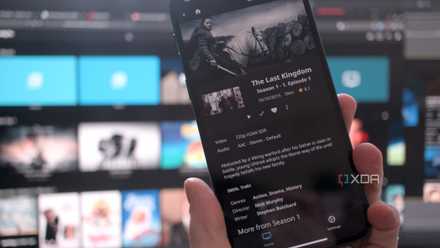
I finally ditched Plex for Jellyfin, and I’m never going back
I don't see the point in self-hosting Plex anymore
I don't want to watch ad-supported TV shows and movies
Subscribing to multiple streaming apps quickly adds up
Over the past few years, the value streamers offer has rapidly eroded, particularly if you want to watch TV shows and movies in 4K with no ads. This has led me to drop several platforms from my streaming setup. Across just a few of the services I've subscribed to, Netflix costs $25 per month, Disney+ $19, HBO Max $23, and Apple TV+ $13. If I switch to the Disney+ with Hulu and HBO Max bundle, it's $33 a month, which saves me a bit of money, but bundles can get confusing, and making sure I'm not accidentally subscribing to a platform twice is key.
Sure, I could also drop to the ad-supported tier for at least some streaming platforms, particularly Netflix and Disney+, but I've lived my entire adult life without watching commercials, and I'm not about to go back now. And this doesn't even include the wild world of streaming live sports, which drives costs even higher. At that point, a mid-level cable subscription suddenly looks far more attractive than it did a few years ago.
There are ways to circumvent these blocks, but they're often finicky and don't always work.
When you add up the prices of all these platforms, the total cost quickly becomes very high. This led me to adopt a new strategy where I only subscribe to an app when there's actually something I want to watch on it. No rule says you need to maintain a streaming app subscription for several months. With Apple TV+, I subscribed for season 2 of Severance and season 2 of The Foundation, and then swiftly canceled. I've done the same with Disney+ and Andor season 2 and several movies, and I subscribe to Paramount+ whenever a new season of an awful Taylor Sheridan show drops (I really enjoy Mayor of Kingstown, even though I know it's actually not great — sometimes bad TV can be good), which costs $13 a month. Netflix used to be the platform I kept around, despite its content quality dropping considerably over the past few years, but after the latest Premium tier price hike, I canceled my subscription and haven't looked back since.
Account sharing has also slowly gone away. First, it was Netflix, and then Disney+ followed suit, blocking subscribers from easily sharing their accounts with friends and family. There are ways to circumvent these blocks (and sometimes it's possible you just fall through the cracks for a few months), but they're often finicky and don't always work, and after a long day, the last thing I want to do is not actually be able to watch my favorite episode of The Sopranos on HBO Max. I just want to sit down, press play, and have everything work.
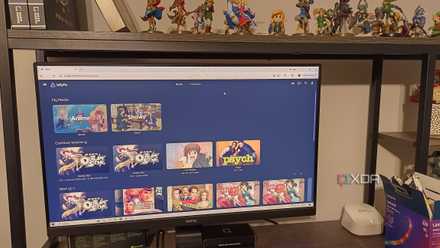
Jellyfin does hardware transcoding for free, and Plex wants $250 to match it
Jellyfin gives you free hardware transcoding, while Plex charges $250 for the same capability. The value gap keeps growing.
The ability to move between subscriptions is one of the few remaining advantages streaming offers
For this to work, you really need to stay on top of what you're paying for
At this point in the streaming landscape, the ability to cancel and then resubscribe when there's something you actually want to watch is one of the few advantages beyond content that sets streamers apart from a more traditional cable subscription, but it can sometimes be more difficult than it initially seems. I often forget to cancel a service within the correct timeframe, or a new TV show or movie drops, and I decide to keep the app for a few extra weeks, forcing another monthly fee to hit my credit card.
I've tried managing my subscriptions in a simple spreadsheet, but I still slip up at some point. I miss the days when I didn't need to think about streaming platforms this way and could easily afford to keep them all because the monthly cost was reasonable.
All of this has me thinking it might be time to jump back into self-hosting with Plex or Jellyfin, coupled with a NAS.
So, where does this leave my streaming app menu? For now, I've culled it to just a few streamers in specific bundles. First off, I subscribe to Apple TV+ all the time because I can access it through Family Sharing thanks to my brother's Apple One plan (don't worry, I pay him back with access to another app). At least for now, I've kept my Paramount+ subscription since there's a lot of content on the streamer that I'm currently watching. I still have Prime Video because it's included with my Amazon subscription, which makes it much easier to justify, though it does carry ads on certain content. Every other platform, including more expensive options like Netflix and Disney+, I've axed.
All of this has me thinking it might be time to jump back into self-hosting with Plex or Jellyfin, coupled with a NAS. As much as I appreciate the convenience of streaming, the cost keeps climbing. As my life becomes increasingly busy, and I'm watching far less content than I used to, the ability to easily cancel and resubscribe to various streaming apps is quickly becoming a nuisance I just don't want to deal with.

Jellyfin gets a new desktop app with updated features
The self-hosting media platform's server has also been updated