
Back in the day, Synology used to be at the apex of the Network-Attached Storage ecosystem, and for good reason. Synology’s DiskStation Manager was (and low-key still is) more beginner-friendly than the unintuitive proprietary distributions rival manufacturers used to ship with their NAS rigs. Sure, Synology’s hardware has always been pricey, but the plug-and-play experience and stable nature of DSM made its premium NAS servers worth the extra cost.
But with its rivals catching up, typical home server platforms becoming more accessible, and Synology itself making some anti-consumer moves, it’s no longer the domineering force it used to be. The best part? With XPEnology bringing DSM to unsupported hardware, you don’t have to stick with Synology NAS units anymore.
I've stopped recommending Synology to friends, and here's what I tell them to use instead
There are plenty of other options for NAS enthusiasts besides Synology
DSM isn’t enough to justify Synology’s weak hardware anymore
Even though it has plenty of QoL apps
Rather than forcing you to learn the ins and outs of a complex distro, DSM’s beginner-friendly nature makes it a killer option for newcomers looking for a robust setup. Inside its neat desktop-like web UI, you’ll find simple configuration tools for spinning up new storage pools, tweaking network settings, and creating automated backups. DSM’s mobile apps are just as robust, and you get a diverse collection of pre-installed tools to accommodate all your needs as a fledgling home labber.
But at the same time, DSM supports advanced utilities like RAID managers to VM-hosting services to satisfy even the most hardcore tinkerers. In fact, my biggest complaint about DSM would be the lack of ZFS, but even with this drawback, I consider it one of the best options for a storage server.
That said, Synology’s newer NAS rigs have inflated price tags without enough hardware enhancements to justify the extra cost, even with the QoL benefits offered by DSM. Take a random Synology rig like the DS925+, for instance. Compare it with similarly-priced offerings from TerraMaster, LinkStation, or practically any other rival NAS manufacturer, and you’ll easily find N100 (and even i3-N305) models with 5GbE/10GbE speeds and higher RAM capacity.
To add insult to injury, certain Synology NAS units can’t even transcode H.264 and H.265 (HEVC) codecs anymore, meaning you’ll have to process everything client-side. If you’re a Plex/Jellyfin user with archived media in different formats, that’s a massive deal-breaker, and it’s especially disappointing considering that you can use this functionality on even the cheapest N100 systems out there.
Custom NAS distros have gotten a lot more beginner-friendly as of late
They also pair pretty well with offerings from Synology’s rivals
While DSM is still the most accessible option for newcomers to the NAS ecosystem, custom server platforms have gotten plenty of QoL tweaks over the years. While Unraid lacks the sleek desktop-esque UI of DSM, its menu-based interface isn’t very complicated, either. Even if you’re a complete noob when it comes to NAS jargon, you can get fairly proficient with Unraid’s UI in a few days, if not hours. Heck, I’d go so far as to say that TrueNAS Community Edition isn’t all that complicated if you’re willing to put some extra hours into learning its UI, especially when you compare it to its predecessors FreeNAS and TrueNAS Core.
Or, you could even grab the oldest machine in your arsenal, slap OpenMediaVault on top of it, and arm it with some plugins to get a decently-functional storage server – one that doesn’t cost a fraction of Synology’s unhinged NAS prices. But you could couple these distributions with a cheaper Synology rival to get a rock-solid NAS that’s adept at backup and archival tasks. And I haven’t even talked about the workaround that lets you configure DSM on unsupported hardware…
With XPEnology, you can have the best of both worlds
The user-friendly nature of Synology on a powerful NAS rig
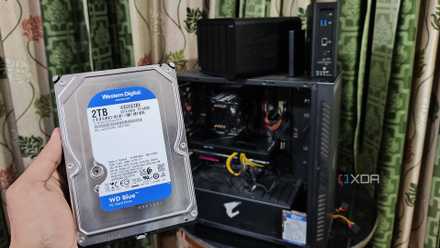
If you’re familiar with Hackintosh setups, you can imagine the XPEnology bootloader as its DSM equivalent. But unlike Hackintosh, getting XPEnology + DSM up and running is a piece of cake, and I say that as someone who has tested this makeshift arrangement on the LincStation N2, Aiffro K100, and a decade-old PC I’d cobbled together from ancient components. Surprisingly, DSM works incredibly well on all three, and Synology’s OS had no trouble detecting the CPU, RAM, and storage drives across my makeshift NAS setups.
Save on NAS & Networking: Deals on Storage Gear
Of course, there are edge-case scenarios where a specific NAS model might have issues with the XPEnology + DSM combo. But I’ve yet to encounter a single compatibility or performance issue on any of the three devices (which have fairly distinct specs and storage combos, mind you) I’ve tested with this arrangement. As long as you do your research, you can arm any ol’ NAS rig with DSM using the XPEnology bootloader, and get more bang for your buck than a conventional Synology rig.
LincPlus LincStation N2
- CPU
- Intel N100
- Memory
- 16GB DDR5 (soldered)
- Drive Bays
- 4x M.2 SSD, 2x SATA drives (2.5-inch)
- Ports
- 1x USB 3.2 Gen 2 Type-A, 1x USB 3.2 Gen 2 Type-C, 2x USB 2.0 Type-A
- OS
- Unraid
- Dimensions
- 210x152x39.8 mm