
Gaming has never been more portable. Long gone are the days of needing a dedicated handheld console like a Nintendo DS or Sony PSP—we've entered a new era of gaming on-the-go, and it started with gaming laptops. Chunky, loud, but powerful, gaming laptops rose to prominence throughout the 2010s, gaining traction as not just capable gaming machines, but adequate for productivity as well.
Fast-forward to the current era, and the landscape couldn't look more different. Gaming laptops still exist and sell well, but it's difficult not to see the writing on the wall. Gaming handhelds, namely the Steam Deck, have completely transformed what it means to play PC games away from the confines of a desk, and for most intents and purposes, it's killing the gaming laptop—and it's doing it fast.
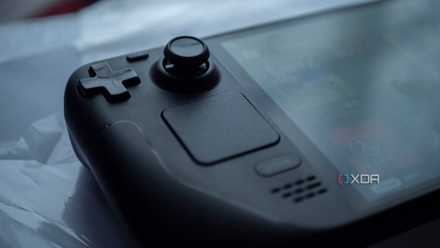
4 ways the Steam Deck changed PC gaming forever
Valve broke new ground with the Steam Deck that launched PC handhelds into the stratosphere.
The rise of the gaming laptop
Razer, Alienware, ASUS—eat your heart out
Gaming laptops first gained a lot of traction in the early 2010s, offering decent gaming performance in a portable package. The word "portable" should come with an asterisk here, because these things were quite bulky, required big power bricks, and put out a ton of heat and noise—something that would be pretty constant throughout their existence. Further innovations improved performance further, and with the GTX 10-series of mobile chips, gaming laptops became legit.
I was enchanted by these in the mid-to-late 2010s. The Razer Blades and Alienware units were expensive, but super impressive for the time. The RGB keyboards, touchpads, and specs were all eye-catching for a young me. Price tags well above $2000 seem pretty reasonable now, but back then, a desktop build totaling that amount would be a monster. Still, for consumers, the portable nature was worth paying a premium for, and year over year the market for gaming laptops grew significantly. For some, it was a great way to game while traveling, and for others, it was just an easier turnkey solution to start PC gaming.
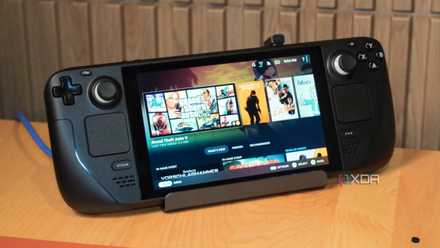
4 reasons Valve's full SteamOS release will change PC gaming again
Valve's full SteamOS release will change PC gaming again, and here are some of the most important ways.
The Steam Deck changes everything
Valve's impressive engineering creates a market of its own
When the Steam Deck launched in early 2022, the PC gaming handheld market didn't exist. Sure, there were PC gaming handhelds out there, but they were largely niche devices with small, dedicated followings. Companies tried creating handhelds, but most of them didn't reach production and ultimately were canned early.
Valve's persistence with the Steam Deck turned it into an excellent product at a surprisingly low price. Gabe Newell himself has famously gone on record saying that the price was extremely aggressive, and this, combined with the Deck actually being a good product, is what created the handheld PC market.
The software polish, along with the fact that users can install whatever they want on the device, is what took it beyond just a gaming handheld. It's a full-blown computer, and this is why the gaming laptop is in trouble. The amount of power you can pack into a gaming handheld like the Deck whilst maintaining a strong value proposition and user control is what makes it such an attractive option for those looking to game on the go. Gaming laptops also still have a bulk issue—even after many years of shrinking processing nodes and efficiency improvements, gaming laptop performance has largely plateaued in the 2020s compared to the rapid innovation of the 2010s.
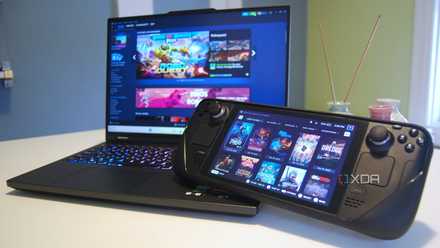
6 ways your Steam Deck can replace your laptop
You may be impressed by the many ways your Steam Deck can actually replace your laptop
High-performance laptops still have a place
Some productivity apps are still best suited to "gaming" devices
One point in favor of the gaming laptop is its raw horsepower. Gaming is one thing, but productivity is an entirely different conversation. Ultrabooks are great and can suffice for most use cases, but some power users still require more headroom, and the only way to get that in a portable format is through a gaming laptop.
The Steam Deck isn't a productivity beast by any means. It's definitely possible to do some small tasks on it, but the lack of an integrated keyboard and relatively modest specs through a productivity lens make it a subpar option. I'm not totally writing off Valve here though—gaming is obviously the focus of this device, but judging by their reluctance to release new versions of the Deck quickly, it seems as though they want to make sure they take full advantage of all the advancements in APU technology before they make a sequel. I can see the second Steam Deck being capable of some productivity, at least more than the first version is capable of.
Intel is at the heart of a lot of gaming laptops, and as long as they're struggling to create mobile chips with tangible advancements, the longer the gaming laptop market itself will suffer. Most handhelds are moving over to AMD's APUs—and for good reason. They're fast, efficient, and steadily increasing in performance with each generation.

4 reasons a Steam Deck shouldn’t replace your dedicated gaming PC
We're evaluating why Valve's Steam Deck isn't a worthwhile replacement for a dedicated gaming PC
Gaming laptops have a place, but they're falling out of favor
Ultimately, gaming laptops are still useful as productivity machines, or if keyboards and touchpads are an absolute must in your gaming experience. Otherwise, the Steam Deck has quickly begun to take over the portable PC gaming market. If there aren't huge gaming advancements in mobile CPUs coming down the pipeline soon, the future of portable gaming may very well be in your hands, and not your lap.