
For the last decade, smart home products have largely operated within the same general promise. That is, replace your stuff with our stuff, and your house becomes smart. Smart fridges with cameras inside them, smart ovens with companion apps, smart thermostats, you name it. The dream of a fully connected home is just a few purchases away, some big, some small.
Meanwhile, bridges, current-monitoring plugs, contact and vibration sensors, multi-protocol hubs, IR and RF blasters are all coming to the forefront, promising to make a "dumb" appliance or device into a smart one. Retrofitting isn't a new development in the smart home space, but it's gaining some serious popularity thanks to the insistence of companies putting a Wi-Fi connection and mandatory updates on everything. The industry still treats retrofitting a bit like a budget option, but in reality, it's the more honest, sustainable, and user-respecting direction a smart home can go.

Home Assistant just made every infrared device in your house controllable, and you probably already own them
Turns out, dumb devices were never the problem.
A lot of "smart" devices are a wallet drain and turn into e-waste
You're putting a ton of faith into companies to not pull the plug
For starters, following the default smart home upgrade path has meant sidelining or disposing of appliances that work perfectly fine. The best case scenario for the fridge in the kitchen being replaced by a "smart" one is that it gets relegated to the garage, but a lot of the time it's just disposed of. The same thing happens with a perfectly functional thermostat, and even light bulbs. Replacing everything with smart devices only makes sense if everything in your home is currently a problem.
A twenty-dollar smart plug, a thirty-dollar IR blaster, or a fifty-dollar sensor-based bridge can deliver the large majority of what a four-hundred-dollar smart appliance offers when it comes to scheduling, basic remote control, and energy awareness. A standard washing machine can easily be retrofitted with a smart plug, and sensors to deliver most of what a smart appliance does at a fraction of the cost. This is also a viable option for renters, who can't replace a landlord's appliances or make big renovations.
If you buy shiny new "smart" appliances, you're also putting a huge amount of faith into companies to not pull the plug on its services or change its policy to require a subscription. One moment you could be using all the automation and fancy features that come with your expensive upgrade, and the next it could be completely bricked, or cost a monthly fee to "unlock."

6 Home Assistant integrations I wish I knew about day one
It took me longer than expected to find the integrations that my home needed
A smart home should be built on something that outlasts the cloud
Longevity matters
The smart home industry has a poor track record on longevity, and the cautionary tales keep piling up: Insteon abruptly shut down its servers in 2022, taking its users' hubs offline overnight, Wink rolled out a mandatory subscription with almost no notice in 2020, effectively paywalling hardware customers had already bought, and Sonos drew sustained backlash over how it handled its legacy product line. I could genuinely go on for pages with these examples.
Through all of it, the dumb fridges, dumb dishwashers, and dumb lamps in those same homes kept working just fine. A smart home that relies on bridges, sensors, and good Home Assistant integration is far more resilient than any proprietary system. If a bridge or sensor dies, it's a ~$50 fix at the most, but if your smart fridge stops working, it could be a thousand-dollar problem. It's also far easier to get everything to talk to one another properly.

Why I stopped buying smart TVs, and what I bought instead
Remember when smart features worked for us, instead of against us?
There are limits to retrofitting
You have to think outside of the box sometimes
Not everything can be retrofitted to the degree that it has feature-parity with a proprietary smart device. For example, a smart plug can tell you if the washing machine is running, but it can't tell you the cycle, time left, or a "clean filter" alert. In North American homes, the 240V plug that's used for things like dryers can't be made "smart" either, so you're limited there.
But you can think outside the box a bit. Instead of monitoring power at the source to see if the dryer is on, install a vibration sensor that reports to Home Assistant to tell you when the cycle is finished. For a dumb garage door, ratcloud makes a small wired device called a ratgdo that enables Home Assistant integration. For something really crude, you can even use a lux sensor and point it at the LEDs on an appliance to detect certain things. It's a bit ham-fisted, but you can make pretty much anything smart.
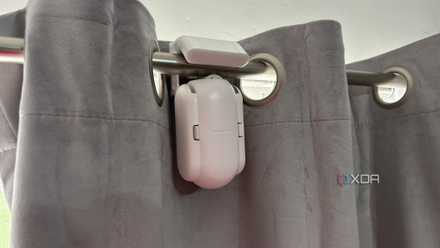
Curtain automation is fun, but the weird smart home projects are where things get really useful
Make your smart home work for you.
You don't have to replace everything to have a smart home
The "fully-connected" life doesn't have to mean replacing everything in your house, and retrofitting isn't the massive compromise it's made out to be. It's the smarter bet in almost every practical sense, as dumb appliances fitted with smart capabilities are more resilient, more affordable, align better with how homes actually work and how long people actually keep their appliances.
- Brand
- AITRIP
- Connectivity Features
- UART, USB