
Not every video game genre sticks around forever. Some fade as gaming trends shift, others as technology advances, and a few never take off due to hardware limitations. But as any retro gamer knows, no genre ever truly dies.
Some genres become harder to find, while others evolve—their mechanics and ideas living on in unexpected ways. And even when a genre fades from the mainstream, it can thrive in smaller communities. Just look at Project Zomboid, a deep, isometric survival game that feels like a lost classic from the late 90s yet continues to grow thanks to passionate developers and dedicated fans.
Maybe you still play these games, maybe you wish you could, or maybe you just enjoy watching them be played on YouTube. Whatever the case, let’s take a look at some video game genres that quietly slipped away while gaming moved on.

Retro gaming has never been better, and it can only go up from here
Give your classics the 21st-century TLC they deserve.
5 Fixed-camera survival horror
From eerie angles to over-the-shoulder action
Survival horror is one of the few genres where clunky controls and limited visibility weren’t flaws — they were part of the horror itself. In the late 90s and early 2000s, games like Fatal Frame II and Clock Tower 3 used fixed camera angles to keep players off-balance and vulnerable. Unlike action games, where you can always see what’s ahead, these horror titles forced you into unsettling perspectives, making every dark hallway and off-screen sound more terrifying.
This wasn’t just about atmosphere — Fatal Frame heightened tension by limiting your view through the Camera Obscura, forcing you to confront ghosts head-on. Clock Tower 3 used cinematic angles to turn hallways into suffocating death traps. Fixed cameras also allowed for eerie compositions — a shadow in the background, an open door that wasn’t before, or the slow realization that something is watching you.
Why did it disappear?
- Players wanted more control. As third-person and first-person perspectives became standard, horror followed suit.
- First-person horror took over. Amnesia and Outlast proved immersion was scarier than limitation.
- The shift to action-heavy horror. Resident Evil 4 introduced fluid combat, something difficult in fixed-camera games.
Fixed-camera survival horror didn’t vanish — it evolved. Games like The Last of Us and even the Resident Evil 2 remake preserve the tension and resource management of classic horror but offer modern movement and combat. Meanwhile, the claustrophobia of Clock Tower found new life in first-person horror, where limited visibility remains terrifying.
Though AAA gaming has moved on, the style survives in the indie space. Tormented Souls faithfully recreates the classic formula, proving that while mainstream horror has changed, there’s still an audience for terror framed just right.
4 Peripheral-based games
The rise and fall of plastic gaming accessories
From the Magnavox Odyssey’s light gun in 1972 to Guitar Hero Live in 2015, gaming has long experimented with accessories beyond standard controllers. The Shooting Gallery light gun lets players aim at their TVs, setting the stage for decades of innovative peripherals.
These accessories offered immersion that standard controllers couldn’t match. Guitar Hero turned players into rock stars, Dance Dance Revolution made them break a sweat, and light gun shooters like Time Crisis recreated the thrill of arcade gunplay.
But eventually, plastic instruments were packed away, dance mats were folded, and light guns stopped working altogether.
Why did they disappear?
- Motion controls and VR took over. Instead of separate accessories, the Wii, Kinect, and VR systems replaced multiple peripherals.
- Light gun technology became obsolete. Classic light guns don’t work on modern LCD/LED screens.
Peripheral-based gaming didn’t vanish — it transformed. The rhythm-heavy gameplay of Guitar Hero and DDR thrives in Beat Saber and Synth Riders, where VR motion tracking replaces plastic instruments.
While arcades still feature shooting games, they no longer use traditional light guns, instead relying on infrared sensors or positional tracking. And though some players dig out old accessories and CRT TVs to keep the experience alive, the era of plastic peripherals is over.
3 Lemmings-like puzzle games
The decline of indirect-control strategy games
Few games are so influential that their name defines a genre, but Lemmings (1991) did just that. A blend of puzzle and strategy, Lemmings required players to guide a mindless, marching crowd to safety by assigning tasks like building, digging, and blocking. Unlike many puzzle games of its time, it wasn’t about reflexes or matching patterns — it was about indirect control and strategic problem-solving.
Despite selling around 20 million copies and inspiring sequels, spin-offs, and countless ports, Lemmings eventually slowed its march.
Lemmings was inspired by the (false) myth that real lemmings blindly follow each other to their doom — a misconception popularized by Disney’s staged documentary White Wilderness (1958).
Why did they disappear?
- A slower pace lost appeal. As action-heavy games became dominant, Lemmings felt outdated.
- The genre didn’t expand. Few games innovated on the formula without feeling like clones.
- Strategy games evolved. Lemmings was a predecessor to RTS games, but Command & Conquer and Warcraft pushed its mechanics into deeper experiences.
Lemmings-like games resurfaced decades later through indie titles like Flockers (2014), Zombie Night Terror (2016), and HUMANITY (2023), proving that while Lemmings may no longer lead the charge, its influence marches on.
2 Water racing games
From high-speed waves to still waters
For a brief period, jet ski and water racing games were everywhere. They threw players into unpredictable, shifting waves, making every race feel dynamic. Whether it was the arcade thrills of Hydro Thunder (1999) or the tight controls of Wave Race 64 (1996), jet ski games delivered a uniquely fluid experience.
Then they disappeared. And as far as I can tell, there’s no widely accepted reason why.
Why did they disappear?
- The rise of other racing subgenres. Need for Speed and Burnout drew players toward street racing.
- Some trends just fade. Jet ski racing may have been a momentary niche.
- The racing genre itself declined. Even major racing franchises struggle to stay fresh.
Jet ski racing didn’t evolve — it just stopped. While modern racing games include water tracks, the dedicated jet ski racer is all but gone. The last major attempt, Riptide GP: Renegade (2016), didn’t reignite mainstream interest. For now, the waves have settled.
1 God Games
The rise and disappearance of playing god
The god game genre was pioneered by Peter Molyneux, who, after selling just two copies of his first game (one of which he suspects was bought by his own mother), went on to found Bullfrog Productions and create Populous (1989).
Populous let players shape terrain, guide civilizations, and wield divine power. It inspired SimEarth (1990), which simulated planetary evolution, and Black & White (2001), where players could be benevolent or vengeful deities.
But over time, god games faded—not because they were replaced, but because they simply disappeared.
Why did they disappear?
- Simulation and strategy games took over. Civilization and Total War gave players direct control over societies, making indirect influence less appealing.
- Shifting player expectations. God games often lacked clear objectives, pushing players toward structured experiences.
- A fate similar to SimCity. The disastrous launch of SimCity (2013) damaged the genre, even as city builders survived.
God games didn’t evolve — they faded. While indie titles like Reus (2013) and WorldBox (2018) experiment with god game mechanics, the pure god game — the one that let players shape and rule civilizations — is now just a relic of gaming history.
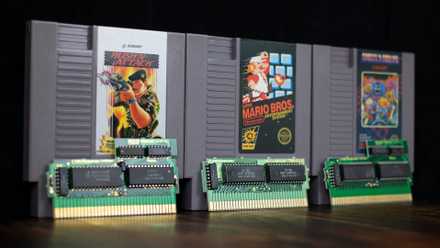
Console meets cartridge: Breaking down the architecture of the NES’s unique design
The NES architecture can be divided into three key groups: CPU-related components, PPU-related components, and cartridge-specific components
Forgotten, but not truly lost
Video game genres don’t truly die — they evolve, fade into the background, or influence what comes next. The ideas behind them still exist, repurposed in new ways. The tension of fixed-camera horror lives on in first-person survival horror. The influence of god games can be seen in sandbox simulations. Even rhythm games, once dependent on plastic peripherals, have found a second life in VR.
But while pieces of these genres remain, their pure forms are unlikely to return to the mainstream. That doesn’t mean they’re gone, though. I’m grateful that indie developers have kept these ideas alive, creating games that capture the spirit of what made them great in the first place — whether through retro-inspired revivals or fresh takes on old mechanics. What other gaming genres have faded from the mainstream?