
As a tech writer and researcher, I’m constantly looking for tools that streamline my workflow, help me gather information, and ultimately spark new ideas. I often find myself managing countless tabs, dozens of notes, and an ever-growing pile of articles. While many tools promise to simplify this process, few deliver on that promise quite like NotebookLM.
I casually started exploring Google’s AI-powered notebook, and it quickly became a crucial part of my routine and helped me solve research problems in ways I never anticipated.
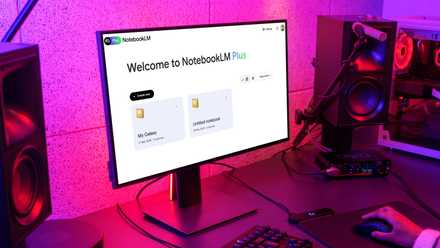
I finally started using NotebookLM and I should have sooner
I’m officially a NotebookLM convert
The research problem we all face
Common issues while dealing with complex subjects
Before NotebookLM entered my digital toolkit, learning about a complex topic like self-hosting was challenging. It was a chaotic, often frustrating, and time-consuming process. Here’s how I used to tackle it.
I wanted to set up my own home server for media, file storage, and a personal website. My journey began, as most do, with a number of Google searches. Suddenly, I was dealing with hundreds of tabs: articles on Docker, tutorials on setting up Nextcloud, forums discussions about choosing the right hardware (Raspberry Pi vs. an old PC), best practices for security, domain name registers, and more.
My system for keeping track of all this was a messy combination: a bookmark folder with links I would never revisit, several half-baked notes in the self-hosting section in OneNote, several PDF guides, and more. The critical piece of information I needed always seemed to be just out of reach.
Beyond just finding information, the real challenge was connecting the dots. One article would explain setting up an Nginx reverse proxy, another would detail a specific Docker compose file for Plex, and a third would dive deep into firewall rules.
I spent hours manually trying to summarize each article, and hoped to extract the core concepts and see how they fit together. It was a nightmare at times.
Enter NotebookLM
A true companion for my research process
I had heard whispers about NotebookLM’s AI capabilities for research, but I was skeptical at first.
My first step was to take all those scattered self-hosting resources – the PDFs, the random articles I bookmarked, even the transcript from a YouTube video about Docker best practices – and dump them all into a new NotebookLM notebook. It felt like magic as it instantly processed each document.
I was able to ask NotebookLM a variety of questions that leveraged its AI capabilities.
- What are the pros and cons of using a Raspberry Pi versus an old desktop for self-hosting?
- Explain the typical data flow for a web service behind a reverse proxy and firewall on a Docker host.
- What’s the difference between a container and a virtual machine?
- Outline a plan for deploying Nexcloud using Docker.
In no time at all, I was able to understand the fundamentals of self-hosting and had my service up and running.
Summarizing customer reviews on a product
A boon for small business owners
Before NotebookLM, diving into thousands of customer reviews for our electric air fryer felt challenging. My goal was to understand customer problems and improve the product based on feedback.
The process involved exporting the reviews from our e-commerce platform into a Google Sheet and scrolling endlessly to spot patterns with my own eyes. This was incredibly slow, prone to bias, and tedious.
Then came NotebookLM to transform this nightmare of customer review analysis. I exported the Google Sheet file in PDF and uploaded it to NotebookLM. I was now able to ask the following questions and received relevant answers in no time.
- What are the most common complaints about the air fryer’s performance?
- Are there any recurring issues related to the product’s durability?
- What do customers say about the cleaning process?
- What are the common benefits reported by users?
NotebookLM would then gather responses directly from the reviews. It even highlights the customer ID so that I can easily refer to the full review on the PDF.
Planning car insurance with minute details
Learning all the nitty-gritty
I was about to purchase a new car insurance policy, and the provided 15-page PDF document detailing the terms and conditions felt complex at first glance. My usual approach would be to skim it quickly with keywords like claim and deductible, and then just cross my fingers and hit the purchase button.
This time, armed with NotebookLM, I simply uploaded the entire 15-page document into a new notebook and asked specific questions directly to the document.
- What are the exclusions for accidental damage?
- What is the process for filing a claim after an accident?
- Does this policy cover damage from natural disasters, and if so, what kind?
- What is the cancellation policy, and are there any fees associated?
NotebookLM quickly pulled out the relevant clauses and cited the page numbers.
Research revolutionized
Ultimately, NotebookLM has proven to be far more than just another solution in my productivity toolkit; it has become a genuine companion in my research journey. Its ability to intelligently process, connect, and surface insights from my information has eliminated countless hours of manual sifting and provided clarity.
If you are a researcher dealing with information overload or want a smarter way to engage with your materials, I encourage you to explore NotebookLM. You will quickly understand how it’s more powerful than you initially estimated.