
In early October 2024, Nintendo took down the last remaining open-source and community-driven Nintendo Switch emulator, Ryujinx. Some speculate Nintendo used legal pressure like they have with other cases of emulation, while others think Nintendo offered the head developer a payout in return for shutting down the project. The announcement on the Ryujinx Discord server only said that the head developer was "offered an agreement" to stop working on the project.
This is on the heels of their out-of-court settlement against Tropic Haze LLC, the makers of the Yuzu Switch emulator, in March. Tropic Haze agreed to pay Nintendo over $2 million in damages. Nintendo has been making an effort to crack down on piracy, and has a history of going after emulators and hardware console hackers. They’ve even been bombarding YouTube content creators with copyright strikes for using emulators in their gameplay or even just for reviewing them.
Protecting your IP is one thing, but game system emulation software is legal in most countries, including the United States. Nintendo stands apart from other video game companies, having cultivated a particularly positive and family-friendly public image. With lovable and iconic characters like Link and Mario, exclusive only to its game consoles, the company developed a very loyal fan base. At the same time, it's still a huge corporation that’s become notorious for aggressively protecting its intellectual property, and its tactics are damaging their reputation.

Nintendo is playing whack a mole with over 8000 Yuzu forks
The battle lines of Nintendo's war against emulation are increasingly murky
Why emulate gaming systems?
Emulators aren’t just for piracy
There are many reasons to emulate a game system. Nintendo itself allows Switch online subscribers to play classic Nintendo games using their own emulator. It makes sense that using an emulator would be much easier than antiquated hardware. It’s not easy to hook old gaming consoles up to modern TVs, especially since they need to be scaled up. The Nintendo Switch isn’t a vintage console though, so other than pirating games, why would people want to use an emulator instead? Here are a few of the biggest reasons:
Modding: It seems like this is the top answer. Modding communities often breathe life into old games, but also make improvements or fun changes to current games. Nintendo’s Breath of the Wild, as an example, has mods for higher resolutions up to 4k, smoother frame rates, and other graphical improvements that just aren’t possible on the original hardware. There are also fun mods like replacing Link with the female character Linkle, and fan-made expansions that are so extensive they are almost like playing new DLC.
Using an emulator when creating YouTube content is also infinitely easier than using the original hardware. You can run the game on the computer with screen capture, which often runs better than the original game, and mods letting you take control of the camera are common. The variety of mods that make bigger changes to the game can also make for really entertaining content. This can ultimately lead to a longer life and more appreciation for the game. A great example is the developer of Fortnite, who embraces mods through its own Epic Games mod launcher.
Game Preservation: There are huge community efforts to archive media history, from old movies only available on VHS tapes to TV network bumpers for your favorite childhood channel. Video games are no different—hardware gets old, companies go out of business, games are no longer being sold or become so rare they are inaccessible. The Video Game History Foundation’s July 2023 study revealed that 87% of video game history is no longer available in the current marketplace.
The video game industry convinced the US Copyright Office that they already do a great job preserving their own games, and allowing other institutions or fans to keep old games from disappearing would hurt their already massive profits. These corporations don’t actually care about gaming history and are actively destroying it. Emulation is widely understood as the most effective way to preserve old games, because if they aren’t going to do it, then fans have to do it for themselves.
I'm worried about the future of emulation
Yuzu's shutdown has sent the emulation community into disarray, and it's hard to say what the future holds
The legality of emulation software hasn’t stopped Nintendo
They believe it should be illegal, so they’re acting like it is
Many emulators, like Ryujinx or Yuzu, are open-source projects being developed by passionate communities of coders who love video games. These programs don’t contain Nintendo’s actual proprietary code. They aim to replicate the functionality of Nintendo’s hardware through reverse engineering to avoid conflict with intellectual property. Nintendo thinks that supporting emulation in any way encourages the illegal piracy of its products, so they’ve taken it upon themselves to use their wealth and legal power to crush anyone remotely associated with it.
So why is emulation so often called a "grey area" when it comes to the law? In the case of the Switch, Nintendo's entire argument is that emulation is inherently illegal because the emulators require Nintendo intellectual property, like "prod.keys" to decrypt and run games. These keys are meant to protect Nintendo's software, and Nintendo thinks that using them on an emulator falls under the DMCA's prohibition against circumventing software protection.
Even though Yuzu didn't distribute these keys, it had a detailed guide giving users instructions on how to obtain them and ROMs. By providing these instructions, Nintendo argues that Yuzu developers admitted that running games on Yuzu necessitates hacking the Switch, and circumventing the DRM protections that Nintendo has put in place.
Nintendo went on to argue that there is no way to legally play a Switch game on an emulator, even if it's the backup copy of a game that a user has legally purchased. The company argues that when you buy a Switch game, you agree to be authorized to play only that one copy and play it only on an unmodified Switch, and that it holds the legal right to determine when to enter a new market and release their software on other hardware. In other words, Nintendo alone can decide when to let computer, iPhone or Android users play Nintendo games on those devices.
If the Yuzu case had been settled in court, this might have been included in the new precedent, but since it didn't, this is still only an argument and not a legal reality.
United States Law
The creation of emulation software is completely legal in the U.S., as long as it’s created under certain guidelines. A method called “clean room” development is used to create emulators like Ryujinx. It’s a process where the emulator is built based only on publicly available information, reverse engineering, and black box testing.
Ironically, it’s because of losing the 1992 court case against the makers of the Game Genie, Lewis Galoob Toys, Inc. v. Nintendo of America, Inc, that users can legally obtain dumped copies of a system's BIOS. This is part of what allows us to legally use the emulation software that has been developed, as long as the game system’s firmware and game ROMs come directly from the owner’s purchased copies. In 1998, the Digital Millennium Copyright Act (DMCA) codified this into U.S. copyright law.
Console manufacturers have repeatedly challenged the legality of emulation in court, and failed to make a legal change. In the 2000 case, Sony Computer Entertainment, Inc. v. Connectix Corporation, the court ruled that copying a system’s BIOS during emulator development is protected under fair use. The Sony Computer Entertainment America v. Bleem case ruling significantly impacted game console emulation by establishing that developing, advertising, and selling an emulator is not inherently copyright infringement, as long as the emulator can play legally obtained game ROMs, and “fair use” doctrine applies.
Brazilian Law
Ryujinx seemed to be invincible, learning from other emulators' past mistakes, as well as being developed in Brazil. Emulation is legal in Brazil, and Nintendo didn't seem to have a firm case against Ryujinx. It was well-known within the emulation community that Ryujinx was created in a clean room environment, and the developers were very careful to make sure nothing they did could lead to legal issues with Nintendo.
However, what a lot of people don't know is that in early May, Brazil published Law No. 14,852/2024 (sometimes referred to as the “Legal Framework for Games” and other similar names). This law amended Article 2 of Law No. 9,279/96 (Industrial Property Law), allowing video game companies to register electronic games as a form of industrial property protection, similar in some ways to intellectual property protection in the U.S. This didn't explicitly change the laws regarding emulation, but it did open the doors for Nintendo and other game companies to take legal action against things they believed violated their rights.
So, while Nintendo may have offered the head developer a lump sum to make Ryujinx disappear, it may also have used this as a legal reference to intimidate them as well. Knowing they didn't have the financial resources to battle a huge company like Nintendo in court, it would make sense for the developer to stand down. These are the unfortunate circumstances a lot of people end up in when any large corporation targets them with their legal department.
Nintendo’s tarnished its image
To be clear, this article doesn’t condone piracy. I like Nintendo games, and I’ll happily buy both the next Zelda game and whatever console it’s released on. It might even be because of that new console, the Switch 2, that Nintendo is freaking out so hard. Even though it's been almost 8 years, the Switch 2 isn't likely to be a huge departure from the original Switch, and shares a lot of similarities, and in fact, it's been confirmed that it will be backwards compatible with the current system.
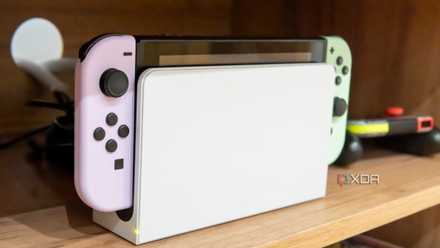
Nintendo Switch 2: Everything we're expecting from the next generation of Nintendo
The Nintendo Switch 2 is fast approaching
But this article isn’t about whether or not it’s okay to steal or pirate games; it’s about fairness. It’s about whether large corporations should be able to use their enormous legal resources to crush small developers, content creators, and hobbyists to enforce what they think the law should be, not what it actually is. Emulators themselves don’t pirate games, and the courts agree. How people use them, legally or illegally, is up to the end user. Nintendo’s relentless crackdown doesn’t align with the image they’ve cultivated through their games and marketing. I understand the need to protect their brand and copyrights, but they can do that without damaging their relationship with fans.
Emulators are here to stay. Ryujinx’s last build was already mirrored, and its code was forked and backed up. New commits are already being made to the old code, and new developers are working on bringing Ryujinx back. Due to Nintendo’s actions, even more people are curious about emulation, and they didn't really benefit much. Piracy will be a drop in the bucket of billions of dollars of annual profit. So, if you’re wondering what happened to Ryujinx, remember that Nintendo doesn’t care about the law; it will find any way they can to shut down the emulation of their consoles.
We may think of Nintendo as family-friendly and genuine because of its lovable and fun games and clever marketing strategy, but in reality, it is just another huge corporation.

How a paperclip helped to defeat the Nintendo Switch's security
If you have one of the original Nintendo Switch consoles, you can hack it... with merely a paperclip.