
AMD's Ryzen X3D CPUs are widely hailed as the best gaming CPUs you can buy, and rightly so. The Ryzen 3D V-Cache technology allows these chips to trump everything else on the market when it comes to gaming performance. They're undoubtedly the prime candidates for a high-end gaming setup. However, if you take a step back and assess the viability of these chips from a value perspective, and consider the overall configuration of most gaming builds, the Ryzen X3D CPUs don't look all that hot. And if you need a versatile setup, you're better off investing your money elsewhere.

4 things to know before investing in an AMD X3D CPU
AMD's Ryzen X3D CPUs are unparalleled for gaming, but you should remember a few things before buying one
You don't have $350 to spend on a gaming CPU
Who does?
Despite how important the CPU is for a gaming build, especially as newer titles continue to leverage more CPU horsepower, you don't need to spend more than $250 on a gaming CPU. Many PC builders don't want to spend even that, and instead choose a 6-core chip priced below $200 instead, which is a smart move, considering they can spend more on the graphics card. The Ryzen X3D CPUs might be the fastest, but they're also some of the costliest — the Ryzen 7 7800X3D costs over $360 at the time of writing, and the Ryzen 7 9800X3D costs $449.
Unless you're working on an unlimited budget, picking a Ryzen X3D CPU for a gaming-only build is an expensive proposition that might not deliver on your expectations. Regular CPUs like the 6-core Ryzen 5 7600 or the 8-core Ryzen 7 7700 are still enough for the majority of gaming builds. Besides being too expensive for the average builder, the Ryzen X3D CPUs also need a high-end system to justify the premium, which is what I'll cover in the next section.
AMD Ryzen 7 7700X
- Brand
- AMD
- CPU Model
- Ryzen 7 7700X
- CPU Socket
- AM5
- Cores
- 8
- Threads
- 16
- Architecture
- Zen 4
The AMD Ryzen 7 7700X is still one of the most powerful processors on the market right now, with 8 cores and 16 threads for top-tier desktop performance.

How much is too much to spend on a gaming CPU?
In a market flooded with several contenders, which gaming CPUs are worth their price?
You don't have a high-end GPU
Most of us aren't buying RTX 5080s and 5090s
Perhaps the most limiting aspect of the Ryzen X3D CPUs is that they need a high-end GPU like the RTX 5080, and ideally the RTX 5090, to fully utilize the performance difference compared to 6-core CPUs. Recent testing by Hardware Unboxed showed that when you pair these high-end CPUs with cards like the RX 9070 and RX 9060 XT 16GB, the performance becomes GPU-bound. The Ryzen 7 9800X3D delivers only around 5% more FPS than the Ryzen 5 7600X at 1080p and 8% more at 1440p, while providing identical FPS at 4K.
Most people aren't buying an RTX 5080 or RTX 5090 for their gaming rigs, so spending $450 on a Ryzen 7 9800X3D will simply be a waste of money. You won't be able to generate the extra FPS that you're paying a premium for, and would be better off buying a $200 6-core chip instead. This makes the Ryzen X3D CPUs relevant only for high-end buyers, making the regular chips truly the "best gaming CPUs" for the rest of us.

How much is too much to spend on a gaming GPU?
What is realistically the right price for a gaming GPU to enjoy a reasonable gaming experience?
You're gaming at 4K
The CPU stops being relevant
If you have a high-end 4K gaming setup, you can probably justify spending hundreds of dollars on an X3D chip, but you don't really have to. The same testing I cited in the previous section shows that as you climb from 1080p to 4K, the difference in performance between the Ryzen 7 9800X3D and the Ryzen 5 7600X becomes negligible, no matter which GPU you use. Even with the RTX 5090, you get a minor 10% performance difference.
At 4K, games inevitably become GPU-bound, and even with the fastest GPU in the world, you can only get 10% more FPS with the fastest X3D CPU (compared to the $180 Ryzen 5 7600X). It sounds logical to pair a high-end 4K GPU with the fastest gaming CPU in the world, but what's the point if you are paying 250% more for just 10% more performance?
AMD Ryzen 5 7600X
- Brand
- AMD
- CPU Model
- 5 7600X
- Cores
- 6
- Threads
- 12
- Architecture
- Zen 4
- Process
- TSMC 5nm
AMD's 6-core chip is actually its best for gaming with incredible single-core performance and an attractive price tag to boot.
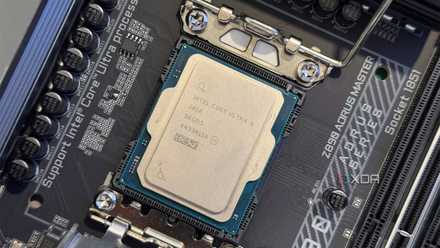
4 reasons I'm not buying a high-end CPU for high-end gaming anymore
When it comes to CPU choice, going with something high-end might not be worth it anymore
You want a versatile chip instead of the highest FPS
X3D chips aren't productivity champs
If gaming isn't the only thing you want to do on your PC, you likely have better options than the Ryzen X3D CPUs. One challenge with the X3D chips is that they don't boast the fastest clock speeds. All the gaming magic comes from the extra L3 cache stacked on the die, which necessitates lower clock speeds to keep the thermals in check. Regular CPUs can beat the Ryzen X3D CPUs in boost clocks, and also in core count for the same price.
If productivity workloads are an essential part of your build, you should look at alternatives like the Ryzen 9 9900X, Ryzen 9 7900X, and Core i9-14900K. They're excellent for multicore workloads, and aren't bad gaming CPUs either, all things considered. They perform quite similarly to the high-end X3D CPUs in gaming, and depending on the FPS range in question, you might not notice any difference.
AMD Ryzen 9 9900X
- Cores
- 12
- Threads
- 24
- Architecture
- Zen 5
- Process
- TSMC 4nm, 6nm
12-core high-performance CPU built for gaming and productivity

3 reasons why you shouldn't buy an AMD Ryzen X3D CPU
AMD's Ryzen X3D CPUs are amazing for gaming, but they might not be the right pick for you
Know the prerequisites before buying a Ryzen X3D CPU
Before you drop $400 or more on a Ryzen X3D chip, you should know the conditions under which it will perform as expected. The sky-high FPS numbers you would have seen in benchmarks can only be achieved if you pair the chip with the fastest GPUs on the market. And if you're gaming at 4K, you'll be limited by the GPU anyway. For those building gaming and productivity systems, alternatives with more cores and faster clock speeds might be better investments.