
When setting up my DIY home NAS, one of the things that took a lot of consideration was deciding between ZFS and Btrfs — two of the most popular filesystems. There are a lot of similarities between the two with features like snapshots, verifying data integrity, and copy-on-write for efficiency. But I couldn’t trust and go with what looked good on paper — they had to prove their mettle too. I wanted to prioritize low power draw, easy backup management, and long-term data integrity on my make-do hardware. After months of use and simultaneous testing, I settled on Btrfs, and I honestly don’t feel like going back — here’s why.
7 Lower memory requirements
It doesn’t take a toll on the hardware
ZFS is known to be heavy on RAM. Most recommendations suggest at least 8GB of memory, and ideally more if you want to use features like deduplication or other performance boost measures. That’s fine if you’re running a server with ECC RAM and enterprise hardware, but mine was much more modest.
My NAS runs on a modest mini-PC with 4GB of RAM and an entry-level processor. So, Btrfs runs comfortably in low-memory environments like mine and doesn’t require tuning out of the box. It let me fully use the hardware I already had without performance hiccups or requiring spending extra.

Breathe some new life into your old PC with these 5 operating systems
Not sure what to do with your ancient PC? You can restore its vitality with the help of these operating systems.
6 Native Linux support
Everyone could use a little less worrying
ZFS is not part of the Linux kernel; it is maintained by the OpenZFS project and distributed as a separate kernel module. This mismatch may not seem big but can and does create issues when the kernel updates faster than the ZFS module. So, you are actively thinking about managing kernel upgrades or hoping nothing breaks — not a sound strategy for something as critical.
Btrfs, on the other hand, is built right into the Linux kernel itself. That generally means better long-term compatibility and quicker bug fixes. And for me personally, it meant less worry during system upgrades. Since my NAS is on Linux, it plays nicely with updates, leaving me at peace.
5 Simpler setup and management
Why does file management have to be difficult?
ZFS may be powerful, but its setup is equally rigid and borderline painful. You must plan in advance how to group together your drives and create ZFS pools as it is hard to make structural changes later on. Even basic tasks like adding drives and changing pool size take a bit of tinkering.
Btrfs is much more convenient and flexible on that front. Things like creating new volumes, enabling compression, and making subvolumes are basically effortless, and so is adding more hard drives to the setup. I’d rather use my NAS and all the apps I’ve installed than spend all my time trying to manage the file system and its quirks. That’s why Btrfs made more sense to me.
4 Better integration with third-party tools
Snapper and Timeshift play nice with Btrfs
A lot of Linux apps are built around Btrfs, making them incredibly easy to pair with systems like mine. I needed snapshot functionality both as a backup and as an easy way to roll back to a recent version if something broke down. Snapper and Timeshift are two of the most trusted tools for the task, and they work with Btrfs even at the sub-volume level to automate the snapshot process and make restoration super easy.
ZFS snapshots sure are quite powerful, but many such Linux desktop tools don’t integrate well with ZFS out of the box. And since my NAS also doubles up as a lightweight Linux desktop occasionally, Btrfs saves me from scripting everything manually.

4 reasons I use ZFS snapshots on my NAS — and so should you
ZFS snapshots will be your new best friend.
3 Flexibility with disk additions
Future flexibility also matters
As previously mentioned, ZFS requires you to plan your storage pools in advance, making adding new drives down the line less of a plug-and-play experience. It often requires you to either create entirely new virtual devices (or vdevs), which is obviously cumbersome.
With Btrfs, I can add more storage as I go to existing file systems and rebalance the data without rebuilding the entire pool from scratch. It made more sense to me for my needs rather than unnecessarily buying extra storage from the get-go just to live with ZFS’s constraints.
2 Energy efficiency
Less recourse-intensive means more energy efficient
While I have now reduced how long my NAS is online, I used to run it 24/7 until recently. And when you have your NAS running for so long, power efficiency does matter. Since ZFS uses more memory, CPU, and disk resources, it is naturally a power hog.
From what I have found comparing both file systems, Btrfs is much leaner and lighter for your RAM and CPU when idle. It doesn’t keep the disks spinning often either. This not only saves power but also keeps the system quieter and reduces drive wear, ensuring your home NAS lasts longer.
1 Transparent compression support
More convenience is what I needed
It’s true that both Btrfs and ZFS support transparent compression, but I found Btrfs’s approach a tad more convenient. It lets me enable compression on a per-subvolume basis, so I can choose which types of data should be compressed without needing to reformat the whole system.
Compression algorithms for things like log files, settings backups, and documents are great — the system handles it without any meaningful performance dip. It’s a good way to get some extra storage space without thinking about it too much. While ZFS does offer similar benefits, the flexibility and ease of use in Btrfs convinced me to go with the latter.
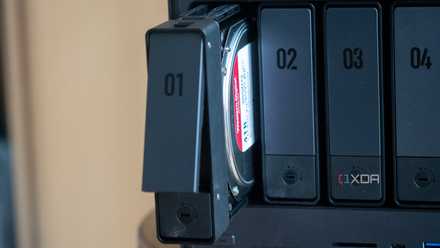
4 next-generation file systems that you can actually use today
ZFS, BtrFS, Bcachefs, EROFS, these are the names of some next-generation file systems that you can actually use today.
Learning the hard way
There is only so much you can learn about a NAS before you bring one home or build one for yourself. Once you have it set up, there is so much learning — both good and bad — as you go along optimizing your system for your needs. And you can’t quicken those learnings, you have to experience it for yourself, like I did with Btrfs and ZFS, before you can decide on what you want. But sometimes, you can learn some lessons from other’s mistakes so that your own NAS experience gets better from day one.