
A lot has changed in my computing habits in the past five years. Back at the start of 2021, I was happily using Windows 10 on my device and getting my work done on Word. Fast-forward to today, and I'm now wholly in the FOSS ecosystem, running Fedora on my PC and using open-source productivity apps.
I've come to trust open-source software a lot more over the years, which is a little strange to say, as open-source has always been, you know, open about things. However, my change in trust is less about how open-source apps have acted, and more based on how closed-source software has put me through the wringer this past half-decade.
The current direction of proprietary apps really soured me
I don't want AI assistants in my apps
There was a time when I felt proprietary apps had a "badge of quality" to them that FOSS software did not. The paid apps owned by businesses would be stable, feature-rich, and reliable, while open-source alternatives would be a shadow of what the big cats achieve.
However, between five years ago and now, the businesses have shifted their tone. It feels like companies are less involved with making quality apps with killer features, and more about trying to shove AI into as many niches as possible. Microsoft showed the world what it looked like when a business wanted to paste its assistant into every product it owned, and while browsers have been making progress toward becoming agentic, Mozilla has been getting support for not going all in on the tech.
I really don't want to use AI for everything, but software companies are trying to entice us to allow these AI assistants to do everything. And the more these proprietary apps move towards an AI-centric model, the less confident I feel using said apps. I prefer my features with a human touch instead of allowing an LLM try to handle everything.

5 reasons Inkscape is the best-open source Illustrator alternative for vector graphics
Moving from Illustrator for vector design? Head straight to Inkscape
Open-source apps have gotten a lot more reliable
Arguably, more stable than some proprietary options
Years ago, when I first dabbled in open-source, I couldn't get over how awful they felt. Apps like Microsoft Word would run without issue, but when I'd try, say, OpenOffice or LibreOffice fifteen years ago, they felt clunky, unstable, and hard to work in.
These days, open-source apps feel as reliable as proprietary ones; at least, the ones I use are. In fact, sometimes I notice that the FOSS apps work faster than closed-source software and respect my PC's hardware specs a lot more. Just swapping out Windows for Fedora made my PC feel snappier than ever before, and arguably more stable.

I found an open-source tool that pinpointed my biggest productivity blindspots
I was wasting more time than I thought.
Open-source apps let me work and play the way I want to
No more being forced into a box
One of my biggest realisations about how far open-source apps have come over the past few years was when I moved to Fedora KDE. I really liked using Windows' Your Phone feature to mirror notifications from my mobile to my PC, and I wanted the same thing in Linux. Fortunately, KDE Plasma comes with its own app pre-installed called KDE Connect, so I gave it a go.
Eventually, I'd come to learn that KDE Connect made Your Phone look embarrassing, given the features it had. However, I also learned that while Your Phone obviously doesn't work on any OS other than Windows, KDE Connect works on pretty much any OS you want, including Windows. Even if I went back to using Microsoft's OS (and the chances of that are very low), I'd use KDE Connect because it gives me the freedom to use any OS I like.
I also have a lot of fun customizing my Linux operating systems the way I want to. Unlike proprietary OSes, Linux lets you pick the different layers of your OS. First, you pick your core, then you pick your desktop environment, and then you fill out the rest with apps. Changing the desktop environment can radically change how everything looks and feels; Fedora on GNOME will feel like a totally different beast than Fedora KDE, for instance.
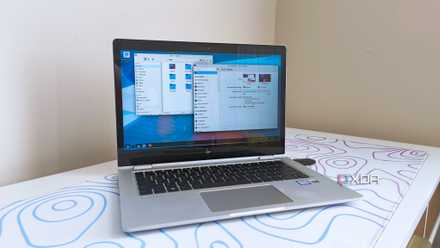
Here's why I recommend Linux's KDE Plasma for Windows escapees
Bring a little Windows with you.
I no longer worry about operating system drama (much)
Windows 11 burned a bridge for me
Finally, let's take a look at how operating systems have changed over the past five years, and why this was the biggest reason why I trust open-source software more now. For me, Microsoft's handling of Windows 10 to 11 was the straw that broke the camel's back. Microsoft had barred my older PC from upgrading to Windows 11 because its CPU didn't meet the TPM 2.0 requirement. Could I have replaced my CPU? Sure. Could I have just purchased a whole new PC? Possible. But I didn't want to; my hardware was working just fine, and I wanted to use it.
Once I had jumped ship to Linux, I no longer had fears or worries about the direction my OS was taking. In fact, I wrote an entire piece on how it felt as a Linux user, watching Windows 11 slowly fill to the gills with AI tools and broken updates. In comparison, using Fedora felt like using a strong, stalwart OS, and if it ever goes down the drain (which I doubt it will, but touching wood anyway), I always have a ton of other distros I can hop to. I've been eyeing openSUSE lately, you know.
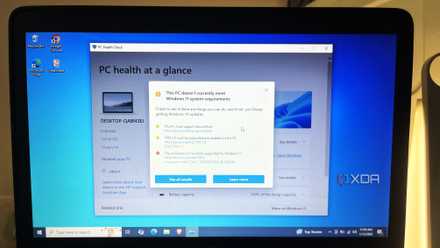
Microsoft says I can’t use my old CPU/laptop with Windows 11, but it’s actually fine
All those warnings turned out to be exaggerated
I can't imagine going back to proprietary software
While I was knee-deep in closed-source software five years ago, I've totally turned around since then. Now I'm starting 2026 with open-source software, and I'm pleased to say it's a lot better than I thought it was.