
Nintendo has been pretty much the sole contender in handheld gaming for a few years, but that seemed to start to change when Valve introduced the Steam Deck in 2022. With more power, better controls, and a surprisingly competitive price, there were very valid reasons for someone to go with a Steam Deck over a Switch, and even a Switch 2.
But recently, Valve discontinued the Steam Deck LCD, the base model that competed most closely with the Switch 2, and now, I'd say the choice is pretty easy. It was already a fantastic device, but now, the Steam Deck is more expensive, and things have changed.
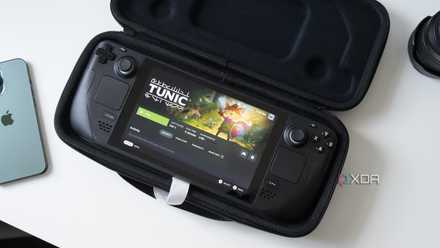
The Steam Deck needs more than generous pricing to beat what it's against
How well will the Steam Deck hold up in 2026?
The price (dis)advantage
Spending more is never too enticing
The gaming handheld market is littered with devices that cost way too much for most people to justify. Before the Steam Deck came along, many smaller companies were selling gaming handhelds for exorbitant prices, and that really hasn't changed too much. The likes of Lenovo, MSI, and others have made some great handhelds, but they're too expensive to really get the attention of all but the biggest PC gaming enthusiasts. The Steam Deck really changed game and stood alone as a proper competitor to Nintendo.
The Steam Deck was $100 more expensive than the Switch ($50 if compared to the OLED model), but it offered a lot more performance, a chassis that many consider more comfortable to hold, and more advanced controls, plus a huge library of PC games, many of which aren't on Nintendo's platform. This became an even better deal when Valve replaced the base 64GB model with a 256GB version while keeping the same $400 price tag.
When Nintendo introduced the Switch 2, the script kind of flipped, which was, in a way, still an advantage for Valve. It now had a weaker handheld with a less impressive display, but it had the price advantage considering the Switch 2 came in at $450.
But now that the Steam Deck LCD has been discontinued and prices for the OLED models haven't changed, Valve's handheld starts at $549 brand-new, which once again puts it at $100 more than Nintendo's offering. And this time, while it has a nicer OLED display and more storage, it doesn't win across the board like it did against the original Switch. That makes this handheld a harder sell than it's ever been, and puts it closer to other PC gaming handhelds like the Lenovo Legion Go S.
6 reasons why the Switch 2 will dominate the next console generation
The Nintendo Switch was one of the best-selling consoles of all-time, and I think the Switch 2 will dominate in similar fashion.
Nintendo has some killer hardware
The Steam Deck can't match all those features
Considering the price delta, the Steam Deck would need to win across the board in terms of performance and features, but that is simply not the case anymore. With the latest Nvidia chip inside the Switch 2, it supports features like ray tracing and, perhaps more importantly, DLSS, an upscaling technology that's typically much better than what you can get from the Steam Deck's AMD chipset. Not to mention it's just a more capable chip overall, so, simply put, games that are on PC and Switch 2 just look better on Nintendo's console, and you can see that in titles like Cyberpunk 2077, or Star Wars Outlaws.
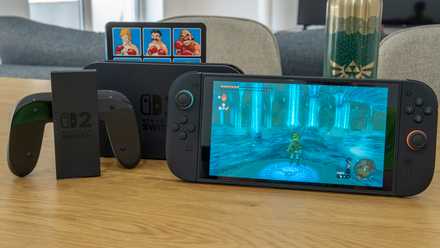
Nintendo also packs a bigger screen with a higher resolution and refresh rate into a smaller chassis, and it wins in terms of flexibility, too. The Steam Deck's price doesn't include a dock or anything you might need to connect it to a bigger screen, nor does it include a wireless controller. Those are all things Nintendo includes in the box, so you can play on your TV with the detached Joy-Con 2 controllers, or snap them onto the console to play in handheld mode.
And while the Steam Deck has touchpads for games where mouse movements are necessary, the Switch 2's Joy-Con have proper mouse sensors built right in. In any supported game, you can use a Joy-Con 2 as a mouse for aiming with extra precision, or for other kinds of experiences like playing management simulators such as Civilization VII.
With the original Switch, you could have argued there were issues with build quality or the simple size of the controllers, but those things have been greatly improved with the Switch 2, so while the Steam Deck still comes out ahead in some areas, the Switch 2 is much better equipped to compete.
Review: The Switch 2 is the best gaming handheld you can buy, and the ultimate form of Nintendo's vision
The Switch of your dreams
Games are cheaper on PC
But does it make a difference?
Of course, the topic that inevitably comes up when talking about pricing is the cost of the games themselves and how that changes things in the long run. Of course, gaming on PC tends to be cheaper thanks to frequent sales and discounts, but the big argument that gets brought up most of the time is how Nintendo's games are $70 and never get discounted, but that's a fairly small part of the story.
Nintendo isn't the only company selling games on its platform, and when you look at third-party releases, those games can get very cheap on Nintendo's eShop, too. Especially when it comes to indie games, there are a ton of affordable titles there, and many get big discounts on occasion, just as they do on Steam. The sales may be less frequent, but if you're waiting around for a sale, how long you'll have to wait probably isn't a huge consideration.
Nintendo's own titles may not get discounted as often, if ever, but you also can't get them anywhere else, so it's not like you're going to find better deals elsewhere. At the very least, with a platform that supports physical games like the Switch 2, you might be able to get lower prices by buying the game used from a store or online marketplace.
Plus — and this is more anecdotal than anything — but for all the talk I hear about getting tons of games for free or very cheap on Steam, I don't often hear people talk about playing those games nearly as much. If you're buying games in bulk to take advantage of the Steam Winter Sale or something along those lines, I'm sure you have a backlog of games you've never played and likely aren't going to play anytime soon. At that point, is it really saving money?

If I needed a gaming laptop on a budget, I'd just get a Steam Deck
Gaming laptops have a new competitor in town, and it's here to stay
The Steam Deck is due for an upgrade
But how much will it cost?
At this point, the Steam Deck is getting to a point where an upgrade probably feels justified, but if the cost of the original hardware isn't coming down, one has to wonder what the price of a new model would be, or if it would even make sense to release at this point. With the ongoing "RAMpocalypse", prices for all kinds of computing devices are likely to shoot up, and that's probably why prices didn't come down for the Steam Deck OLED, and I'd wager it's also why we haven't heard much about a successor.
To be fair, though, it also remains to be seen how all this impacts the price of the Switch 2 itself. Nintendo is undoubtedly feeling the pressure of increased memory costs with its handheld packing 12GB of RAM, and reports have claimed the company is spending as much as 41% more on memory for the console. It wouldn't be shocking to see prices go up for Nintendo's handheld, which would balance the playing field yet again.
As it stands, though, the Switch 2 is easily the more affordable and versatile option for someone wanting to get into handheld gaming.
I just don't care about the Steam Deck 2 anymore
The Steam Deck's sequel won't revolutionize the industry in the same way the original did.
It was hardly ever a competition
To be clear, it's not like the Steam Deck ever really came close to being a huge threat to Nintendo's handheld market. Between 2022 and early 2025, PC gaming handhelds as a whole sold close to 6 million units, with nearly 4 million being attributed to the Steam Deck. The Switch 2 had already sold 3.5 million units after just four days on the market (including pre-orders), and is now sitting at over 10.36 million after just four months. Of course, the Steam Deck also has no physical retail presence, so Valve clearly isn't going for the same broad appeal.
Until now, though, Nintendo and Valve traded blows much more evenly, to the point where a slight preference towards PC hardware, or even mere curiosity, would be enough to sway someone in the direction of the Steam Deck. With the current picture, the Switch 2 has much stronger arguments in its favor.