
Another year has almost passed us by, and it's time to round up the worst PC hardware launches, trends, and realities that we witnessed in the last 12 months. The year was relatively thin in terms of new products since neither Intel nor AMD released any new desktop CPU lineups. Still, we had enough drama and mayhem to last us well into the next year (and maybe even beyond that). From motherboards killing CPUs and GPUs missing crucial internals to disappointing products and worrying trends, the year had it all. While we wait for the next year to bring new products (and problems), let's nurse old wounds as we look back at the year that was.

ASRock motherboards kill Ryzen CPUs and sockets
When we had just recovered from the Raptor Lake scandal
For a few months there, it seemed that ASRock motherboards and Ryzen 7 9800X3D CPUs were a forbidden combo. Over a hundred reports came in about failed POST, burned AM5 sockets, and dead Ryzen 7 9800X3D CPUs when used with ASRock motherboards. The issue was also seen on other boards, but the ASRock issue was the most prominent one. After the company released a BIOS update claiming to fix a "memory compatibility" issue, many users were able to POST, but many others still couldn't. AMD also mirrored ASRock's statement when it pointed to memory incompatibility being one possible reason behind the problem.
However, as multiple users reported burned sockets and dead CPUs, it was clear that memory incompatibility wasn't the whole picture. There was some deeper issue with the ASRock BIOS that was pushing the hardware beyond its limits. While AMD promised replacements and repairs to users who couldn't resolve the issue with a BIOS update, the whole story left a bad taste in people's mouths. The issue seemed to have disappeared by mid-2025, but I hope that dangerous bugs like this and the one destroying Intel's 13th and 14th Gen CPUs don't make an appearance in 2026.
Unfinished PC hardware is here to stay, just like broken PC games
Manufacturers aren't done launching broken PC components
Nvidia's RTX 50 series ships with missing hardware
You can't even make this up
Nvidia has been in the news for melting power connectors, lofty claims regarding AI, and skimping on VRAM. However, in February 2025, the company confirmed reports that some RTX 5090, RTX 5090D, RTX 5080, and RTX 5070 Ti units were missing Raster Operations Pipeline (ROP) units. Nvidia said around 0.5% of the cards in the wild were affected, but how this happened was unclear. The company either messed up its QA processes big time or knowingly shipped defective units — I'm not sure which is worse. ROP units are responsible for writing pixel values to the framebuffer, and can affect tasks like antialiasing and blending.
Depending on how ROP-intensive a game or application is, the missing ROP units can have a significant impact on performance. Nvidia claimed a maximum of 4% performance difference due to the missing ROP units, but it can also be higher. The company released a statement asking consumers to contact the board partner for replacements, but that doesn't answer the question of how this happened in the first place. Nvidia should have received a lot more backlash for this, and maybe even a few class-action lawsuits. You'd be surprised to know that this is not the first time Nvidia has done something like this. Back when the GTX 970 launched, it only had 56 ROPs instead of the advertised 64. Plus, only 3.5GB of its 4GB VRAM was running at the advertised speed, with the rest of it running slower.

Why doesn’t Nvidia stick to 8-pin PCIe cables?
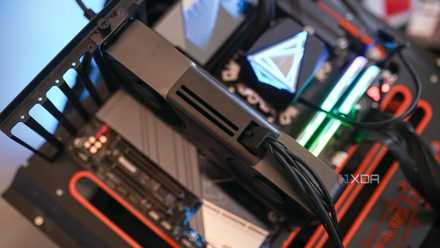
Nvidia's 12VHPWR woes still exist, making everyone think why not use 8-pin cables like before?
RTX 5070 disappoints with poor performance and VRAM
RTX 4090 levels of performance? Yeah, right
The GPU from the RTX 50 lineup that most people were actually thinking of buying was the RTX 5070, thanks to its $549 MSRP. The RTX 5090 was a unicorn, and the RTX 5080 was still over a grand. The $749 RTX 5070 Ti, on the other hand, had already disappointed with unimpressive gains over the RTX 4070 Ti Super. When the RTX 5070 landed in the hands of third-party reviewers, the claims of RTX 4090 performance levels went up in smoke. It was clear that without the help of frame generation, the RTX 5070 was barely faster than the RTX 3090, and around 40% slower than the RTX 4090 in raw performance.
Nvidia's AI-focused marketing didn't last long, and the RTX 5070 received middling reviews. The theme of poor generational gains was consistent across the RTX 50 lineup, and the RTX 5070 was only around 5% faster than the RTX 4070 Super. Another concern was the 12GB framebuffer. For a GPU that didn't sell anywhere close to its MSRP for months, 12GB of VRAM seemed like daylight robbery. Even at its $549 MSRP, it should have had at least 16GB of VRAM. However, Nvidia reserved that privilege for its high-end RTX 5080.

Nvidia's RTX 50 series is disappointing, and we are the ones to blame
We might be mad at Nvidia for the RTX 50 series, but we're the real culprits here.
8GB VRAM curse continues to haunt Nvidia and AMD GPUs
And 2026 will deal yet another blow
It seems we've been repeating the same thing for years now: 8GB of VRAM is not enough. Ever since the RTX 3070 shipped with an 8GB framebuffer, reviewers had started warning consumers that it wouldn't age well. In 2025, however, Nvidia and AMD continue to launch GPUs with 8GB of VRAM. Models like the RTX 5060 Ti, RTX 5060, and RX 9060 XT sport an 8GB framebuffer in the name of "budget" GPUs. However, even at 1080p, these GPUs are simply outdated in many modern games. Texture pop-in, crashes, and failed launches are the things you should be prepared for when you run out of VRAM on such graphics cards.
Many consumers buying these "budget" GPUs have older systems with only PCIe 3.0 support. Running out of VRAM on such setups can easily tank performance to abysmally low levels, completely defeating the argument that 8GB of VRAM is meant for budget gaming. The ongoing DRAM supply crisis that has gripped consumer RAM and storage will undoubtedly affect GPUs, too. Nvidia has reportedly stopped supplying VRAM to AIB partners, and is unlikely to consider increasing the amount of VRAM on consumer GPUs. PC builders should stop hoping for larger framebuffers, at least from the likes of Nvidia and AMD.

Your GPU's PCIe generation doesn't matter — except when it does
PCIe 3.0 doesn't affect your GPU performance, unless you run out of VRAM
The "RAMpocalypse" gives PC builders the worst holiday present
It's not exactly bad hardware, but it deserves a spot
I touched upon the memory crisis in the previous section, but it deserves its own spot on the list. Enterprise AI demand has yet again consumed available supply, this time reducing consumer memory supply. As manufacturers divert production to more profitable enterprise memory, consumer RAM prices are skyrocketing, tripling almost overnight. A 32GB kit of DDR5-6000 memory that used to cost $80–$100 is now selling for $350–$450. It has completely derailed people's PC upgrade plans, and it doesn't look like this is a temporary price hike. Reports indicate that the DRAM supply squeeze is set to last well into 2028. Storage prices are also increasing across the board, and GPU memory is also set to be affected.
Most people will have to delay their PC upgrades indefinitely or hunt for elusive deals on the used market to get affordable memory and storage. A dark cloud is about to descend on PC building, destined to be the worst PC hardware memory of the year 2025.

6 PC hardware trends that deserve way more criticism
The PC community has been way too lenient
PC builders can't seem to catch a break
In recent memory, I don't remember a time when the PC hardware market was not dealing with one crisis or the other. First, it was the 2020 pandemic and crypto boom that made PC building virtually impossible until mid-2022. Then, the RTX 40 and RX 7000 series GPUs were plagued with insufficient supply and sky-high prices. The RTX 50 and RX 90 series weren't much different in 2025, thanks to paper launches and scalping. Even the Ryzen 7 9800X3D was unavailable for months after launch.
And now, the memory crisis is poised to delay all upgrade plans till 2028. If nothing else, this would urge gamers to complete their backlog of old games instead of chasing new CPUs and GPUs to play the latest titles.