Summary
- QuietDash: Raspberry Pi eInk desk dashboard that refreshes infrequently to avoid distractions
- Shows workday progress, tasks, weather, calendar, time, and a news/RSS line at a glance
- eInk reduces power use and screen glow, letting the dashboard blend into your workspace
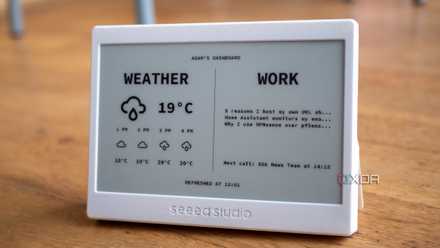
Sometimes it feels like the very tools meant to boost your productivity end up detracting from it. With all the notifications, messages, and pings coming in, I often find myself checking incoming alerts more than I do actually getting anything done. If you want your productivity helpers to actually leave you alone for once, you can do a lot worse than to build the QuietDash, a Raspberry Pi-powered eInk display that doesn't pester you.
The QuietDash won't invade your workspace with notifications
It also looks great
The creator of QuietDash, fberrez, wrote a full write-up of their invention on GitHub. The idea behind QuietDash is that it keeps tabs on all the information you'd expect from a DIY dashboard, with one caveat: it refreshes a handful of times an hour. This is not something you'll have your eyes glued to all day. It's designed to give you everything you need to know at a glance so you can get back to work right away.
Here are all the features the QuietDash supports:
- A workday progress ring so you can see how much of the day is left at a glance
- Today's tasks
- Weather
- Calendar
- Time and date
- A news/RSS line
Interestingly, fberrez has some good reasoning behind why they picked an eInk display for the job. I thought it was because it has a low power profile and is designed specifically for low refresh rates, but fberrez makes the excellent point that a backlit screen is a distraction in itself. By using eInk, the QuietDash can blend into the background a lot easier than if fberrez used an LCD screen instead.
Save on DIY maker deals for eInk, Pi & accessories
While you can build your own via the GitHub page, you can express your interest in a prebuilt version over on the QuietDash website.