AI is already everywhere at work. It's the invisible hand behind your inbox drafts, the reason your reports build themselves faster, and maybe even why your boss thinks they're suddenly a "data person."
The real question isn't if you'll use AI at work—it's how you'll make it work for you. Because while AI can crank through tasks, it can't replace your judgment, experience, or uncanny ability to find the perfect gifs to make number-heavy slides less of a snooze. That's where you come in.
So let's talk about five ways you can work with AI—skills and mindsets that'll help you adapt without losing what makes you excel at your job in the first place.
5 ways to adapt to AI at work
Adapting to AI doesn't mean overhauling everything you do. Instead, it's about making small shifts that . Here are five strategies to help you do just that.
1. Shift from doing to deciding and describing
AI makes execution faster, but that raises the bar on your role as the . Instead of manually cranking through tasks, practice giving precise, outcome-focused instructions. For example, if you need a report, describe what metrics matter, how it should be formatted, and the audience it's for—then .
This skill—sometimes described as —turns you into the strategist while AI handles the mechanics.
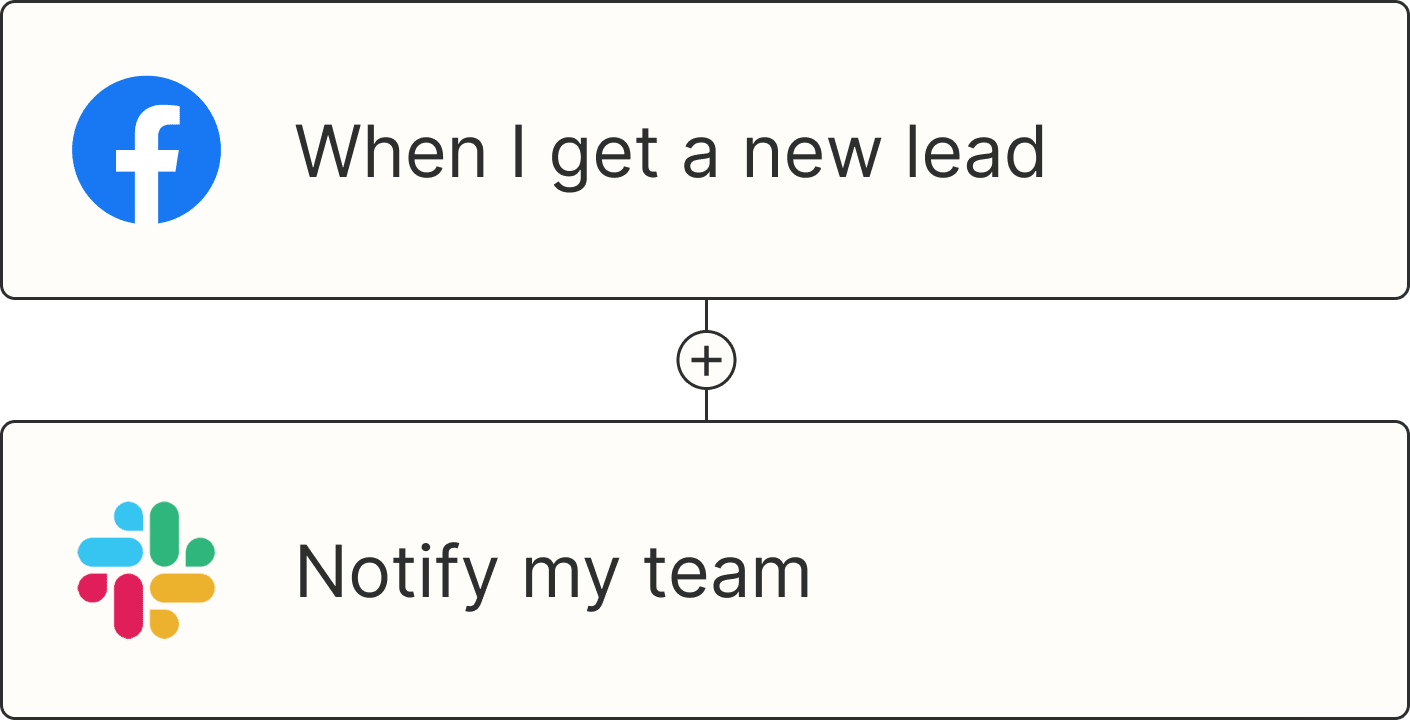
This shift away from doing is even easier when you . With , you can build AI-powered, end-to-end workflows that don't just generate outputs, but also organize and distribute them across your tech stack. For example, Zapier can automatically send new leads to your CRM, use AI to score them based on your set criteria, assign them to the right rep, and create a draft of an email for the rep to approve. You describe and decide, but AI does most of the work.
You're not just delegating a single task to AI—you're orchestrating an entire process that keeps work moving without extra effort. , or get started with one of these pre-made templates.
Identify whether support tickets contain buying signals so you can easily route new leads to sales.
Route new emails, form submissions, and social messages from multiple channels to the right teams with intelligent categorization and routing.
2. Build your "plotter" muscle
Writers often fall into one of two camps: Pantsers are the fly-by-the-seat-of-their-pants type, while plotters like to plan ahead. AI rewards the latter. The clearer your upfront structure, the better your results. For example, instead of "draft an email," try "draft a three-paragraph email for enterprise customers announcing a product update, with a CTA to schedule a demo."
This goes far beyond writing, too. For example, when you orchestrate a workflow on Zapier, you don't need to . Tell Copilot—Zapier's AI-powered assistant—what you're hoping to build using everyday language, and it'll build the workflow for you. Learn more about .
3. Experiment with AI workflow styles
There's no one "right" way to collaborate with AI, but there are :
Centaur style: This is where you divide tasks between yourself and AI with you handling strategy and AI handling the grunt work.
Cyborg style: This is where you work iteratively, going back and forth with AI in a conversational loop.
Try both, and notice which feels more natural for different types of projects. For data-heavy tasks, you might lean centaur. For creative work like drafting copy, cyborg may be better.
Zapier makes it possible to operationalize either style at scale. You can set up workflows where AI automatically handles discrete steps (centaur), or build AI agents that check in with you until the task is completed to your liking (cyborg).
4. Review AI outputs with a critical eye
It's tempting to trust AI outputs at face value, but skipping careful review is risky. Even as AI tools get better at avoiding errors, your expertise is still essential. For many people, that's a shift, especially if you've spent years building deep subject matter knowledge. The real value going forward won't be human or AI expertise alone, but the .
The challenge is that reviewing requires a different kind of focus than creating. When you build something from scratch, you naturally engage more deeply with the material. Reviewing, on the other hand, can feel surface-level, which makes it easier to miss subtle mistakes.
The key is to treat reviewing as an active process, not a passive one. This includes:
Looking for whether something makes sense, not just whether it looks correct.
Cross-checking numbers or references against source data for accuracy.
Editing for originality so your work maintains a distinct voice.
Updating AI workflows to help them improve over time.
5. Stay flexible as AI evolves
If AI feels like it's changing by the hour, that's because it is. Blink, and there's a new tool, model, or "revolutionary" feature to tinker with. It's exhausting—like trying to keep up with every season of The Bachelor. (You don't need to. No one does.)
But if there's one strategy that's kept me from falling into a black hole of AI dread, it's this: stay flexible. Instead of fighting AI, roll with the changes. Stay curious. Keep experimenting. Think of it less like bracing for impact and more like surfing a wave—chaotic, sure, but also kind of thrilling once you catch it. (At least, that's what I'm told. I've never managed to unglue my body from a surfboard.)
At Zapier, we bake this mindset into our culture: , holding enablement sessions, and even tying AI exploration to quarterly goals. That way, is the norm, not the exception.
Related reading:
This article was originally published in July 2024 by Briana Brownell. The most recent update was in September 2025.