OpenAI shipped GPT-5.6 on June 26, 2026, and then did something it has never done before: it handed the launch to the US government first. You cannot open ChatGPT and try Sol, Terra, or Luna today. The models are live only through the OpenAI API and Codex, and only for roughly 20 partners whose names were individually approved by the federal government. Everyone else is watching from the outside.
That last part is the story for builders. A frontier model now reaches the public only after a government sign-off, and the rollout starts with a hand-picked list instead of a global on switch. If you ship on OpenAI’s APIs, this changes the timeline between “a model exists” and “you can call it,” and it adds a variable you do not control to your roadmap. This piece is the developer read: what the gate means for your planning, your model choices, and your stack. For the full news timeline of who asked, when, and the reporting behind it, plus the Fable 5 and Mythos 5 precedent that set the template, see the breakdown of what’s happening to GPT-5.6 and the government gate.
TL;DR
- GPT-5.6 (Sol, Terra, Luna) launched June 26, 2026 as a limited preview through the OpenAI API and Codex only. It is not in ChatGPT during the preview.
- Access is restricted to about 20 partners individually approved by the US government, under the administration’s new assessment process for frontier AI models (the timeline and sourcing are in the linked news breakdown).
- OpenAI calls it a short-term step toward broader availability, which it says is coming “in the coming weeks” across ChatGPT, Codex, and the API.
- The safety rationale centers on cyber and bio: Sol is tuned to find software vulnerabilities and write fixes while resisting attempts to build full exploit chains.
- For developers, the takeaway is a precedent. Frontier models may now ship after government pre-clearance, which adds a new variable to your release planning.
What “gated” actually means here
Start with the access reality, because the headlines blur it. GPT-5.6 is real, it is running, and OpenAI is serving it in production. The catch is who gets to send requests. During the preview, that list is about 20 partners, and each one was approved by name through the government, not by signing up on a pricing page.
There is no ChatGPT toggle. There is no waitlist form that drops a key in your inbox. The OpenAI API and Codex are the only two surfaces, and they are open only to the approved set. The exact API model identifiers have not been published yet, so even the names you would put in a request body are unknown to the public. OpenAI says general availability across ChatGPT, Codex, and the API is coming “in the coming weeks,” but “weeks” is the only timeline on record.
If you want the full identity rundown of the three-model family, the tiers, and the new reasoning controls, the companion explainer on what GPT-5.6 Sol is and why you can’t use it yet covers it. This article stays on the gate itself.
Why the gate exists, in brief
The reason for the restriction is policy, not a capacity shortage. A new frontier model now passes through a government assessment step before it goes wide, and GPT-5.6 is the first OpenAI model to ship that way: a vetted preview instead of a public launch. The exact mechanism, who asked, and the reporting timeline are the subject of the companion news piece linked above; this section stays on what it does to your release math.
OpenAI framed its participation as a deliberate, temporary choice. The company said, per MacRumors coverage, “We are taking this short-term step because we believe it is the strongest path to broader availability in the coming weeks.” Read that carefully. OpenAI is presenting the gate as the fastest route to a full release, not an obstacle to it. The bet is that clearing the assessment now buys a cleaner, broader rollout later.
This is the part developers should sit with. A capability assessment that happens before launch, run with government involvement, is a different release model than the one the API ecosystem grew up on. For years the pattern was: OpenAI announces, the API opens, you start building the same day. GPT-5.6 breaks that rhythm on purpose.
Why cyber and bio are the heart of the gate
The safety story and the gate story are the same story. GPT-5.6 is built to be strong at coding, at science and biology, and at cybersecurity, and those last two are exactly the domains a government assessment would care about most.
On the cyber side, the framing matters and it is easy to get wrong. Sol is tuned to find software vulnerabilities and write fixes, while resisting efforts to craft full exploit chains. That is a defensive posture. The goal is a model that helps you patch your own code, not one that hands an attacker a working break-in. OpenAI describes the result as its “most robust safety stack to date,” and per Android Authority’s rundown of the three models it points to internal evaluations like ExploitBench and ExploitGym for the cyber work, and GeneBench v1 for the biology work.
Verify live as of June 2026. GPT-5.6 is in limited preview and OpenAI has not published every detail. The benchmark names and the comparative numbers below come from OpenAI and early secondary coverage, not from a page we independently fetched and measured.
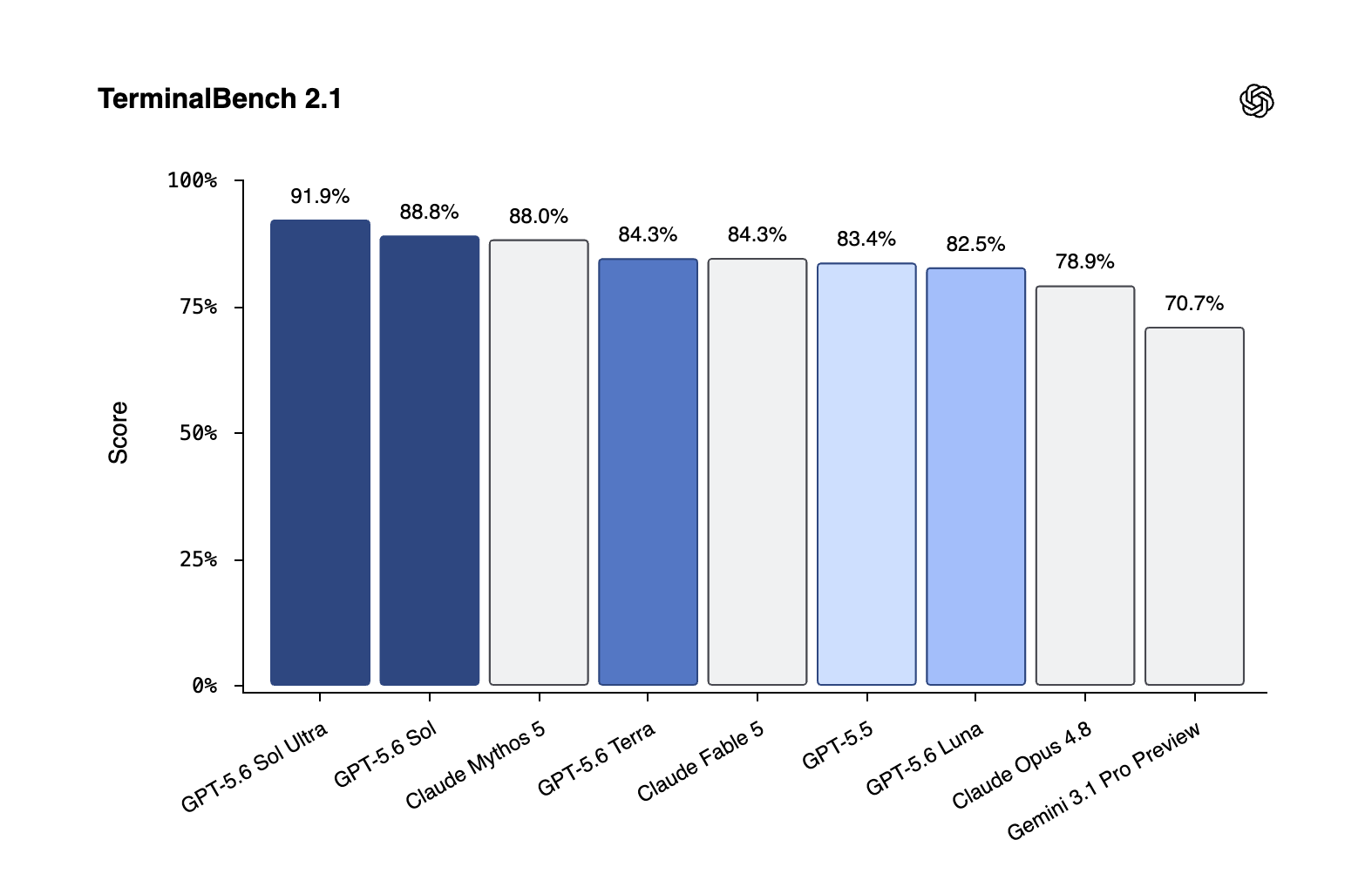
Per early coverage, Sol’s cyber results are competitive with Anthropic’s Mythos Preview while using roughly one third of the output tokens, and its GeneBench v1 results improve over GPT-5.5 using fewer tokens. Treat those as reported figures, not settled fact. The point for the gate is the shape, not the decimals: a model that is genuinely good at finding vulnerabilities and reasoning about biology is exactly the kind of system a pre-launch assessment exists to vet. The capability is why the lock is there.
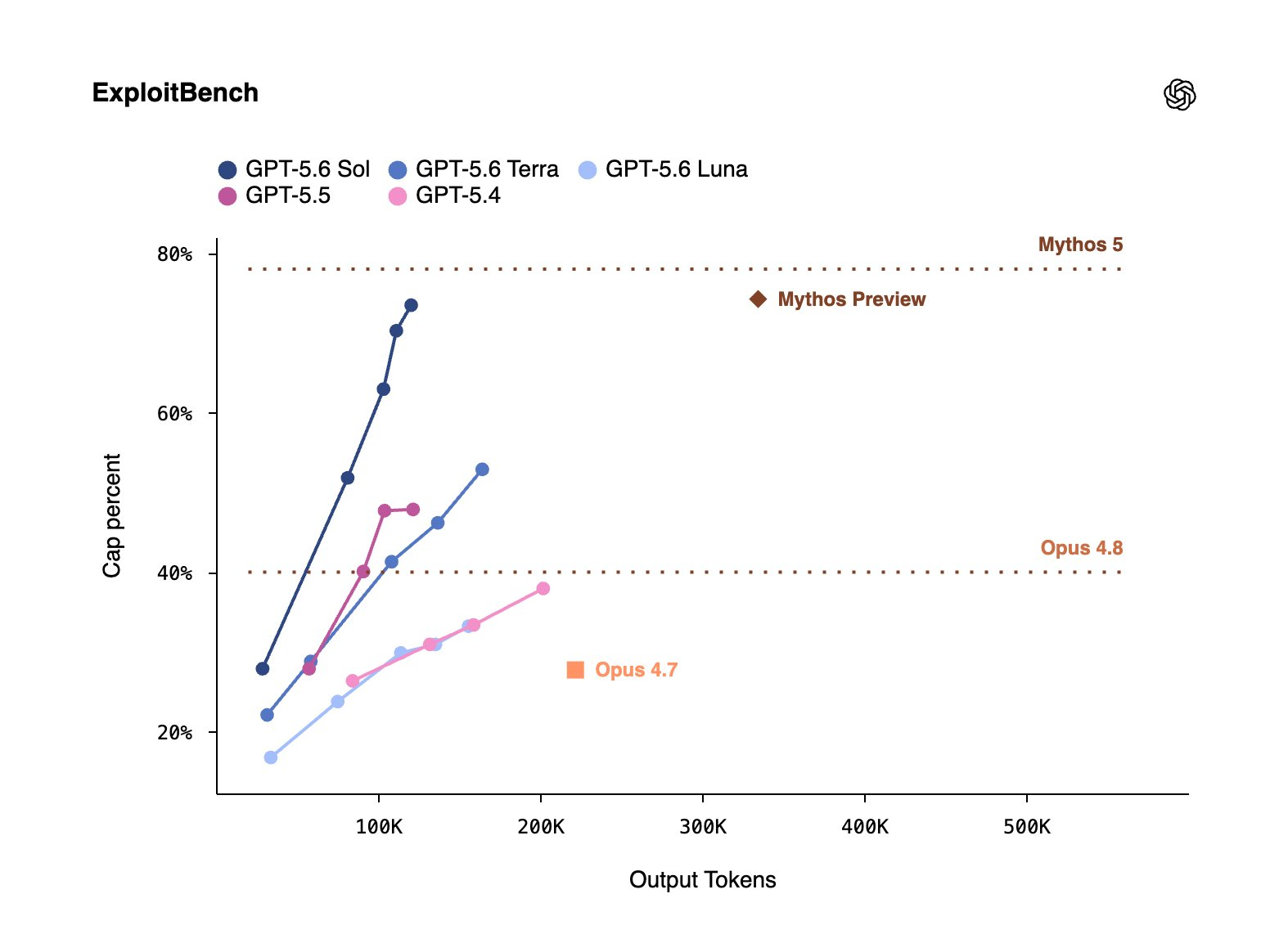
The dual-use tension is not new to AI. We covered a version of it when Anthropic held back a model it framed as too risky to ship openly, in the breakdown of Claude Mythos and its release calculus. GPT-5.6 is the same tension handled with a government in the loop instead of a single lab’s judgment call.
What the precedent means if you build on these APIs
Here is the developer-facing read, separate from the news.
First, “announced” no longer means “available.” With GPT-5.6, the gap between the announcement and a key you can use is measured in weeks and gated by a process you do not control. If your roadmap assumes that the newest OpenAI model is callable the day it trends, that assumption now has an asterisk. Plan for a lag between launch and access on frontier releases.
Second, early access may become a relationship, not a checkout. About 20 named partners got in first. If pre-cleared, partner-only previews become a pattern, then the developers closest to OpenAI’s programs will get a head start on the strongest models, and everyone else waits for general availability. That is a competitive variable worth tracking, not panicking over.
Third, the capability tier you can reach may shift over time. The naming change OpenAI introduced here matters: the number is the generation, and Sol, Terra, and Luna are durable capability tiers that advance on their own cadence. A gated launch plus tiered names means the question is not only “is the new model out” but “which tier am I cleared to use, and when.” For context on how this lines up against the last generation, the GPT-5.5 explainer is the baseline most teams are still running on.
None of this is a reason to stall. It is a reason to design your stack so a model swap is a config change, not a rebuild. Keep your provider integration behind a clean interface, keep your prompts portable, and you can adopt Sol on day one of your access without rewiring anything. The full engineering playbook for surviving a model that gets gated or pulled, including provider-agnostic design, mocking, and failover, is in the companion resilience breakdown of the gate.
What you can actually do today
Since you cannot call GPT-5.6 yet, the practical move is to keep shipping on the frontier models that are open right now. Claude Mythos 5, Claude Fable 5, GPT-5.5, Gemini 3.5 and 3.1 Pro, GLM-5.2, and Fugu Ultra are all usable today, and most of them speak the same OpenAI-compatible request shape you will use for Sol later.
This is where your testing setup earns its keep. You can wire any of these OpenAI-compatible endpoints into Apidog, send real requests, assert on the responses, and save the scenarios. When your GPT-5.6 access lands, swapping the base URL and model identifier into the same saved requests is a small edit, not a new project. You stay productive on the models you can reach now, and you are ready to test Sol the moment the gate opens for you.
To be clear about what is and is not possible: you cannot test GPT-5.6 in any tool today, because no public endpoint exists. What you can do is build and validate the alternatives now, so your harness is proven before Sol arrives.
FAQ
Why is GPT-5.6 restricted instead of launching in ChatGPT like past models? The US administration limited the launch under its new assessment process for frontier AI models, so OpenAI shipped a preview through the API and Codex for about 20 government-approved partners and called it a short-term step toward broader availability. ChatGPT access is part of the planned general-availability rollout “in the coming weeks,” not the preview.
Can I sign up for the GPT-5.6 limited preview? Not through a public form. The roughly 20 preview partners were individually approved by the government, so there is no open waitlist that grants access today. If you need a frontier model right now, the realistic path is to use one of the open alternatives covered in the GPT-5.5 overview and watch for the general-availability announcement.
Is GPT-5.6 a hacking model? No. Sol is tuned to find software vulnerabilities and write fixes while resisting attempts to build full exploit chains. The cyber work is defensive, aimed at helping you patch your own code, and OpenAI describes the surrounding safeguards as its most robust safety stack to date.
When will GPT-5.6 be available in the API for everyone? OpenAI says general availability across ChatGPT, Codex, and the API is coming “in the coming weeks,” but it has not given a firm date. Treat that timeline as a signal, not a guarantee, and check OpenAI’s official channels before planning a launch around it.
What does the gate mean for my release planning? Build for a lag between a model’s announcement and your access to it, and keep your integration swappable. The full identity and capability picture is in the GPT-5.6 Sol explainer if you want the spec-level detail.
Conclusion
GPT-5.6 is the first time a frontier model from OpenAI shipped behind a government gate, and the precedent outlasts the launch. A government assessment step, about 20 pre-approved partners, an API-and-Codex-only preview, and a cyber-and-bio safety rationale add up to a new variable in how fast you can adopt the strongest models. The honest move for now is to understand the gate, keep building on the alternatives you can reach, and design your stack so the day your access opens, the switch is trivial.
Want your API tests ready before Sol arrives? Download Apidog to build and validate against the OpenAI-compatible models you can use today.