The Postman CLI is a fine way to run your Postman collections in a pipeline, but it ties your test runs to a Postman account and the Postman cloud, and that arrangement doesn’t fit every team. This guide walks through five solid alternatives for running API tests in CI, what each one is genuinely good at, and where the Apidog CLI fits as the recommended pick. For background on how the Postman CLI relates to its older sibling, see Postman’s own comparison of the Postman CLI and Newman.
Why teams look past the Postman CLI
The Postman CLI is the tool Postman now points you to for CI/CD. It runs collections, reports results, and shows those runs back inside the Postman app. That last part is the friction point for a lot of teams.
To use the Postman CLI, you log in with a Postman API key, and your runs report back to the Postman cloud. That’s convenient if your whole workflow already lives in Postman. It’s a problem if you’ve hit the cloud-tie, licensing, or lock-in walls:
- Cloud-tie. Runs are authenticated against a Postman account, and execution results surface in the Postman application. Air-gapped or compliance-sensitive shops often can’t accept that round trip.
- Licensing. Collections, environments, and team features sit behind Postman’s plan tiers. As your team grows, the per-seat math changes.
- Lock-in. Your source of truth is a Postman collection. Moving off it later means exporting and re-tooling.
None of that makes the Postman CLI bad. It just pushes a lot of teams to look for a runner that keeps tests in their own repo, runs offline, and doesn’t bill per seat to run a pipeline. Here are five worth knowing.
A quick comparison
| Tool | Test format | Account required to run | License | Best for |
|---|---|---|---|---|
| Apidog CLI | Apidog test scenarios / suites, or exported files | No (token-based for project sync) | Commercial, free tier | Teams who design, mock, test, and document in one place |
| Newman | Postman collection JSON | No | Open source (Apache-2.0) | Existing Postman users who want offline runs |
| Hoppscotch CLI | Hoppscotch collection JSON | No (JSON export path) | Open source | Hoppscotch users, self-hosters |
| inso (Insomnia CLI) | Insomnia test suites via Git sync | No | Open source | Insomnia + Git-native teams |
| Hurl | Plain-text .hurl files |
No | Open source | Engineers who want curl-style tests in version control |
1. Apidog CLI
The Apidog CLI is the headless runner for Apidog, an all-in-one API platform that covers design, debugging, testing, mocking, and documentation. You run test scenarios and test suites from the terminal with apidog run, the same command you drop into a CI/CD pipeline.
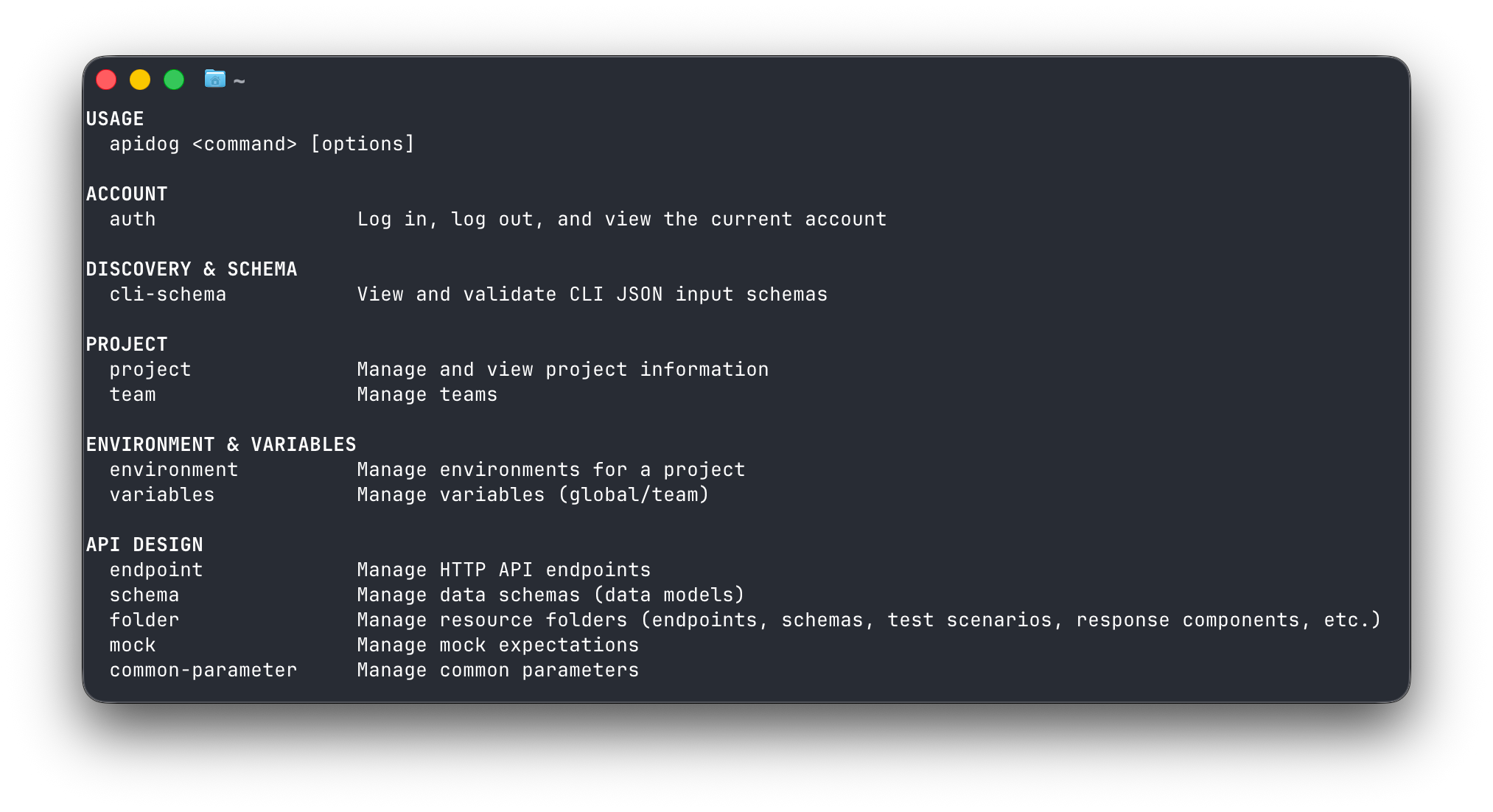
What makes it the recommended pick here isn’t the runner alone. It’s that the runner sits on top of a single source of truth. Your OpenAPI contract, your test scenarios, your mock server, and your docs all live in the same project, so a test in CI checks the same API you designed and documented. You don’t stitch four tools together.
Concrete strengths for CI:
apidog runis built for pipelines. Copy the generated command from the CI/CD panel and paste it into Jenkins, GitLab, or GitHub Actions. Walk through it end to end in the step-by-step CLI tutorial.- Data-driven testing. Feed a CSV or JSON file with the
-dflag and Apidog iterates your test once per row. That covers the parameterized cases most teams hand-roll elsewhere. - Reporters that fit any pipeline. The
-rflag emitscli,html,json, andjunitoutput, so your CI dashboard can read results natively and humans can open an HTML report. - Mocking that runs headless too. Apidog’s mock server generates responses from your schema and runs in CI, so front-end and integration tests don’t wait on a live backend. For the bigger picture, see the guide to API mocking.
- AI-agent aware. Apidog’s MCP server lets an AI agent or IDE (Cursor, Claude, VS Code) read your API specs and work against them. That’s covered in Apidog MCP server.
Apidog has a free tier and a desktop app from Apidog to follow along. If you specifically want the Postman-CLI-to-Apidog head-to-head rather than this listicle, read Apidog CLI vs Postman CLI.
2. Newman
Newman is Postman’s original open-source collection runner, and it’s still the most familiar option for teams already invested in Postman. It runs a Postman collection JSON from the command line, no Postman app required, and it’s been around long enough that almost any CI recipe you search for exists.
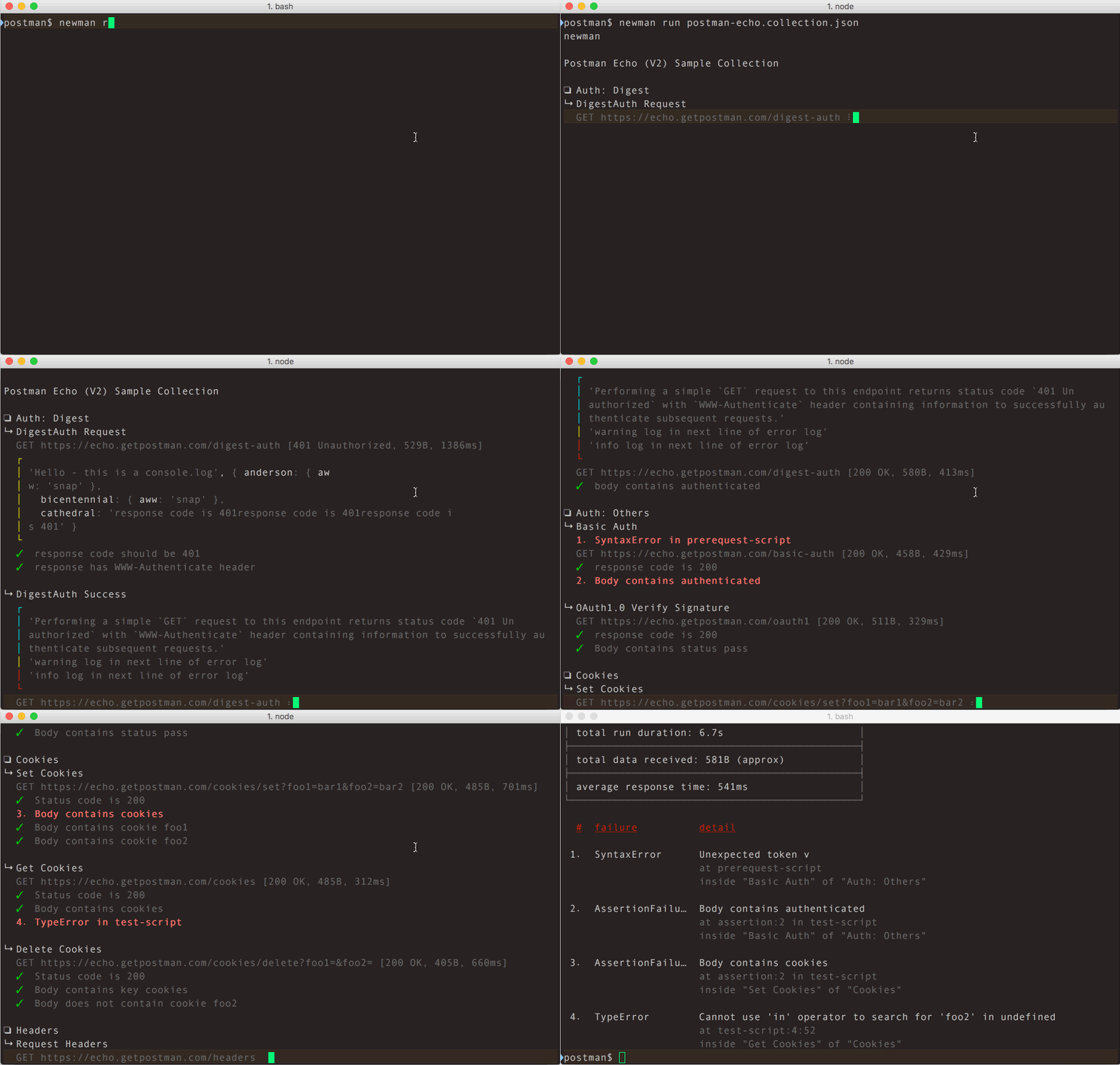
Newman’s real strengths:
- It’s fully open source under Apache-2.0, so you can run it offline and inspect what it does.
- It reads standard Postman collection exports, so migrating an existing collection is a one-step export.
- It has a deep ecosystem of reporters and a large community, which means answers are easy to find.
The tradeoff: Newman still centers on Postman collections as the artifact. If your goal is to get away from collection-as-source-of-truth, Newman keeps you in that model. Postman has said there are no plans to deprecate Newman, so it remains stable. If you’re weighing the two Postman-flavored runners, Apidog CLI vs Newman lays out the differences.
3. Hoppscotch CLI
Hoppscotch is an open-source, self-hostable API client, and the Hoppscotch CLI (@hoppscotch/cli) brings its test scripts to CI. The hopp test command walks a collection, runs each request, and validates responses against the test script attached to each one.
Where it shines:
- It’s open source and self-hostable, which matters if you can’t send anything to a vendor cloud.
- You can run tests from a JSON export of your collection and environment, or by collection ID.
- It emits JUnit reports with
--reporter-junit, so CI systems pick up results cleanly.
Hoppscotch CLI is a good fit if you’re already a Hoppscotch user and you like its lightweight, browser-first design. If you’re shopping the broader category, our Hoppscotch alternatives roundup covers the GUI side too.
4. inso (Insomnia CLI)
inso is Kong Insomnia’s command-line tool. It runs the test suites you build in Insomnia, and its standout feature is how it pairs with Insomnia’s Git sync. When Git sync is set up, inso reads your Insomnia data from a .insomnia directory in your repo, so your specs, collections, and test suites become version-controlled files alongside your code.
inso’s strengths:
- Git-native. Tests live as files in your repo, committed and branched like the rest of your stack.
- It runs named test suites directly, for example
inso run test "My API Test Suite". - It’s backed by Kong and the open-source Insomnia project, and it slots into GitHub Actions, GitLab, and Jenkins.
If your team already designs in Insomnia and wants tests in version control without a vendor cloud in the loop, inso is a natural pick. For the focused comparison, see Apidog CLI vs inso.
5. Hurl
Hurl is the outlier here, and for some teams it’s the perfect one. It’s a small command-line tool that runs HTTP requests written in a plain-text .hurl format. It’s a Rust binary powered by libcurl, so it starts fast and has no runtime dependency to install. It’s open source, maintained by Orange under the Orange-OpenSource org on GitHub.
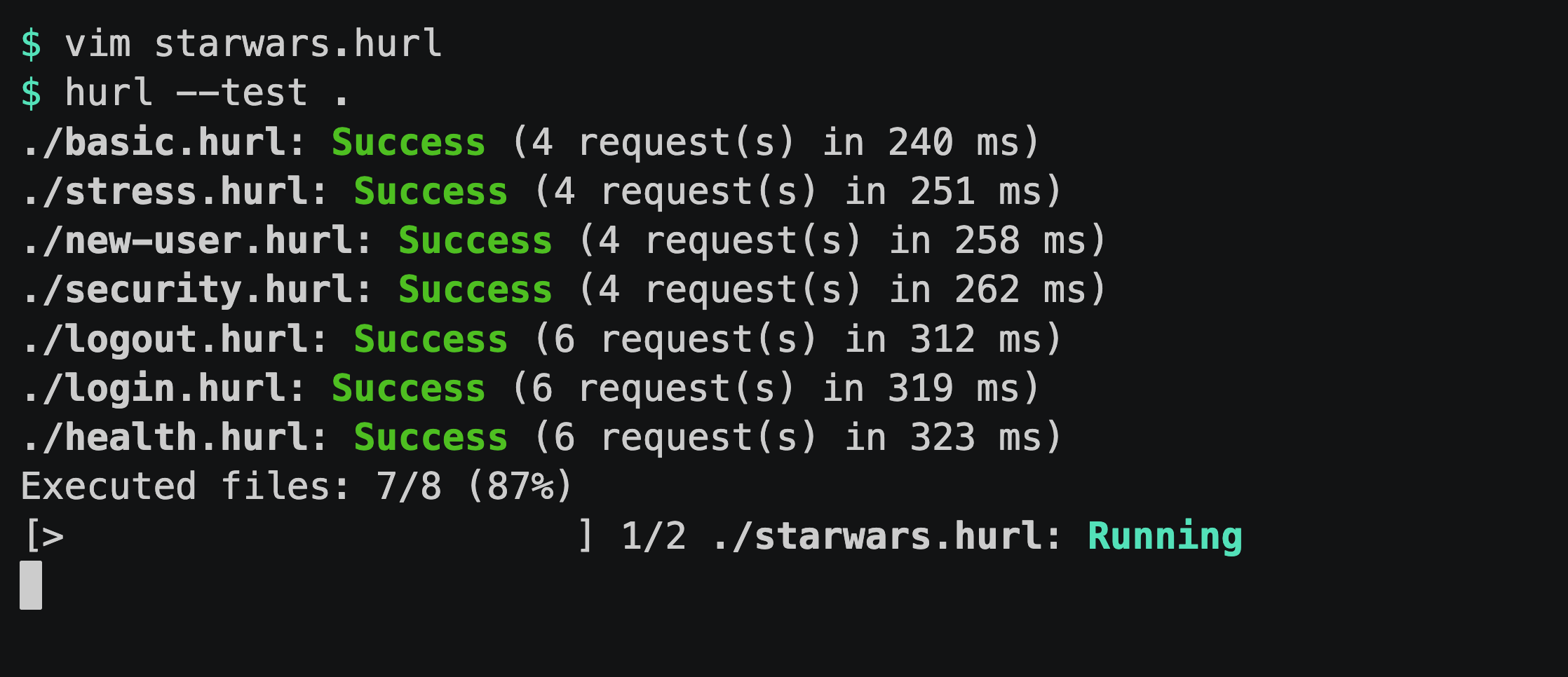
Why engineers reach for it:
- Plain text, version-controlled. A
.hurlfile reads like annotated curl. It diffs cleanly and lives in your repo with zero export step. - Fast and dependency-light. No Node runtime, no GUI, no account. It chains requests, captures values, and asserts on headers and body.
- CI-friendly by design. Because the tests are just text files and the binary returns standard exit codes, wiring it into a pipeline is trivial.
Hurl doesn’t try to be a full API platform. There’s no design surface, no mock server, no docs generation. That’s the point. If you want the smallest possible thing that asserts your endpoints behave, Hurl is hard to beat. Read the official Hurl docs to see the format.
How to choose
Match the tool to where your API workflow already lives:
- Already deep in Postman, want offline runs: Newman.
- On Hoppscotch or self-hosting: Hoppscotch CLI.
- On Insomnia and Git-native: inso.
- Want minimal, text-based, no platform: Hurl.
- Want one place to design, mock, test, and document, with a runner that ties back to your contract: Apidog CLI.
If you’re treating your API as a product rather than a pile of collections, the last option scales best. That framing is worth a read in API as a product, and the CI/CD best practices for API testing guide covers how to wire any of these into a pipeline well.
Frequently asked questions
Is there a free Postman CLI alternative?
Yes, several. Newman, Hoppscotch CLI, inso, and Hurl are all open source and free to run. The Apidog CLI has a free tier and runs the same apidog run command you’d use on a paid plan. None of them charges you per pipeline run.
Can I run my existing Postman collections without the Postman CLI?
Yes. Newman reads Postman collection JSON directly, and Apidog can import a Postman collection, after which you run it headless. We cover the migration path in how to run Postman collections in CI without Newman.
What’s the difference between the Postman CLI and Newman?
Both run Postman collections from the command line with similar arguments. The Postman CLI logs in with a Postman API key and reports runs back to the Postman application, while Newman is a standalone open-source runner that doesn’t report to the cloud. Postman has said it has no plans to deprecate Newman.
Which alternative is best for CI/CD?
It depends on your stack. For a single platform that handles design, mocking, testing, and docs with a CI-ready runner, the Apidog CLI is the recommended pick. For a pure text-based runner with no platform attached, Hurl is excellent. Newman, Hoppscotch CLI, and inso are strong when you’re already on Postman, Hoppscotch, or Insomnia respectively.
Bottom line
The Postman CLI works, but its cloud-tie and licensing model push plenty of teams to look elsewhere. Newman, Hoppscotch CLI, inso, and Hurl each cover a clear use case. If you want a runner that ties back to a single source of truth for your whole API lifecycle, the Apidog CLI is the one to try. Download Apidog and run your first test from the command line, or read more about the platform at Apidog.