Pricing
from $0.01 / 1,000 results
PDF Tools MCP Server
Merge, split, rotate, watermark, extract text, delete pages, reorder, and set metadata on PDFs. 11 tools via MCP. Fully local processing — zero external APIs, your PDFs stay private. Works with Claude, Cursor, VS Code, ChatGPT.
Pricing
from $0.01 / 1,000 results
Rating
0.0
(0)
Developer

Actor stats
0
Bookmarked
1
Total users
0
Monthly active users
2 months ago
Last modified
Categories
Share
MCP server template
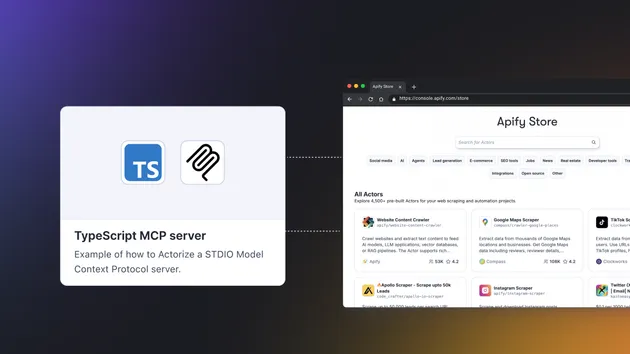
A template for running and monetizing a Model Context Protocol server using stdio transport on Apify platform. This allows you to run any stdio MCP server as a standby Actor and connect via either the streamable HTTP transport with an MCP client.
How to use
Change the MCP_COMMAND to spawn your stdio MCP server in src/main.ts, and don't forget to install the required MCP server in the package.json (using npm install ...).
By default, this template runs an Everything MCP Server using the following command:
Alternatively, you can use the mcp-remote tool to turn a remote MCP server into an Actor. For example, to connect to a remote server with authentication:
Feel free to configure billing logic in .actor/pay_per_event.json and src/billing.ts.
Push your Actor to the Apify platform, configure standby mode, and then connect to the Actor standby URL with your MCP client using the endpoint: https://me--my-mcp-server.apify.actor/mcp (streamable HTTP transport).
Important: When connecting to your deployed MCP server, you must pass your Apify API token in the Authorization header as a Bearer token. For example:
This is required for authentication and to access your Actor endpoint.
Pay per event
This template uses the Pay Per Event (PPE) monetization model, which provides flexible pricing based on defined events.
To charge users, define events in JSON format and save them on the Apify platform. Here is an example schema with the tool-request event:
In the Actor, trigger the event with:
This approach allows you to programmatically charge users directly from your Actor, covering the costs of execution and related services.
To set up the PPE model for this Actor:
- Configure Pay Per Event: establish the Pay Per Event pricing schema in the Actor's Monetization settings. First, set the Pricing model to
Pay per eventand add the schema. An example schema can be found in .actor/pay_per_event.json.
Resources
- What is Anthropic's Model Context Protocol?
- How to use MCP with Apify Actors
- Apify MCP server
- Apify MCP server documentation
- Apify MCP client
- Model Context Protocol documentation
- TypeScript tutorials in Academy
- Apify SDK documentation
Getting started
For complete information see this article. To run the Actor use the following command:
Deploy to Apify
Connect Git repository to Apify
If you've created a Git repository for the project, you can easily connect to Apify:
- Go to Actor creation page
- Click on Link Git Repository button
Push project on your local machine to Apify
You can also deploy the project on your local machine to Apify without the need for the Git repository.
-
Log in to Apify. You will need to provide your Apify API Token to complete this action.
$apify login -
Deploy your Actor. This command will deploy and build the Actor on the Apify Platform. You can find your newly created Actor under Actors -> My Actors.
$apify push
Documentation reference
To learn more about Apify and Actors, take a look at the following resources: