|
VOOZH | about |
|
VOOZH | about |
Multiple, independent networks conform to the Ethereum protocol. Each of these networks is essentially its own Ethereum environment, with an underlying infrastructure comprised of interconnected computers. These connected computers are referred to as nodes, and the software application that runs on each computer is referred to as a client. The Ethereum clients running on the nodes help to maintain the protocol’s single canonical state, and hence its inherent security. Running an Ethereum client on a node enables us to use the protocol safely and securely, while also contributing to the Ethereum ecosystem.
👁 Ethereum Symbol Over a Fenced Sky BackgroundIn this article, we’ll examine the differences between three types of Ethereum nodes. We’ll also look at the different features, support, programming language, and licenses for various open source Ethereum clients.
Ethereum nodes are computers or servers that store, validate, and exchange data on the Ethereum network. There are three types of nodes that can be run by an Ethereum client:
Full nodes, light nodes, and archive nodes differ based on the amount of blockchain data that they sync and the portion of Ethereum’s up-to-date state information that they store. Each of these three node types takes a different synchronization approach to retrieving and interpreting data. Let’s take a look.
As their name implies, Ethereum full nodes store a full copy of the blockchain data. They can also contribute to the distribution of the data and the validation of blocks within the Ethereum network. Full nodes continuously sync in order to be up to date with the Ethereum blockchain. Smart contracts running on the Ethereum network can interact with full nodes. Unfortunately, this type of node is very expensive and resource intensive to run.
Ethereum light nodes go light on the amount of data they store. They only store the header chain data, such as the timestamp and the previous block’s hash. Where there is a need for additional information, a light node will query the blockchain. In this way, less information is stored, and additional information is retrieved upon request as needed. Light nodes can verify the validity of the stored data against the state roots in the block headers. This type of node can be advantageous for low-capacity devices such as embedded tools or smartphones because they do not take on intensive data storage and writing activities.
Ethereum archive nodes store all data and build an archive of the historical blockchain states. Aptly named, these nodes serve as a sort of archive for the blockchain data. Archive nodes will save prior data, even after a client has completed synchronization. Full nodes and light nodes, on the other hand, will “prune” historical blockchain data. this means they will be able to reconstruct, but not retain, the historical data. Archive nodes can save gigabytes of historical data, making them less appealing to an average user but valuable for service providers, such as block explorers, wallet suppliers, and chain analytics.
A client is any sort of software that is downloaded onto a computer, allowing the user to interact with another type of software or service offered by a server. Ethereum clients are Ethereum implementations that verify all transactions in each block, ensuring that the network is secure and that the data is correct.
Within the Ethereum community, multiple open source execution clients (previously known as Eth1 clients or Ethereum clients) are available, each created by a different team using a different programming language.
Each Ethereum client has a unique set of features and benefits. Because of their diversity, implementations can be adapted to different user groups. When choosing a client, take into account its features, support, programming language, and licenses.
Let’s take a closer look at the following open source Ethereum clients:
Go Ethereum (or Geth) is the official Golang implementation of the Ethereum protocol. Geth is currently the most popular Ethereum client. It has the largest user base and offers a vast range of tools, written in Go, for both consumers and developers. Geth is open source and is licensed under the GNU LGPL v3.
Nethermind is an Ethereum implementation written in the C# .NET tech stack programming language that runs on all major platforms, including ARM. Nethermind makes it simple to integrate with current infrastructures while maintaining stability, reliability, data integrity, and security. Nethermind offers detailed documentation on how to set up an Ethereum node application.
Erigon is a Go Ethereum fork that focuses on speed and disk space savings. Erigon is an entirely re-architected Ethereum implementation that is written in Go; however, future plans call for it to be ported to other languages. Erigon was developed in order to provide a faster, more modular, and better optimized Ethereum implementation. this client can complete a full archive node sync in under three days with less than 2TB of storage space.
Hyperledger Besu is an open source Ethereum client written in Java and released under the Apache 2.0 license. It supports the Ethereum public network, as well as private and test networks like Rinkeby, Ropsten, and Görli. Besu implements consensus procedures based on proof of work (Ethash) and evidence of authority (IBFT 2.0, Clique, and QBFT).
OpenEthereum is a CLI-based, advanced Ethereum client that is fast and feature-rich. It is written in Rust and is GPLv3 licensed. OpenEthereum was designed to provide the necessary infrastructure for quick, dependable services that require fast synchronization and increased uptime. This client provides a clean, modular codebase. Unfortunately, OpenEthereum has been deprecated and is no longer supported. Use it with caution and, if possible, select a different client implementation.
In this article, we explored three different types of Ethereum node applications: full, light, and archive. Nodes can take a significant amount of time to sync blockchain data, and they require ongoing maintenance depending on the type of data that you’re seeking. For example, If you need older data from the blockchain, you will need to use an archive node even though it is slower.
We also investigated five Ethereum clients. Each client offers distinct features, so select the one that best suits your needs. Hopefully, you found this information is helpful for the next time you need to spin a node application.
Client-side issues that impact users’ ability to activate and transact in your apps can drastically affect your bottom line. If you’re interested in monitoring UX issues, automatically surfacing JavaScript errors, and tracking slow network requests and component load time, try LogRocket.
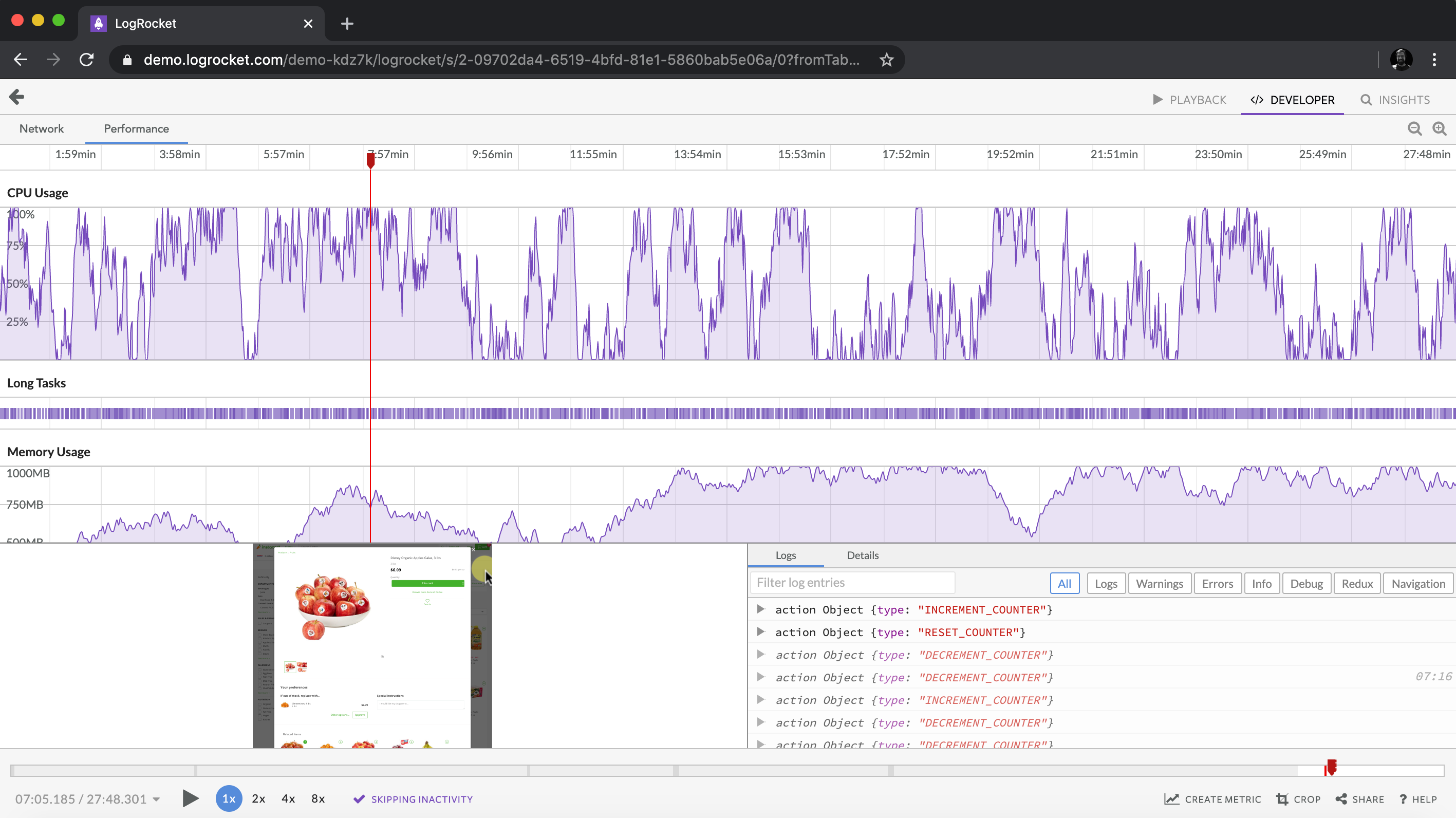
👁 LogRocket Dashboard Free Trial BannerLogRocket lets you replay user sessions, eliminating guesswork around why bugs happen by showing exactly what users experienced. It captures console logs, errors, network requests, and pixel-perfect DOM recordings — compatible with all frameworks.
LogRocket's Galileo AI watches sessions for you, instantly identifying and explaining user struggles with automated monitoring of your entire product experience.
Modernize how you debug web and mobile apps — start monitoring for free.
We built the same app in TanStack Start RSC and Next.js RSC. TanStack shipped 40% less JS and built 4x faster — but Next.js is still the safer production bet.
From RSC vulnerabilities and the Vercel breach to TypeScript 7.0 Beta and AI agents — the nine frontend storylines that defined H1 2026, ranked.
AI tools generate working React code fast, but miss race conditions, empty states, debouncing, and accessibility. Here’s how to catch bugs before production.
Learn how to use Gemini CLI subagents to delegate frontend, backend, testing, and docs tasks to specialized agents with guardrails and clear ownership.
Hey there, want to help make our blog better?
Join LogRocket’s Content Advisory Board. You’ll help inform the type of content we create and get access to exclusive meetups, social accreditation, and swag.
Sign up now