|
VOOZH | about |
|
VOOZH | about |
In 1908, Ford launched the Model T. At that time, every car was built by hand, by skilled craftspeople, one at a time.
Then Ford introduced the assembly line. By the mid-1920s, a Model T rolled off the line every few minutes.
The same thing happened to televisions, refrigerators, and nearly everything we make. When the manual steps of production are automated, the product stops being a luxury, and the people who did the repetitive work move on to more important tasks, like designing newer and better cars.
Software is undergoing a similar change. Product and engineering teams are using AI agents to automate the manual steps of building and maintaining software. But the “assembly line” of software is still limited by humans telling their agents what to build. Coding is no longer the bottleneck; figuring out what to build is the limiting factor.
To automate the software production factory, we need a new capability: something that intelligently uncovers what you should be working on.
Today, I’m excited to announce self-improving capabilities in LogRocket Galileo, where we automatically identify customer issues and work with your coding agents to develop a fix.
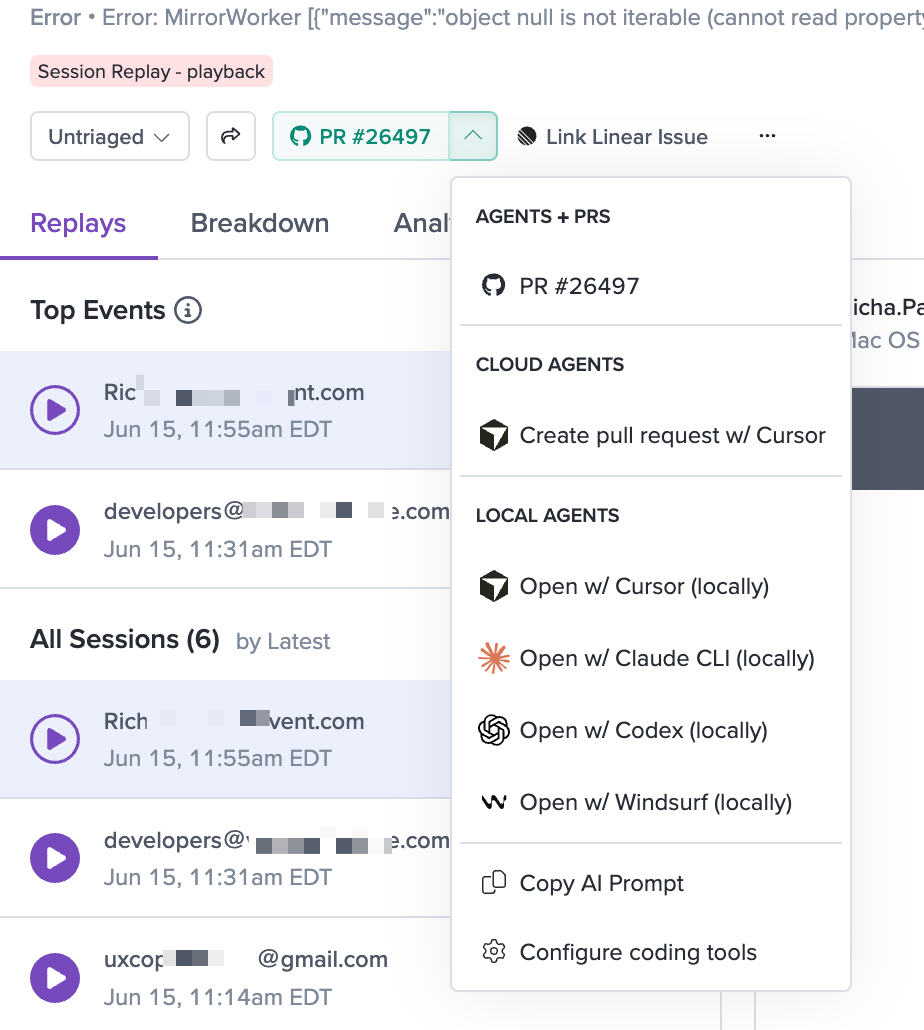
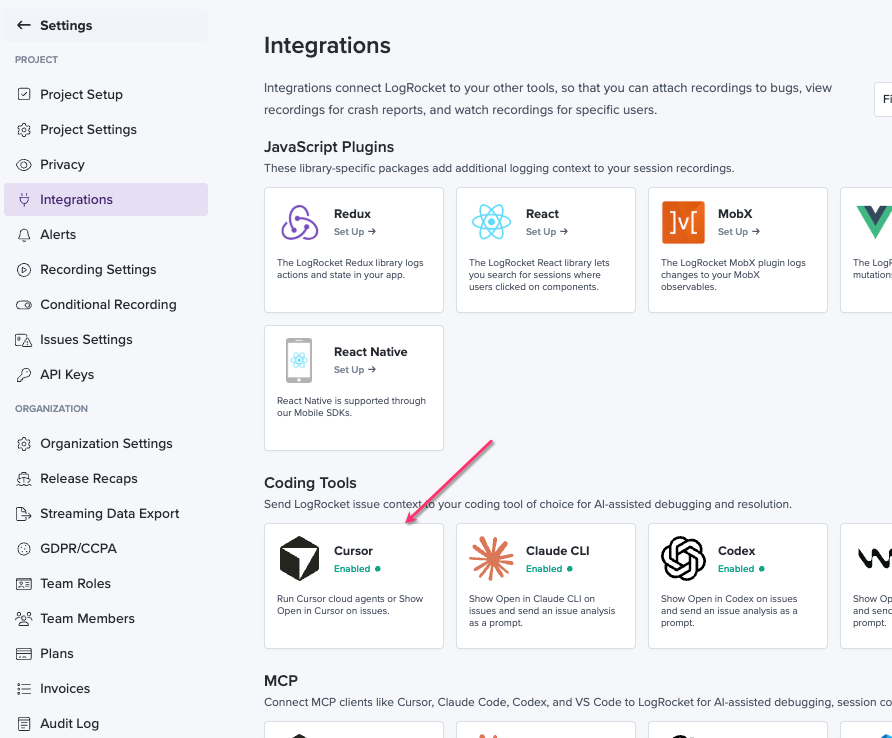
Galileo constantly watches user sessions, reads customer feedback, and identifies issues, then dispatches those issues to Cursor, Claude Code, Codex, etc, to automate the fix.
Your agents don’t need to wait until you discover an issue and send them a prompt; Galileo handles it for you. We’ve been building towards the self-improving software era since we founded LogRocket in 2016, and it’s finally here.
Let’s suppose you’ve just joined your 9 AM daily standup. While you’re in the meeting, a checkout error starts affecting users on mobile. Rage clicks spike and drop off climbs.
LogRocket’s Galileo AI catches it. Galileo watches session replays from real users, identifies the issue, and routes it directly to your coding agent in Cursor (or your AI tool of choice). By the time you’re back at your desk, the agent has traced the bug, written a fix, and opened a pull request.
You review the PR, merge, and the fix is live. A bug that might’ve lived in a backlog for two days has been triaged, diagnosed, and fixed before you pour your second cup of coffee. The only human time spent on it was the part that actually required human judgment: the review.
This is the software assembly line: detection, triage, diagnosis, and a first-draft fix, automated end to end.
LogRocket’s Galileo AI already watches real user sessions, reviews customer feedback, and analyzes your product data. It identifies the issues that matter most, prioritized by real user impact.
Now, Galileo can route those issues directly to your coding agents:
You set the rules of the factory floor, but the line runs on its own. Your team comes back to a drafted PR instead of a backlog ticket.
Last month, we launched the LogRocket MCP, and we’ve already had customers like Rippling and ShipStation Global build agents that resolve issues, report on new feature launches, and draft responses to support tickets.
At Speedway Motors, Derek Stapleton, Software Development Team Lead, has been using LogRocket to connect observability directly to his team’s coding agents:
“LogRocket has improved our team’s ability to identify, diagnose, and resolve bugs that directly affect conversion,” Stapleton said.
“Its alerting capabilities integrate seamlessly into our engineering workflow, and its MCP integration has proven especially valuable in connecting observability with modern coding agents. LogRocket has reshaped how our team prioritizes engineering work, enabling us to focus attention on the issues with the greatest financial and customer impact.”
The assembly line didn’t spell the end of craftspeople. Instead, it promoted them to tackle the design, the hard engineering, and the calls a machine couldn’t make on its own. Because they weren’t focusing on manually building the cars, these craftspeople could focus on making cars faster, safer, and sleeker.
The same is true here. There will always be a need for human, artisanal engineering. What’s being automated is the routine stuff in between: the triage, the reproduction, the small fix for the bug you already understand.
This gives engineers more time to answer the real questions: what do my customers need, and what should I be building to meet those needs?
The factory floor is running on its own. Your agents aren’t waiting for someone to switch them on anymore. They stop sitting idle and start working through the problems that actually matter to your users, so your team can spend its time building great products.
This is the start of self-improving software, where the software production line never stops moving.
Existing customers can check out our docs to learn how to dispatch coding agents from LogRocket.
If you’re new to LogRocket, visit us at logrocket.com to get started on your own.
Learn how PMs can use AI and communication to spot duplicate work early, align teams, and protect engineering capacity.
Audit freemium conversion points by use case to cut clutter, improve UX, and protect long-term revenue from upgrade fatigue.
PMs often misread acquisition spikes as growth. Learn which retention and activation signals show whether users actually find value.
The LogRocket MCP connects your AI agents to Galileo AI. Detect issues, diagnose root causes, and ship fixes from Claude, Cursor, Codex, or your own agent.