|
VOOZH | about |
|
VOOZH | about |
The Replay is a weekly newsletter for dev and engineering leaders.
Delivered once a week, it's your curated guide to the most important conversations around frontend dev, emerging AI tools, and the state of modern software.
Streams are one of the major features that most Node.js applications rely on, especially when handling HTTP requests, reading/writing files, and making socket communications. Streams are very predictable since we can always expect data, error, and end events when using streams.
👁 Understanding Streams in Node.jsThis article will teach Node developers how to use streams to efficiently handle large amounts of data. This is a typical real-world challenge faced by Node developers when they have to deal with a large data source, and it may not be feasible to process this data all at once.
This article will cover the following topics:
The following are four main types of streams in Node.js:
Streams come in handy when we are working with files that are too large to read into memory and process as a whole.
For example, consider Node.js streams a good choice if you are working on a video conference/streaming application that would require the transfer of data in smaller chunks to enable high-volume web streaming while avoiding network latency.
Batching is a common pattern for data optimization which involves the collection of data in chunks, storing these data in memory, and writing them to disk once all the data are stored in memory.
Let’s take a look at a typical batching process:
const fs = require("fs");
const https = require("https");
const url = "some file url";
https.get(url, (res) => {
 const chunks = [];
 res
 .on("data", (data) => chunks.push(data))
 .on("end", () =>
 fs.writeFile("file.txt", Buffer.concat(chunks), (err) => {
 err ? console.error(err) : console.log("saved successfully!");
 })
 );
});
Here, all of the data is pushed into an array. When the data event is triggered and once the “end” event is triggered, indicating that we are done receiving the data, we proceed to write the data to a file using the fs.writeFile and Buffer.concat methods.
The major downside with batching is insufficient memory allocation because all the data is stored in memory before writing to disk.
Writing data as we receive it is a more efficient approach to handling large files. This is where streams come in handy.
The Node.js fs module exposes some of the native Node Stream API, which can be used to compose streams.
We’ll be covering readable, writable, and transform streams. You can read our blog post about duplex streams in Node.js if you want to learn more about them.
const fs = require("fs");
const fileStream = fs.createWriteStream('./file.txt')
for (let i = 0; i <= 20000; i++) {
 fileStream.write("Hello world welcome to Node.js\n"
 );
}
A writeable stream is created using the createWriteStream() method, which requires the path of the file to write to as a parameter.
Running the above snippet will create a file named file.txt in your current directory with 20,000 lines of Hello world welcome to Node.js in it.
const fs = require("fs");
const fileStream = fs.createReadStream("./file.txt");
fileStream
 .on("data", (data) => {
 console.log("Read data:", data.toString());
 })
 .on("end", () => { console.log("No more data."); });
Here, the data event handler will execute each time a chunk of data has been read, while the end event handler will execute once there is no more data.
Running the above snippet will log 20,000 lines of the Hello world welcome to Node.js string from ./file.txt to the console.
Transform streams have both readable and writable features. It allows the processing of input data followed by outputting data in the processed format.
To create a transform stream, we need to import the Transform class from the Node.js stream module. The transform stream constructor accepts a function containing the data processing/transformation logic:
const fs = require("fs");
const { Transform } = require("stream");
const fileStream= fs.createReadStream("./file.txt");
const transformedData= fs.createWriteStream("./transformedData.txt");

const uppercase = new Transform({
 transform(chunk, encoding, callback) {
 callback(null, chunk.toString().toUpperCase());
 },
});

fileStream.pipe(uppercase).pipe(transformedData);
Here, we create a new transform stream containing a function that expects three arguments: the first being the chunk of data, the second is encoding (which comes in handy if the chunk is a string), followed by a callback which gets called with the transformed results.
Running the above snippet will transform all the text in ./file.txt to uppercase then write it to transformedData.txt.
If we run this script and we open the resulting file, we’ll see that all the text has been transformed to uppercase.
Piping streams is a vital technique used to connect multiple streams together. It comes in handy when we need to break down complex processing into smaller tasks and execute them sequentially. Node.js provides a native pipe method for this purpose:
fileStream.pipe(uppercase).pipe(transformedData);
Refer to the code snippet under Composing transform streams for more detail on the above snippet.
Node 10 introduced the Pipeline API to enhance error handling with Node.js streams. The pipeline method accepts any number of streams followed by a callback function that handles any errors in our pipeline and will be executed once the pipeline has been completed:
pipeline(...streams, callback)


const fs = require("fs");
const { pipeline, Transform } = require("stream");

pipeline(
 streamA,
 streamB,
 streamC,
 (err) => {
 if (err) {
 console.error("An error occured in pipeline.", err);
 } else {
 console.log("Pipeline execcution successful");
 }
 }
);
When using pipeline, the series of streams should be passed sequentially in the order in which they need to be executed.
We can also handle stream errors using pipes as follows:
const fs = require("fs");
const fileStream= fs.createReadStream("./file.txt");
let b = otherStreamType()
let c = createWriteStream()
fileStream.on('error', function(e){handleError(e)})
.pipe(b)
.on('error', function(e){handleError(e)})
.pipe(c)
.on('error', function(e){handleError(e)});
As seen in the above snippet, we have to create an error event handler for each pipe created. With this, we can keep track of the context for errors, which becomes useful when debugging. The drawback with this technique is its verbosity.
In this article, we’ve explored Node.js streams, when to use them, and how to implement them.
Knowledge of Node.js streams is essential because they are a great tool to rely on when handling large sets of data. Check out the Node.js API docs for more information about streams.
Deploying a Node-based web app or website is the easy part. Making sure your Node instance continues to serve resources to your app is where things get tougher. If you’re interested in ensuring requests to the backend or third-party services are successful, try LogRocket.
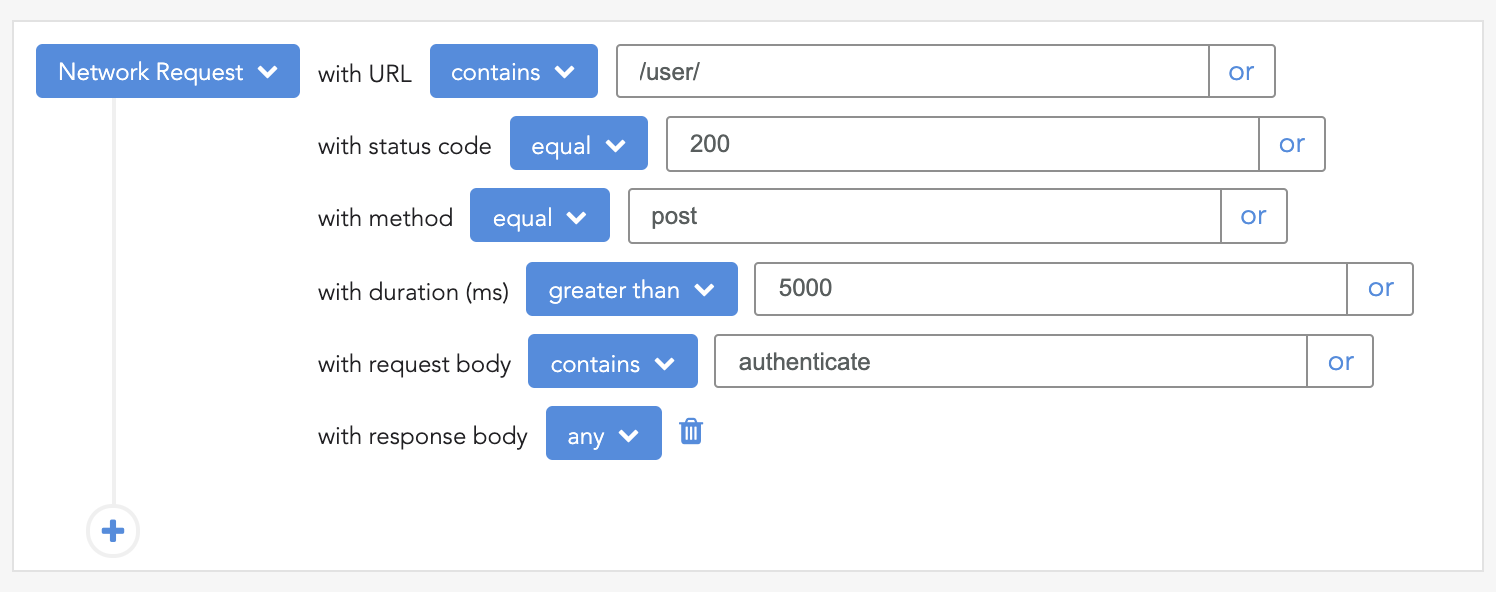
👁 LogRocket Network Request MonitoringLogRocket lets you replay user sessions, eliminating guesswork around why bugs happen by showing exactly what users experienced. It captures console logs, errors, network requests, and pixel-perfect DOM recordings — compatible with all frameworks.
LogRocket's Galileo AI watches sessions for you, instantly identifying and explaining user struggles with automated monitoring of your entire product experience.
LogRocket instruments your app to record baseline performance timings such as page load time, time to first byte, slow network requests, and also logs Redux, NgRx, and Vuex actions/state. Start monitoring for free.
Build dynamic LLM routing in Next.js with OpenRouter, TanStack AI, task classification, model fallbacks, and cost-aware routing.
TSRX adds first-class control flow, conditional hooks, and scoped styles to React via a TypeScript compiler extension — no new framework required.
Learn how to build a full React Native auth system using Better Auth and Expo — with email/password login, Google OAuth, session persistence, and protected routes.
Compare the top AI development tools and models of June 2026. View updated rankings, feature breakdowns, and find the best fit for you.
Hey there, want to help make our blog better?
Join LogRocket’s Content Advisory Board. You’ll help inform the type of content we create and get access to exclusive meetups, social accreditation, and swag.
Sign up now