|
VOOZH | about |
|
VOOZH | about |
From tedious manual work to comprehensive automated analysis in one afternoon
If you're like me, you probably dread writing those monthly product update emails. You know the ones – where you have to comb through dozens (or hundreds) of commits across multiple repositories, trying to remember what actually shipped and what matters to your users.
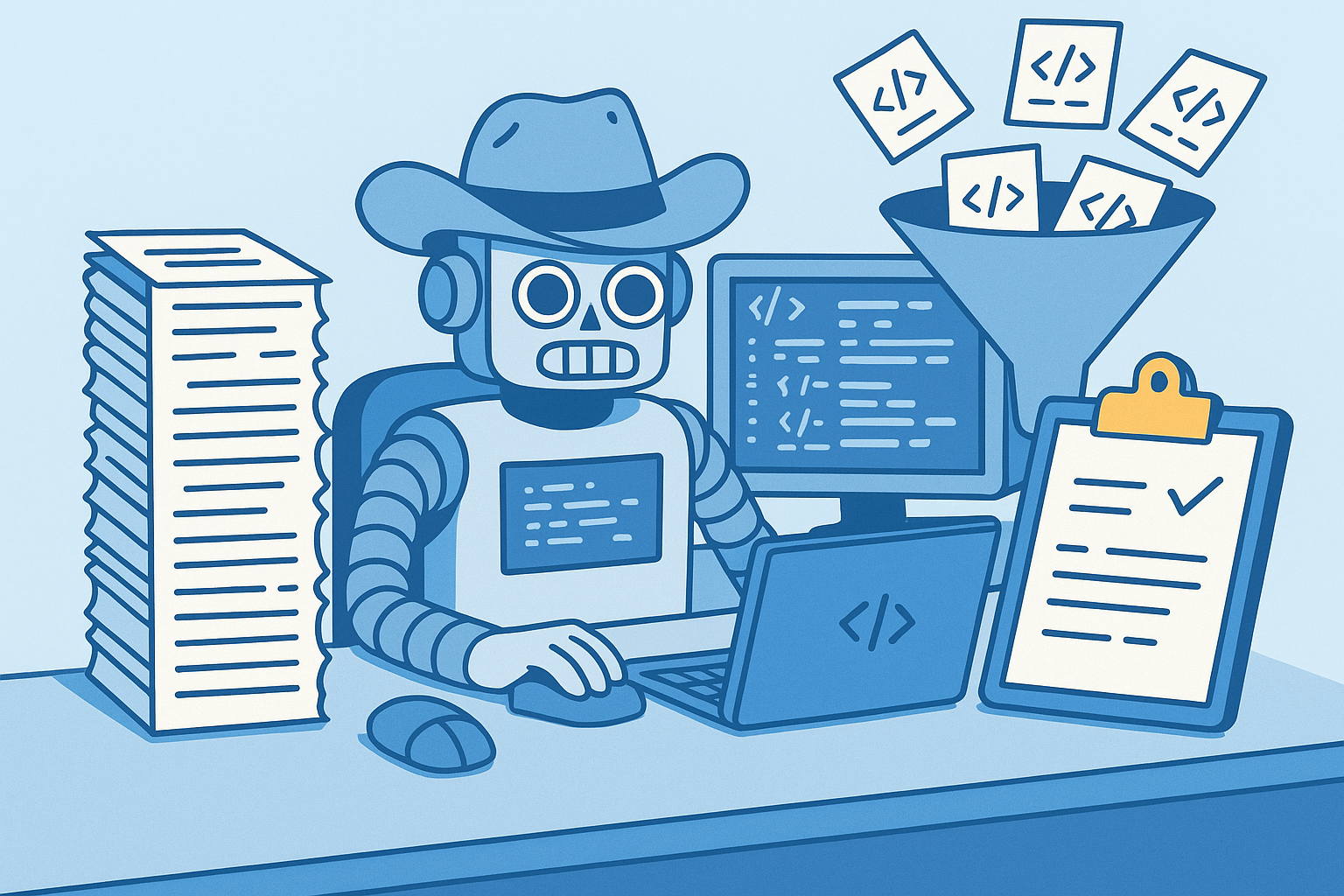
Today I used Claude Code to turn our product update process from a manual slog into an automated, comprehensive analysis that actually reads every single line of code we've changed.
Every month at PromptLayer, we send out a product update email to our users. It's important – our customers want to know what's new, what's fixed, and what's coming. But creating these updates was painful.
My old process:
Even with a script to help analyze commit messages, I was still just looking at surface-level information. What did "refactor authentication flow" actually mean for our users? What files changed? What features were impacted?
I recently watched Dan Shipper's interview on the Lenny Newsletter podcast (highly recommend it, by the way). Dan talked about using Claude Code for non-coding tasks – things you wouldn't traditionally think of as "programming" problems.
That got me thinking: what if instead of just analyzing commit messages, Claude Code could actually clone our repos, read through every single code change, and write intelligent summaries of what actually happened?
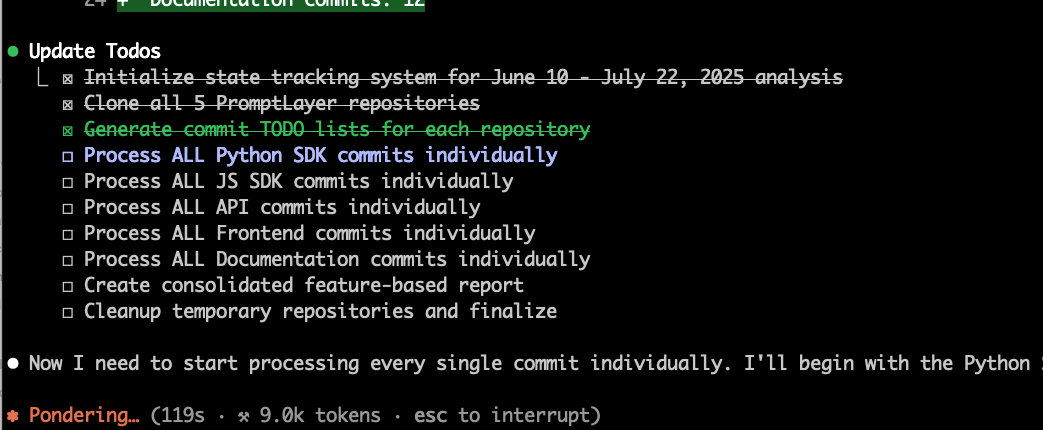
I asked Claude to build this. Here is it's process:
Instead of just reading commit messages, the system:
One challenge I hit early was that Claude Code would sometimes lose track of where it was in the process. Too many commits, too much context. So I had it build in state tracking:
Current Status: PROCESSING
Current Repository: python-sdk
Current Commit: a7f3d21
Repositories Status:
- python-sdk: IN_PROGRESS (15/47 commits)
- js-sdk: NOT_STARTED
- api: NOT_STARTED
If anything interrupts the process, it should be able to pick up exactly where it left off.
The system works through each repository systematically:
For each commit, it writes a 2-3 sentence summary explaining what changed and why it matters. No commit is too small – even config changes get documented.
Here's where the magic happens. After analyzing all commits across all repos, the system creates a consolidated report grouped by FEATURES, not repositories.
So instead of:
You get:
What used to take me 2-3 hours of manual work now runs automatically. I just specify a date range and let it go. The output is comprehensive, accurate, and actually useful.
This isn't just about product updates. Think about all the manual analysis tasks you do:
Any task where you need to understand "what changed and why" across multiple codebases is a candidate for this approach.
Claude Code isn't just for programming tasks.
© Copyright 2026 Magniv, Inc. All rights reserved.