|
VOOZH | about |
|
VOOZH | about |
With LLMs, we can build products that truly feel like magic. You don’t need a machine learning PhD, but you do need to be aware of the new primitives that are being introduced into your system.
As the core mechanism driving LLM outputs, prompts are more than mere inputs; they are the 🔑 that makes our AI products actually work. Prompts are the magic that makes your LLM system work. They are your secret sauce. 🥫
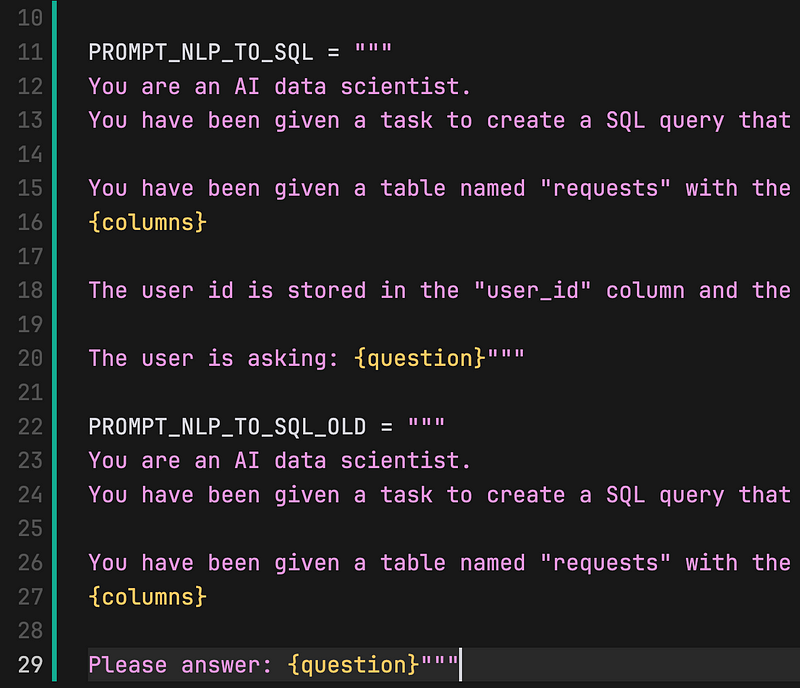
Yet, the MVP of your AI product often has ad-hoc prompts scattered across your codebase. Iterations are often buried in commit messages and .env vars like VERSION_1 and VERSION_1_FINAL. Maybe you even have a folder of .txt files in your git repo.
Half-baked prompt management solutions might work for version one, but they fall apart quickly.
Greg Baugues published a great article detailing his project’s evolution of prompts from in-code MVP to a prompt CMS (like PromptLayer). Check it out: https://haihai.ai/friction.
Let’s not re-invent the wheel. 🛞 There is a lot to be learned from software engineering principles, without blindly adopting their complexity.
Separating prompt development from the main codebase allows for faster iterations and more stakeholder collaboration. This approach acknowledges the unique lifecycle of prompts and facilitates a more dynamic development process.
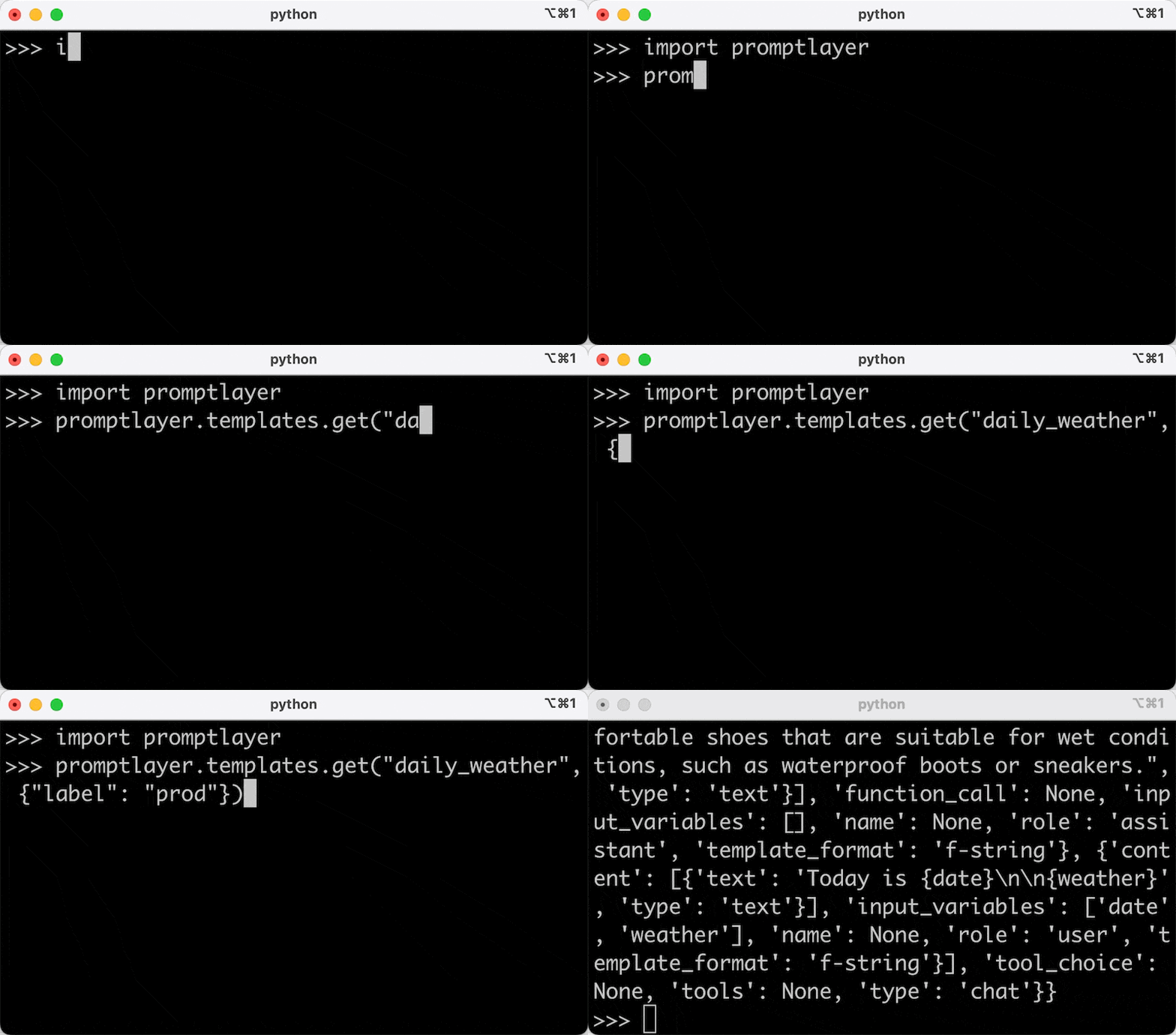
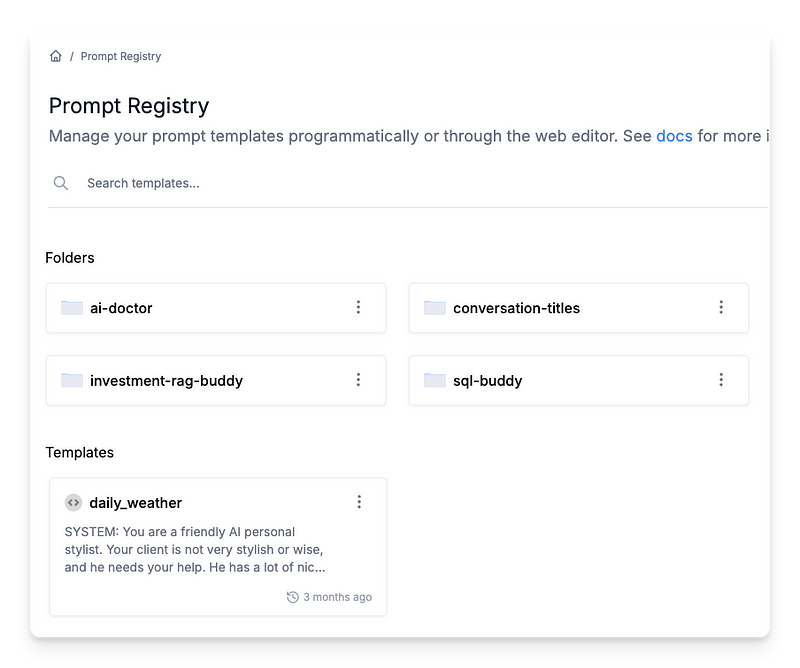
To do this, store your prompts outside of git. Use a prompt CMS like the PromptLayer Prompt Registry. Edit your prompts in a dashboard and pull them down at runtime programmatically.
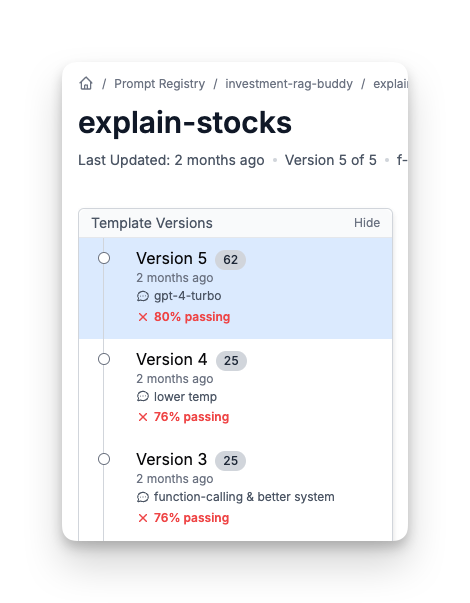
This one is easy. Make sure to use descriptive commit messages every time you version a prompt.
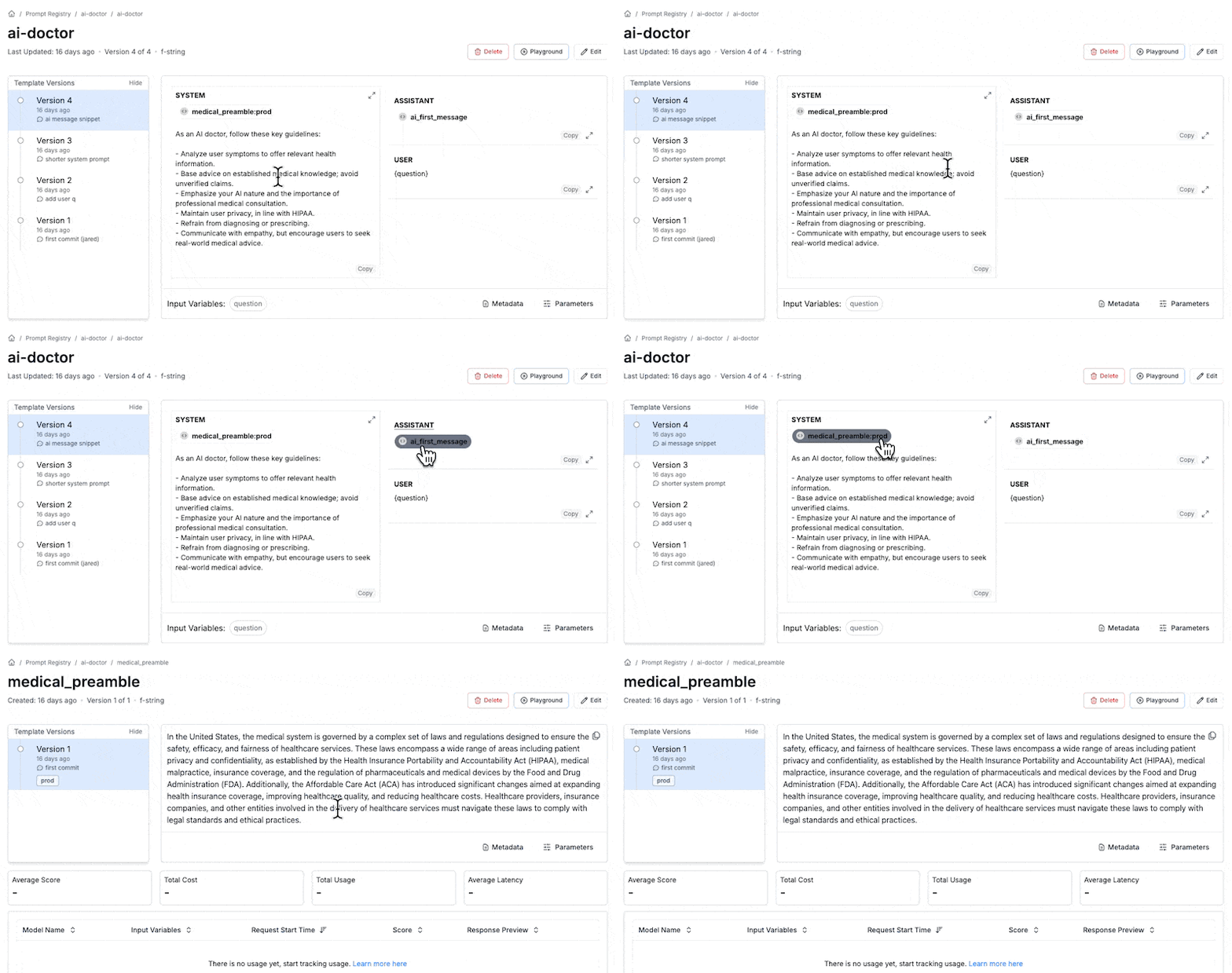
Again, let’s borrow some ideas from traditional software development. Modularize the different parts of a prompt.
Your master prompt should be a skeleton, where prompt snippets are imported.
Some examples of things you can move to snippets are below.
database_schema or hipaa_blurb.A tidy workstation makes everything better! Use folders & workspace access controls to do this.
Effective collaboration strategies in prompt management involve setting up control mechanisms for editing permissions to ensure that only authorized individuals can make changes to prompts. By freezing versions, teams can maintain stable iterations of prompts for collaboration purposes, preventing unintended alterations. This makes collaboration between engineers and non-technical subject-matter experts less risky.
Using PromptLayer for prompt management & collaboration
PromptLayer makes all of this easy:
PromptLayer is the most popular platform for prompt engineering, management, and evaluation. Teams use PromptLayer to build AI applications with domain knowledge.
Made in NYC 🗽 Sign up for free at www.promptlayer.com 🍰
© Copyright 2026 Magniv, Inc. All rights reserved.