Qwen2.5 Omni API Tutorial 2026: Voice, Vision, and Multimodal Workflows for Developers#
Qwen2.5 Omni API tutorial is a high-intent keyword because the people searching for it are usually close to an implementation or buying decision. They are not just curious. They are trying to decide which model, plan, or API pattern makes sense for a real engineering workflow.
For Crazyrouter, that matters because the product sits exactly in the middle of that decision: one API key, 627+ models, OpenAI/Anthropic/Gemini-compatible access, and lower pricing than many direct routes. If you are comparing vendors, trying to reduce lock-in, or just want simpler billing, this is where the tradeoff becomes practical instead of theoretical.
In this guide, I will cover what Qwen2.5 Omni API tutorial actually means, how it compares with Gemini multimodal APIs, GPT vision flows, and other voice+vision stacks, how to implement it with code, what the pricing implications look like, and the questions developers usually ask before shipping.
What is Qwen2.5 Omni API tutorial?#
In plain English, Qwen2.5 Omni API tutorial is the operational question behind a product choice. Developers usually run into it when a proof of concept becomes a real app, or when a single engineer workflow turns into a repeatable team process.
At that point, the main concerns are almost always the same:
- How hard is the setup?
- How predictable is the pricing?
- How portable is the implementation if you change vendors later?
- Can you run it safely in CI, production backends, or customer-facing apps?
- Does the model quality justify the cost and latency?
That is why the best way to evaluate this topic is not by marketing claims, but by looking at developer ergonomics, compatibility, and long-term operating cost.
Qwen2.5 Omni API tutorial vs alternatives#
The wrong way to compare AI tools is feature checklist against feature checklist. The better way is to compare them in the context of an actual stack.
If you are a solo developer, convenience matters more than governance. If you are a startup team, cost visibility and model portability matter more. If you are running production workflows, retries, rate limits, and fallback behavior matter more than flashy demos.
Here is the practical comparison lens:
- Direct vendor access is simple and often the fastest way to prototype.
- Single-model workflows are easy to reason about but can get expensive.
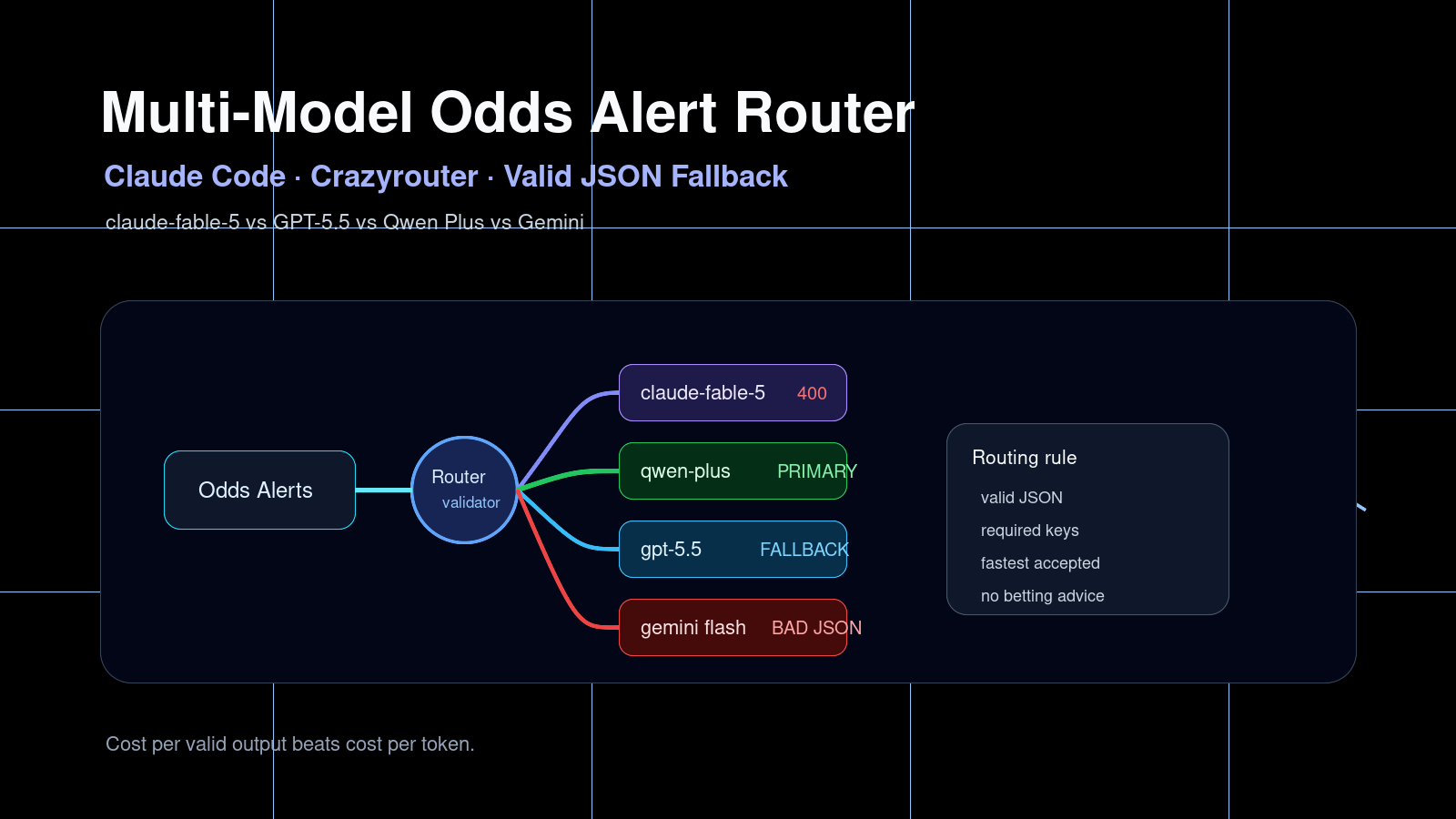
- Multi-provider routing adds flexibility and better cost control.
- Crazyrouter is strongest when you want one API key across GPT, Claude, Gemini, DeepSeek, Qwen, video, image, and audio APIs.
That last point is underrated. Teams rarely stay with one model forever. Product requirements change, prices move, and some models perform better on coding while others are better for reasoning, vision, or video generation. A gateway reduces migration pain.
How to use Qwen2.5 Omni API tutorial with code examples#
For most developers, the easiest path is to keep the client code close to the SDK they already use and swap only the API key and base URL. That is the whole appeal of OpenAI-compatible and Anthropic-compatible gateways.
Python example#
from openai import OpenAI

client = OpenAI(
 api_key="YOUR_CRAZYROUTER_KEY",
 base_url="https://crazyrouter.com/v1"
)

response = client.chat.completions.create(
 model="qwen2.5-omni",
 messages=[
 {
 "role": "user",
 "content": [
 {"type": "text", "text": "Describe the UI problems in this screenshot and suggest fixes."},
 {"type": "image_url", "image_url": {"url": "https://example.com/ui.png"}}
 ]
 }
 ]
)

print(response.choices[0].message.content)
Node.js example#
import OpenAI from "openai";

const client = new OpenAI({
 apiKey: process.env.CRAZYROUTER_API_KEY,
 baseURL: "https://crazyrouter.com/v1"
});

const result = await client.chat.completions.create({
 model: "qwen2.5-omni",
 messages: [{
 role: "user",
 content: [
 { type: "text", text: "Summarize what happens in this product demo image." },
 { type: "image_url", image_url: { url: "https://example.com/demo.jpg" } }
 ]
 }]
});

console.log(result.choices[0].message.content);
cURL example#
curl https://crazyrouter.com/v1/chat/completions -H "Content-Type: application/json" -H "Authorization: Bearer YOUR_KEY" -d '{
 "model": "qwen2.5-omni",
 "messages": [{
 "role": "user",
 "content": [
 {"type": "text", "text": "Extract the visible product name from this image."},
 {"type": "image_url", "image_url": {"url": "https://example.com/product.png"}}
 ]
 }]
 }'
A good implementation habit is to keep the model name configurable through environment variables or per-request routing. That way you can A/B test quality, speed, and cost without rewriting the application layer.
Pricing breakdown#
Pricing is where many teams make bad decisions because they compare the monthly headline number but ignore iteration volume, retries, and background workflows.
Official pricing view#
| Stack | Pricing Style | Notes |
|---|---|---|
| Qwen2.5 Omni direct usage | Usage-based | Good for multimodal experiments and local-market fit |
| Premium multimodal APIs | Higher usage-based | Better ecosystem or tooling in some cases |
Crazyrouter pricing view#
| Path | Benefit |
|---|---|
| Single-provider multimodal setup | Fewer moving parts |
| Crazyrouter unified multimodal access | Easier to combine Qwen, Gemini, Claude, GPT, image, and video APIs behind one key |
The real savings usually do not come from a single model being slightly cheaper. They come from routing the right workload to the right model:
- use cheaper fast models for extraction, classification, and guardrails
- use stronger reasoning models only for the hard requests
- move experimentation into a shared gateway instead of creating three separate vendor accounts
- centralize billing and usage tracking so engineering and finance see the same numbers
For many teams, that is a bigger win than any one discount table.
FAQ#
Is Qwen2.5 Omni API tutorial only relevant for large teams?#
No. Even solo developers benefit from cleaner routing and pricing visibility, especially once they move from playground testing to scripted workflows or CI jobs.
Should I go direct to the official provider first?#
Usually yes for quick validation, especially if you only need one model. But once you need portability, shared billing, or multiple providers, a gateway becomes more attractive.
When does Crazyrouter make the most sense?#
Crazyrouter makes the most sense when you want one key for many model families, OpenAI/Anthropic/Gemini compatibility, cheaper access on many routes, and an easier path to compare providers without rebuilding your stack.
What about lock-in?#
Using a gateway can actually reduce lock-in if the API stays compatible with the SDKs you already use. The key is to avoid application code that hardcodes provider-specific assumptions everywhere.
How should I choose the default model?#
Pick the cheapest model that reliably passes your real task benchmark. Then add a fallback for harder requests. That usually beats choosing the most expensive model by default.
Summary#
Qwen2.5 Omni API tutorial is really a question about engineering leverage. The best option is not always the most powerful model or the most famous brand. It is the route that gives you good enough quality, predictable cost, and flexibility when requirements change.
If you want to compare providers, reduce API spend, and keep one clean integration layer, Crazyrouter is the practical place to start. You get one API key, access to 627+ models, and compatibility with the tools developers already use.