|
VOOZH | about |
|
VOOZH | about |
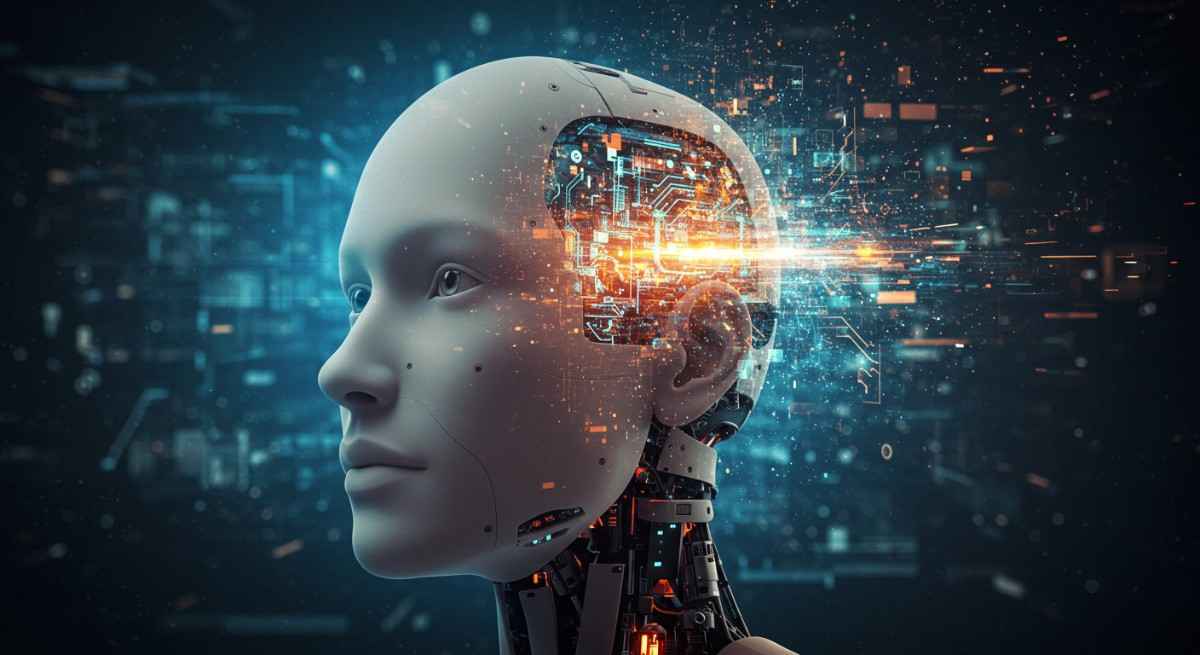
Will machines ever think, learn, and innovate like humans? This bold question lies at the heart of Artificial General Intelligence (AGI), a concept that has fascinated scientists and technologists for decades.
Unlike the narrow AI systems we interact with today—like voice assistants or recommendation engines—AGI aims to replicate human cognitive abilities, enabling machines to understand, reason, and adapt across a multitude of tasks.
Learn about Chatbots as a beginners
Current AI models, such as GPT-4, are gaining significant popularity due to their ability to generate outputs for various use cases without special prompting. While they do exhibit early forms of what could be considered AGI, they are still far from achieving true AGI.
Learn about Artificial General Intelligence in GPT-4
But what is Artificial General Intelligence exactly, and how far are we from achieving it? This article dives into the nuances of AGI, exploring its potential, current challenges, and the groundbreaking research propelling us toward this ambitious goal.
Artificial General Intelligence is a theoretical form of artificial intelligence that aspires to replicate the full range of human cognitive abilities. AGI systems would not be limited to specific tasks or domains but would possess the capability to perform any intellectual task that a human can do.
This includes understanding, reasoning, learning from experience, and adapting to new tasks without human intervention.
To qualify as AGI, an AI system must demonstrate several key characteristics that distinguish it from narrow AI applications:
Look at the relation between Artificial Intelligence and Computer Vision for road safety
Explore Top 10 trending AI podcasts
👁 Why GPT-4 Exhibits Higher General Intelligence
Learn InstructGPT vs GPT3.5 and GPT 4
The field of AGI has been significantly shaped by both early visionaries and modern influencers. Their combined efforts in theoretical research, practical applications, and ethical considerations continue to drive the field forward.
Understanding their contributions provides valuable insights into the ongoing quest to create machines with human-like cognitive abilities.
2. Nils John Nilsson:
2. Ben Goertzel:
3. Andrew Ng:
4. Yoshua Bengio:
Achieving Artificial General Intelligence (AGI) involves complex challenges across various dimensions of technology, ethics, and resource management. Here’s a more detailed exploration of the obstacles:
Human cognition is incredibly complex and not entirely understood by neuroscientists or psychologists. AGI requires not only simulating basic cognitive functions but also integrating emotions, social interactions, and abstract reasoning, which are areas where current AI models are notably deficient.
The variability and adaptability of human thought processes pose a challenge. Humans can learn from limited data and apply learned concepts in vastly different contexts, a flexibility that current AI lacks.
The computational power required to achieve general intelligence is immense. Training sophisticated AI models involves processing vast amounts of data, which can be prohibitive in terms of energy consumption and financial cost.
The scalability of hardware and the efficiency of algorithms need significant advancements, especially for models that would need to operate continuously and process information from a myriad of sources in real-time.
The development of such a technology raises profound ethical concerns, including the potential for misuse, privacy violations, and the displacement of jobs. Establishing effective regulations to mitigate these risks without stifling innovation is a complex balance to achieve.
There are also safety concerns, such as ensuring that systems possessing such powers do not perform unintended actions with harmful consequences. Designing fail-safe mechanisms that can control highly intelligent systems is an ongoing area of research.
Artificial General Intelligence requires diverse, high-quality data to avoid biases and ensure generalizability. Most current datasets are narrow in scope and often contain biases that can lead AI systems to develop skewed understandings of the world.
The problem of acquiring and processing the amount and type of data necessary for true general intelligence is non-trivial, involving issues of privacy, consent, and representation.
Current algorithms primarily focus on specific domains (like image recognition or language processing) and are based on statistical learning approaches that may not be capable of achieving the broader understanding required for AGI.
Innovations in algorithmic design are required that can integrate multiple types of learning and reasoning, including unsupervised learning, causal reasoning, and more.
AI models today excel in controlled environments but struggle in unpredictable settings—a key feature of human intelligence. AGI requires a system to adapt new knowledge across various domains without extensive retraining.
Developing algorithms that can generalize from few examples across diverse environments is a key research area, drawing from both deep learning and other forms of AI like symbolic AI.
AGI would likely need to seamlessly integrate specialized systems such as natural language processors, visual recognizers, and decision-making models. This integration poses significant technical challenges, as these systems must not only function together but also inform and enhance each other’s performance.
The orchestration of these complex systems to function as a cohesive unit without human oversight involves challenges in synchronization, data sharing, and decision hierarchies.
Each of these areas not only presents technical challenges but also requires consideration of broader impacts on society and individual lives. The pursuit of AGI thus involves multidisciplinary collaboration beyond the field of computer science, including ethics, philosophy, psychology, and public policy.
The quest to understand if machines can truly think, learn, and innovate like humans continues to push the boundaries of Artificial General Intelligence. This pursuit is not just a technical challenge but a profound journey into the unknown territories of human cognition and machine capability.
Despite considerable advancements in AI, such as the development of increasingly sophisticated large language models like GPT-4, which showcase impressive adaptability and learning capabilities, we are still far from achieving true AGI.
Learn how to use custom vision AI and Power BI to build a bird recognition app
These models, while advanced, lack the inherent qualities of human intelligence such as common sense, abstract thinking, and a deep understanding of causality—attributes that are crucial for genuine intellectual equivalence with humans.
Thus, while the potential of AGI to revolutionize our world is immense—offering prospects that range from intelligent automation to deep scientific discoveries—the path to achieving such a technology is complex and uncertain.
It requires sustained, interdisciplinary efforts that not only push forward the frontiers of technology but also responsibly address the profound implications such developments would have on society and human life.
Monthly curated AI content, Data Science Dojo updates, and more.