

Author IHOR PETRENKO
The great triangular geometry and the ukrainian knot
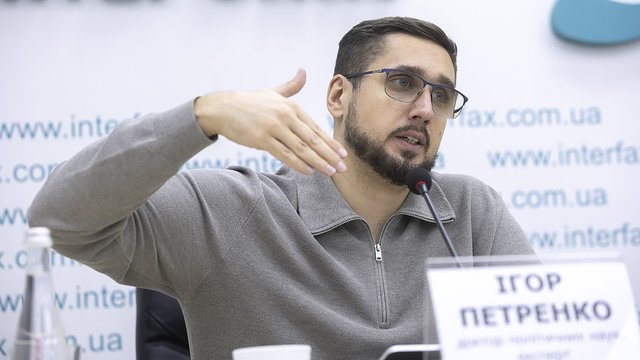
Ihor Petrenko, Doctor of Science, expert at the United Ukraine Think Tank
You know, we are often accustomed to perceiving our foreign policy through the simplified prism of “friends versus enemies.” But if we look at the 2026 map soberly, we will see that the world has finally ceased to be two-dimensional. Ukraine today finds itself at the center of a very complex geometry, where the corners of the triangle are Washington, Brussels, and Beijing. Each of these centers of power sees us in its own way, and these perceptions often contradict one another.
Let us begin with Washington. Donald Trump’s second term has finally closed the page on the “rules-based world.” The United States has not simply exited this game – they have joined in dismantling the old order, because they no longer see any value in it for their national interests. The era of “support as long as necessary” has been replaced by a harsh transactional approach. Today, American realism tells us: we will give you weapons, but you must become part of a security architecture that does not burden the U.S. budget. Moreover, Washington openly calls for the creation of a “strong Europe,” but by “strength” they mean not the geopolitical might of Brussels, but ideological alignment. For them, a “strong” Europe is one that professes conservative values, fights migration harshly, and shares the Republicans’ domestic political agenda.
In this game, the U.S. attitude toward Russia and Ukraine is determined by the desire to implement what is called the “reverse Kissinger” – to pull Moscow away from Beijing. This explains the sometimes incomprehensibly soft position of Washington toward the Russian Federation. For them, we are an instrument of containment that must be cost-effective and not interfere with the grand deal to detach Russia from China. This is a painful but necessary fact to understand.
On the other hand – Europe, which is in a state of painful rethinking. Brussels is squeezed between the fear of destabilization and unpreparedness for true strategic autonomy. We must honestly tell the Europeans: Ukraine today is your shield. It is we who give Paris, Berlin, and Warsaw time to rearm and acquire that very autonomy. Supporting us is not charity and not throwing money to the wind. It is the cheapest investment in their own security, because facing Russia one-on-one would be orders of magnitude more expensive and tragic for them.
And here appears the third force – China, which no longer plays at “neutrality.” Beijing views us as a lever of pressure on both Russia and the West simultaneously. This creates an incredibly narrow corridor for maneuver. What does this mean for us? That Ukraine’s security now depends on our ability to balance between these giants.
Proceeding from this, I propose three basic principles that must form the foundation of our foreign policy. First – the principle of maximum transactionality. No expectations of “values,” only the language of specific interests and benefits. Second – subjectivity through indispensability. We must offer solutions without which the security of none of the players is possible. And third – multi-vector resilience. We cannot afford the luxury of being merely “anti-Russia”; we must become an independent node in the network of connections between Europe, the United States, and Asia. Only in this way will we cease to be an object that is divided and become a player with whom they negotiate.
We must be useful to all three centers of power without becoming a vassal of any. This is modern political realism: to turn one’s vulnerability into geopolitical rent that the world is forced to pay us.
Let us move away from the big geopolitical arrows on maps and talk about what truly lies at the foundation of the game in the triangle of the United States–China–Europe. Why do they continue to fight over Ukraine despite the fatigue? The answer is pragmatic: resources, technologies, and Ukraine’s new role in the era of deglobalization. Today the world is experiencing fragmentation. Each bloc is trying to create its own closed production cycles, and here Ukraine becomes critically important.
We are not just grain. Ukraine in 2026 is a potential hub of “critical minerals,” without which neither the European “green transition” nor the American military-industrial complex is possible. Lithium, titanium, rare earth metals—this is what forces Washington and Beijing to look closely at our borders. Since Beijing controls over 80% of the market for these elements, Ukraine with its subsoil is almost the only alternative on the continent for the West. Control over the resources of the future is our best security guarantee, because no one will bomb factories into which billions in investments from strategic partners have been poured.
But there is another aspect in which we have already become world leaders – drone production. Drones today are the foundation of modern warfare, its “technological backbone.” We have created a unique industry that, in terms of innovation pace, outpaces any country in the world. We do not merely use technologies; we dictate the standards of future warfare. This is our unique asset that we can and must offer in exchange for strategic partnership. This is what makes us a subject: we do not ask for help; we propose joint dominance in the military technology market.
Of course, here we encounter the specifics of relations with China. Beijing promotes its interest through infrastructure – the new digital Silk Road. For them, Ukraine is the shortest path to the EU. However, we see Washington’s harsh veto on Chinese technologies in our energy or communications sectors. This creates constant tension: every step toward China provokes irritation from the United States, and every bow to Washington costs us economic contracts.
But it is precisely in this that our new role lies. Subjectivity is not when everyone loves you, but when everyone is forced to reckon with you because of your unique resource and your indispensability. Our task for the coming years is to become that very “indispensable link.” We must offer the world not only our suffering, but our capabilities: from energy hubs in our underground gas storage facilities to the production of drones and components that previously only China supplied.
Political realism teaches us: the one who survives is not the one who shouts loudest about justice, but the one whose stability is beneficial to the biggest players on the planet. It is precisely such a pragmatic Ukraine – one that is simultaneously Europe’s shield and an innovation hub – that we must present on the international arena. We must stop being an object of sympathy and become an asset without which the new world order simply cannot function.
In the world of political realism, help is not given out of pity; it is given when it is beneficial. And we must learn to sell our role in this global architecture as expensively as possible.
Thus, our task is to change the narrative. We do not “ask for help”; we propose strategic partnership in managing global risks. We are a source of military innovations, owners of critical resources, and the main donor of time for European security. Only through such an understanding of our own value can we withstand in the triangle between the United States, China, and Europe, preserving our own state and subjectivity.

