|
VOOZH | about |
|
VOOZH | about |
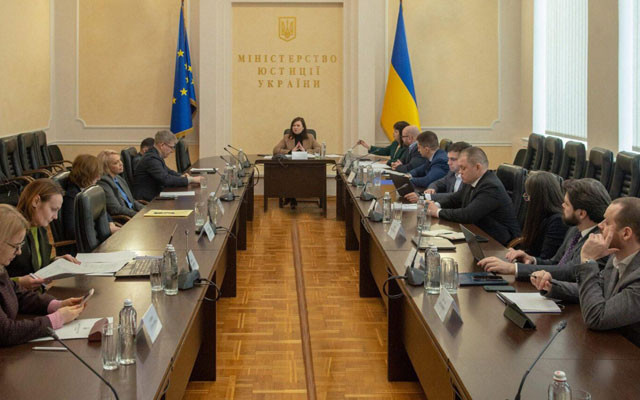
The Ministry of Justice hosted the first meeting of the working group on bar reform. But instead of professional preparation of legislative changes, we saw exactly what Armada Network Director Dale Armstrong had spoken about the day before in Kyiv: not reform, but a struggle for control over the agenda through a narrow circle of “stakeholders” who create an echo chamber of influence for themselves.
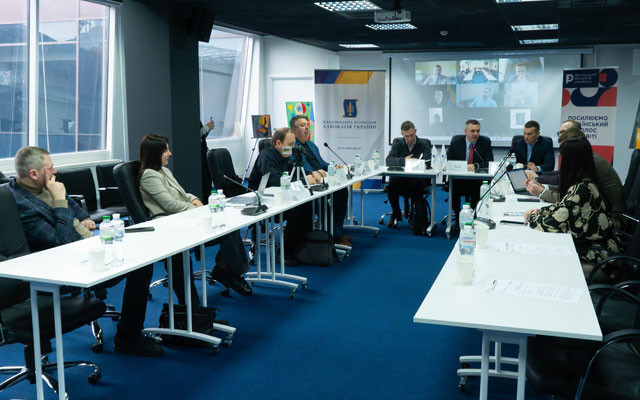
According to a report by the Judicial and Legal Gazette, on March 20, the Ministry of Justice hosted the first meeting of the Working Group on improving legislation in the field of advocacy and legal practice, established by Cabinet of Ministers Resolution No. 42 of January 12, 2026. The publication states that «all key parties were immediately involved» in the process — representatives of the Ministry of Justice, the Office of the President, the Cabinet of Ministers, members of parliament, academics, advocates, representatives of the professional community, civil society institutions and international partners.
But this is where the main problem begins: this picture does not align with the documented criticism of the group’s composition and format, which was voiced even before it began its work, reports ADVOKAT POST.
Where are “all key stakeholders” if advocacy is effectively not represented in the group?
The Bar Council of Ukraine publicly stated as early as February 19 that the working group’s membership, formed based on the Ministry of Justice’s list, does not ensure equal representation of the three institutions — the Ministry of Justice, the Verkhovna Rada, and the Ukrainian National Bar Association — designated as implementers of the Roadmap. Moreover, the group includes only one person who is a member of the bar’s self-governing bodies. The BCU explicitly called this a disregard for the proper institutional representation of the bar as a professional organization uniting over 70,000 advocates.
In other words, when it is stated that “all key parties” are already involved in the process, this contradicts the official position of the Bar Council of Ukraine, which asserts the opposite: the reform of the legal profession is being launched without the proper participation of the legal profession itself.
The Verkhovna Rada Committee identified the same problem
The relevant parliamentary Committee was even more blunt. At the meeting on February 19, deputies directly asked: who exactly and how is preparing the legislative changes, if the working group was formed as an advisory body consisting of “stakeholders,” civil society organizations, and partner entities. Deputy Committee Chairman Valerii Bozyk noted that the parliament cannot be replaced by a broad circle of stakeholders when it is the deputies themselves who will ultimately vote on the law. And Subcommittee Chairman Volodymyr Vatrus stated directly: “Once again, we are starting a conversation about reforming advocacy without involving advocacy in this reform”.
In other words, right at the start of the process, we have two established positions—those of the BCU and the parliamentary Committee — that refute the narrative of an “open professional dialogue” and “all key parties”.
Worst of all — the group doesn’t even have a verified basis for its work
Another fact that undermines the notion of a “serious start to the reform”: according to Volodymyr Vatras, participants received only a letter inviting them to submit ideas, but without a draft bill to which these proposals could be formulated. The deputy himself asked the Ministry of Justice to first prepare a draft and only then collect proposals, as well as to determine whether this involves a new law or specific amendments to the existing one.
And this is the key point.
Because reform without an analytical note, a draft bill, a comparative analysis model, or a clearly defined goal is not reform, but a political construct in which influential groups can fill the content with anything.
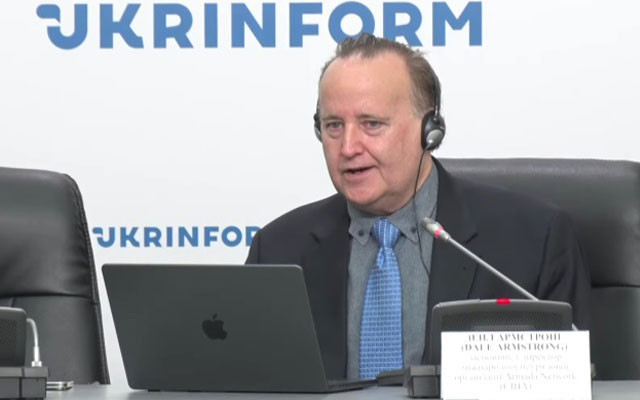
This is exactly what American expert Dale Armstrong described recently
At the presentation of the Armada Network report on March 19 at Ukrinform, Dale Armstrong explicitly warned that the “roadmap” had begun to be used not as a framework document, but as a justification for radical restructuring being pushed by certain actors without a professional mandate. In the full text of his speech, which is available to the editorial staff, Armstrong said that the struggle surrounding advocacy is no longer a dispute over the interpretation of the document, but a struggle over who will control the reform agenda.
This directly aligns with the main conclusion of the Armada report itself: the government’s Roadmap on the Rule of Law is a framework and programmatic document — the so-called Roadmap does not impose a specific institutional model for the bar, leaving room for national discretion provided that independence and professional autonomy are respected. The report also explicitly warns that the practice of shadow reporting in certain cases goes beyond the Roadmap’s mandate and substitutes its objectives with its own institutional projects, while the repetition of the same talking points by a narrow circle of organizations creates the illusion of consensus.
And this is exactly what we are seeing in practice right now: there is no draft law, no full institutional representation, no explanation of the model, but there is already a group, there are already “stakeholders,” and there is already a political framework for “reform.”
“All key stakeholders” does not mean a large number of representatives from civil society organizations, but rather a mandate and accountability
In Ukrinform’s announcement of the Armada Network presentation, the following was explicitly listed among the key topics: And now we have a perfect example of what is described there as a problem: the representative mandate is being replaced by a “broad circle of stakeholders,” and the professional institution by a set of external or semi-external groups that bear no responsibility for the system,
but want to set the rules for it.
What actually happened
So, if we set aside the official rhetoric and the fancy headlines about “new laws”, the essence of the event is as follows:
The Ministry of Justice launched a working group without adequate institutional participation from the advocacy community.
What is presented as “the start of a new phase of bar reform” actually looks like the launch of a politically driven process lacking an analytical foundation. When there is no draft law but a circle of “stakeholders” has already been formed; when there is no mandated representation of the profession but there are already statements about “parity”; when there is no verified data but there is already a framework for “reform” — this signifies not substantive preparation, but a struggle for control over the future law.
And it is precisely in this sense that yesterday’s meeting served not as a refutation, but as confirmation of what Dale Armstrong had warned: the roadmap has begun to be used not as a framework for modernization, but as a pretext for institutional restructuring under the control of influential groups, which themselves create a media and expert echo chamber for their own benefit.
Rule of Law Roadmap
The Ministry of Justice hosted the first meeting of the working group on bar reform. But instead of professional preparation of legislative changes, we saw exactly what Armada Network Director Dale Armstrong had spoken about the day before in Kyiv: not reform, but a struggle for control over the agenda through a narrow circle of “stakeholders” who create an echo chamber of influence for themselves.
Rule of Law Roadmap
Following its presentation in Brussels, the report «The Ukrainian advocacy in the context of the rule of law and European integration» made its way to Kyiv. It highlighted critical issues both in understanding the very nature of the self-governing profession and in the emergence of a «shadow market» surrounding the Ukrainian advocacy.
Rule of Law Roadmap
On March 13, a meeting was held of the «Organization of the advocacy and self-government» subgroup of the Working Group on the implementation of the Rule of Law Roadmap regarding bar reform. The event was conducted via videoconference.
Guarantees of the practice of law
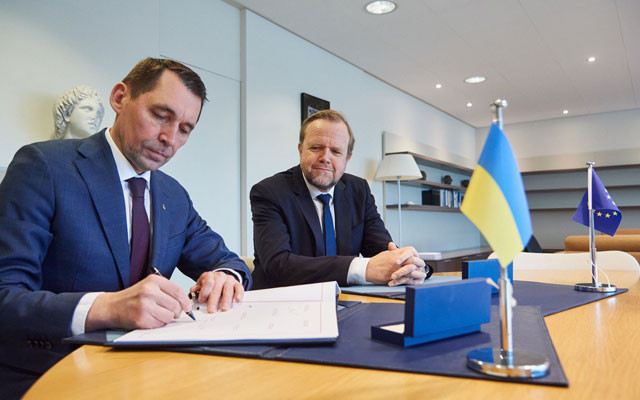
Today, on 9 March, Ukraine's Permanent Representative to the Council of Europe Mykola Tochytskyi signed the Council of Europe Convention for the Protection of the Profession of Lawyer. This makes our country the 28th to sign this important international treaty.
Discussion
The state interferes most intensively with the human right to liberty when choosing a preventive measure. At this stage, the standard of proof of risk becomes the actual measure of the real meaning of the presumption of innocence.
European integration
Is the state protecting society from crime today, or is it gradually destroying the rule of law under the guise of this fight? These alarming trends were outlined by the President of the UNBA, BCU Lidiya Izovitova, during her speech at the 54th European Conference of bar presidents.
Discussion
The Ukrainian National Bar Association held a roundtable discussion entitled «Artificial Intelligence in the цork of advocates: ethics, responsibility, legal process engineering». Participants discussed how artificial intelligence systems are already being used in the professional activities of advocates and where the ethical boundaries of what is permissible lie.
European integration
The Roadmap on the rule of law is not a law, directive, or other binding regulatory act and, accordingly, does not establish direct legal obligations regarding a specific institutional model of bar self-government.
Volodymyr Matsko Extradition during wartime: when the risks outweigh the request
👁 Volodymyr MatskoVolodymyr Matsko Extradition as a systemic form of rights violations
👁 Victoria Yakusha, Law and BusinessVictoria Yakusha, Law and Business The anti-corruption vertical cannot «take care» of the Bar as an institution, - acting head of the HQDCB
👁 Censor.netCensor.net Protecting advocates – protecting justice: addressing concerns about the new law
👁 Ihor KolesnykovIhor Kolesnykov A BRIEF SUMMARY REGARDING THE APPLICATION OF THE ORDER ON EXTENDED CONFISCATION IN LATVIA REGARDING FINANCIAL ASSETS OF…
👁 Valentyn GvozdiyValentyn Gvozdiy WORKING IN A WAR ZONE
👁 Lydia IzovitovaLydia Izovitova Formula of perfection
👁 Sergiy VylkovSergiy Vylkov Our judicial system is so built that courts do not trust advocates
© 2026 Unba.org.ua.
All rights reserved.
Privacy Policy and Terms of Use | Contacts | For Press
The Ukrainian National Bar Association (hereinafter - "the UNBA"). Reproduction or other use of materials published on this website is allowed, provided that the source is acknowledged. Internet publishers and media may use the site materials and post videos from the UNBA official website on their own web pages, provided that the hyperlinks to the official website of the Ukrainian National Bar Association are made. It is prohibited to reprint and use the materials containing links to other Internet publications and media. Materials labeled with "Advertisement" are published as advertisements.