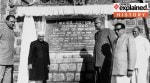
Bhimrao Ramji Ambedkar, popularly known as Baba Saheb was a politician, economist, jurist and social reformer in India. He is attributed to have given shape to the Dalit movement in the country. Ambedkar was born on April 14, 1891 at Ratnagiri district of Maharashtra to a low caste family. Ambedkar completed his school education from Elphinstone High School in Bombay and then went on to acquire a doctorate in Economics from Columbia University, New York and then subsequently another degree from London School of Economics. Ambedkar was fiercely apposed to the idea of untouchability and propagated the need for education among the lower castes in order to uplift them. Ambedkar was at logger heads with Gandhi on the issue of caste uplift. While both agreed on the necessity of imporving conditions for lower castes, it is the precise process for achieving this that they both disagreed upon. After independence, Ambedkar served as the first law minister of India and also as the chairman of the constitution drafting committee. The influence of Ambedkar's economic, social and political contributions can be felt till date in the country's economic planning and social welfare programs. He converted to Buddhism immediately preceding his death. Three days before his death he had finished the manuscript of his last major work, "The Buddha and his Dhamma."
Dalit organisations, under different banners, have now approached Hyderabad police demanding that Prasad be booked under the Scheduled Caste and Scheduled Tribes (Prevention of Atrocities) Act.
“No Government can exercise its power in such a manner as to provoke the Muslim community to rise in rebellion. I think it would be a mad Government if it did so. But that is a matter which relates to the exercise of the power and not to the power itself.”
Shahid Diwas, Mahatma Gandhi Ambedkar Debate: In 1931, Mahatma Gandhi questioned Ambedkar about his criticism of the Congress. Ambedkar's answer captures the heart of the many disagreements between the two.
Civil society shows us how laws function in practice. Academic and public debate elucidate norms before they can be litigated. Combined, these spaces make up the ecosystem that decides whether constitutional promises live on
Constituent Assembly member K T Shah moved the amendment to add the two words to Article 1. However, Dr Ambedkar, who passed away on December 6, 1956, found it “superfluous”.
President Pranab Mukherjee, Vice President Hamid Ansari and Prime Minister Manmohan Singh led the nation in paying homage to Babsaheb Ambedkar on his 122nd birth anniversary.
Fresh IBC amendments: How govt looks to plug gaps in insolvency code
Explained1 hr ago
The Parliament has passed the Insolvency and Bankruptcy Code (Amendment) Bill, 2026 to make the resolution process faster and introduce new provisions such as an out-of-court mechanism, group insolvency, and cross-border insolvency.




![👁 How can someone be the deputy leader [of the AAP] in the Upper House if they’re not willing to take on the BJP?](https://images.indianexpress.com/2026/01/Atishi.jpg?resize=150,83)