Budget 2026: The Union Budget 2026, set to be presented on February 1, 2026, is eagerly awaited as it comes at a pivotal time for the Indian economy. The budget is expected to focus on revitalizing economic growth, addressing inflation, and fostering an environment conducive to investment and innovation.
Key sectors such as infrastructure, healthcare, and education are anticipated to receive substantial allocations to boost overall development. The government is likely to introduce measures to enhance rural and agricultural development, aiming to uplift farmers' incomes and ensure food security.
Digital transformation will remain a priority, with potential new incentives for startups and advancements in technology adoption across various sectors. There is also an expectation of policies aimed at enhancing the ease of doing business, thereby attracting foreign investment and stimulating domestic entrepreneurship.
Tax reforms are another area of interest, with possible adjustments to personal and corporate tax structures to provide relief to the middle class and promote business growth. The government may also introduce policies to support green energy initiatives, reflecting a commitment to sustainable development and addressing climate change concerns.
A structurally constrained fiscal environment: Kerala’s revenue receipts for 2026-27 are estimated at around Rs 1,82,972 crore, while revenue expenditure is projected at nearly Rs 2,17,559 crore
This will be a challenging year for state finances, es pecially if a prolonged conflict in West Asia and a strong El Niño worsen India’s growth inflation dynamics
The budget proposed 15 new primary health centres and 10 Namma Clinics, apart from allocating Rs 35 crore for healthcare infrastructure within BECC limits.
Parliament Budget Session 2026 Live Updates: PM Modi in Rajya Sabha outlined India’s position on the ongoing West Asia conflict and its implications for energy security. He said India remains in contact with Iran, Israel, and the United States, and highlighted that over 3.75 lakh people have returned to the country since the conflict began.
One of the Kuki-Zo MLAs who took part virtually, LM Khaute, pointed out that Vungzagin Valte, the MLA who was brutally assaulted in 2023 and died last month, has not yet been buried due to unresolved demands.
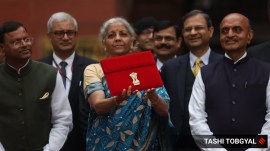
Union Budget 2024 (Interim) in PHOTOS: Union Finance Minister Nirmala Sitharaman presented the interim Budget today, months ahead of the Lok Sabha polls.
53.7% 403 of 750 families in Katra Sadatganj have no access to toilets and defecate in the open, according to NGO Sulabh International’s UP head Avinash Kumar.
Budget 2019: Indian Express Rural Affairs Editor Harish Damodaran and Consulting Editor Shaji Vikraman take a deep dive and explain fine prints of the Union Budget presented by Finance Minister Piyush Goyal in Lok Sabha today.
Saloni Roy, Senior Director, Deloitte India (Indirect Tax) says that she hopes that India won't raise customs duties in the Vote on Account on February 1 since it would mean taking a more protectionist stance.
Saloni Roy, Senior Director, Deloitte India (Indirect Tax) says that measures other than customs duties should be used to provide a boost to the Make in India campaign.
Description:Saloni Roy, Senior Director, Deloitte India (Indirect Tax) says that not many changes are expected to be announced in customs duties since it is a Vote on Account.
Poorva Prakash, Senior Director, Deloitte India, says that the upcoming Vote on Account could give multiple personal tax concessions in order to make it a popular. She explains what can be expected on February 1.
Poorva Prakash, Senior Director, Deloitte India, explains that as a trend Finance Ministers don't make any major personal tax changes in a Vote on Account. However, she expects the Finance Minister to lay a roadmap for tax sops in this.
‘There’s almost no one to offer it’: Tiruppur Subramaniam on Ajith’s big fee demand
Entertainment32 min ago
Tamil film financier Tiruppur Subramaniam sheds light on the ongoing delay in Ajith Kumar's next project, attributing it to the actor's high salary demands and the shortage of big-investment studios in the industry. He suggests that Ajith consider profit-sharing models with production houses to continue making films.