VOOZH about

The Indian Express

⇱ NASA Artemis 2 Rocket Launch LIVE: Artemis II Mission Launch Date, Time, Crew Information, Latest News and Updates


👁 Award Trophy
👁 Chetak
👁 Screen
Co Presented
By
👁 Campa
Celebration
Partner
  • Retail Partner

  • Style Partner

  • Strength Partner

  • In Partnership With

  • Industry Partners

  • Crafted By

  • Radio Partner

  • Broadcast Partner

  • OOH Partner

  • Scripted & Directed by

skip to content
Advertisement

NASA Artemis II Rocket Launch highlights: Astronauts carry out moon mission’s first objective

Nasa Artemis 2 Rocket Launch Date, Time Live Update: Nasa returns to lunar exploration after five decades since the Apollo era. Follow this LIVE blog for the latest developments on the Artemis II mission.

Updated: Apr 3, 2026 09:00 PM IST
👁 The Artemis II has liftoff with a successful engine cutoff and separation of the Space Launch System core stage. (Image: Nasa)
The Artemis II has liftoff with a successful engine cutoff and separation of the Space Launch System core stage. (Image: Nasa)

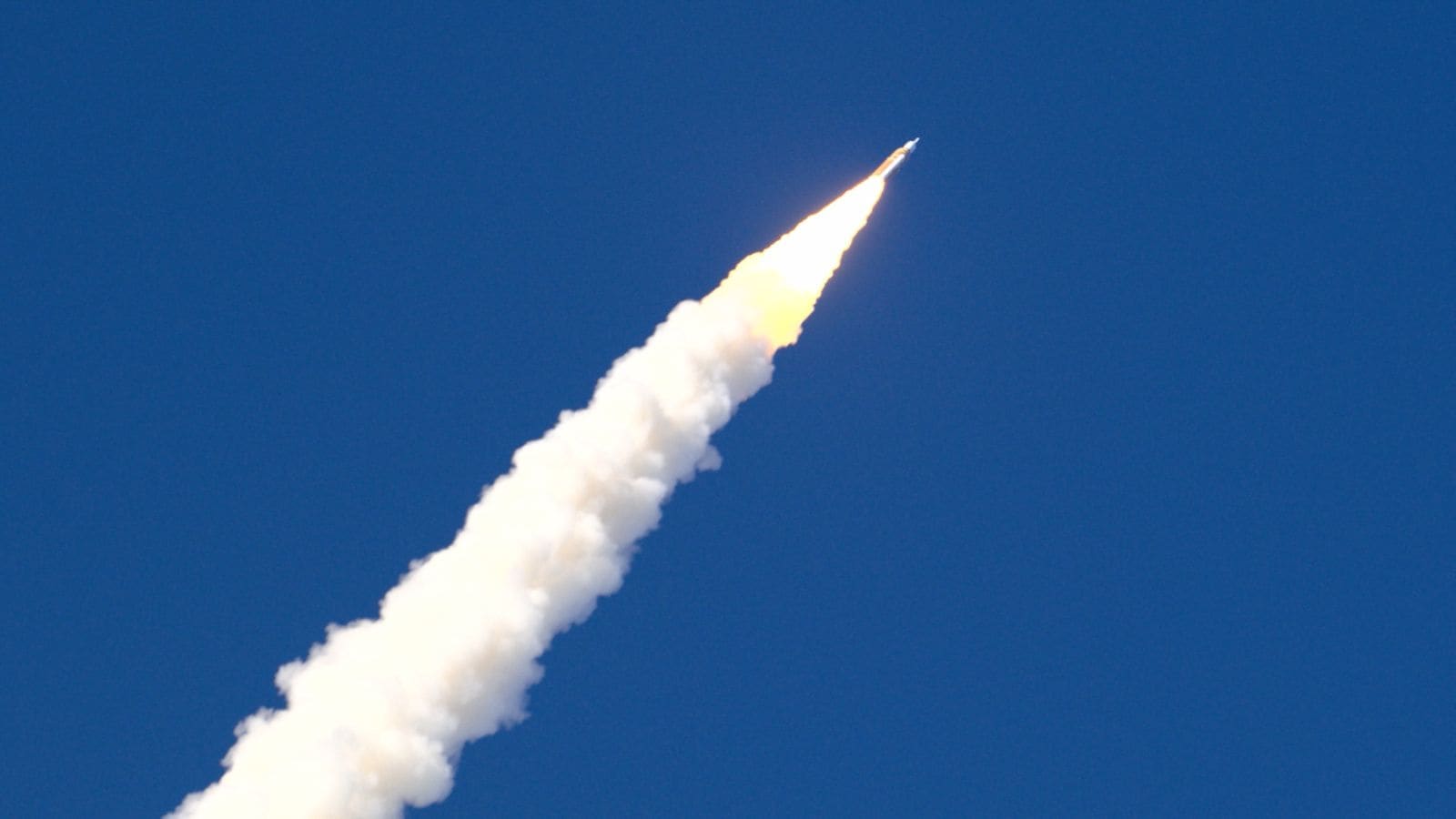
Nasa Artemis 2 Rocket Launch LIVE Updates: Artemis II has successfully lifted off from Kennedy Space Center, with the Space Launch System and Orion spacecraft carrying astronauts Reid Wiseman, Victor Glover, Christina Koch, and Jeremy Hansen on a landmark journey around the Moon.

The twin solid rocket boosters and four RS-25 engines combined to generate 8.8 million pounds of thrust, powering the 5.75-million-pound rocket off the pad as umbilicals detached, marking the transition to fully autonomous flight.

👁 Image
Story continues below this ad

Why NASA isn’t landing on the Moon this time: Artemis’ plans for future

This roughly 10-day mission is the first crewed flight of NASA’s Artemis programme, aimed at testing systems for future lunar exploration and paving the way for eventual human missions to Mars.

Artemis II lifts off: Four astronauts begin a journey marking a new era in space travel

With this mission, the United States is marking a significant return to lunar exploration after nearly 50 years since the Apollo missions. Nasa is also set to achieve historic milestones — sending the first woman, the first person of colour, and the first non-American astronaut on a journey around the Moon.

Artemis II launch date: How and where to watch

You can follow live updates of Nasa’s Artemis II mission on indianexpress.com. Coverage begins at 7:45 am on April 1 via Nasa’s YouTube channel as teams start fueling the SLS rocket. Comprehensive coverage on NASA+ will start at 12:50 pm. You Can watch live mission coverage on Nasa YouTube

Artemis II mission

Artemis II marks the first crewed mission using Nasa’s SLS rocket and Orion spacecraft. The astronauts will evaluate these systems in preparation for future missions, including Artemis IV, which aims for a Moon landing in 2028. The four-member crew, comprising three Americans and one Canadian, will also conduct a lunar flyby during the mission and not land on the moon. 

Stay tuned to this LIVE blog for continuous updates on the Artemis II mission.

Live Updates
Apr 2, 2026 06:32 PM IST
Artemis II crew aces Orion proximity ops test with ICPS manoeuvres

The Artemis II crew successfully completed the proximity operations demonstration, concluding one of the mission’s early objectives and providing valuable data on how the Orion spacecraft, named Integrity, performs during manual close‑range maneuvering around another spacecraft. Over the course of the approximately 70‑minute activity, the crew guided the spacecraft through a series of controlled approach and retreat manoeuvres using the detached ICPS (interim cryogenic propulsion stage) as a reference target.

At the conclusion of the demonstration, Orion executed an automated departure burn to safely back away from the ICPS, after which the stage will perform its own disposal burn to re‑enter Earth’s atmosphere over a remote region of the Pacific Ocean.

Apr 2, 2026 05:32 PM IST
Artemis 10- day plan: Day 10 schedule

On flight day 10 of Artemis II, the crew aboard the Orion spacecraft prepares for reentry with a final trajectory correction burn before separating from the service module.

The capsule then reenters Earth’s atmosphere under extreme heat, deploys parachutes to slow its descent, and safely splashes down in the Pacific Ocean, marking the end of the mission.

Apr 2, 2026 05:29 PM IST
Artemis 10- day plan: Day 9 schedule

On flight day 9 of Artemis II, the crew prepares for reentry by reviewing procedures, coordinating with flight control, and performing a final trajectory correction burn to keep the Orion spacecraft on course for Earth.

They also conduct final system demonstrations, including testing backup waste systems and fitting compression garments to help their bodies readjust to gravity after returning home.

Apr 2, 2026 05:13 PM IST
Artemis 10- day plan: Day 8 schedule

On flight day 8 of Artemis II, the crew aboard the Orion spacecraft conducts radiation protection tests by building a shelter and studying exposure levels in deep space.

They also perform manual piloting demonstrations, testing Orion’s maneuverability and comparing different attitude control modes.

Apr 2, 2026 04:35 PM IST
Artemis 10- day plan: Day 7 schedule

On flight day 7 of Artemis II, the Orion spacecraft exits the Moon’s sphere of influence as astronauts share insights with scientists on Earth before beginning their journey home.

The crew then performs the first return trajectory correction burn to adjust their path back to Earth, followed by a largely off-duty period for rest after the intense lunar flyby.

Apr 2, 2026 04:23 PM IST
Artemis 10- day plan: Day 6 schedule

On flight day 6 of Artemis II, the crew aboard the Orion spacecraft makes its closest approach to the Moon, traveling 4,000–6,000 miles above the surface and potentially setting a new record for the farthest distance humans have ever traveled from Earth — surpassing Apollo 13.

Astronauts spend the day capturing images and observations of the lunar surface, documenting geological features under varying sunlight conditions, while briefly losing communication with Earth as they pass behind the Moon.

Apr 2, 2026 03:43 PM IST
Artemis 10- day plan: Day 5 schedule

On flight day 5 of Artemis II, the Orion spacecraft enters the Moon’s sphere of influence, where lunar gravity overtakes Earth’s.

The crew spends much of the day testing their Orion Crew Survival System suits for emergency readiness, followed by the final outbound trajectory correction burn to fine-tune their path ahead of the lunar flyby.

Apr 2, 2026 03:05 PM IST
Artemis 10- day plan: Day 4 schedule

On flight day 4 of Artemis II, the crew conducts a second outbound trajectory correction burn to further refine the path of the Orion spacecraft toward the Moon.

Astronauts also spend time preparing for lunar observations by reviewing specific surface targets they will image during the flyby, along with a dedicated window to capture photos of Earth, the Moon, and other celestial objects.

Apr 2, 2026 02:09 PM IST
Artemis 10- day plan: Day 3 schedule

On flight day 3 of Artemis II, astronaut Jeremy Hansen prepares for the first outbound trajectory correction burn to keep the Orion spacecraft on course to the Moon.

The crew also conducts safety and medical demonstrations, including CPR in microgravity and equipment checks, while Christina Koch tests emergency communications with the Deep Space Network. The day concludes with a full crew rehearsal for upcoming lunar observation activities.

Apr 2, 2026 01:45 PM IST
Artemis 10- day plan: Day 2 schedule

On Artemis II, astronauts Reid Wiseman and Victor Glover begin their day by testing Orion’s exercise equipment, while Christina Koch prepares for the mission’s key translunar injection (TLI) burn that will send the Orion spacecraft toward the Moon on a free-return trajectory.

After the burn, the crew transitions to lighter activities, including adapting to space conditions and taking part in space-to-ground communications, marking a shift into the next phase of their journey.

Apr 2, 2026 01:23 PM IST
Google celebrates Artemis II launch with a new Doodle

Following the successful launch of NASA’s Artemis II mission, Google is marking the occasion with a special Doodle. For a quick recap, Artemis II will send astronauts around the Moon and back, making it the first crewed lunar mission since the Apollo program over 50 years ago. During the 10-day journey, the crew will travel farther into space than any humans have gone since that era.

Today’s #googledoodle celebrates the launch of Artemis II, the @NASA mission that will send astronauts around the moon and back for the first time in over 50 years. During the approximately 10-day voyage, the crew will test the spacecraft’s systems while traveling farther into… pic.twitter.com/i8fKlOsI8P
— Google (@Google) April 1, 2026
Apr 2, 2026 12:23 PM IST
What are NASA’s SLS secondary payloads?

NASA’s Space Launch System (SLS) isn’t just built to carry astronauts. It also doubles as a launch platform for smaller missions. Known as secondary payloads, these are compact satellites, often CubeSats, that hitch a ride alongside the primary Orion spacecraft.

👁 Image

Image: Nasa

Stored inside the Orion Stage Adapter, these mini-spacecraft are deployed after Orion safely separates, using spring-loaded mechanisms. This allows NASA and its partners to send multiple experiments into deep space at a lower cost.

On Artemis II, four such CubeSats are flying along, supporting additional science and technology demonstrations, making the mission more than just a lunar flyby.

Apr 2, 2026 12:17 PM IST
Artemis II completes key proximity operations test, next burn planned

NASA’s Artemis II crew has successfully completed a critical proximity operations demonstration, marking an early milestone in the mission, according to a NASA blog update.

The test involved manually flying the Orion spacecraft near its upper stage to evaluate handling and navigation in close-range conditions.

With the manoeuvre complete, the mission is now preparing for the next major step, which is a perigee raise burn that will adjust Orion’s orbit and set it on course for its journey toward the Moon. The milestone is part of a series of system checks designed to validate spacecraft performance during the 10-day lunar flyby.

Apr 2, 2026 06:27 AM IST
Astronauts resolve issues with toilet system

Christina Koch ran into trouble with the toilet, seconds after starting it up.

“The toilet shut down on its own, and I have a blinking amber fault light,” she told Mission Control. She was advised to use a handheld bag-and-funnel system for now — CCU, short for Collapsible Contingency Urinal — while flight controllers pondered how best to deal with the so-called lunar loo.

The toilet is located in the “floor” of the capsule, with a door and curtain for privacy. It’s an upgraded version of an experimental toilet that launched to the International Space Station in 2020. That station toilet is currently out of order; two others are working fine.

AP

Apr 2, 2026 05:32 AM IST
Artemis II reaches orbit after communication link re-established

Mission Control’s communication link with the orbiting capsule cut out after switching from one tracking and data relay satellite to another. But the problem was quickly resolved by resetting ground equipment.

As reported by BBC, "The view of Australia was epic just now, it is amazing to be at this altitude," said Reid Wiseman, the Artemis II commander.

AP

Apr 2, 2026 04:31 AM IST
Artemis II powers up as Orion solar arrays fully deploy

The Artemis II has completed another milestone as the Orion spacecraft’s solar array wings have fully deployed, with all four panels successfully unfolding and beginning to generate power.

Extending to a wingspan of about 63 feet, the arrays — mounted on the European Service Module — will provide continuous electricity for life support, communications, and onboard systems throughout the journey, using thousands of solar cells that track the Sun for maximum efficiency.

Up next, the mission will carry out key orbital manoeuvres to raise Orion’s trajectory, followed by preparations for a proximity operations demonstration to test manual spacecraft control.

Apr 2, 2026 04:16 AM IST
Artemis II core stage separation after liftoff

The Artemis II has reached a outerspace with main engine cutoff and successful separation of the Space Launch System core stage, marking the end of the first propulsion phase and transition to upper-stage operations.

Up next, the Orion spacecraft will deploy its solar array wings, which will provide continuous power for life support, communications, and onboard systems during its journey to the Moon.

Apr 2, 2026 04:08 AM IST
Artemis II takes flight, sending humans back toward deep space

Artemis II has successfully lifted off from Kennedy Space Center, with the Space Launch System and Orion spacecraft carrying astronauts Reid Wiseman, Victor Glover, Christina Koch, and Jeremy Hansen on a landmark journey around the Moon.

The twin solid rocket boosters and four RS-25 engines combined to generate 8.8 million pounds of thrust, powering the 5.75-million-pound rocket off the pad as umbilicals detached, marking the transition to fully autonomous flight.

This roughly 10-day mission is the first crewed flight of NASA’s Artemis programme, aimed at testing systems for future lunar exploration and paving the way for eventual human missions to Mars.

Apr 2, 2026 04:06 AM IST
Liftoff! NASA launches Artemis II on historic Moon mission

At T-0, the Artemis II officially begins as the twin solid rocket boosters ignite, releasing a massive surge of thrust that lifts the Space Launch System off the launch pad. In the same instant, umbilical connections detach and the rocket clears the tower, marking humanity’s return to deep space with astronauts aboard.

Apr 2, 2026 04:03 AM IST
From T-10 to liftoff: How Artemis II reaches the launch moment

As Artemis II enters its final moments, NASA’s Ground Launch Sequencer takes control through a precise series of automated steps — from retracting the crew access arm and arming safety systems to igniting the Space Launch System engines — culminating in booster ignition and liftoff at T-0.

See the list below of the terminal count milestones: 

T-10 minutes and counting 

  • T-10M – GLS initiates terminal count 
  • T-8M – Crew Access Arm retract 
  • T-6M – GLS go for core stage tank pressurization   
  • T-6M – Orion ascent pyros are armed 
  • T-6M – Orion set to internal power 
  • T-5M57S – Core stage LH2 terminate replenish 
  • T-5M20S – LAS capability is available 
  • T-5M20S – NTD lets commander knows LAS capability is available 
  • T-4M40S – GLS go for LH2 high flow bleed check 
  • T-4M30S – Flight termination system armed 
  • T-4M – GLS is go for core stage auxiliary power unit (APU) start 
  • T-4M – Core Stage APU starts 
  • T-4M – Core stage LOX terminate replenish 
  • T-3M30S – ICPS LOX terminate replenish   
  • T-3M10S – GLS go for purge sequence 4  
  • T-2M02S – ICPS switches to internal battery power 
  • T-2M – Booster switches to internal batter power 
  • T-1M30S – Core stage switches to internal power   
  • T-1M20S – ICPS enters terminal countdown mode   
  • T-50S – ICPS LH2 terminate replenish 
  • T-33S – GLS sends “go for automated launch sequencer” command 
  • T-30S – Core stage flight computer to automated launching sequencer   
  • T-12S – Hydrogen burn off igniters initiated   
  • T-10S – GLS sends the command for core stage engine start  
  • T-6.36S– RS-25 engines startup   
  • T-0 – Booster ignition, umbilical separation, and liftoff  
  • Apr 2, 2026 04:00 AM IST
    Artemis II enters final minutes as crew access arm retracts

    With just five minutes remaining in the countdown, the Artemis II has entered its final pre-launch phase at Kennedy Space Center.

    The crew access arm — the path astronauts used to board the Orion spacecraft — has now been fully retracted and disconnected, marking a key milestone as the rocket stands isolated on the pad, ready for liftoff.

    Weather conditions remain highly favourable at 90 per cent “go,” and all systems are aligned as the mission approaches the final moments before launch.

    Apr 2, 2026 03:51 AM IST
    Artemis II countdown to resumes as launch director gives final ‘go’

    NASA to resume the countdown for Artemis II after a planned hold at T-10 minutes, with the launch director officially giving the “go” to proceed toward liftoff.

    With final checks completed and systems cleared, the countdown is now back on track for launch from Kennedy Space Center.

    Apr 2, 2026 03:44 AM IST
    Nasa Artemis II: Battery issue 'will not affect the launch'

    NASA has reported that one of the two batteries in the launch abort system on Artemis II is showing an unexpected temperature reading, but engineers believe this is an instrumentation issue rather than a hardware fault.

    The agency noted that earlier readings from the same battery were within normal range, reinforcing confidence that the anomaly is linked to sensor data rather than an actual temperature problem, and is not expected to impact launch operations.

    Apr 2, 2026 03:32 AM IST
    NASA clears Artemis II for launch as sensor issue deemed non-critical

    NASA’s Artemis II has entered its final countdown phase as the closeout crew completed all prelaunch tasks and departed Launch Complex 39B at Kennedy Space Center in Florida, leaving the Orion spacecraft sealed and flight-ready.

    With the spacecraft fully configured, control has now shifted to launch teams, marking a key milestone toward liftoff after hours of detailed checks and preparations. Engineers also reviewed a temperature reading on the launch abort system battery. NASA states that the sensor-related issue will not impact the launch.

    Adding to the positive outlook, weather conditions have improved further, now standing at a 90% “go” for launch.

    Apr 2, 2026 03:21 AM IST
    From faith to family: Inside Artemis II astronaut's personal cargo

    Astronauts on Artemis II are carrying meaningful personal items for their journey around the Moon, reflecting their individual stories and connections to home.

    Pilot Victor Glover is bringing his Bible, while Jeremy Hansen will carry four moon pendants previously worn by his family. Commander Reid Wiseman has chosen a notebook and pencil to record his thoughts, and mission specialist Christina Koch is taking handwritten messages from loved ones for comfort during the mission.

    👁 Image
    Apr 2, 2026 03:11 AM IST
    Artemis II faces new concern over launch abort system battery temperature

    NASA has reported a temperature issue with the launch abort system battery on Artemis II, with readings currently outside the acceptable range — a concern that engineers must assess before proceeding with liftoff.

    The launch abort system (LAS) battery is a critical component of the Orion spacecraft’s safety architecture, providing the electrical power needed to activate the abort system in an emergency. If something goes wrong during launch, the LAS would rapidly fire powerful motors to pull the crew capsule away from the rocket, carrying astronauts to a safe distance before parachute-assisted descent.

    The battery ensures that this system can respond instantly and independently, even if other onboard power systems fail. Maintaining it within a strict temperature range is essential, as extreme conditions could affect its performance or reliability during a high-stress abort scenario.

    Apr 2, 2026 03:06 AM IST
    White room is detached from the spacecraft

    Weather conditions for the Artemis II launch have improved to a 90% “go,” up from the earlier 80%, boosting confidence as the countdown enters its final stretch at Kennedy Space Center.

    The astronauts are now fully sealed inside the Orion spacecraft, with the White Room detached — marking the moment when ground personnel depart, leaving only the four crew members onboard ahead of liftoff.

    Apr 2, 2026 02:58 AM IST
    NASA says the mission is a 'go'

    With less than an hour to go before the launch window opens, Artemis II is entering its final phase of countdown toward liftoff. Engineers have successfully resolved the earlier communication issue with the flight termination system and completed a confidence test, ensuring the critical safety mechanism is fully operational.

    At the same time, the Orion spacecraft has been sealed in its final configuration, with the launch abort system hatch securely closed and verified for pressure integrity and alignment.

    Apr 2, 2026 02:46 AM IST
    Artemis II countdown back on track after critical system fix

    Nasa states that engineers have resolved the communication issue with the flight termination system on Artemis II, successfully completing a confidence test to confirm the hardware can send a destruct signal if required for public safety.

    At the same time, technicians have completed the launch abort system hatch closure on the Orion spacecraft, ensuring the crew module is fully sealed, aligned, and pressure-secure for flight. With these critical checks complete, Orion is now in its final launch configuration.

    Apr 2, 2026 02:37 AM IST
    NASA prepares workaround test for flight termination system glitch

    Without confirming the system’s reliability, the launch would be a no-go, but Nasa states that their engineers have now developed a potential workaround and are preparing to test it.

    Despite the ongoing issue with the flight termination system, NASA teams continue the final countdown steps for Artemis II, including closing the hatch on the Orion spacecraft.

    The closeout crew will be the last people seen by astronauts Reid Wiseman, Victor Glover, Christina Koch, and Jeremy Hansen before their 10-day journey around the Moon.

    Apr 2, 2026 02:19 AM IST
    NASA working to resolve last-minute glitch before Artemis II liftoff

    Engineers are working to resolve a communications issue with the flight termination system on the Artemis II, a critical safety mechanism designed to destroy the rocket if it veers off course.

    The problem, identified during pre-launch checks, is at the ground level and is preventing controllers from fully testing the system, with teams attempting a fix using legacy hardware from the Space Shuttle program.

    The termination system must be fully operational before launch; in an emergency, the launch abort system would carry the Orion spacecraft and its astronauts to safety, after which the flight termination system would destroy the rocket to prevent it from endangering populated areas.

    While the countdown is continuing, the launch will be declared a no-go if the issue is not resolved within the launch window.

    Apr 2, 2026 02:15 AM IST
    189 Items on the menu of Artemis II: Here is everything that the astronauts will eat

    Here is everything that the crew, Reid Wiseman, Victor Glover, Christina Koch, and Jeremy Hansen, will eat during their 10-day mission across moon.

    👁 Image
    Apr 2, 2026 02:04 AM IST
    -1:50:00 to expected Artemis II mission launch window

    Just 1 hour 50 minutes remain until the launch window for Artemis II opens at Kennedy Space Center, scheduled for 6:24 p.m. EDT (3:54 a.m. IST on April 2, 2026).

    The Space Launch System and Orion spacecraft stand ready at Launch Complex 39B to carry astronauts Reid Wiseman, Victor Glover, Christina Koch, and Jeremy Hansen on a 10-day mission around the Moon and back.

    Apr 2, 2026 01:55 AM IST
    Moon mission history

    Artemis II will bridge a 54-year gap since humans last ventured beyond Earth orbit during Apollo 17, marking a major return to deep space exploration.

    Only 24 people, all Americans, have ever travelled to the Moon under the Apollo program between 1969 and 1972, with 12 walking on its surface, while Apollo 13 was forced to abort after a critical failure.

    👁 Image

    Apollo 11(Image: Nasa)

    Among the surviving moonwalkers are Buzz Aldrin, who flew with Neil Armstrong, along with David Scott, Charles Duke, and Harrison Schmitt.

    The Apollo era ended early after Richard Nixon cancelled later missions due to declining public interest and budget constraints.

    Apr 2, 2026 01:50 AM IST
    Orion hatch secured as Artemis II moves closer to launch

    NASA teams are completing final closeout steps for the Artemis II by installing the crew module hatch service panel on the Orion spacecraft, securing critical connections and protecting the hatch area for flight.

    With systems around the hatch verified and sealed, countdown operations continue at Kennedy Space Center as the mission moves closer to liftoff.

    Apr 2, 2026 01:26 AM IST
    Moon mission history

    The current record for the farthest human spaceflight — about 248,000 miles — is held by the crew of Apollo 13, which was forced to abort its Moon landing after an onboard explosion.

    Humans have not traveled beyond Earth’s orbit since the final Apollo program mission in 1972, while NASA’s uncrewed Artemis I successfully tested the Orion spacecraft on a similar journey around the Moon and back.

    Apr 2, 2026 01:17 AM IST
    NASA tests Orion hatch integrity with pressure checks ahead of launch

    NASA engineers are carrying out critical checks for Artemis II by testing the counterbalance mechanism and conducting pressure decay tests on the Orion spacecraft hatch at Launch Complex 39B.

    These procedures ensure the hatch opens and closes smoothly without stressing seals, while confirming it can maintain airtight pressure under launch conditions, a step that is important for astronaut safety.

    Apr 2, 2026 01:13 AM IST
    NASA displays their zero gravity indicators

    This stuffed toy looking is a Zero gravity indicator that gives astronauts a visual aid to indicate when the enter zero gravity. This was designed by 8-year old

    👁 Image

    (Image: NASA)

    Apr 2, 2026 01:03 AM IST
    Crew sealed in as Orion hatch closure marks final prelaunch step

    NASA’s Artemis II closeout crew is completing the critical hatch closure on the Orion spacecraft, carefully sealing and securing the crew module to ensure it is fully pressurised and flight-ready.

    With the hatch locked, the astronauts are now officially sealed inside, as the countdown moves closer to liftoff.

    Apr 2, 2026 01:01 AM IST
    Artemis II final stretch: What happens after the lunar flyby

    Flight Day 6
    During its closest approach, the Artemis II crew flies the Orion spacecraft within 4,000–6,000 miles of the Moon, spending hours capturing images and scientific observations while reaching one of the farthest distances ever traveled by humans from Earth.

    Flight Day 7
    As Orion exits lunar space, astronauts transmit mission data back to Earth, conduct a historic call with the International Space Station crew, and perform a trajectory correction burn before resting.

    Flight Day 8
    The crew practices radiation shielding techniques and tests Orion’s maneuverability through attitude control exercises during their return journey.

    Flight Day 9
    Astronauts prepare for reentry by conducting final system checks, testing equipment, performing a small course correction, and securing the spacecraft for landing.

    Flight Day 10
    The mission concludes as Orion performs reentry into Earth’s atmosphere, deploys parachutes, and splashes down in the Pacific Ocean for recovery, marking the end of the lunar journey.

    Apr 2, 2026 12:57 AM IST
    Artemis II enters final stage as crew boards spacecraft for Moon mission

    NASA’s Artemis II astronauts are boarding the Orion spacecraft and beginning essential communication and suit integrity checks to ensure readiness for their journey around the Moon. After signing in the White Room, the crew is assisted by the closeout team in strapping in, securing helmets and gloves, and preparing for hatch closure — a meticulous process designed to guarantee airtight seals and safety. With leak checks and system verifications underway, these final steps bring them closer to liftoff.

    Apr 2, 2026 12:50 AM IST
    Artemis II: A day-by-day breakdown of NASA’s 10 day Moon mission, the five days

    Launch Day Day 1
    The Artemis II crew launches aboard the Space Launch System, performs early orbit maneuvers and proximity operations with the Orion spacecraft, and wraps up with system checks and their first rest period.

    Flight Day 2
    Astronauts test exercise equipment and execute the critical translunar injection burn that sends Orion on its trajectory around the Moon.

    Flight Day 3
    The crew rehearses lunar flyby operations, conducts safety drills, and performs a trajectory correction burn while en route to the Moon.

    Flight Day 4
    Astronauts handle routine operations, review lunar imaging targets, and capture photos of Earth and the Moon from deep space.

    Flight Day 5
    The mission enters lunar space as the crew tests spacesuits for emergencies and completes another correction burn ahead of the Moon flyby.

    Apr 2, 2026 12:04 AM IST
    NASA astronauts complete suit checks, arrive at launch pad for Artemis II

    NASA states that Artemis II astronauts have completed final suit checks with helmets and gloves secured, ensuring airtight seals and communication systems are ready before boarding the Orion spacecraft.

    The crew — Reid Wiseman, Victor Glover, Christina Koch, and Jeremy Hansen — has arrived at Launch Complex 39B at Kennedy Space Center and is heading toward the spacecraft via the crew access arm, with launch just hours away.

    Following a long-standing NASA tradition of a pre-launch card game for good luck, the team is now moving through final boarding procedures, keeping the countdown on track for liftoff.

    https://www.youtube.com/watch?v=AACx_SNz7GM

    Apr 1, 2026 11:21 PM IST
    Artemis II countdown advances with safety checks and crew suits-up

    NASA’s Artemis II countdown is advancing with key safety and preparation milestones at Kennedy Space Center. Pad rescue and closeout teams are in position at Launch Complex 39B to handle emergencies, secure the Orion spacecraft, and ensure the launch area is ready for liftoff.

    Meanwhile, astronauts Reid Wiseman, Victor Glover, Christina Koch, and Jeremy Hansen are suiting up in advanced Orion Crew Survival System suits, which NASA states are designed for improved safety, mobility, and comfort.

    At the same time, the Space Launch System has entered “replenish mode,” maintaining super-cold propellant levels across all stages as the countdown moves through a planned hold for final system checks.

    Apr 1, 2026 10:35 PM IST
    Artemis II crew clears final weather briefing as countdown enters critical phase

    NASA’s Artemis II astronauts have completed their final weather briefing at Kennedy Space Center, with teams confirming around 80% favourable launch conditions despite minor concerns over clouds, precipitation, and ground winds. Commander Reid Wiseman, pilot Victor Glover, mission specialist Christina Koch, and Jeremy Hansen were briefed on conditions across the launch site, abort zones, and recovery areas to ensure safety.

    👁 Image
    Apr 1, 2026 10:21 PM IST
    NASA completes chilldown, initiates fast-fill oxidiser loading for launch readiness

    As part of the Artemis II launch countdown, NASA teams are rapidly filling the interim cryogenic propulsion stage with liquid oxygen (LOX). In order to prepare the SLS (Space Launch System) rocket upper stage for its role in launching the Orion spacecraft into a high Earth orbit prior to a proximity operations demonstration test and Orion's translunar injection burn, this phase quickly loads the oxidiser after chilldown is finished.

    Apr 1, 2026 09:31 PM IST
    Artemis II Mission Specialist Christina Koch

    NASA astronaut Christina Koch is serving as a mission specialist on Artemis II and is set to become the first woman to travel beyond low Earth orbit. Selected in 2013, Koch previously spent 328 days aboard the International Space Station, the longest single spaceflight by a woman, and participated in the first all-female spacewalk.

    An electrical engineer by training, she has also worked in extreme environments, including Antarctica. On Artemis II, Koch will help test critical systems during the mission’s lunar flyby, paving the way for future human missions to the Moon and beyond.

    Apr 1, 2026 08:30 PM IST
    Artemis II Pilot Victor Glover

    NASA astronaut Victor J Glover is serving as pilot for the Artemis II mission, which will carry humans around the Moon for the first time in decades. Selected by NASA in 2013, Glover previously flew on the SpaceX Crew-1 mission, spending 168 days aboard the International Space Station and completing four spacewalks.

    A US Navy captain and test pilot, he has logged thousands of flight hours across multiple aircraft. Born in California, Glover is set to become the first person of colour to travel beyond low Earth orbit, marking a significant milestone in space exploration.

    Apr 1, 2026 07:58 PM IST
    Artemis II crew spotlight: Mission specialist Jeremy Hansen

    Canadian astronaut Jeremy Hansen will serve as a mission specialist on Artemis II, becoming the first Canadian and the first non-American to travel beyond low Earth orbit. Selected by the Canadian Space Agency in 2009, Hansen is a Royal Canadian Air Force colonel, former fighter pilot, and trained physicist. Born in Ontario, he has spent years contributing to astronaut training and mission support while awaiting his first trip to space. On Artemis II, he will fly alongside three NASA astronauts on a lunar flyby, marking a historic milestone for Canada’s role in deep space exploration.

    Apr 1, 2026 07:50 PM IST
    Meet the Artemis II crew: Commander Reid Wiseman

    NASA astronaut Reid Wiseman will command Artemis II, the first crewed mission to travel around the Moon in more than 50 years. A former US Navy pilot and test aviator, he joined NASA’s astronaut corps in 2009 and has spent over 165 days in space aboard the International Space Station. Wiseman also previously served as NASA’s Chief Astronaut before returning to active flight status. Originally from Baltimore, he brings extensive aviation and mission experience to the role. On Artemis II, he will lead a four-member crew on a roughly 10-day lunar flyby, overseeing critical system tests that will support future human missions to the Moon and beyond.

    Apr 1, 2026 07:18 PM IST
    Artemis II to push human spaceflight farther with key deep space trials

    Artemis II will send astronauts on NASA’s Orion spacecraft for its first crewed journey, powered by the Space Launch System (SLS). The mission, expected to last around 10 days, will take humans farther into space than they have travelled in decades. During the flight, astronauts will test vital onboard systems in real deep space conditions, including life support and communication technologies needed for future missions beyond Earth.

    The mission will also generate important data to help scientists better understand how humans perform and stay safe during extended space travel. As NASA’s first crewed Artemis mission, the flight lays the groundwork for upcoming missions aimed at returning humans to the Moon and eventually reaching Mars.

    Apr 1, 2026 06:05 PM IST
    NASA clears readiness review ahead of launch

    NASA has completed its Flight Readiness Review for the Artemis II, meaning it has a green signal to proceed for the launch preparations. The review not only included the rocket, but also the spacecraft, crew readiness, and the mission systems that ensure safety and performance compliance.

    While the mission has passed checks required before liftoff, some minor work still remains. To give you a quick recap, Artemis II will test life-support, communication systems and navigation during its lunar flyby.

    The mission follows Artemis I and is a crucial step towards establishing a human presence later this decade.

    Apr 1, 2026 05:44 PM IST
    Artemis II preparations enter the last stage

    NASA has moved a step closer to launching Artemis II, successfully rolling out the rocket to the launch pad after completing assembly inside the Vehicle Assembly Building. The towering Space Launch System (SLS) rocket, along with the Orion spacecraft, was transported in a coordinated manner, marking a major milestone ahead of liftoff.

    Since then, the space agency has been working on retracting the platforms, securing systems, and preparing the vehicle for fueling and countdown procedures. With the rollout complete, NASA remains on track for the launch window, which will be subject to final technical checks.

    Apr 1, 2026 04:56 PM IST
    NASA prepares for Artemis II launch

    NASA is in the final stages of preparing the Artemis II rocket for launch, marking the first crewed mission to the Moon in over 50 years. Teams have completed key preparations and moved the Space Launch System (SLS) and Orion spacecraft to Launch Pad 39B at the Kennedy Space Center.

    The mission has passed major readiness reviews, with engineers now focusing on final checks and minor tasks ahead of liftoff. Artemis II will carry four astronauts on a 10-day journey around the Moon, testing deep space systems and paving the way for future lunar landings.

    Apr 1, 2026 04:26 PM IST
    Climatic conditions are key

    The Artemis II launch is highly dependent on weather conditions. NASA, along with the US Space Force’s Space Launch Delta 45, is continuously monitoring the forecast leading up to the liftoff.

    However, current projections indicate an 80 per cent chance of favourable weather, with cloud coverage and potential for high winds on the ground as primary concerns. Key concerns include cloud cover, wind speeds, and other constraints such as lightning risk, all of which are evaluated in real time before a final launch decision is made.

    Apr 1, 2026 03:23 PM IST
    Artemis II astronauts not landing on the moon: Why it matters

    The astronauts aboard the Artemis II mission are not going to make a moon landing. The four crew members will perform a low flyover above the moon's orbit and check all systems in space in preparation for a future landing, which is not planned for another two years.

    👁 Image

    Since they will be the first humans to travel to deep space in more than 50 years, the Artemis II crew will still make history. Additionally, NASA is sending the first non-American, the first woman, and the first person of colour on a lunar orbit.

    Apr 1, 2026 02:44 PM IST
    Why NASA isn’t landing on the Moon yet: Artemis’ future plans

    For a generation raised on the images of NASA’s Apollo missions, the question feels almost absurd: we landed on the Moon in 1969 – why can’t we just do it again?

    Yet here we are, more than fifty years after Neil Armstrong made that “giant leap for mankind” humans still haven’t returned to the lunar surface. , is inching toward that goal but carefully, slowly, and with delays that often frustrate the public.

    To read more, click here.

    Apr 1, 2026 02:14 PM IST
    NASA Artemis II: Preparations for NASA’s Artemis II mission flight is underway

    The Artemis II mission by NASA is scheduled for launch on April 1 from the Kennedy Space Center in Florida, marking the first crewed journey to the Moon since the Apollo era. The launch window opens at 6:24 PM EDT(3:24 IST on 2nd April 2026).

    Backup opportunities are available daily until April 6 in case of delays. Live coverage begins at 12:50 PM EDT on NASA+ and NASA TV, with additional streaming on YouTube, showcasing the launch preparations, milestones, and the Orion spacecraft.

    https://www.youtube.com/watch?v=Tf_UjBMIzNo

    © IE Online Media Services Pvt Ltd
    Latest Comment
    Post Comment
    Read Comments
    Trending
    Journalism of Courage
    Weather
    Edition
    search
    Install the Express App for
    a better experience
    Featured
    Today's E-paper
    Apr 03, 2026
    Trending Topics
    News
    Multimedia
    Follow Us