
Friday, June 19, 2026
I Tried Frontend Masters for Learning Database and SQL and Its Awesome - My 3 Course Recommendations for 2026
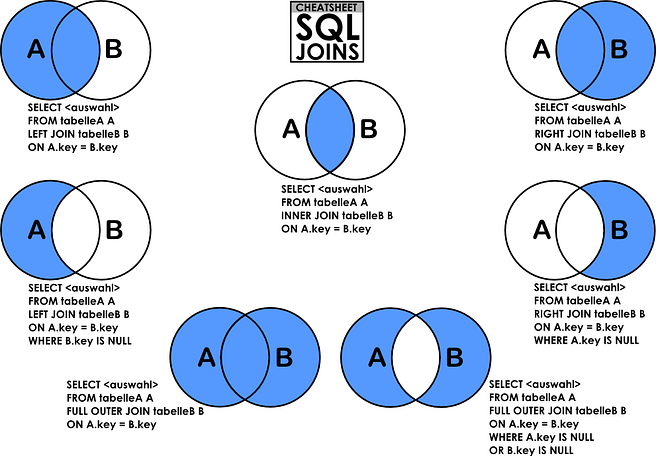
Hello guys, in an era where data is called “the new oil,” SQL remains the universal language for accessing and manipulating that data. While AI tools and NoSQL databases grab headlines, SQL quietly powers 90% of the world’s data infrastructure — from Fortune 500 enterprises to cutting-edge startups.
If you’re looking to future-proof your career with one of the most valuable and stable tech skills available, mastering SQL is your strategic move.
In the past, I have shared best SQL books, courses, and best places to learn SQL and today I am going to share best SQL courses from one of the best places to learn online, Frontend Masters.
Frontend Masters offers expertly crafted SQL courses that take you from complete beginner to database expert. Here are the top 5 courses to master SQL in 2026.
3 Best Frontend Masters Courses to Learn SQL and Database in 2026
Without any further ado, here are the top 3 SQL and Database courses you can join on Frontend Masters to learn this very useful skills for web developers:
1. Complete Intro to SQL & PostgreSQL by Brian Holt
Brian Holt’s comprehensive course is the gold standard for learning SQL. As a senior engineer with experience at companies like Microsoft, LinkedIn, and Netflix, Brian brings real-world expertise to teaching SQL fundamentals through PostgreSQL — one of the most powerful and popular open-source databases.
What You’ll Learn
- SQL fundamentals from absolute basics
- Writing SELECT queries with filtering and sorting
- Joining multiple tables for complex queries
- Aggregate functions (COUNT, SUM, AVG, MAX, MIN)
- Grouping and filtering aggregated data
- Subqueries and common table expressions (CTEs)
- Database design and normalization principles
- Creating and modifying tables and schemas
- Inserting, updating, and deleting data
- PostgreSQL-specific features and best practices
- Working with JSON data in PostgreSQL
- Understanding indexes and query performance
Why This Course Stands Out
Brian doesn’t just teach you SQL syntax — he teaches you to think in SQL. You’ll understand why databases work the way they do, making you capable of solving real-world data problems.
The course uses PostgreSQL, which means you’re learning with a database system used by companies like Apple, Instagram, Spotify, and Netflix.
Perfect For
- Complete beginners with zero SQL experience
- Developers who need database skills for their applications
- Data analysts transitioning from Excel to databases
- Anyone building data-driven applications
Pro Tip: Complete this course first — it’s the foundation everything else builds on.
Here is the link to join this course — Complete Intro to SQL & PostgreSQL by Brian Holt
2. Complete Intro to Databases by Brian Holt
The Complete Intro to Databases course by Brian Holt is a fantastic starting point for anyone aiming to understand how different databases work in real-world applications.
It covers four major open-source database types — MongoDB, PostgreSQL, Neo4j, and Redis — giving learners a well-rounded foundation in document-based, relational, graph, and key-value store databases.
Brian does a brilliant job of explaining not just how to use each database, but also when and why you’d choose one over the other.
This hands-on learning style makes complex database concepts surprisingly easy to grasp, especially for developers transitioning toward full-stack development.
If you’ve ever felt databases were an intimidating part of backend systems, this course breaks that barrier. With practical projects and clear explanations, you’ll gain a deep understanding of how to structure, query, and scale data efficiently.
Here is the link to join this course — Complete Intro to Databases by Brian Holt
3. Complete Intro to SQLite by Brian Holt
The Complete Intro to SQLite course by Brian Holt dives deep into the world’s most widely used database engine — SQLite. In this course, you’ll learn how to write efficient SQL queries, manage tables, perform joins, and optimize database performance.
What makes it special is how Brian transitions from basic relational data handling to building a production-ready Node.js application powered by SQLite.
You’ll also explore advanced topics like full-text search, working with JSON data, and using modern tools such as Litestream and LiteFS to replicate and scale your database.
This course perfectly blends theory with practice, showing that SQLite is far more powerful than just a lightweight local database — it’s production-ready with the right optimization.
After completing this course, you’ll feel confident building and deploying data-driven apps even as a solo developer.
Here is the link to join this course — Complete Intro to SQLite by Brian Holt
Why Learn Database and SQL in 2026?
While this question doesn’t need an answer, I am highlighting few important reason for those who are completely new to SQL. Here are few reasons why you should learn SQL?
1. Exceptional Career Prospects and Competitive Salaries
The average SQL developer’s annual total pay is $128,000 according to recent data, with SQL Server Database Developers earning an average of $119,000 per year, ranging from $95,400 to $156,400.
More specialized roles command even higher compensation: Database Architects earn an average of $138,870 annually, making it one of the best SQL jobs in 2025.
2. The Foundational Skill Every Developer Needs
SQL isn’t just for database administrators, its for developers, BAs, QAs and all tech people.
Software engineers with SQL knowledge are more likely to get higher pay than their peers who have not mastered SQL, with the average annual salary for a software engineer at $105,331.
Whether you’re a backend developer, data scientist, business analyst, or full-stack engineer, SQL proficiency is non-negotiable.
3. Universal and Future-Proof Technology
SQL has survived 50+ years of technology evolution for a simple reason: it works brilliantly.
While programming languages come and go, SQL’s declarative syntax and relational model remain the most efficient way to query structured data.
Every major cloud platform — AWS, Azure, Google Cloud — offers SQL-based database services, ensuring your skills remain relevant regardless of technology trends.
4. Career Versatility Across Multiple Domains
Salaries for SQL positions typically range from $70,000 to $120,000 a year, depending on experience and complexity of work, with remote job options increasingly common and flexible work arrangements allowing SQL professionals to work from anywhere. SQL skills open doors to:
- Data Analysis and Business Intelligence — Business Analysts earn an average of $85,333 annually
- Data Science — Data Scientists earn an average of $125,126 annually
- Database Administration — Database Administrators earn an average of $75,485 annually
- Software Engineering — Backend and full-stack roles across all industries
- Freelance Consulting — Project-based work with schedule flexibility
5. Quick Learning Curve with Immediate ROI
Unlike complex programming languages that require months to master, SQL fundamentals can be learned in weeks.
The language’s English-like syntax makes it accessible to beginners, while its depth provides lifelong learning opportunities.
You can start writing useful queries on day one and progressively build advanced skills.
Final Thoughts: Your SQL Journey Starts Today
In a world obsessed with the latest JavaScript framework or AI model, SQL might seem unsexy. But while trends come and go, SQL endures because it solves a fundamental problem brilliantly: organizing and accessing structured data.
The developers who master SQL don’t just write queries — they unlock insights, build scalable systems, and create value everywhere data exists. They command premium salaries, enjoy job security, and have career flexibility that framework specialists can only dream of.
Frontend Masters provides the expert instruction, hands-on projects, and comprehensive curriculum to transform you from SQL beginner to database expert.
Whether you’re starting your development career, pivoting to backend work, or adding essential skills to your toolkit, these SQL courses are your pathway to success.
Ready to master SQL and unlock your data career? Start with “Complete Intro to SQL & PostgreSQL,” build real applications, and watch opportunities multiply. The data-driven world needs skilled SQL developers — will you be ready?
Other Frontend Masters Resources you may like to read
- My Favorite Frontend Masters Courses for Frontend Web Developers
- Is the Java Fundamentals Course by Angie Jones on Frontend Masters Worth It?
- Is Frontend Masters a Good Place to Learn JavaScript, React, and Vue.js?
- Frontend Masters Knowledge Quest Sale (50% Discount)
- Top 5 Project-Based Frontend Masters Courses to Learn JavaScript
- Review: Is Introduction to Node.js Course on Frontend Masters Worth It?
- Review: Is TypeScript 5 Fundamentals Course on Frontend Masters Worth It?
- Is the JavaScript Hard Parts Course on Frontend Masters Worth It? (Review)
- Is Frontend Masters The Last Algorithms Course You’ll Need Course Worth It? (Review)
- Review: Is Frontend Masters Complete Intro to React Course Worth It?
- 10 Reasons to Join Frontend Masters to Learn Web Development
- Is Frontend Masters Good Place to learn Web Development?
- Is Frontend Masters Really Worth It for Learning Web Development?
- Top 5 Frontend Masters Courses You Can Take in 2025
- Review — Is Front-End System Design Course by Evgenii Ray on Frontend Masters Worth it?
Thank you for reading this article till the end. If you like this course then please share with your friends and colleagues. If you have any questions or doubts then feel free to ask.
P. S. — If you are keen to level up your frontend skills then joining frontend master can be a great first step as they have awesome courses to learn valuable frontend skills, you can join Frontend Masters now and even get a 17% discount on their annual plan.

Thursday, April 23, 2026
The Data Engineer's Reading List for 2026 (10 SQL Books that Matter)
Hello guys, SQL (Structured Query Language) is one of the most essential skills of a programmer. I would rate this skill similar to UNIX if you are a professional programmer because it doesn't matter whether you are Java, C++, or a .NET developer, you are bound to write SQL queries. Since a database is an integral part of any modern Java or Web application, the Interviewer always preferred candidates with excellent SQL skills. Now, the big question comes, how a programmer can learn SQL? Does just knowing how to query a table is enough? If you remember, insert, update, delete, and select, then are you a competent SQL programmer?
I started learning SQL from my college days, and I am hooked to it because of its simplicity and power. I also found writing SQL queries exciting and challenging, similar to solving programming puzzles, but my SQL skills don't improve a lot for a long time, Why? Because I was satisfied with the limited knowledge of insert, update, delete, and select.
I knew how to join multiple tables, and I thought I knew the whole SQL. Well, I was wrong, and my misconception hit severely when I started working on a project involving Murex, which has a vast database in Sybase with hundreds of tables, stored procedures, and other database objects.
At that time, I started learning advanced SQL, particularly Sybase and SQL Server. My quest also results in lots of good books to learn SQL, database design, normalization, and improve your SQL query skills, and this article is a collection of such books.
Though I have a separate collection of database-specific books, like books, to learn SQL Server, Sybase, or Oracle, I am only sharing books to learn generic and standard SQL, which applies to all relational databases, also known as ANSI SQL in this article. I'll write separate articles about SQL Server and Oracle books.
If you want to learn quickly, you can also combine these books with some of the comprehensive and engaging online SQL courses like The Complete SQL Bootcamp by Jose Pottila on Udemy. It's an incredible course full of useful information and practical tips to learn and master SQL very quickly.
It doesn't matter whether you are a beginner programmer, just started your software development career or an experienced software professional with years of experience, you will find some of the books refreshing. You will learn a lot in terms of SQL concepts, database design, and SQL query skills.
So, what are we waiting for? Let's start with this list.
1. Head First SQL
This is the best book for any SQL beginners. I like the Head First style for their innovative teaching with diagrams, fireside chats, puzzles, explanations, and highlight the most important concepts.I have been recommending this book to beginner programmers for years, and they always thank me for that. You can use this book for theory, for example, and understanding fundamental concepts of SQL, like Joins, Subqueries, Normalization, and a little bit of database design.
If you are an active learner like me then you can also combine this book with The Complete SQL Bootcamp: Go From Zero To Hero course by Jose Portilla on Udemy which is full of hands-on SQL exercises and lectures. It's also very affordable and you can buy this course for just %9.9 on Udemy sales which happen every now and then.

2. SQL All-in-One For Dummies
4. SQL Antipatterns
To be successful, it's not just essential to do the right things, but it is also necessary to avoid mistakes that can hamper your success. This universal truth is also applicable to SQL. It's just not enough to know all the best practices in the SQL world and keep repeating silly mistakes like using SELECT * query or having duplicate columns.This book will help you to avoid the common mistake every SQL developer makes. If you don't know about SQL mistakes, it's also an excellent book to learn about them. Again, one of the must-read SQL books for programmers who are serious about improving their SQL and database design skills.
If you are learning SQL for data science then I also suggest you check out this SQL for Data Science course on Udemy which will teach you how to understand and write large queries which you often need while working with real-world data.

5. SQL Puzzles and Answers by Joe Celko
I didn't know about this book until last year, but ever since I come to know about it, I just fall in love. It's a great book to improve your SQL query skills. I always like to solve SQL query-based problems because they are also an excellent exercise for your mind, and this book is full of such issues.The book is really advanced, and some of the problems are tough even for seasoned SQL programmers. Even though you will solve the problem, a good chance is that you will also learn a new way to answer the same question by reading explanations.
In short, one of the best SQL books for experienced programmers who want to improve their SQL query skills.
6 . Beginning SQL queries
This is another beginner book, probably for the absolute beginner who doesn't know how to write SQL queries. As the title suggests, this book will help you not only to write SQL queries but also to write correct SQL queries and help you to become a professional SQL developer. Not a must-read, but a good SQL book for beginners.
7. SQL Performance Explained by Markus Winand
If I say that whatever I know about SQL indexes is due to this book, then it won't be wrong. I had a lot of misconceptions about database indices and didn't know how their order can affect performance.This is an excellent book from Markus Winand, and I thank him a lot for explaining such an essential topic in great detail. One of the must-read SQL books for every programmer.
8. SQL Cookbook: Query Solutions and Techniques for Database Developers
The SQL Cookbook: Query Solutions and Techniques for Database Developers (Cookbooks (O’Reilly)) 1st Edition by Anthony Molinaro is another fantastic book for experienced programmers and anyone who codes SQL for a living.
I really like what this book says about SQL, that “SQL is a deceptively simple language,” and many programmers and DBAs don’t go far beyond the simple CRUD statements like SELECT, INSERT, UPDATE, etc. DELETE. Still, it is so much you can do with SQL; this is where SQL Cookbook helps you.
It will teach you how to take your SQL skills to the next level by using author Anthony Molinari’s favorite SQL techniques and features.
You will learn about advanced SQL concepts like window functions, powerful, database-specific features such as SQL Server’s PIVOT and UNPIVOT operators, the Oracle’s MODEL clause, and PostgreSQL’s handy GENERATE_SERIES function.
9. SQL Performance Tuning by Peter Gulutzan and Trudy Pelzer
Knowing to write SQL queries is one thing and writing SQL queries that are fast and gives high-performance is another skill. This is also the skill that separates beginners from experienced programmers.
This book provides many practical tips for improving SQL performance on all of the major database systems.
It does not teach you the SQL syntax and how to use a particular SQL command but instead helps you understand the differences between the major DBBS, including the big three, Oracle, SQL Server, and MySQL.
In this book, the author presents several practical tips to improve SQL performance across databases. This book will be a great asset if you deal with different database implementations, whether you are a programmer, consultant, DBA, or technical end-user.
The tips given in this book can help you to decide which tuning techniques will work for which database. One trick that gives better performance in SQL Server doesn’t need to give you the best performance in Oracle.
10. SQL in Nutshell
The SQL in a Nutshell, 3rd edition by Kevin Kline, Daniel Kline, and Brand Hunt, is an essential reference for programmers, analysts, and database administrators (DBAs).
This book offers a great cross-platform syntax reference for SQL. It probably is not the easiest reference to find the exact syntax for one particular DBMS, but it is absolutely the best reference for those who work with multiple DBMSs.
By the way, If you are learning SQL to become a Data Scientists, then I also recommend you check out the SQL for Data Science Course offered by UCDAVIS University of California on Coursera.
Other Books and Courses Recommendations for Programmers
- 10 Algorithm books for Programmers and Software engineers (see here)
- 7 Free Courses to learn SQL and Database for Beginners (courses)
- 5 Books to improve your Coding Skill (see here)
- 10 Courses to learn Data Structure and algorithms (classes)
- 10 Books Every Programmer Should Read (see here)
- My Favorite courses to learn MySQL database (courses)
- 10 Tips and 101 Problems to Crack Coding Interviews (tips)
- 5 Books to learn Java 8 and Functional Programming (see here)
- My favorite free courses to learn Java in-depth (courses)
- 5 Books to prepare Programming/Coding Interviews (see here)
- 10 Courses to Crack Programming Job Interviews (courses)
- 5 Books to learn Concurrent programming and multi-threading (see here)
- Top 5 Courses to learn Java Concurrency in-depth (courses)
- 6 Books to learn Hibernate framework for Java developers (see here)
- 5 books to learn Spring framework for Java developers (see here)
- 5 of the Best courses to learn Spring Boot (courses)
P.S. - Along with books, online training courses on platforms like Udemy, Coursera, and Pluralsight are also useful to learn fundamentals and build skills. If you need some excellent classes to learn SQL and Database, I suggest you check this list of Top 5 SQL Courses for Programmers on HackerNoon to level up your SQL skill and learn new tricks to do well on your day-to-day job.


