|
VOOZH | about |
|
VOOZH | about |
If you’re starting an online business, you’ll need the right equipment — tools to promote your brand to new customers, process orders without a hitch, and keep folks coming back again and again.
More entrepreneurs choose WordPress than any other platform. Why? It gives you complete ownership and ultimate flexibility with its open source model. Plus, there are nearly unlimited plugins to quickly add new functionality to your shop. In addition to essentials like speed optimizers and security plugins, you’ll find form builders, subscription solutions, live chat widgets, and more.
This guide will introduce you to the best ecommerce plugins and show you what to look for when choosing critical tools for your business.
We selected plugins based on:
When sourcing plugins, you need to think about everything from core commerce functionality (listing and processing orders) to marketing, customer service, and business management.
Here are the best WordPress ecommerce plugins launch and grow your store:
WooCommerce is the leading ecommerce plugin for WordPress. It enables you to create an online store, complete with functionality for shipping fulfillment, tax compliance, and order management.
With WooCommerce, you have full control and ownership over your brand, products, and store. Build, design, and manage your site without needing to edit a single line of code, and sell everything from physical and digital products to services, memberships, bookings, and tickets. The best part? It includes unrivaled documentation and customer support to help you along the way.
Once you install WooCommerce, it will automatically add essential pages like Checkout, Cart, and Shop. Then, customize these pages with the block editor and extend functionality with other proven plugins from this article.
Key features:
Pricing:
WooCommerce is a free, WordPress ecommerce plugin, but you may need to pay for certain extensions.
Your store should provide a pleasant shopping experience. If pages are slow to load or jump around as visitors try to read or click, people may leave your site without making a purchase.
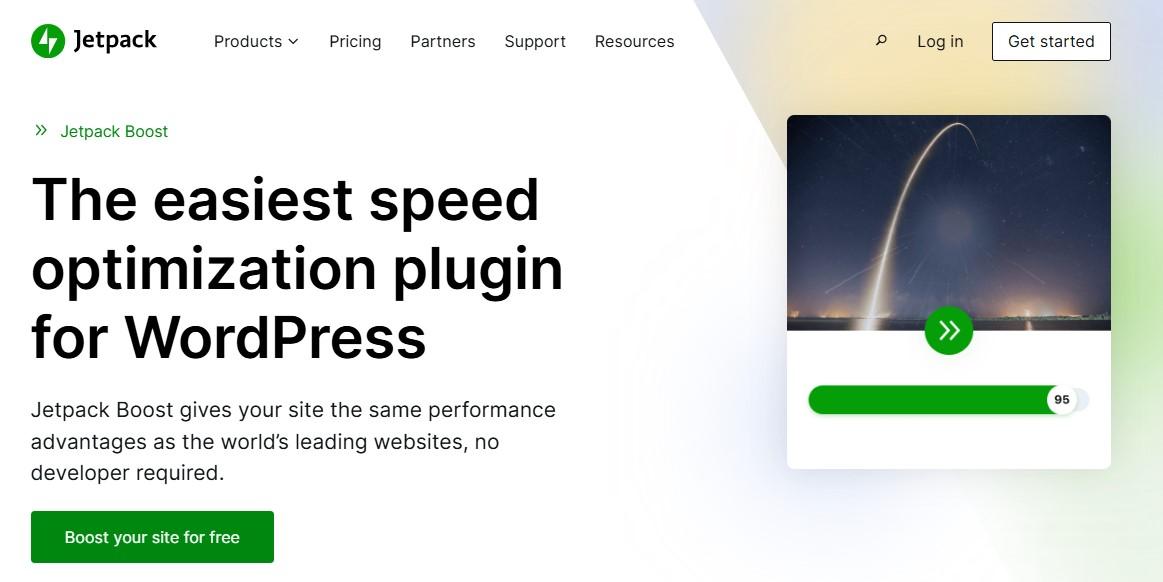
Jetpack Boost is a WordPress plugin that improves load times by implementing features like page caching and code minification. It also gives you performance scores for desktop and mobile versions of your site.
Key features:
Pricing:
Jetpack Boost is a free plugin with an optional premium plan. The latter starts at $9.95 per month and includes additional features like image quality control and an image size analyzer.
Another way to improve the shopping experience is to make it easy for customers to find products on your site. This is where Jetpack Search comes in.
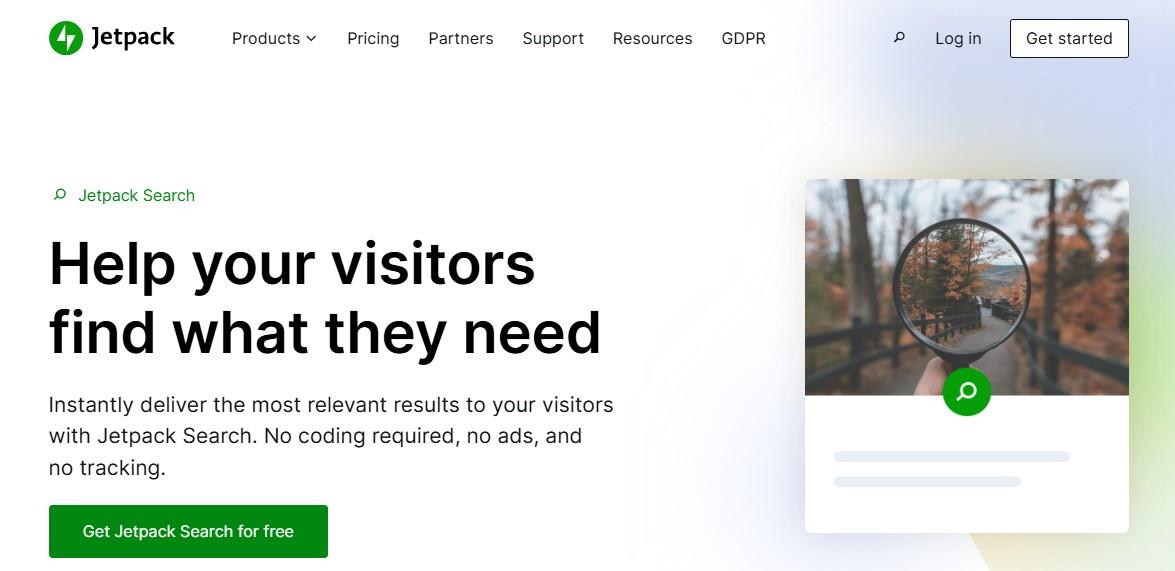
Jetpack Search makes it easier for shoppers to find what they need and boosts sales in the process. It understands visitor intent, delivers lightning-fast results, and works seamlessly with WooCommerce, offering smart filters for categories, tags, and more.
Its appearance is completely customizable, so you can provide the unique experience your customers have come to expect.
Plus, since all the heavy lifting happens on Automattic’s servers, it won’t drain hosting resources and will keep your site running fast. This provides a smoother shopping experience for customers and leads to more conversions.
Key features:
Pricing:
You can use Jetpack Search for free, but you’ll be limited to 500 monthly requests and 5,000 records. The premium plugin starts at $8.33 per month.
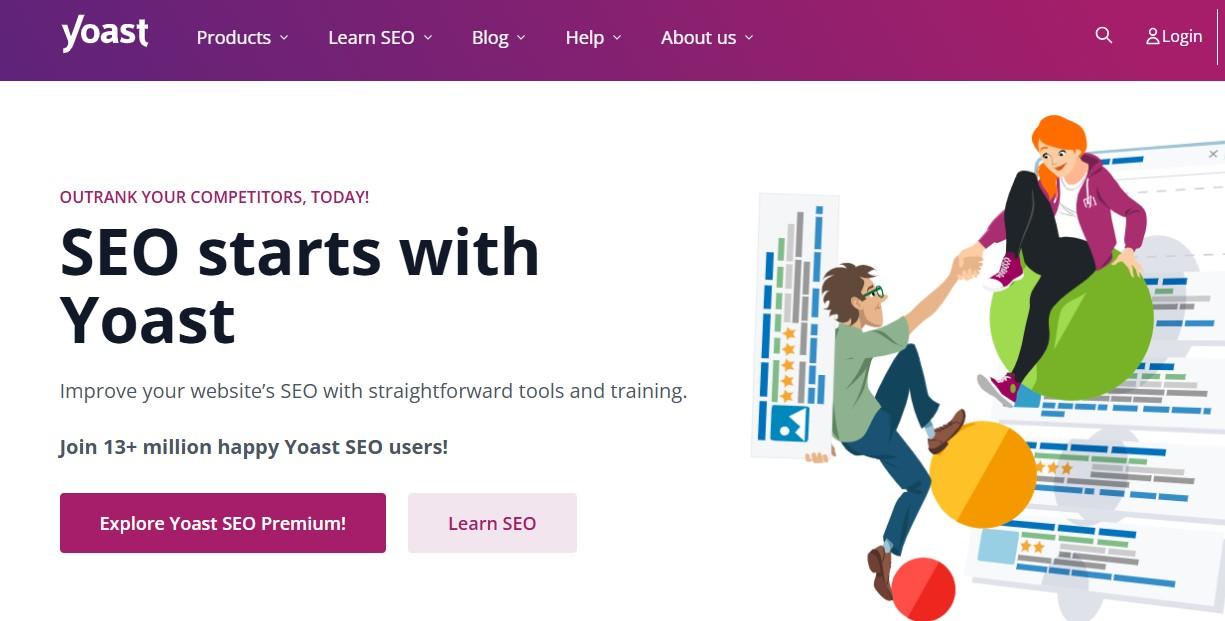
As the name suggests, Yoast SEO is a search engine optimization plugin. It helps you optimize your product pages to drive more organic traffic to your website.
With this WordPress plugin, you’ll get a tailored SEO analysis of each page that shows what it’s missing and suggestions to make it better.
Key features:
Pricing:
Yoast SEO is a freemium solution. You’ll need the Yoast WooCommerce SEO plugin to access the advanced ecommerce features. This starts at $79 per year.
If you want to engage with customers in real-time, you need a tool like LiveChat. This helps you create a custom chatbot with predetermined responses and targeted messages.
LiveChat also provides a help desk with a ticketing system. You can even use it to set up an extensive knowledge base.
Key features:
Pricing:
The Starter plan costs $20 per month per person (or “agent”) and is ideal for small businesses.
If you want features like unlimited chat history and reporting, the Team plan starts at $41 per month per person.
There’s also a Business plan, which gives you staffing predictions, on-demand reporting, and more advanced features. This starts at $59 per month.
WPForms is a drag-and-drop form builder for WordPress. It’s ideal for creating custom order forms, surveys, newsletter opt-ins, and registration forms.
This plugin also simplifies entry management. You’ll be able to view all leads, payments, and other form data in one place.
Key features:
Pricing:
WPForms is a free plugin with premium plans that start at $49.50 per year.
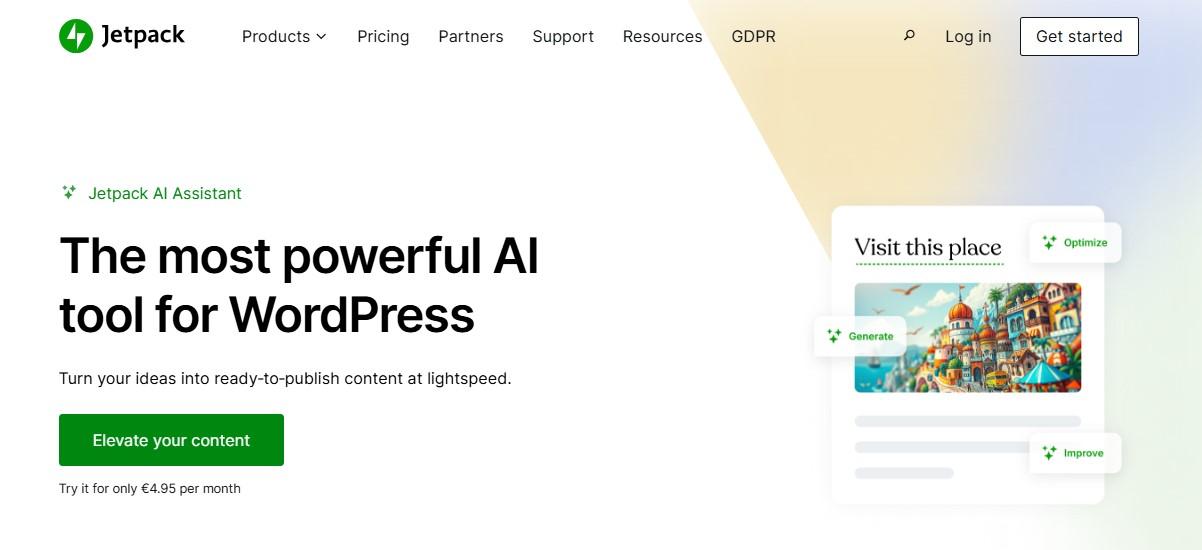
Jetpack AI Assistant brings the power of artificial intelligence directly into the WordPress block editor. Quickly generate entire articles, lists, and tables, or even use prompts to create forms, logos, and images.
Instead of wasting time on tedious tasks or switching between dozens of tabs, your workflow now lives in one place.
Key features:
Pricing:
You can try Jetpack AI Assistant for free, but you’ll have a quota of 20 requests. The premium plan starts at $4.95 per month for the first year.
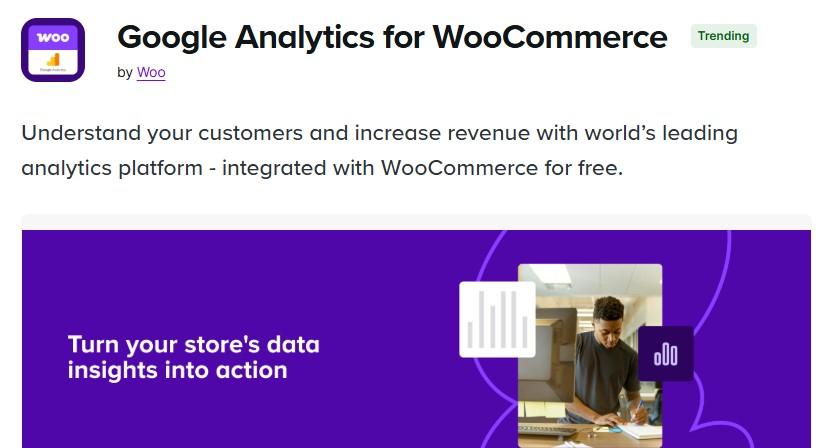
Google Analytics is a platform that gives you detailed data about your site’s visitors, including page views per session, demographics, and browsing time.
The Google Analytics for WooCommerce plugin integrates the reporting software with your online store. You can see which products are most popular with customers, what channels (social, email, organic search) drive traffic to your store, and more.
Key features:
Pricing:
This is a free extension.
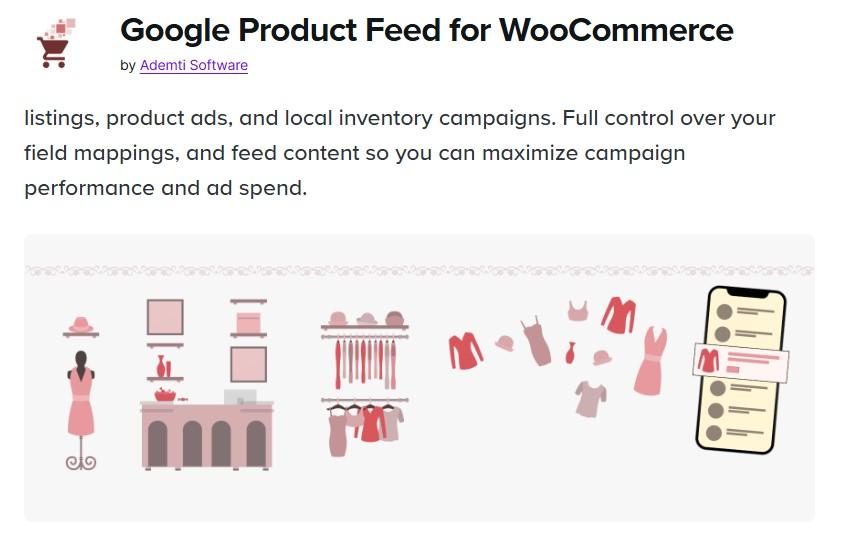
This WooCommerce plugin helps you feed product information to Google Merchant Center. Your products will also be available in your Google Ads account, enabling you to set up your own product ads.
Key features:
Pricing:
This is a premium extension that costs $6.59 per month, billed annually at $79.
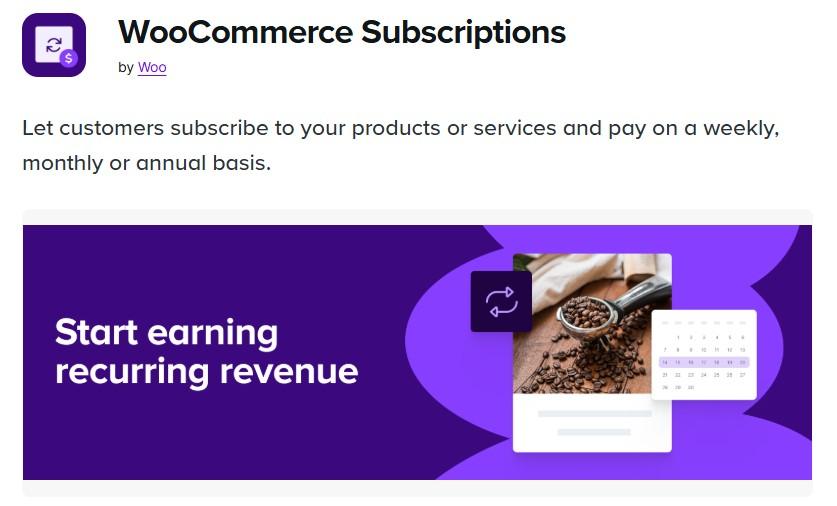
By default, WooCommerce doesn’t offer subscription functionality. To obtain this, you’ll need an extension like WooCommerce Subscriptions. You can use it for subscription-based products or services like monthly gift boxes, coaching calls, premium articles, and more.
This extension allows customers to manage their subscriptions. For instance, they can downgrade or upgrade their plan without your assistance.
Key features:
Pricing:
WooCommerce Subscriptions costs $279 per year. If you purchase a two-year plan, it will cost $446.40.
With Easy Digital Downloads, you can sell products like downloadable photos and graphics, courses, templates, audio files, and more. It supports unlimited digital downloads, without additional fees.
You’ll have complete control over orders and customers. For instance, you can edit customer details, give refunds, and manage order status.
Key features:
Pricing:
There’s a free version available, but with a premium plan, you’ll get features like custom payment forms, email marketing tools, and additional payment processors. Plans start at $99.50 per year.
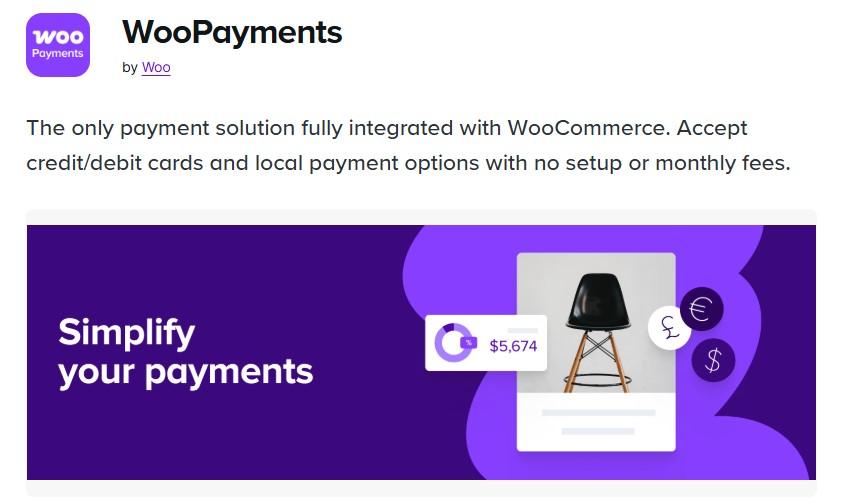
WooPayments is a preferred payment processor for WooCommerce. It’s suitable for both online and in-person payments (even using your phone as a payment terminal for debit and credit cards), and you can manage them all from your WordPress dashboard.
Currently, WooPayments is available in 38 countries and accepts more than 135 currencies.
Key features:
Pricing:
WooPayments is free to install, with pay-as-you-go fees per transaction.
For stores based in the United States, the fee is 2.9 percent and $0.30 for each transaction. If the payment is made with an international bank card, there’s an additional 1.5 percent charge.
Stripe for WooCommerce is an extension that enables payments on your WordPress site. It supports both online and in-person transactions.
Key features:
Pricing:
The extension is free. However, you’ll want to consider all the different transaction fees that Stripe charges, based on the payment method and where the bank card was issued.
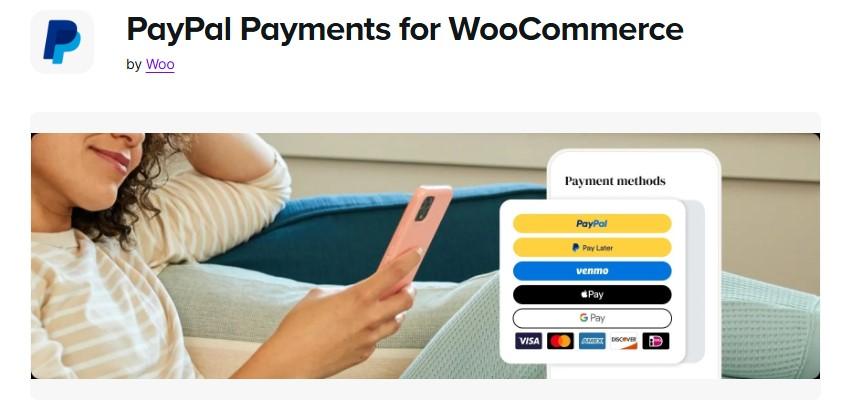
Offering multiple payment options helps reduce cart abandonment. PayPal is a popular and secure digital wallet, and you can enable it on your store with the PayPal Payments for WooCommerce extension.
With this all-in-one checkout solution, you can offer PayPal, Venmo (US), Pay Later, credit and debit cards, and more payment options.
Key features:
Pricing:
This extension is free, but you’ll need to consider PayPal’s transaction fees.
WooCommerce Shipping helps you manage shipping and fulfillment from your WordPress dashboard. You can print USPS, UPS, and DHL labels, compare live rates across different carriers, schedule pickups, and more.
Key features:
Pricing:
This extension is free.
Finally, you’ll want a plugin that protects your store and customers from cyberattacks. Jetpack Security provides measures against common threats, including spam and malware.
You’ll also get a 30-day activity log and real-time backups, so you can see which actions and users on your WordPress site triggered a security breach and then reverse them with just a click.
Key features:
Pricing:
Plans start at $9.95 per month.
The ecommerce plugins you use can impact your store’s functionality, user experience, and long-term success. Therefore, it’s important that you select the right tools from the beginning.
With that in mind, here are some factors to consider:
The features of an ecommerce plugin determine what your online store can do. Of course, these will vary depending on the specific nature of the tool (whether it’s an analytics plugin, a form builder, or a chatbot).
However, here are some essential features you’ll want for your store:
WooCommerce offers most of these features out of the box. There are also extensions that you can use to add more payment methods, offer discount codes, sell subscriptions, and more.
Running an online store involves many repetitive tasks. Automation saves you time and effort so you can focus on more important areas of your business.
Consider plugins that offer:
There are also AI tools like Jetpack AI that automatically generate content like images, product titles and descriptions, and metadata.
Your ecommerce plugin should be easy to use, both for you and your customers. A clean and simple interface means hassle-free product uploads and management. It also helps shoppers complete an order without any issues.
You’ll also want to ensure that your ecommerce plugin is optimized for mobile devices. For example, if you’re using a form builder, the forms should automatically adjust to smaller screens.
If a checkout process is complicated, or difficult to complete on a mobile phone, it can lead to abandoned carts.
As a busy store owner, you don’t want to spend hours configuring plugins. So, choose tools with settings that you can enable with a few clicks.
For example, Jetpack Boost provides toggle buttons for enabling features like page caching and an image CDN.
Before choosing a plugin, verify its compatibility with your WordPress theme. If you’re using a non-ecommerce theme, you might need to switch to an option that’s designed for WooCommerce stores.
You’ll also want to check that the ecommerce plugin works well with other tools on your website. It’s a good idea to install it on a staging site first, so you can make sure that it doesn’t cause any compatibility issues.
If you cater to an international audience, you might need a plugin with multilingual support. Typically, this information is stated on the official plugin website, but you can always reach out to the developers if you’re in doubt.
Cost is an important consideration, especially if you’re just starting out and have a limited budget.
Many ecommerce plugins come in free and premium versions. As your store grows, you may need to upgrade to a paid plan, so it’s important to look at the prices even if you’re starting with the free version.
Evaluate the initial cost versus long-term expenses. Some plugins may be cheap, but require paid extensions or add-ons for advanced features. Additionally, the license fees may increase upon renewal.
Your online store should contain all the features necessary to process transactions, secure your WordPress site, offer a smooth shopping experience, and grow your business. You’ll want to start by installing WooCommerce, which is the leading plugin for creating a shop in WordPress.
Then, move on to tools like Yoast SEO (for gaining visibility in search engines), WPForms (for creating custom contact forms), and LiveChat (for adding chatbots). If you’re selling subscription-based products, you’ll need WooCommerce Subscriptions.
Finally, there’s Jetpack, which offers features like an AI assistant, an advanced search function, performance optimization, and essential security measures. Learn more about Jetpack’s suite of powerful tools!
Rob works on building tools for creators and their audiences. He's focused on building an open, calm platform that will be loved by bloggers, newsletter publishers, podcasters, and readers alike. He's worked on marketing and product for 15 years, primarily at Automattic, Mailchimp, and UPS.
Explore the benefits of Jetpack
Learn how Jetpack can help you protect, speed up, and grow your WordPress site. Get up to 50% off your first year.
Explore plansHave a question?
Comments are closed for this article, but we're still here to help! Visit the support forum and we'll be happy to answer any questions.
View support forum