Build smarter, more resilient supply chains with Graph Intelligence Platform
Turn fragmented supply chain data into an interconnected knowledge graph. Create a real-time view of suppliers, shipments, and routes. Gain end-to-end visibility to adapt to disruption.
End-to-end visibility
Trace dependencies, pinpoint risks, and optimize shipments in real time.
Adaptive supply chain
Quickly reroute shipments, onboard new suppliers, and adapt to new regulations.
Improve operational efficiency
Get insights to reduce downtime, avoid cost overruns, and keep goods moving.
Seamless scalability
Easily onboard new suppliers or logistics partners, and enter different markets.

Build resilient supply chains with a knowledge graph
Build an interconnected knowledge graph of your supply chain data for insights on how to stay ahead of disruption.
Use Cases
More efficient supply chain management with Graph Intelligence Platform
Connect suppliers, logistics, and operations into a single, adaptive network to reduce risk, improve efficiency, and boost resilience.

Gain real-time supply chain visibility
Gain end-to-end visibility across your supply chain —from suppliers to raw materials, production to batches, or orders to delivery. Trace dependencies, detect delays, and assess risks in real time to resolve issues faster, ensure service levels, and keep operations running smoothly.
Optimize supply chain routes and logistics
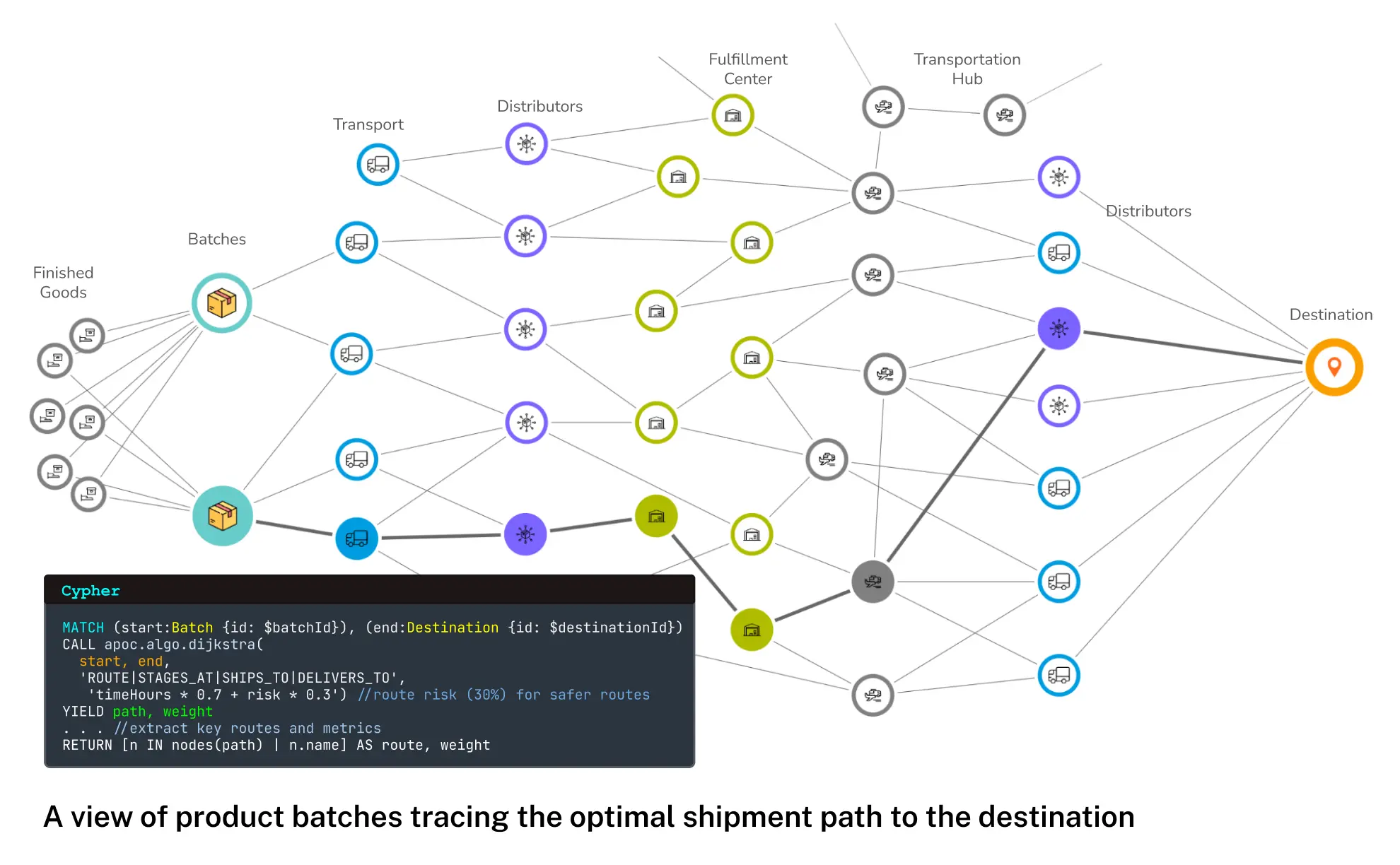
Identify the shortest, most cost-efficient, or resilient paths across your supply chain network. Make smarter logistics decisions using real-time pathfinding that can adapt to changing conditions.
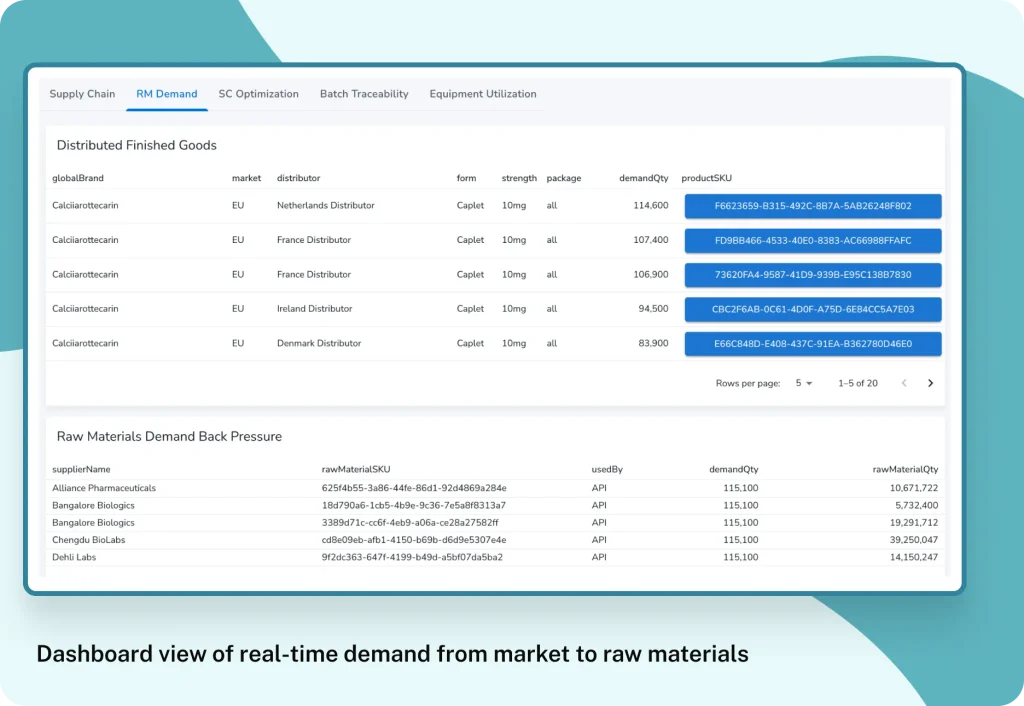
Improve inventory planning
Connect your demand, storage, and supply data for smarter inventory planning. Manage stock levels across locations to predict shortages and trace dependencies. Balance availability, cost, and service to ensure the right products are in the right place at the right time.
Detect supply chain risks and bottlenecks
Improve risk analysis by tracing ripple effects in real time. Avoid fraud. Detect and resolve bottlenecks. Backward trace from customer orders to supplier stock levels.


Mitigate impact of tariffs
Get a complete view of how tariffs will impact your supply chains to plan smarter routes and adapt to trade restrictions.
Capabilities
Build scalable, responsive supply chain apps
Visualize dependencies, optimize routes, predict risks, and scale securely across any cloud.
Uncover patterns in your connected data to identify risks, bottlenecks, and shipment route dependencies. Gain insights to strengthen supply resilience and decision-making.
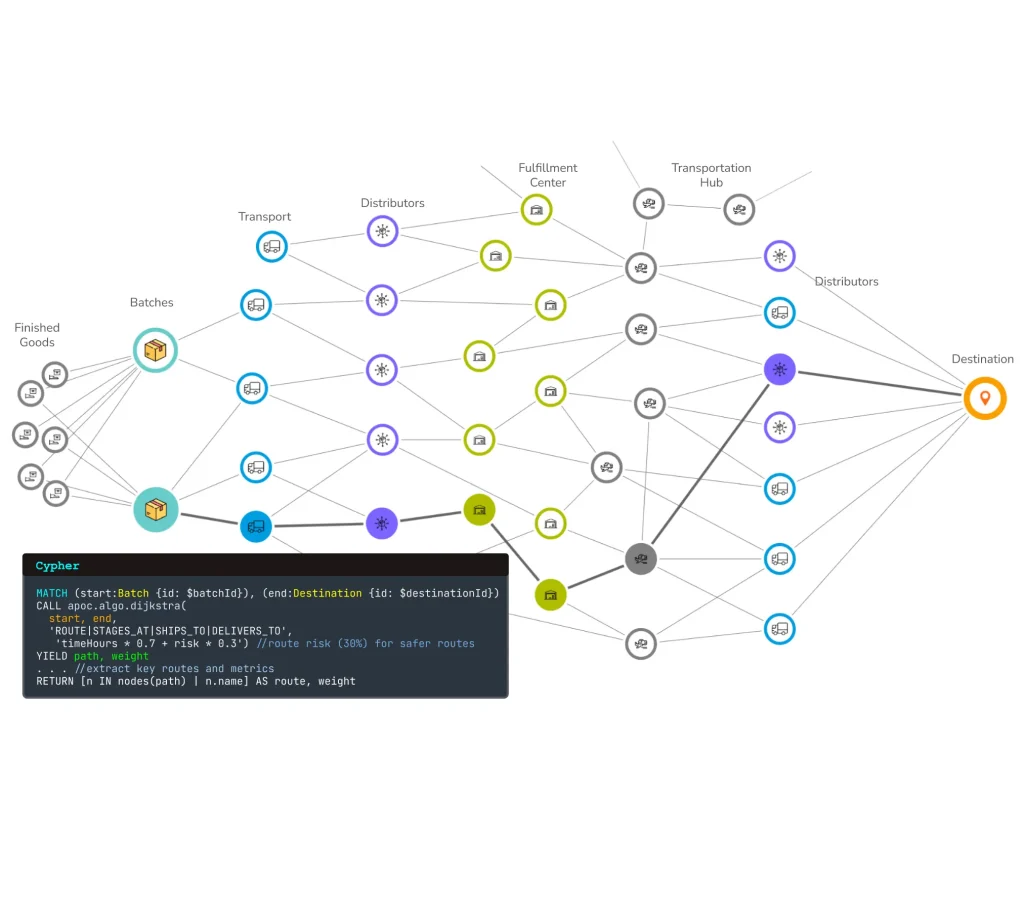
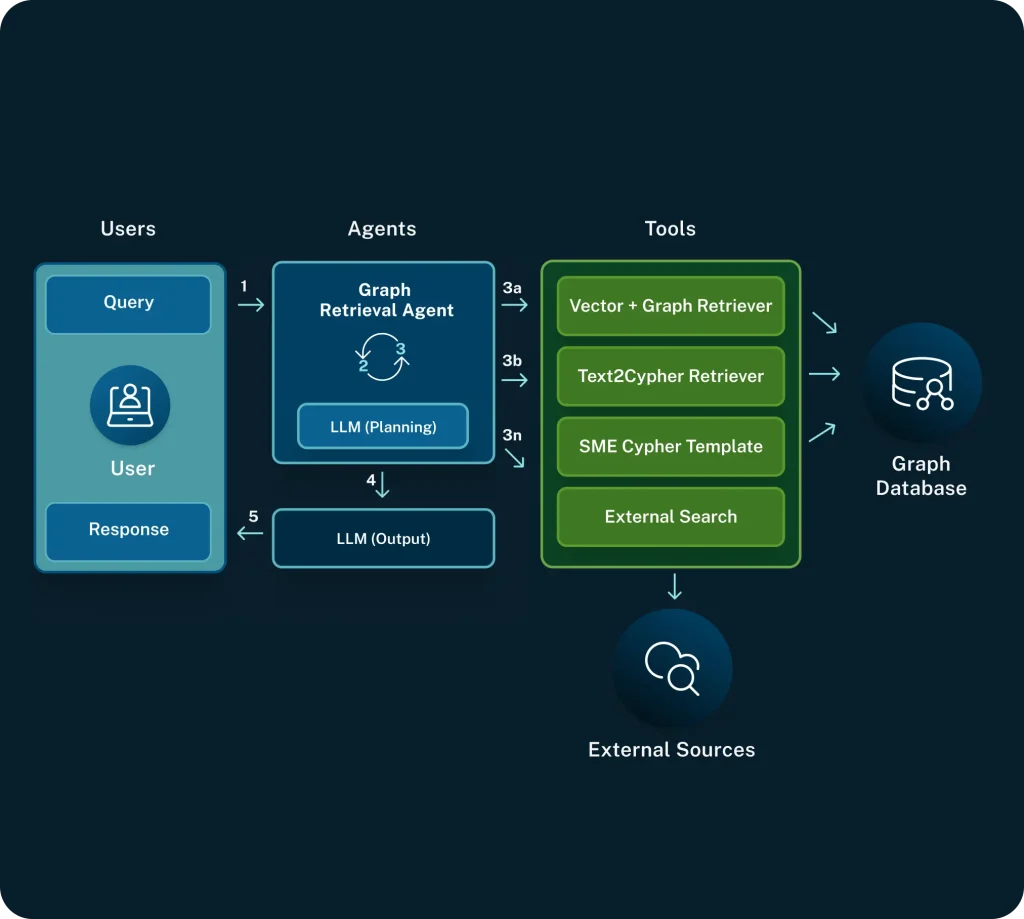
Avoid congested ports and vulnerable suppliers. Use Cypher and graph algorithms to identify faster, lower-risk routes. Simulate disruptions and create fallback options to stay ahead of crises.
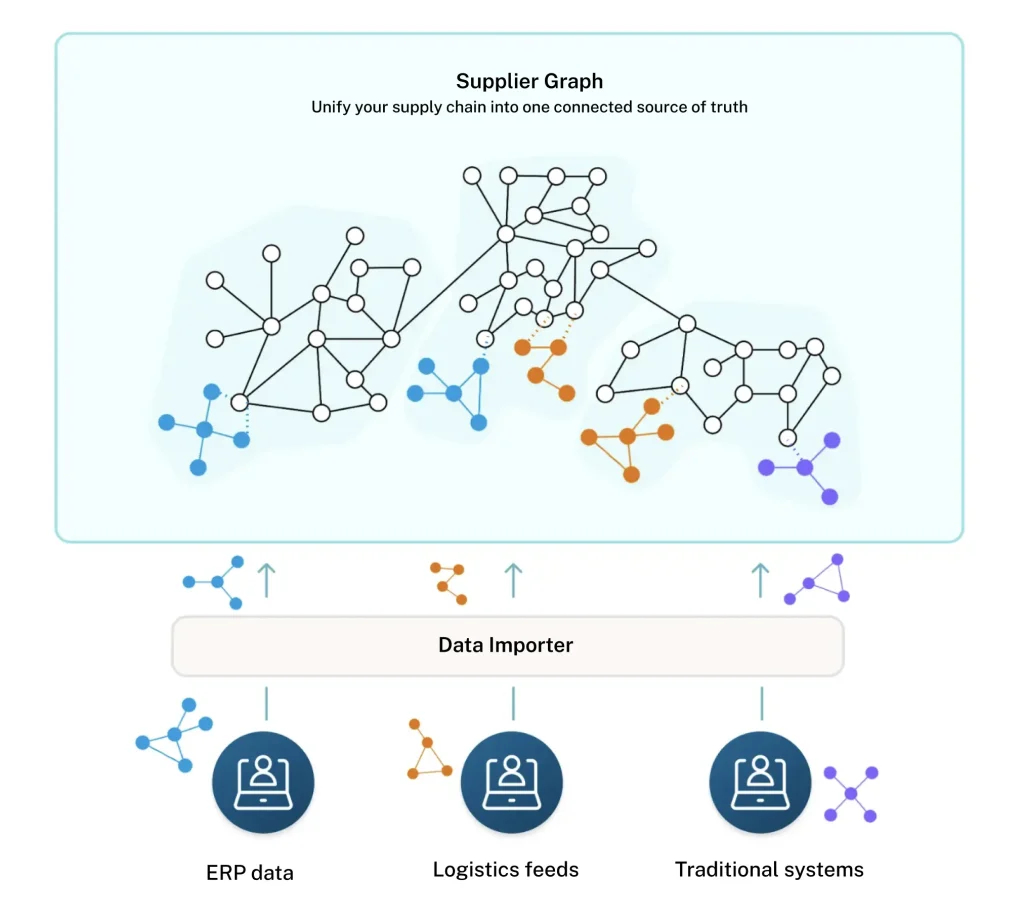
Connect supplier, logistics, and procurement data into a supplier model tailored to your business needs. Easily add new data from any source due to a knowledge graph’s flexible schema.
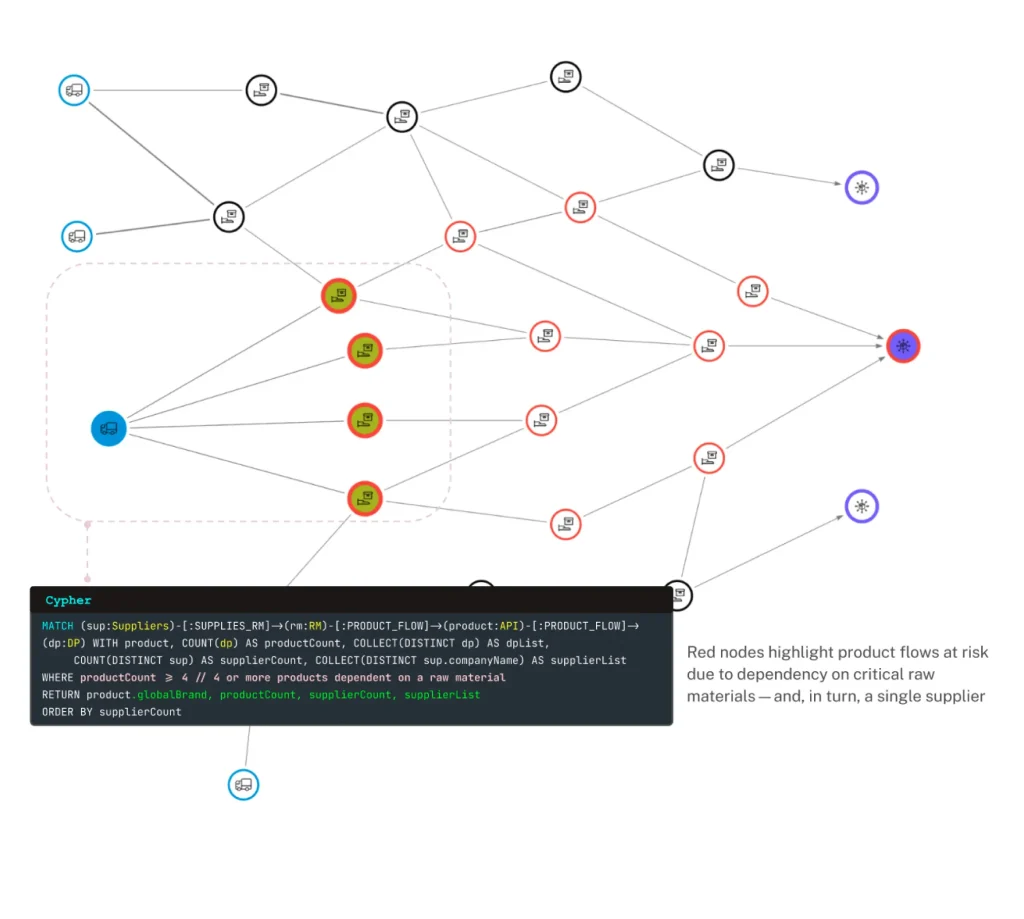
Map multi-tier relationships from raw materials to finished goods. See how suppliers, products, and distributors interact. Identify upstream risks before they impact production.
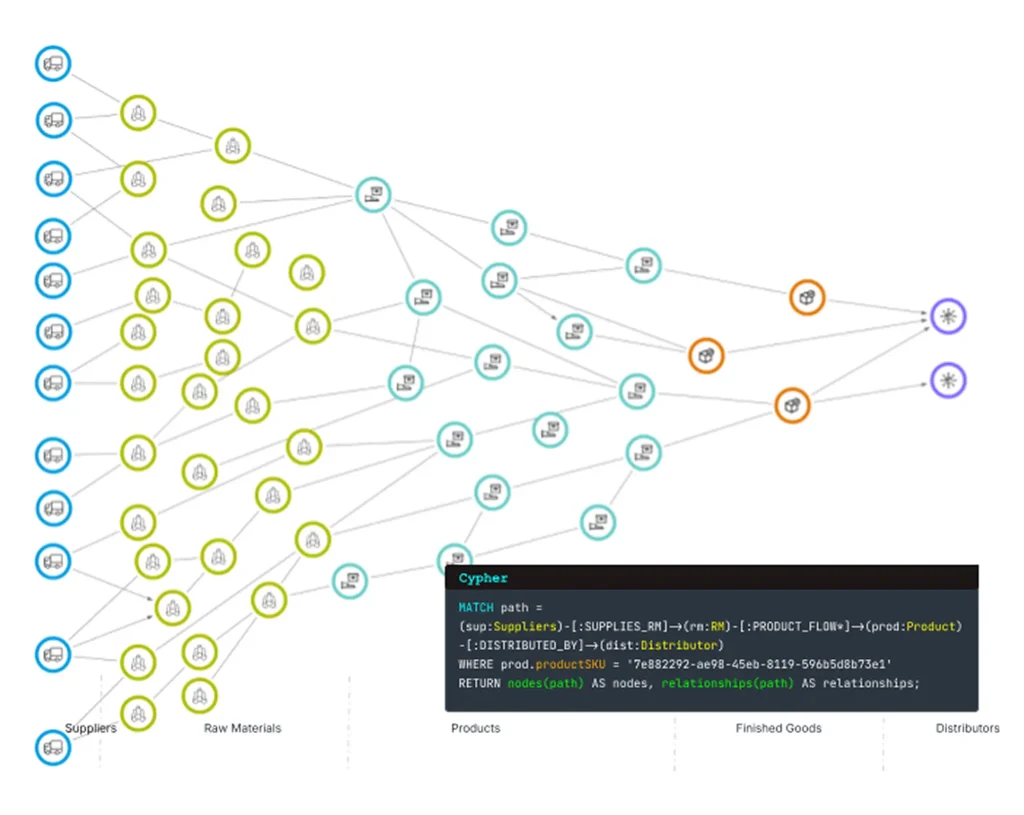
Ensure supply chain continuity. Boost predictive accuracy using context to anticipate disruptions, detect risks, and act before issues escalate.
Deploy anywhere — across AWS, Azure, or Google Cloud — to grow seamlessly as your supply chain data and analytics needs expand.
Loved by devs. Deployed worldwide.
1,700+ organizations build on Neo4j for data breakthroughs.
We’re using Neo4j not as just a data store, but as a place to analyze data and store those new characteristics of the data back in the graph and then extract it for traditional analysis.
Eric Wespi,
Data Scientist, Boston Scientific

Neo4j enables analysts to save huge amounts of time. Answers are immediate. As a result, the parts delivery is more accurate and order turnaround is much faster.
Preston Hendrickson,
Principal Systems Analyst, CALIBRE Systems

We found that real-time data can only be solved by a graph database because a graph database is an agile and adaptive way to interpret granular data at scale.
Andy Emmonds,
Chief Transport Analyst, Transport for London