☆ Mozilla peut-elle apporter l’unité à l’open-source ?
La nouvelle licence open-source de Mozilla est bien plus qu’un simple ravalement de façade. Elle pourrait créer de nouvelles possibilités pour l’unité de la communauté du Libre.
La première semaine de janvier 2012 marque un jalon discret mais important dans le mouvement de l’open-source, grâce à la publication d’une deuxième version de la Mozilla Public License (MPLv2) et sa validation en tant que licence libre officielle. Quand bien même beaucoup n’y voient qu’un énième détail juridique, cette publication est importante à deux titres : le procédé par lequel on l’a élaborée, et l’objectif pour lequel on l’a créée. Il s’agit d’une licence qui a pour but l’unité.
Rédaction et révision de cette licence se sont déroulées selon un processus très ouvert, dans lequel Luis Villa a joué un rôle prépondérant. Organisé en majeure partie dans des forums publics, le débat a conduit à de nombreuses modifications du texte. Luis est entré en contact très tôt avec l’Open Source Initiative, a accepté les retours du groupe de révision des licences, puis obtenu sans mal l’approbation du conseil d’administration.
D’autres articles sur cette nouvelle licence se sont concentrés sur les modifications de la partie « patent peace » (NdT: la paix des brevets) et autres ajustements des clauses (adieu, Netscape !), mais le changement le plus important apporté par la version 2 de la licence Mozilla est à mon sens l’inclusion d’une compatibilité particulière avec la GPL (GNU General Public License). Par le passé, le projet Mozilla jonglait avec un système complexe et peu clair de triple licence afin de composer avec les univers des licences copyleft et non copyleft. De manière générale, les autres utilisateurs de la MPL (et ses nombreux clones rebaptisés) ne prenaient pas cette peine, et par conséquent certains codebases se sont retrouvés exclus de toute collaboration possible avec l’immense univers des logiciels placés sous licence GPL.
Selon un procédé inédit que la Commission européenne a inauguré pour la licence publique de l’Union européenne (EUPL), la MPLv2 inclut des clauses permettant à un projet de stipuler, de façon optionnelle et explicite, sa compatibilité avec d’autres licences, en particulier celles de la famille GPL. À mes yeux, la MPLv2 représente une mise à jour d’envergure de la famille précédente des v1.x, justement grâce à cette compatibilité explicite avec la GPL, laquelle offre pour la première fois une passerelle praticable entre les paradigmes permissifs et copyleft. Elle ne satisfera pas les puristes des deux mondes, mais propose avec pragmatisme une nouvelle solution aux projets open-source appuyés par des entreprises. Celles-ci pourront disposer d’une communauté qui produit du code sous licence permissive tout en fournissant à cette même communauté un moyen d’entretenir des relations avec d’autres communautés travaillant sur du code sous licence copyleft.
Filed under: ComputerWorldUK, En Français, Open Source | Tagged: License, Mozilla | Comments Off on ☆ Mozilla peut-elle apporter l’unité à l’open-source ?
☆ Is Mozilla Open-By-Rule?
Host to the Firefox browser and the Thunderbird mail client among many other projects, the Mozilla Foundation is one of the largest and most significant open source projects. Long-term contributor and employee Gervase Markham has kindly provided the data for an open-by-rule scorecard for Mozilla.
The goal of the open-by-rule benchmark is not to judge the effectiveness or otherwise of any particular project. It is to examine the project governance and establish whether it is an example of good governance. A project may succeed despite flawed governance, with the good judgement and goodwill of participants overcoming possible opportunities for closed behaviour.
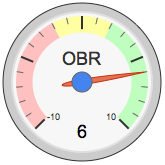
As usual, the data and draft text is contributed by a community insider who has made suggestions about scoring, but the score is mine and text that’s not in quote marks should be assumed to be mine too. Mozilla scores +6 on the scale -10 to +10 and is an open-by-rule community (as well as a functionally open community) despite some issues with closed overall leadership rules.
| Rule | Data | Evaluation | Score |
|---|---|---|---|
| Open, Meritocratic Oligarchy | About Mozilla | Mozilla’s ultimate authority is a board of 5 people. This board is not elected, but was chosen by the senior group who set up the Foundation. They do not exercise day-to-day governance over the project but approve direction, big new initiatives, and budgets. Because they are not elected or subject to challenge, this is clearly not an open organisation. Score -1.
Mozilla’s day-to-day heads are Mitchell Baker on the organizational side, and Brendan Eich on the technical side (both are also on the board), and Mark Surman for the Foundation itself. Even when Netscape dominated the project and sacked Mitchell, she remained head of the project (rather to their consternation). People rise and fall in the organization based on merit, not employment – although the two are hard to separate, as meritorious people often get hired, and Mozilla hires already-meritorious people from other fields! Despite the big hiring budget leading to a preponderance of employees of Mozilla, it is still a meritocracy and there are plenty examples of leadership from outside the ranks of those employed by the Foundation, so this scrapes a +1. Mozilla has strong leadership, with an appointed set of leaders (known as ‘module owners’) who have control in their areas, with the (very rarely exercised) right of appeal to Mitchell or Brendan. The clearest example of this is in the user interface, where the team spends a lot of its time saying “No” to other people. This is an oligarchy – leadership is exercised rather deferred to chatter or “democracy” by the masses – and scores +1 as a result. The overall score of +1 reflects a somewhat closed leadership strategy for an organisation that’s otherwise so committed to inclusivity and transparency. It works, but it is in some part due to great people filling the leading roles and overcoming the challenge of the closed top-level leadership rules. |
+1 |
| Modern license | The Mozilla License | MPL 1.1+/GPL 2.0+/LGPL 2.1+, with the possibility in the future of switching to the MPL 2.0+ when it is released. (The MPL 2 is a modern license with inbuilt compatibility with the other two currently used.) All of these licenses have patent protection. Mozilla takes a lead role in writing and advising upon the writing of open source licenses. | +1 |
| Copyright accumulation | Mozilla Committer Agreement | Mozilla does not require copyright assignment. There is a Committers’ Agreement which requires people committing code to have the rights necessary to contribute it, or to investigate its provenance if they did not write it. But the copyright on all our code remains with the authors (or the Foundation for Mozilla employees). | +1 |
| Trademark policy | Trademark Policy | The Firefox and Mozilla trademarks are owned by the Mozilla Foundation, and carefully controlled to make sure that good uses are promoted and bad uses are not. However, what is “good” or “bad” is ultimately the Foundation’s decision, and other community members do not have trademark rights equal with the Foundation.
Gervase says: “I have publicly disagreed with Simon’s points here, but this is his set of criteria, not mine. I am scoring us as 0 because I think the trademark policy is not actively detrimental to the project, but Simon may wish to score it differently.” Simon says: “Mozilla was a pioneer here and the policy does not actually privilege a community member above all others so actually I’m tempted to score it as +1, but there’s enough controversy around the subject to just about make me agree with Gervase’s score here. “ |
0 |
| Roadmap | Firefox Roadmap | Gervase says: “The Mozilla project is very open about its day-to-day procedures and planning, but the fast-moving nature of the field means that roadmaps which look even 6 months ahead tend to be very vague and aspirational. We also release “when it’s done” and so you won’t find a date-based release schedule either.”
Simon says: “The lack of a date-based release schedule is a concern. When releases are determined based on someone’s judgement that “they are ready” there is too much scope for abuse. It’s far better to have firm release dates and include or exclude features based on their owners’ public assessment of readiness (the “release train” pattern) as this is far harder for any individual to “game”. However, the results are good so I’m scoring this as 0 and I gather there are moves afoot to start naming the next release date in advance which would roll the score over to +1.” |
0 |
| Multiple co-developers | Developer Credits (Not a comprehensive list, and not everyone on the list is still active.) |
Gervase says: “Mozilla is one of the largest open source projects in the world. We employ (I think) over 400 people, and have several thousand more active volunteers. (Good community metrics are hard to come by, something we are working to change.)”
Simon says: “I’m actually concerned by the number of key contributors who are employed by the Foundation; an open-by-rule community should have greater diversity. All the same, my experience at Sun was that Mozilla was very happy for Sun staff to take key roles in Mozilla projects and as such I’d score it +1 for diversity based on that experience.” |
+1 |
| Forking feasible | GNU IceCat | Mozilla code is regularly forked to produce other browsers or related software, from the minor changes of GNU IceCat to the much larger changes of the Songbird media player. Some of these organizations or companies send back patches, some do not. There is even Mozilla code in competing browsers, e.g. Chrome on Linux uses NSS, the Network Security Services module. | +1 |
| Transparency | Forums | All project communication is done in the open, and all meetings are open for dial-in or to be viewed as streaming video on Air Mozilla. There are a wide range of forums, available via multiple access methods – email, news and web. There is a forum specifically for governance discussions.You can, of course, track all bugs and commits (with the exception of some information about security bugs, for a limited time) in Bugzilla and via our the SCM systems. | +1 |
| Summary (scale -10 to +10) | +6 |
The full series of articles is summarised on the Essays page.
Filed under: Governance | Tagged: Firefox, Mozilla, Open-By-Rule | 4 Comments »
☞ Networked Society
-
In the closest thing we’ll see to a unanimous multi-partisan vote in any modern democracy, the European Parliament resolved that ACTA negotiations must be transparent, must be limited to existing EU law and must not make three-strikes and other sociopathic ideas mandatory. This is the first big obstacle to the secret corporate juggernaut that has been rolling to trade our freedoms for corporate profits and it’s fantastic news.
-
A complete browser-based collaborative meeting system, all built from open source components. I’m in the process of downloading and building it for my test server, but the demo makes it look ideal for community meetings like the GNOME Board, OpenSolaris Governing Board and OSI Board, all of which I’ve participated in and which have struggled to find a solution that is both free software and one-click-easy. This looks like it’s both.
-
Mitchell Baker announces the revision of the Mozilla Public License. This is a welcome development; if it had been done 7 years ago we wouldn’t have the CDDL today.
-
Great posting from the CEO of the company that runs WordPress on the benefits of a distributed organisation. Having been part of a distributed organisation myself I do wonder how well this scales; doing so certainly needs enlightened management.
Filed under: Links | Tagged: ACTA, Mozilla, VoIP, Work | Comments Off on ☞ Networked Society
☞ Maintenance required
-
European Parliament Written Declaration 12/2010 is now ready for signature. The Declaration establishes principles by which ACTA will be judged when it finally uncloaks and we discover how it is in fact armed. It’s time to use your preferred means to contact your MEPs and ask them to sign it.
-
Maybe if they do a good job Oracle would consider retiring CDDL and using this instead?
-
Paul Carr with a relatively fair and balanced view of the Digital Economy Bill – seductively so. But I don’t agree with his conclusions.
While the social contract behind copyright has merit (creating a protected ‘space’ where a copyright creation can be monetised in exchange for its dedication to the public domain), the digital age has driven a switch from a control-centric (‘hub-and-spoke’) society to an emergiunbg peer-to-peer society. There are no ‘fixes’ we can do to copyright to make it work right; we need to start again and invent a copyright for the digitial age.
The Digital Economy Bill is well intentioned, but there are no fixes available to make analogue copyright law work for a digital society and I fear the Bill will just make things worse, unleashing a “sorcerer’s apprentice” effect of unintended consequences the way the US DMCA has done. The Bill has to be stopped, not patched.
-
A great potted history from Dries Buytaert, timeline-style.
Filed under: Links | Tagged: ACTA, Digital Economy Bill, Mozilla | Comments Off on ☞ Maintenance required