|
VOOZH | about |
|
VOOZH | about |
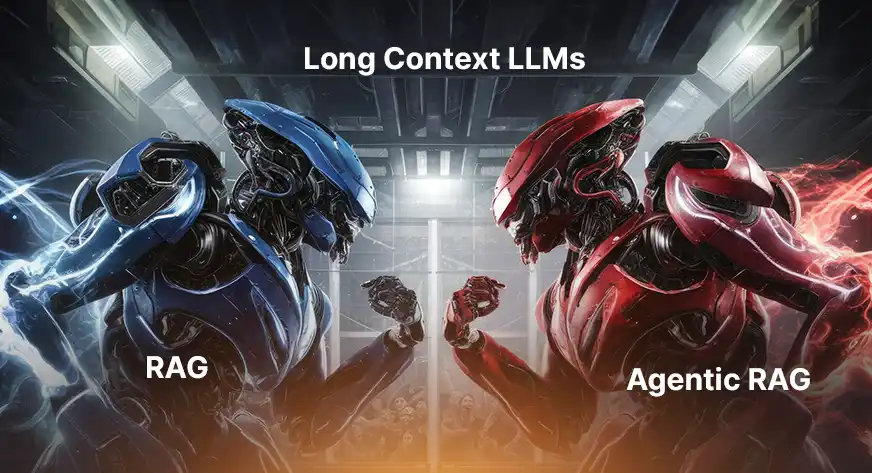
Artificial intelligence models have significantly impacted human life, excelling in tasks like text generation and natural language processing but falling short in real-world action and interaction, highlighting the need for autonomous systems. AI agents, capable of reasoning and acting dynamically, address this gap by operating without human intervention. When combined with powerful language models, they unlock intelligent decision-making and action-taking. Traditional models like Long Context LLMs and Retrieval-Augmented Generation (RAG) enhance context and knowledge retrieval but remain static, lacking autonomous, goal-driven behavior. Agentic RAG bridges this gap, evolving to enable dynamic, goal-oriented actions, which we will explore further in this article.
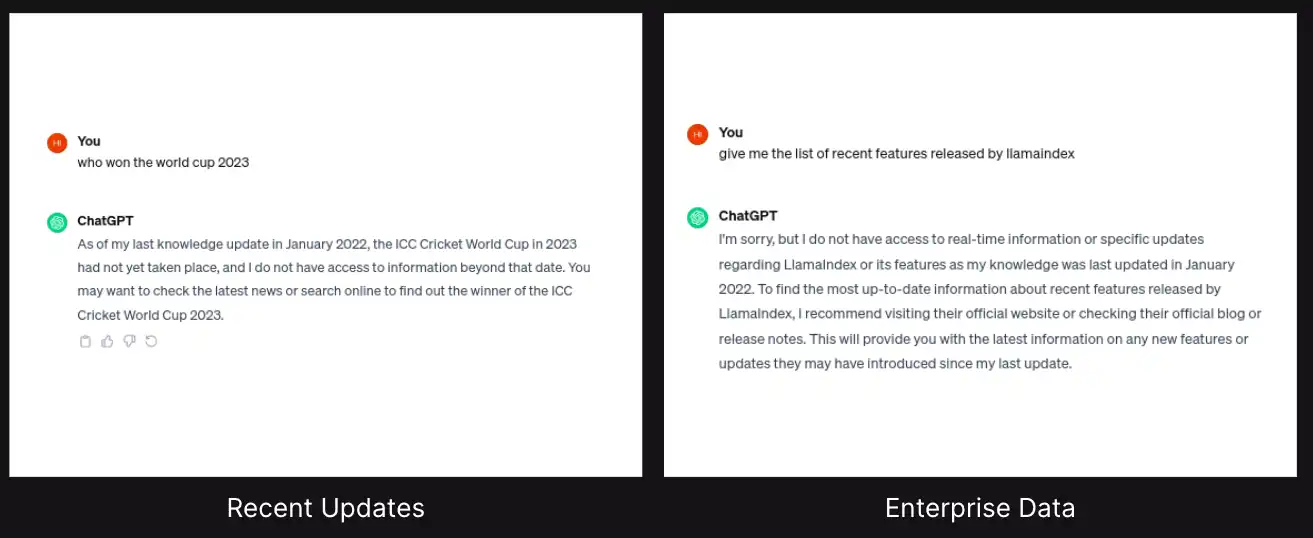
When large language models (LLMs) emerged, they revolutionized how people engaged with information. However, it was noted that relying on them to solve complex problems sometimes led to factual inaccuracies, as they depend entirely on their internal knowledge base. This led to the rise of the Retrieval-Augmented Generation (RAG).
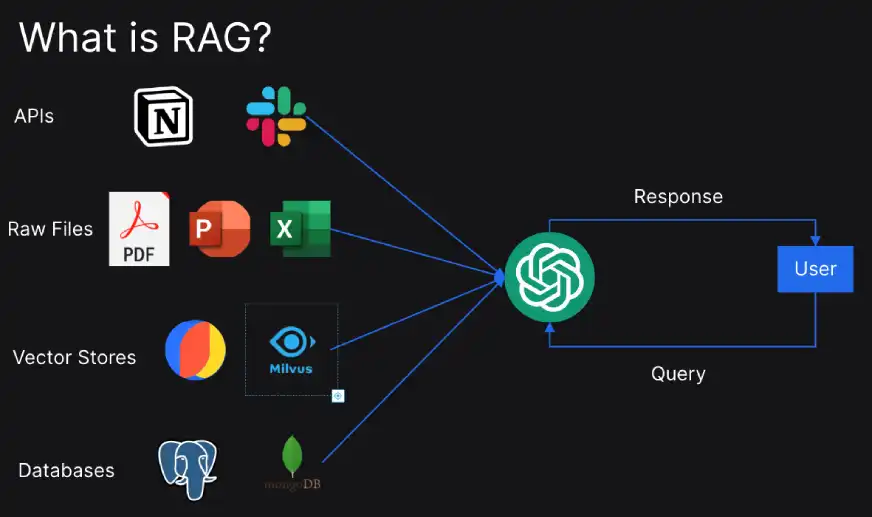
RAG is a technique or a methodology to augment the external knowledge into the LLMs.
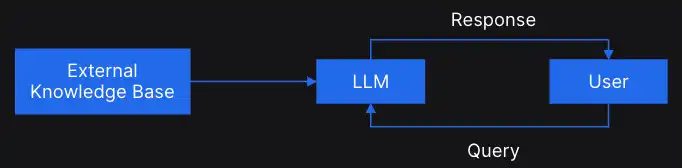
We can directly connect the external knowledge base to LLMs, like chat GPT, and prompt the LLMs to fetch answers about the external knowledge base.
Let’s quickly understand how RAG works:
RAG excels at simple queries across a few documents, but it still lacks a layer of intelligence. The discovery of agentic RAG led to the development of a system that can act as an autonomous decision-maker, analyzing the initial retrieved information and strategically selecting the most effective tools for further response optimization.
Agentic RAG and Agentic AI are closely related terms that fall under the broader umbrella of Agentic Systems. Before we study Agentic RAG in detail, let’s look at the recent discoveries in the fields of LLM and RAG.
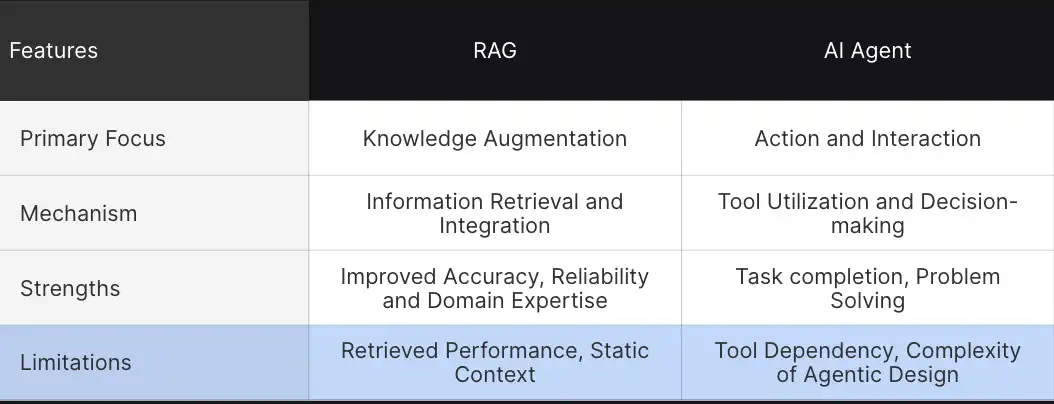
So far, we have understood the basic differences between RAG and AI agents, but to understand it intricately, let’s take a closer look at some of the defining parameters.
These comparisons help us understand how these advanced technologies differ in their approach to augmenting and performing tasks.
So far, you have observed how integrating LLMs with the retrieval mechanisms has led to more advanced AI applications and how Agentic RAG (ARAG) is optimizing the interaction between the retrieval system and the generation model.
Now, backed by these learnings, let’s explore the architectural differences to understand how these technologies build upon each other.
| Feature | Long Context LLMs | RAG ( Retrieval Augmented Generation) | Agentic RAG |
| Core Components | Static knowledge base | LLM+ External data source | LLM+ Retrieval module + Autonomous Agent |
| Information Retrieval | No external retrieval | Queries external data sources during responses | Queries external databases and select appropriate tool |
| Interaction Capability | Limited to text generation | Retrieves and integrates context | Autonomous decisions to take actions |
| Use Cases | Text summarization, understanding | Augmented responses and contextual generation | Multi-tasking, end-to-end task generation |
These architectural distinctions help explain how each system allows knowledge, augmentation, and decision-making differently. Now comes the point where we need to determine the most suitable—LLMs, RAG, and Agentic RAG. To pick one, you need to consider specific requirements such as Cost, Performance, and Functionality. Let’s study them in greater detail below.
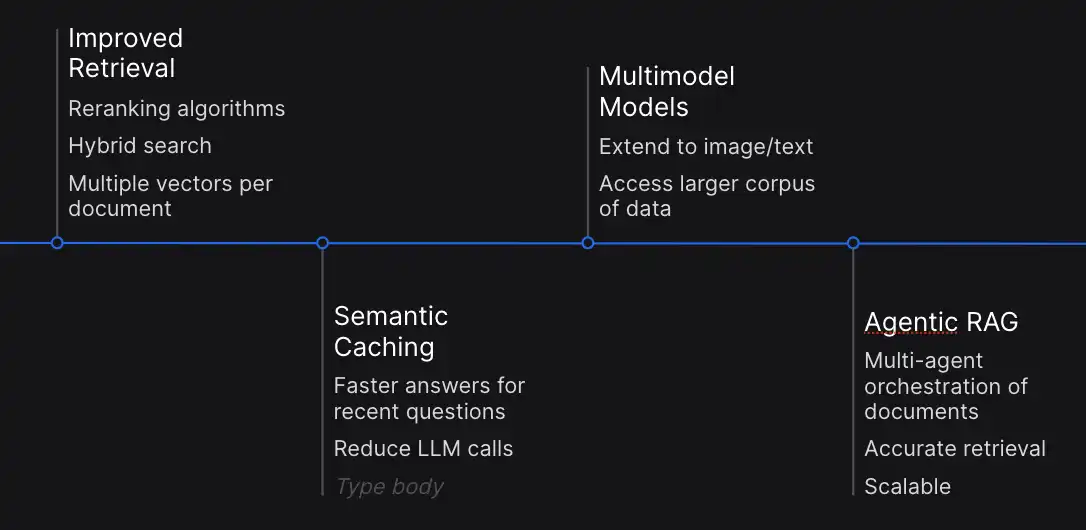
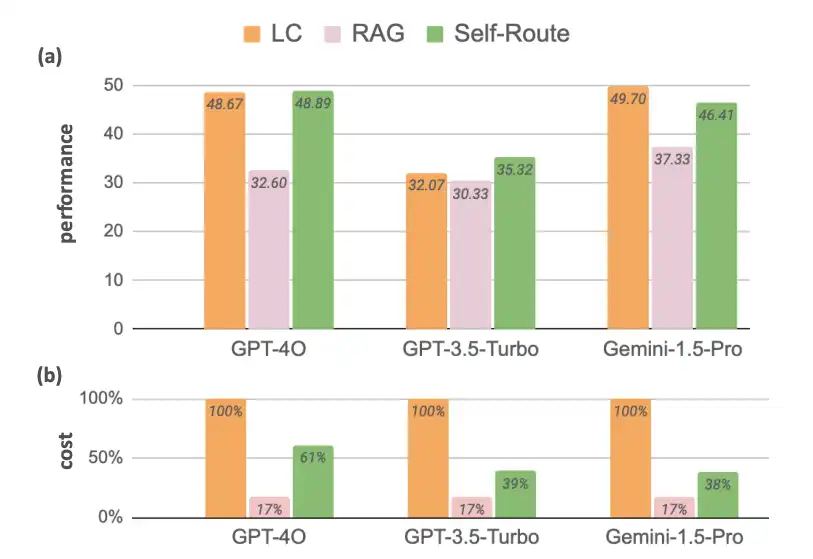
But, before we move onto understanding the new fusion technique, let’s first look at the result it has produced.
Self-Route: Self-Route is an Agentic Retrieval-Augmented Generation (RAG), designed to achieve a balanced trade-off between cost and performance. For queries that can be answered without routing, it uses fewer tokens, and only resorting to LC for more complex queries.
Now packed with this understanding, let’s move on to understand Self-Route.
Self-Route is an Agentic AI design pattern that utilizes LLMs itself to route queries based on self-reflection, under the assumption that LLMs are well-calibrated in predicting whether a query is answerable given provided context.
Self-Route proves to be an effective strategy when performance and cost must be balanced. This makes it an ideal system for applications that require dealing with a diverse set of queries.
We have discussed the evolution of Agentic RAG, specifically comparing Long Context LLMs, Retrieval-Augmented Generation (RAG), and the more advanced Agentic RAG. While Long Context LLMs excel at maintaining context over extended dialogues or large documents, RAG improves upon this by integrating external knowledge retrieval to enhance contextual accuracy. However, both fall short in terms of autonomous action-taking.
With the evolution of agentic RAG, we have introduced a new intelligence layer by enabling decision-making and autonomous actions, bridging the gap between static information processing and dynamic task execution. The article also presents a hybrid approach called “Self-Route,” which combines the strengths of RAG and Long Context LLMs, balancing performance and cost by routing queries based on complexity.
Ultimately, the choice between these systems depends on specific needs, such as cost-efficiency, context size, and the complexity of queries, with Self-Route emerging as a balanced solution for diverse applications.
Also, to understand the Agent AI better, explore: The Agentic AI Pioneer Program
Ans. RAG is a methodology that connects a large language model (LLM) with an external knowledge base. It enhances the LLM’s ability to provide accurate responses by retrieving and integrating relevant external information into its answers.
Ans. Long Context LLMs are designed to handle much longer input tokens compared to traditional LLMs, allowing them to maintain coherence over extended text and summarize larger documents effectively.
Ans. AI Agents are autonomous systems that can make decisions and take actions based on processed information. Unlike RAG, which augments knowledge retrieval, AI Agents interact with their environment to complete tasks independently.
Ans. Long Context LLMs are best used when you need to handle extensive content, such as summarizing large documents or maintaining coherence over long conversations, and have sufficient resources for higher computational costs.
Ans. RAG is more cost-efficient compared to Long Context LLMs, making it suitable for scenarios where computational cost is a concern and where additional contextual information is needed to answer queries.
Hi, I'm Sushant Thakur, an Instructional Designer. I'm actively involved in writing blogs and articles that explore the latest trends in Generative AI technologies and their real-world applications. Follow me for insights on how Gen AI is shaping industries and enhancing learning experiences.
GPT-4 vs. Llama 3.1 – Which Model is Better?
Llama-3.1-Storm-8B: The 8B LLM Powerhouse Surpa...
A Comprehensive Guide to Building Agentic RAG S...
Top 10 Machine Learning Algorithms in 2026
45 Questions to Test a Data Scientist on Basics...
90+ Python Interview Questions and Answers (202...
8 Easy Ways to Access ChatGPT for Free
Prompt Engineering: Definition, Examples, Tips ...
What is LangChain?
What is Retrieval-Augmented Generation (RAG)?
Edit
Resend OTP
Resend OTP in 45s