


Key points
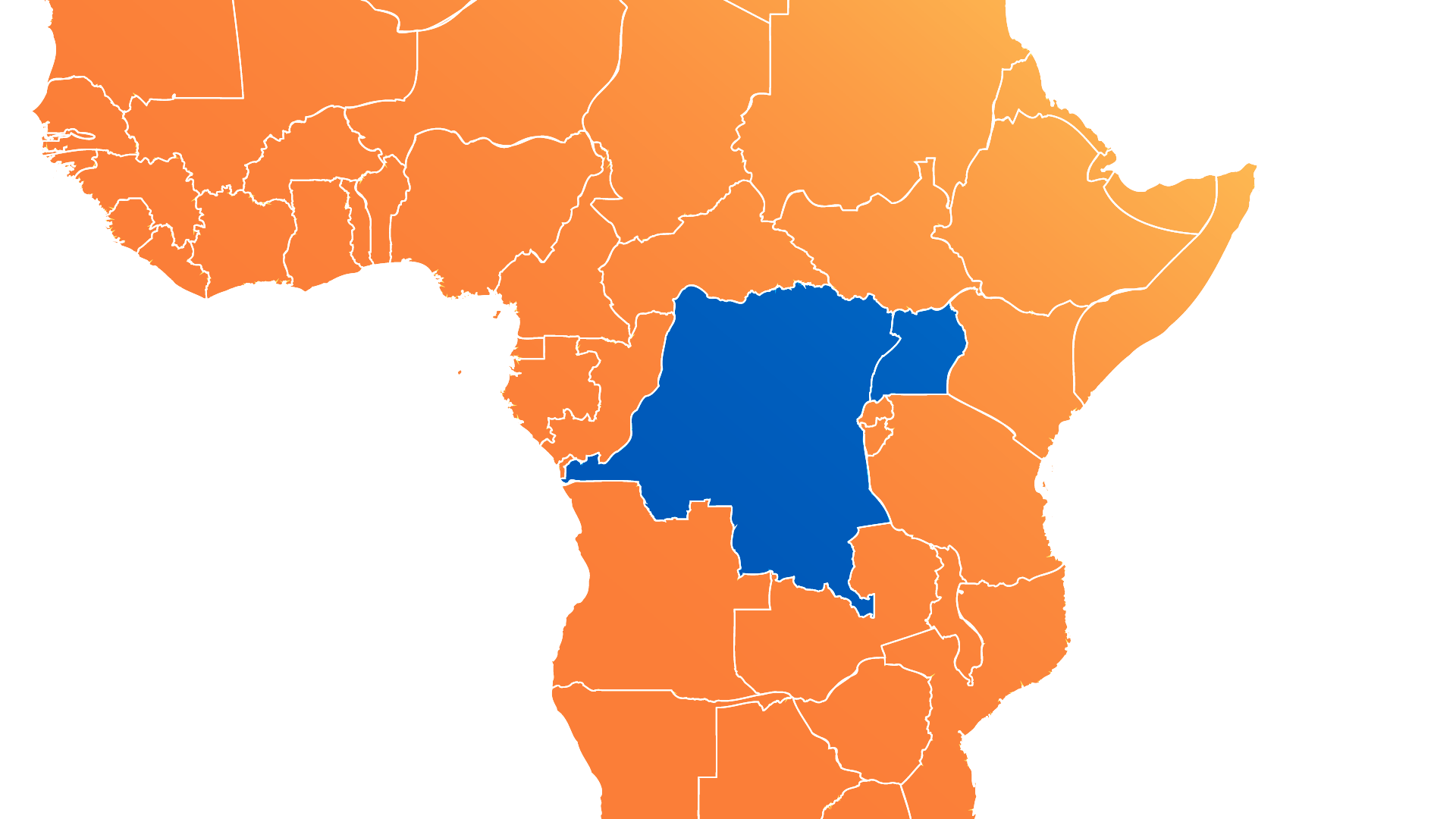
- CDC is responding to an outbreak of Ebola disease caused by Bundibugyo virus in remote areas of the Democratic Republic of the Congo (DRC) and Uganda.
- To date, no cases of Ebola disease have been confirmed in the United States because of this outbreak.
- The overall risk to the American public and travelers remains low.
Current situation
Risk to the United States
Important Information
- CDC has issued Travel Health Notices for DRC and Uganda due to Ebola outbreaks in East and Central Africa.
- CDC recommends avoiding non-essential travel to Ituri, Nord-Kivu, and Sud-Kivu provinces in DRC. Travelers to DRC or Uganda should take precautions to avoid Ebola exposure and monitor for symptoms while traveling and for 21 days after leaving.
- CDC and DHS have implemented enhanced travel screening, entry restrictions, and public health measures to prevent Ebola disease from entering the United States amid outbreaks in East and Central Africa.
- Affected air passengers from DRC, South Sudan, and Uganda will have their air travel re-routed to arrive at Washington-Dulles International Airport (IAD), Atlanta Hartsfield-Jackson International Airport (ATL), George Bush Intercontinental Airport (IAH), or John F. Kennedy International Airport (JFK). Airlines will work directly with affected travelers to rebook flights.
- To date, South Sudan has not reported any cases, but it is included in these efforts due to shared borders with affected countries.
- An American citizen who tested positive for Ebola after being exposed as part of humanitarian work in DRC has recovered from the illness and has been released from care.
- High-risk contacts associated with this exposure did not experience any Ebola symptoms and are now out of the 21-day incubation period for Ebola disease. They have been released from monitoring.
Latest data
Reported cases
This is a rapidly evolving situation, and case counts are subject to change.
The DRC and Uganda Ministries of Health report the following:
DRC
(As of June 15)
- 837 confirmed cases
- 196 confirmed deaths
- NA - probable cases
- NA - probable deaths
- NA - suspected cases*
- NA - suspected deaths*
Uganda
(As of June 16)
- 19 confirmed cases
- 2 confirmed deaths
- 1 probable case
- 1 probable death
What to know about the outbreak
In early May, a hospital in Bunia Health Zone in northeastern DRC identified a cluster of severe illnesses affecting healthcare workers. Initial samples tested in DRC were negative for Ebola virus, but later 8 out of 13 samples tested positive for an orthoebolavirus, and 5 were inconclusive. Using genetic fingerprinting, the illnesses were identified as Bundibugyo (Bun-dee-BOO-joh) virus, one of the 4 types of orthoebolaviruses that cause Ebola disease in people.
There is no vaccine for Bundibugyo virus, and treatment consists of supportive care. Patients have experienced Ebola disease symptoms like fever, headache, vomiting, severe weakness, abdominal pain, nosebleeds, and vomiting blood.
There have been 2 previous outbreaks of Bundibugyo virus, one in Uganda (2007) and one in DRC (2012), with death rates of 32% and 55%, respectively. This outbreak is now the largest caused by Bundibugyo virus.
Projecting the possible size of the outbreak
A CDC analysis of available data examines what this outbreak could look like over the coming months by running a range of scenarios. This analysis is used as a planning tool to show how public health actions in affected areas could affect case numbers and deaths. The modeling suggests that strong, immediate support is needed to control the current outbreak.
Risk to the United States
CDC assessed the risk posed by this ongoing outbreak to the U.S. population during the next 3 months as low. Even though there are large numbers of cases in DRC, the current likelihood for potential spread of Bundibugyo virus from DRC to the United States is considered very low. Further, if a case was diagnosed in the United States, the risk of community spread in the United States is also low given the strength of our public health system and infection control measures.
For Americans going about their daily lives – including those with travel plans that don't involve the affected countries – there is no recommended change in behavior at this time.
CDC response
CDC is working internationally and domestically to respond to this outbreak and prevent Ebola from entering the United States.
If you were recently in affected areas
CDC has guidance for people who recently have been in areas affected by this Ebola outbreak, including what to do if you feel sick after travel.
Map of impacted areas
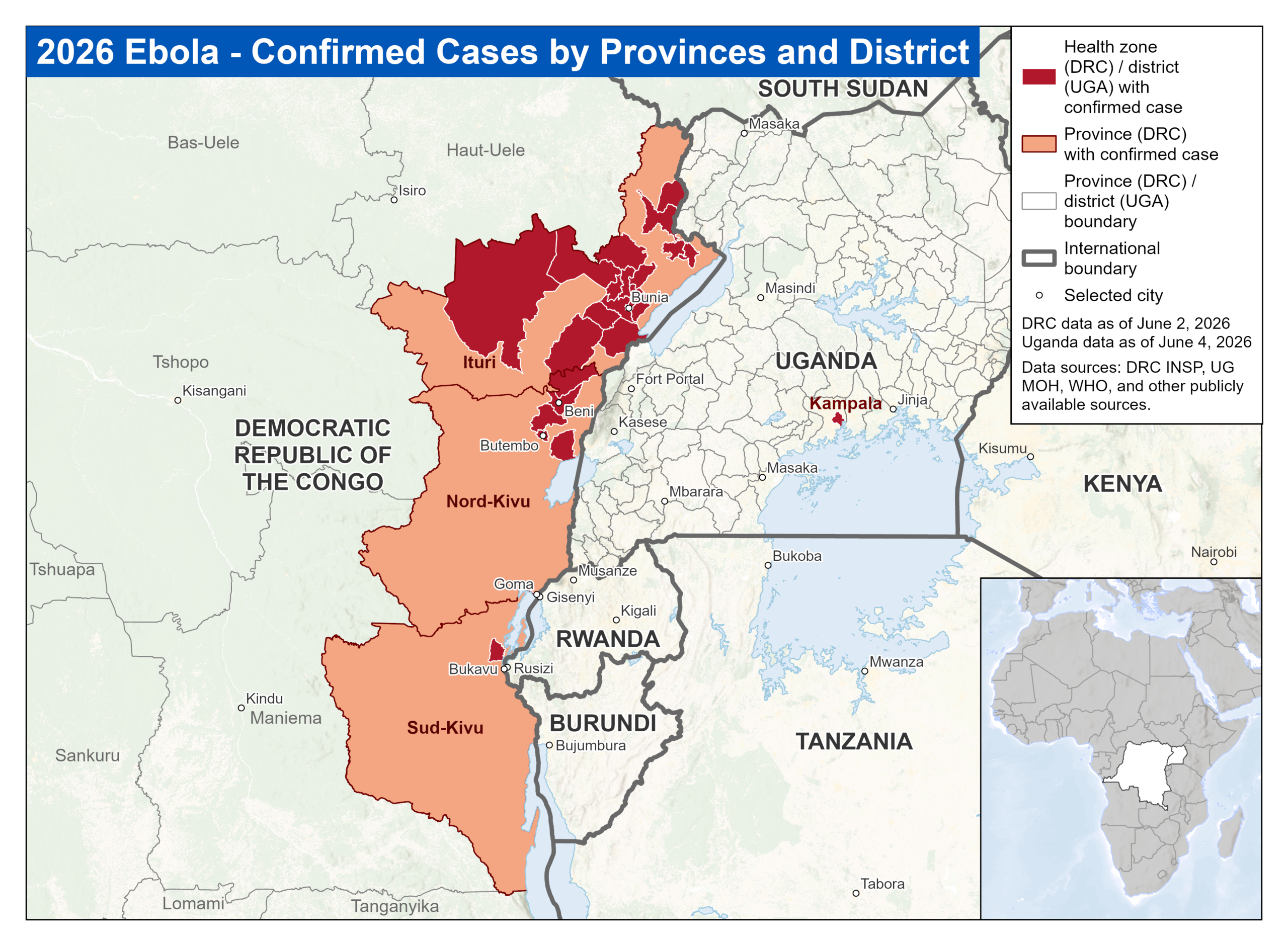
This map highlights the provinces of Ituri, Nord-Kivu, and Sud-Kivu in the Democratic Republic of the Congo and areas (health zones) within those provinces that have confirmed cases of Ebola disease. The map also highlights one district in Kampala, Uganda with confirmed cases.
Resources
For everyone
Travel information
- Travel Health Notice: Democratic Republic of the Congo
- Travel Health Notice: Uganda
- Ebola: What to Do After Travel
- Information for Travelers Returning from Ebola-Affected Areas
For healthcare providers
- Clinical Guidance for Ebola Disease
- Clinical Screening and Diagnosis for Viral Hemorrhagic Fevers
- Infection Prevention and Control Recommendations for Patients in U.S. Hospitals who are Suspected or Confirmed to have Selected Viral Hemorrhagic Fevers
- Use of Ebola Vaccine: Recommendations of the Advisory Committee on Immunization Practices, United States, 2020 - PMC
- HAN: Ebola Disease Outbreak in the Democratic Republic of the Congo and Uganda