

Comprehensive Shoulder Mechanics and Treatment Approaches
Keep adding new skills with 10,000+ programs for $239 (usually $399). Save now.

Comprehensive Shoulder Mechanics and Treatment Approaches
This course is part of Upper Body Specialist: Advanced Assessments and Treatments Specialization

Instructor: Niel Asher Education
Included with
Recommended experience
Recommended experience
What you'll learn
How to assess and treat shoulder dysfunction in both athletes and general clients
How to design rehab and performance programs integrating mobility and strength
How to assess shoulder movement and apply mobility, stability, and performance strategies to support pain-free function and stronger movement.
Details to know

January 2026
3 assignments
See how employees at top companies are mastering in-demand skills

Build your subject-matter expertise
- Learn new concepts from industry experts
- Gain a foundational understanding of a subject or tool
- Develop job-relevant skills with hands-on projects
- Earn a shareable career certificate

There are 3 modules in this course
Shoulder pain and restriction can affect everything from throwing, lifting, training, and reaching overhead to simple daily tasks like dressing or sleeping comfortably. By the end of this course, learners will understand how shoulder mechanics, stability, mobility, and whole-body movement patterns influence pain, performance, and recovery.
Led by Sue Falsone, PT, ATC, former Head Athletic Trainer of the Los Angeles Dodgers, this course combines elite sports medicine experience with practical shoulder care for both athletic and general populations. Learners explore how the shoulder works as part of the kinetic chain and why dysfunction often involves more than the joint itself. Through expert instruction and practical demonstrations, learners study shoulder assessment, throwing mechanics, mobility and stability concepts, exercise progressions, rehabilitation strategies, and performance-based treatment planning. Healthcare, fitness, sports, and rehabilitation professionals will gain adaptable tools for working with shoulder dysfunction, while general learners will better understand how shoulder movement connects to posture, strength, and daily function. This course offers a practical framework for supporting pain-free movement, better performance, and long-term shoulder health.
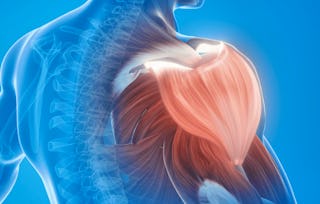
In Module 1 of the Shoulder Master Class, Dr. Sue Falsone breaks down the shoulder as an integrated system — not a single joint, but a coordinated relationship among the scapulothoracic, glenohumeral, AC, and SC joints. She emphasizes that shoulder dysfunction often originates elsewhere in the kinetic chain, such as the trunk or lower body, and highlights how energy leaks in the system can contribute to pain or loss of function. Using clear anatomical demonstrations, Sue shows how the subacromial space can easily become compromised and explains how posture, inflammation, rotator cuff function, and scapular stability all influence shoulder mechanics. Throughout the module, she reinforces the importance of anatomy and biomechanics literacy, encouraging therapists to think globally rather than treat locally. This module lays the groundwork for assessment and treatment by showing that to understand shoulder pain, you must first understand how the entire system works together.
What's included
3 videos3 readings1 assignment1 discussion prompt
3 videos•Total 32 minutes
- Anatomy and Biomechanics - Part 1•11 minutes
- Anatomy and Biomechanics - Part 2•10 minutes
- Anatomy and Biomechanics - Part 3•12 minutes
3 readings•Total 25 minutes
- Syllabus•5 minutes
- Course Workbook•10 minutes
- Student Notes•10 minutes
1 assignment•Total 15 minutes
- Practice Assignment•15 minutes
1 discussion prompt•Total 10 minutes
- Introduction•10 minutes
Module 2 shifts from theory to application. Dr. Falsone demonstrates real-time assessment and corrective strategies for the most common compensations seen in athletes and clients with shoulder dysfunction. Using live models, she walks through upward/downward scapular rotation control, external rotation/external rotator dominance patterns, internal rotation deficits, and thoracic/neck involvement. She teaches how to activate the serratus anterior, lower trapezius, and deep neck flexors to restore efficient scapular mechanics. Exercises progress from simple band-assisted movements to loaded stability patterns like modified side planks with external rotation. Sue reinforces the concept of force couples, how muscle imbalances distort shoulder mechanics, and how proper activation creates improved centration of the humeral head. The session finishes with performance-focused posterior cuff strengthening, scapular stability drills, and high-value rehab exercises (Y’s, T’s, W’s, and dynamic Blackburns) that therapists can use immediately in clinical practice.
What's included
3 videos1 reading1 assignment1 discussion prompt
3 videos•Total 35 minutes
- Compensations and Rehabilitative Exercise - Part 1•8 minutes
- Compensations and Rehabilitative Exercise - Part 2•13 minutes
- Compensations and Rehabilitative Exercise - Part 3•14 minutes
1 reading•Total 10 minutes
- Student Notes•10 minutes
1 assignment•Total 15 minutes
- Practice Assignment•15 minutes
1 discussion prompt•Total 10 minutes
- Summary•10 minutes
This final exam is designed to assess your understanding of the key concepts presented throughout the course. Please review all video lessons and written materials before beginning. A passing score of 70% or higher is required to successfully complete the course and earn your CE certificate. You may reference your notes during the exam. Once you pass, your certificate will be available for immediate download.
What's included
1 assignment
1 assignment•Total 45 minutes
- Course Exam•45 minutes
Earn a career certificate
Add this credential to your LinkedIn profile, resume, or CV. Share it on social media and in your performance review.
Instructor
Offered by

Explore more from Patient Care
- Status: Free TrialN
Niel Asher Education
Specialization
- Status: Free TrialN
Niel Asher Education
Course
- Status: Free TrialN
Niel Asher Education
Course
- Status: Free TrialN
Niel Asher Education
Specialization

Why people choose Coursera for their career






Frequently asked questions
To access the course materials, assignments and to earn a Certificate, you will need to purchase the Certificate experience when you enroll in a course. You can try a Free Trial instead, or apply for Financial Aid. The course may offer 'Full Course, No Certificate' instead. This option lets you see all course materials, submit required assessments, and get a final grade. This also means that you will not be able to purchase a Certificate experience.
When you enroll in the course, you get access to all of the courses in the Specialization, and you earn a certificate when you complete the work. Your electronic Certificate will be added to your Accomplishments page - from there, you can print your Certificate or add it to your LinkedIn profile.
Yes. In select learning programs, you can apply for financial aid or a scholarship if you can’t afford the enrollment fee. If fin aid or scholarship is available for your learning program selection, you’ll find a link to apply on the description page.
More questions
Financial aid available,