|
VOOZH | about |
|
VOOZH | about |
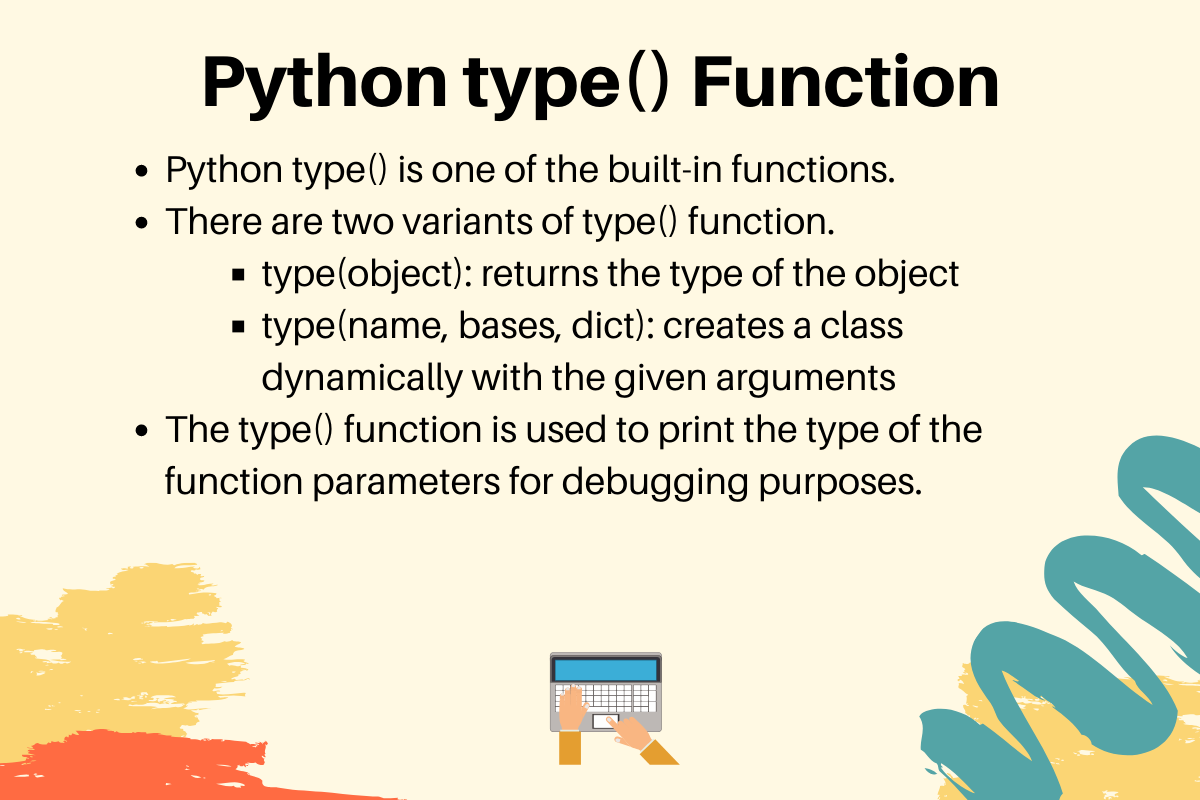
Python’s type() function is a built-in that serves a dual purpose: determining an object’s exact class and dynamically creating new classes at runtime. In this article, we will delve into both aspects of type(), illustrating its syntax, common use cases with built-in and custom classes, its role in dynamic class generation, and the crucial distinctions when compared to isinstance() for effective type checking. It’s a very straightforward function. Without any further ado, let’s get right into the syntax.
Thanks for learning with the DigitalOcean Community. Check out our offerings for compute, storage, networking, and managed databases.
Java and Python Developer for 20+ years, Open Source Enthusiast, Founder of https://www.askpython.com/, https://www.linuxfordevices.com/, and JournalDev.com (acquired by DigitalOcean). Passionate about writing technical articles and sharing knowledge with others. Love Java, Python, Unix and related technologies. Follow my X @PankajWebDev
With over 6 years of experience in tech publishing, Mani has edited and published more than 75 books covering a wide range of data science topics. Known for his strong attention to detail and technical knowledge, Mani specializes in creating clear, concise, and easy-to-understand content tailored for developers.
Full documentation for every DigitalOcean product.
The Wave has everything you need to know about building a business, from raising funding to marketing your product.