A complete Abridge review: Is it the right AI scribe for 2025?


Last edited November 5, 2025
If you’re a clinician, you’re probably all too familiar with “pajama time.” It’s that lovely part of the evening, long after your last patient has left, where you’re stuck catching up on clinical notes. This administrative grind is a huge driver of burnout in healthcare. AI medical scribes have popped up as a potential fix, and one name you’ll hear over and over is Abridge.
So, is it just hype? This Abridge review will get into the nitty-gritty of what the platform does, who it’s really for, and how it holds up in a real hospital setting. We’ll look at its tech, how it’s implemented, and its business model to give you a clear picture of what it’s all about.
What is Abridge?
Put simply, Abridge is an AI-powered platform that listens to conversations between doctors and patients and then automatically generates clinical documentation from them. It was founded back in 2018 by Dr. Shiv Rao, a practicing cardiologist who was tired of the documentation burden and figured there had to be a better way. The goal is to cut down on those administrative tasks so healthcare professionals can actually focus on their patients.
The platform records the conversation (with everyone’s consent, of course), transcribes it, and then uses generative AI to whip up a structured medical note in common formats like SOAP (Subjective, Objective, Assessment, Plan). Abridge is built for the big players, serving large health systems, hospitals, and clinics. It's already trusted by some of the biggest names in healthcare, like Kaiser Permanente, Johns Hopkins, and Mayo Clinic, which tells you it’s a serious, secure, and scalable tool.
Abridge's features and technology
Abridge’s magic isn’t just about turning speech into text; it’s about understanding the complex world of medical conversations. It was built from the ground up for this specific job.
The contextual reasoning engine
At the heart of the platform is its Contextual Reasoning Engine. This isn't just a fancy name; it’s what allows the AI to understand clinical nuances, pick out important medical terms, and even flag details for coding and billing. For instance, as mentioned in a Becker's Hospital Review article, the AI can tell the difference between a condition that’s resolved versus one being managed by a device (like sick sinus syndrome with a pacemaker). That small distinction can have a huge impact on reimbursement, and it’s this kind of deep understanding that sets it apart from generic AI models.
Deep EMR integrations that respect workflows
One of the biggest headaches with new health tech is getting it to play nicely with the systems everyone already uses. Abridge gets this right by offering deep integrations directly inside Electronic Medical Record (EMR) systems like Epic. This means a doctor can wrap up a visit, and the AI-generated note is already sitting in the EMR, waiting for a quick review and sign-off.
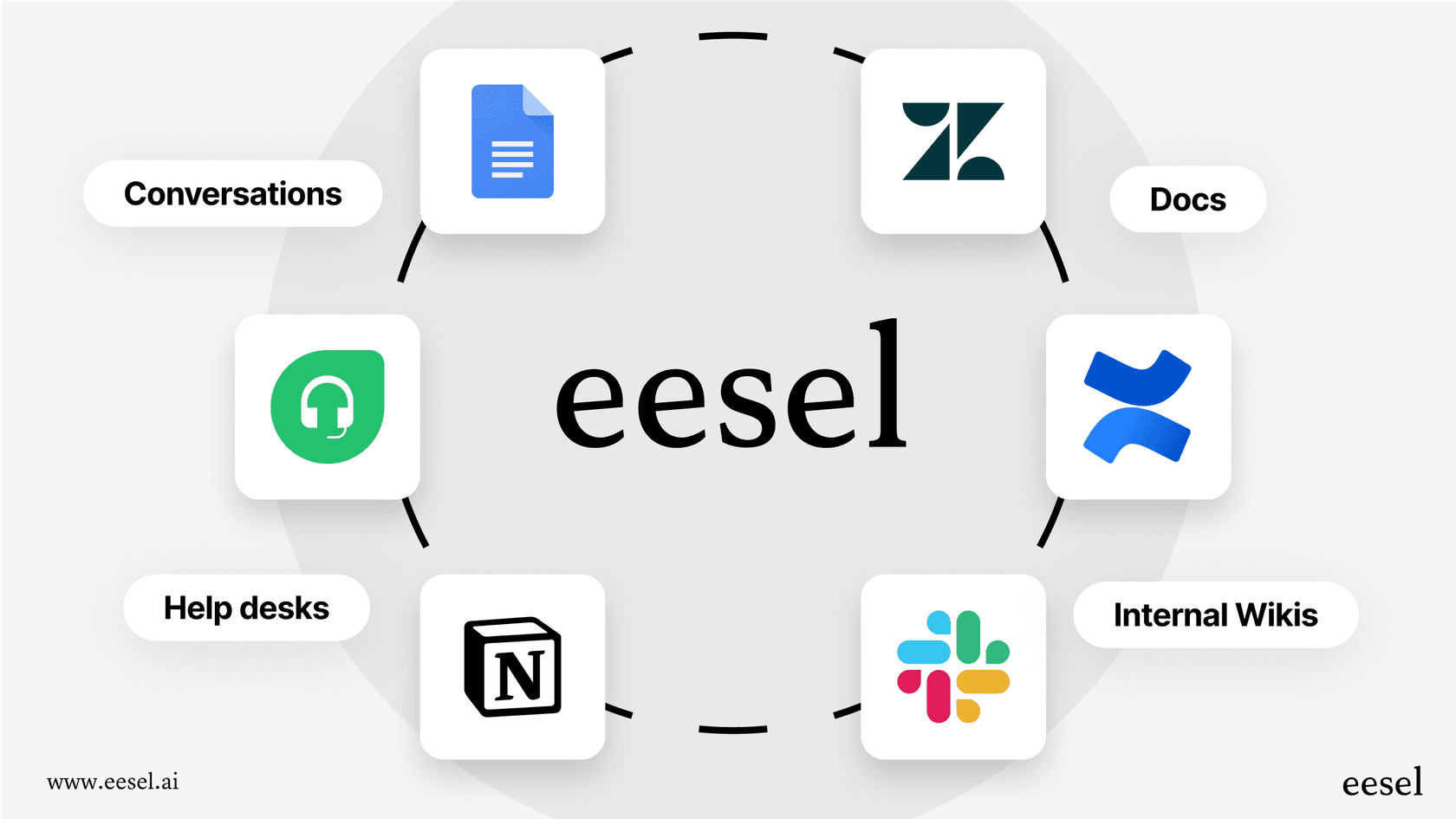
This idea of working with existing tools instead of fighting against them is a huge deal for adoption. It’s the same philosophy for support teams, where any new tool has to integrate smoothly with help desks like Zendesk or Freshdesk. Platforms like eesel AI are built on this principle, plugging right into your existing stack without forcing you to change your entire workflow.
Multilingual and multi-specialty support
Healthcare isn’t one-size-fits-all, and Abridge is designed for that reality. The platform can handle over 14 languages, including Spanish, Mandarin, and Haitian Creole, and it doesn't get tripped up when a conversation switches between languages.
This is a massive advantage for serving diverse patient populations.One doctor on Reddit put it perfectly: Abridge 'understands foreign languages and can make sense of a non-English/English conversation... I am honest SUPER impressed.'

Implementation and real-world impact
Alright, the tech sounds impressive. But does it actually work in a busy clinic? Let's look at how Abridge gets rolled out and what doctors are saying about it.
The enterprise adoption model
Abridge is geared toward large health systems, and its rollout process reflects that. They don't just flip a switch. A new deployment usually starts with a detailed pilot program where the tech is tested by a specific department or group of doctors. According to Becker's Hospital Review, health systems like UW Health run these extensive trials to make sure the tool is accurate and easy to use before it goes live everywhere.
What doctors are saying
The feedback from clinicians seems to be overwhelmingly positive. Doctors are reporting they save up to two hours a day on notes, which means less burnout and a better work-life balance. One user called it "the best thing since sliced bread," and another said it was "literally saving me about 2 hrs of charting each evening." This frees them up to be more present with patients instead of being glued to a keyboard.
The trade-off between power and speed
In the high-stakes world of healthcare, Abridge’s slow and steady, pilot-first approach makes a ton of sense. Accuracy is everything. But this enterprise model also means a full implementation can take months.
For a customer support or IT team, that kind of timeline just doesn’t fly. Business moves too fast. That’s where a different kind of tool is needed. Radically self-serve platforms like eesel AI are designed for speed and agility. Instead of a long pilot, you can connect your help desk and knowledge sources in a few minutes and immediately simulate how the AI would perform on thousands of your past tickets. This lets you test, tweak, and go live on your own schedule, without needing to book a sales demo first.
Pricing and plans
Don't bother looking for a pricing page on Abridge's website, you won't find one. This is pretty standard for enterprise software that targets huge health systems. The cost is customized based on things like how many clinicians will use it, the size of the deployment, and which EMR integrations are needed.
This means you’re looking at a pretty long sales cycle with multiple demos before you get a custom quote. While this makes sure the final solution is tailored to the hospital's needs, it’s a big barrier to entry and lacks the straightforward transparency many of us expect these days.
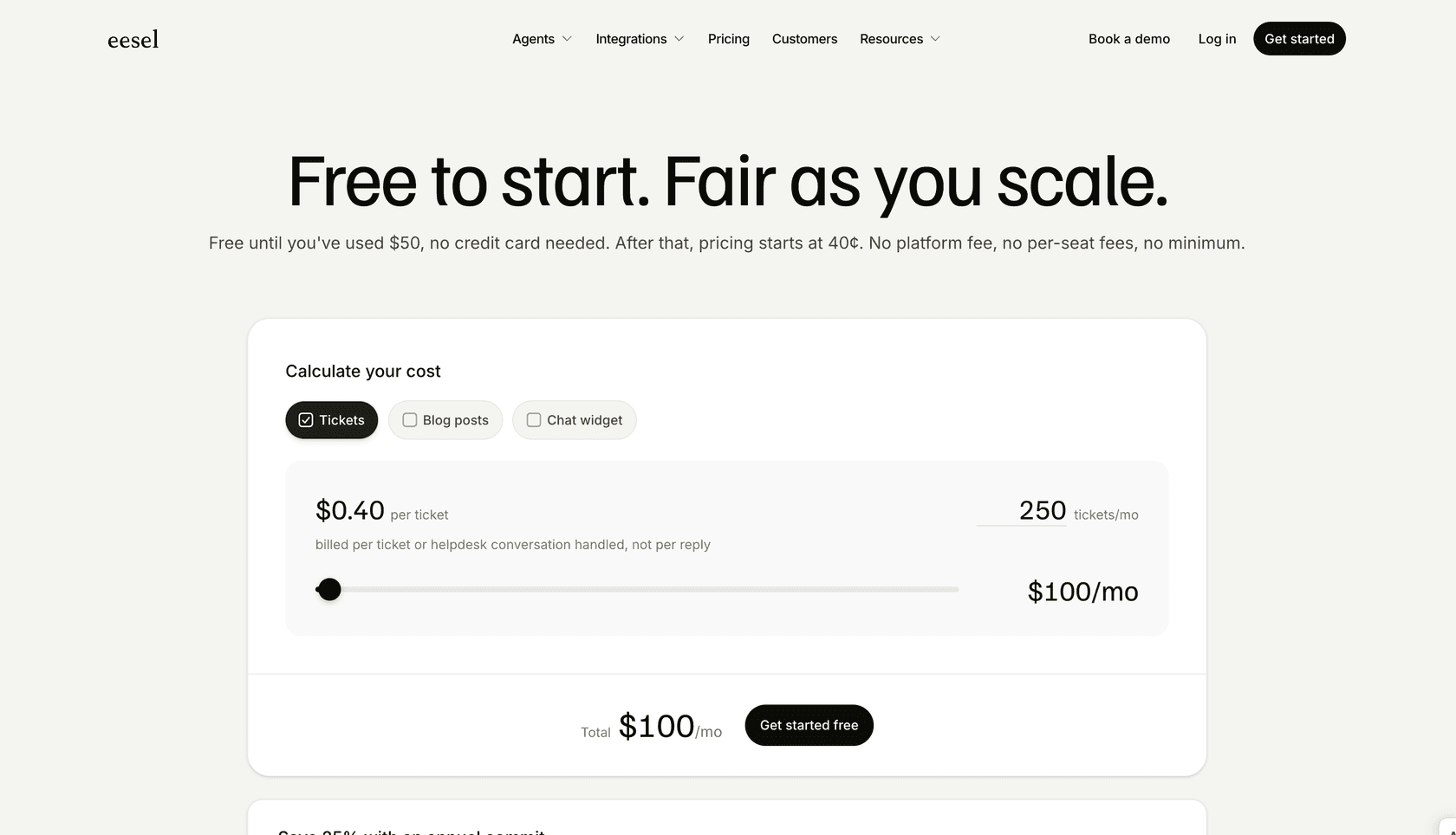
It’s a different world from solutions built for the wider business market. For example, platforms like eesel AI offer clear, predictable pricing based on features and usage. With public monthly and annual plans that have no hidden per-resolution fees, businesses can actually forecast their costs and scale without getting hit with a surprise bill. That kind of predictability is a lifesaver for teams that need to manage a budget and show a return on their investment quickly.
A powerful tool for a specific job
So, what's the final word on Abridge? It's clear that it’s a top-tier AI scribe for clinical documentation. It’s a powerful, highly specialized tool built to solve a very specific, very painful problem for clinicians in large healthcare organizations. Its deep EMR integrations, fantastic language support, and laser focus on clinical accuracy make it a leader in its niche.
But the things that make it great for healthcare are also what limit it for other industries. It’s not a general-purpose AI assistant.
-
You can't just sign up and go. It’s not a self-serve tool.
-
It's built for big, long-term deals. The business model is designed for enterprise-wide partnerships, not small teams.
-
It speaks 'doctor,' not 'customer support ticket'. Its knowledge and functions are all tailored to medicine.
Why specialized AI matters for your team
Looking closely at Abridge proves a really important point about artificial intelligence: the best AI is specialized. Abridge works so well because it was purpose-built for the unique language, workflows, and headaches of healthcare. You wouldn't use a generic chatbot to write a medical note, so you shouldn't use a medical tool to run your customer support.
If you want to bring that same AI power to your support or IT teams, you need a platform designed for your world. You need an AI that can learn from your past support tickets, plug into help desks like Zendesk and Jira, and pull knowledge from places like Confluence and Slack.
That’s where eesel AI comes in. It’s the specialized platform for business support. It brings together all your scattered company knowledge to automate frontline support, draft instant replies for your agents, and intelligently route tickets. It gives you full control over what gets automated, lets you test everything confidently in a simulation environment, and gets you up and running in minutes.
Ready to bring specialized AI to your support team?
Abridge is changing the game for clinicians. Now, it's time to bring that same level of specialized, high-impact AI to your customer support and IT teams.
While Abridge is busy with clinical notes, eesel AI is focused on automating your support workflows. You can connect your help desk, train the AI on your past tickets and knowledge base, and start automating responses with an AI that actually understands your business.
Sign up for free and see how it works in minutes.
Frequently asked questions

Share this article

Article by
Kenneth Pangan
Writer and marketer for over ten years, Kenneth Pangan splits his time between history, politics, and art with plenty of interruptions from his dogs demanding attention.