Ada CX vs eesel AI: A 2025 breakdown for support teams


Last edited May 8, 2026

Table of Contents
- What is Ada CX?
- What is eesel AI?
- Setup and integration: Going live in minutes vs. months
- Features and customization: A closed system vs. a flexible engine
- Ada CX vs eesel AI: A quick comparison
- Pricing and value: Opaque enterprise pricing vs. transparent task-based costs
- The verdict: Which AI platform is right for you?
Disclosure: This article is published by eesel AI, a competitor of Ada. We encourage you to read Ada's own materials for their perspective.
Picking the right AI platform can feel like a huge decision. You're hoping it will transform support, but you're also worried about getting stuck with a clunky tool that requires a marathon setup. You need something that doesn't just spit out automated replies, but actually works with the tools you already use, gets your company's unique vibe, and delivers value you can actually see.
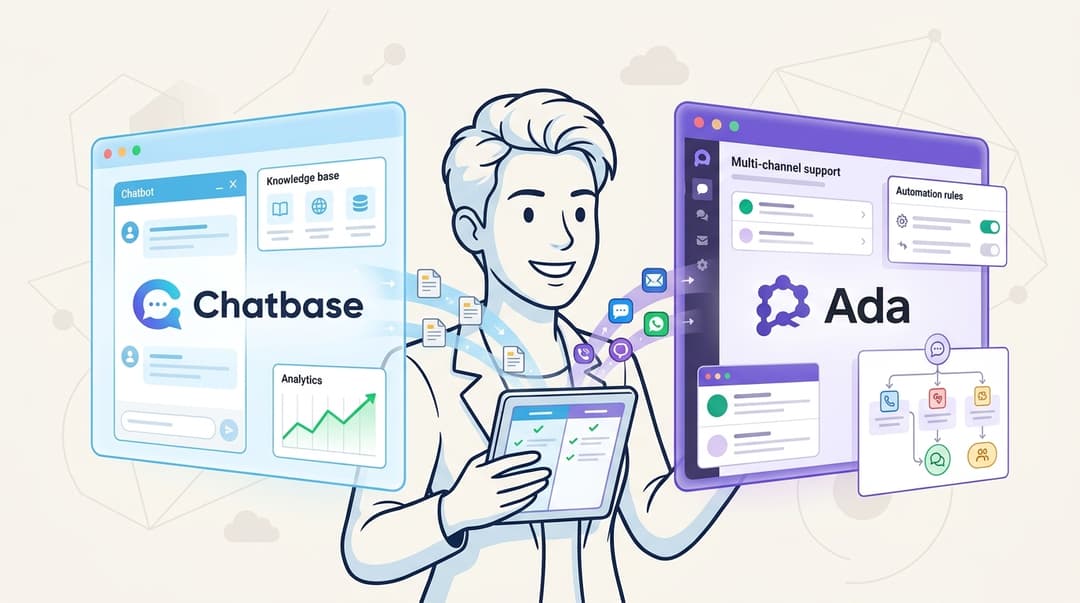
Many support leaders are looking at their options, and two names that keep coming up are Ada CX and eesel AI. While both want to make your support team's life easier, they go about it in completely different ways. This guide will walk you through the key differences between Ada CX vs eesel AI so you can figure out which one really makes sense for your team.
What is Ada CX?
So, what's the deal with Ada? Think of it as an all-in-one AI platform built to handle customer conversations across messaging, email, and even voice. It's generally geared toward larger companies and is designed to be a complete, standalone system for support automation. For a long time, Ada was a top bot partner recommended by big names like Zendesk, which really cemented its place in the market.
The platform is built around its Reasoning Engine, a term for how it uses a mix of AI models to figure out what customers are asking and then resolve conversations autonomously. The main goal of Ada is to cut down the number of tickets that land in your human agents' queue by handling a lot of conversations on its own. Getting started usually means working closely with Ada's team to build and launch your AI agent, making it a go-to for big organizations that want a powerful, more traditional chatbot solution.
What is eesel AI?
eesel AI takes a totally different path. Instead of asking you to move to a new system, it's designed to plug directly into the customer service tools you already use, like Zendesk, Freshdesk, and Gorgias. It acts like a smart layer on top of your existing helpdesk, giving you powerful automation without the disruption of a long setup process.
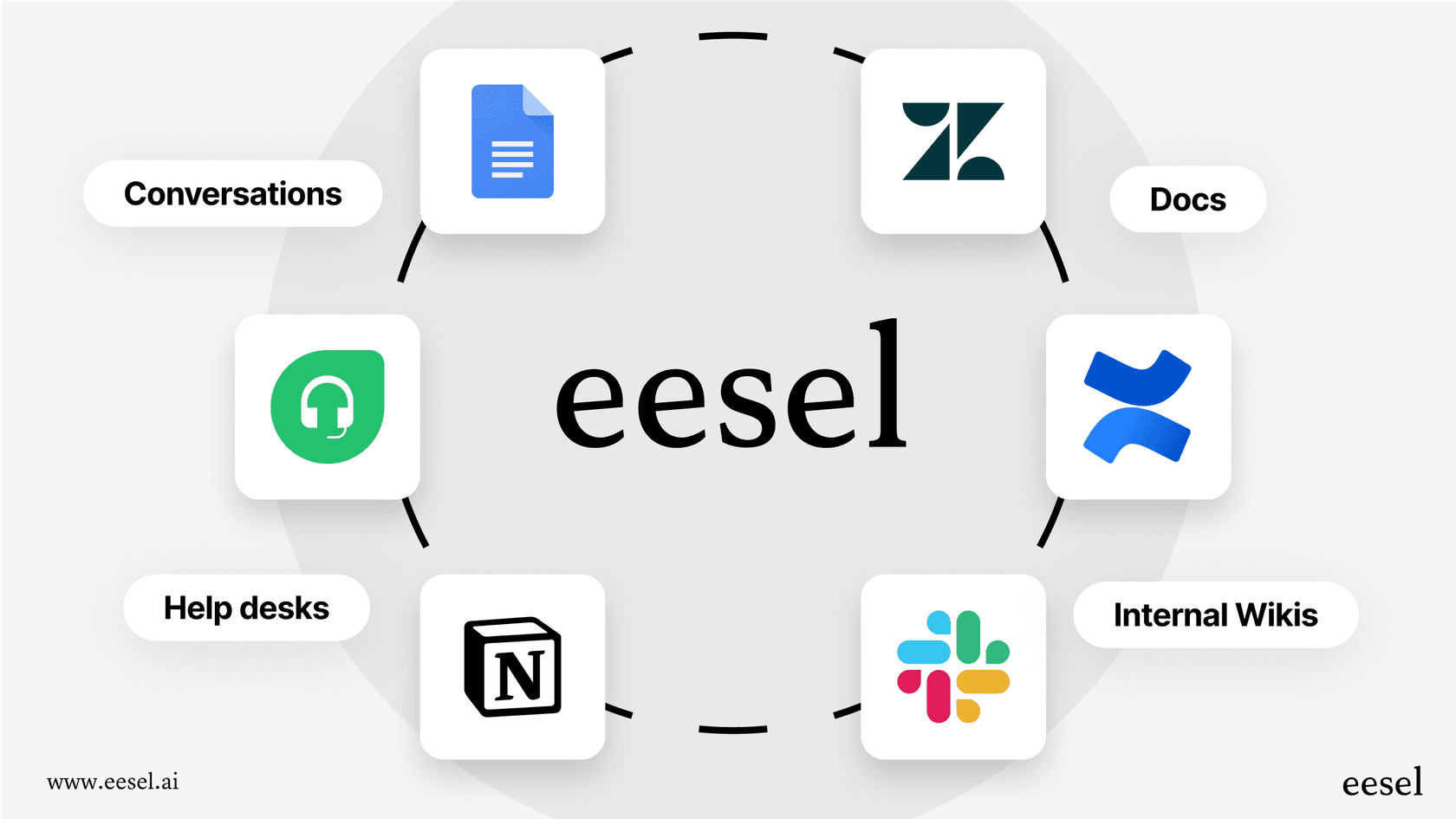
The whole platform is built so you can get up and running yourself in just a few minutes. But its real advantage is how it learns. It doesn't just scan your official help center articles. It connects to all your scattered company knowledge, learning from past support tickets, internal guides in Google Docs or Confluence, and all the other messy, real-world data. This lets eesel AI give really accurate, human-sounding answers that match your team's actual voice.
Setup and integration: Going live in minutes vs. months
This is probably the biggest difference you'll notice right away: how long it takes to get from sign-up to a working AI agent. Your team's time is precious, and a long, drawn-out implementation can kill momentum before you even start.
Ada CX: The traditional enterprise onboarding
Ada is aimed at the enterprise crowd, and its setup process shows it. You can't just sign up and play around with it; you typically have to schedule a demo and talk to a sales team first. The setup is a guided, hands-on process, which can be good if you have really complex needs, but it also means you're on their schedule, not yours.
This traditional, sales-first model can be a blocker for teams that want to move fast or just test the waters without making a huge commitment. It's less of a "try before you buy" and more of a "plan a big project" situation.
eesel AI: Self-serve and ready to go
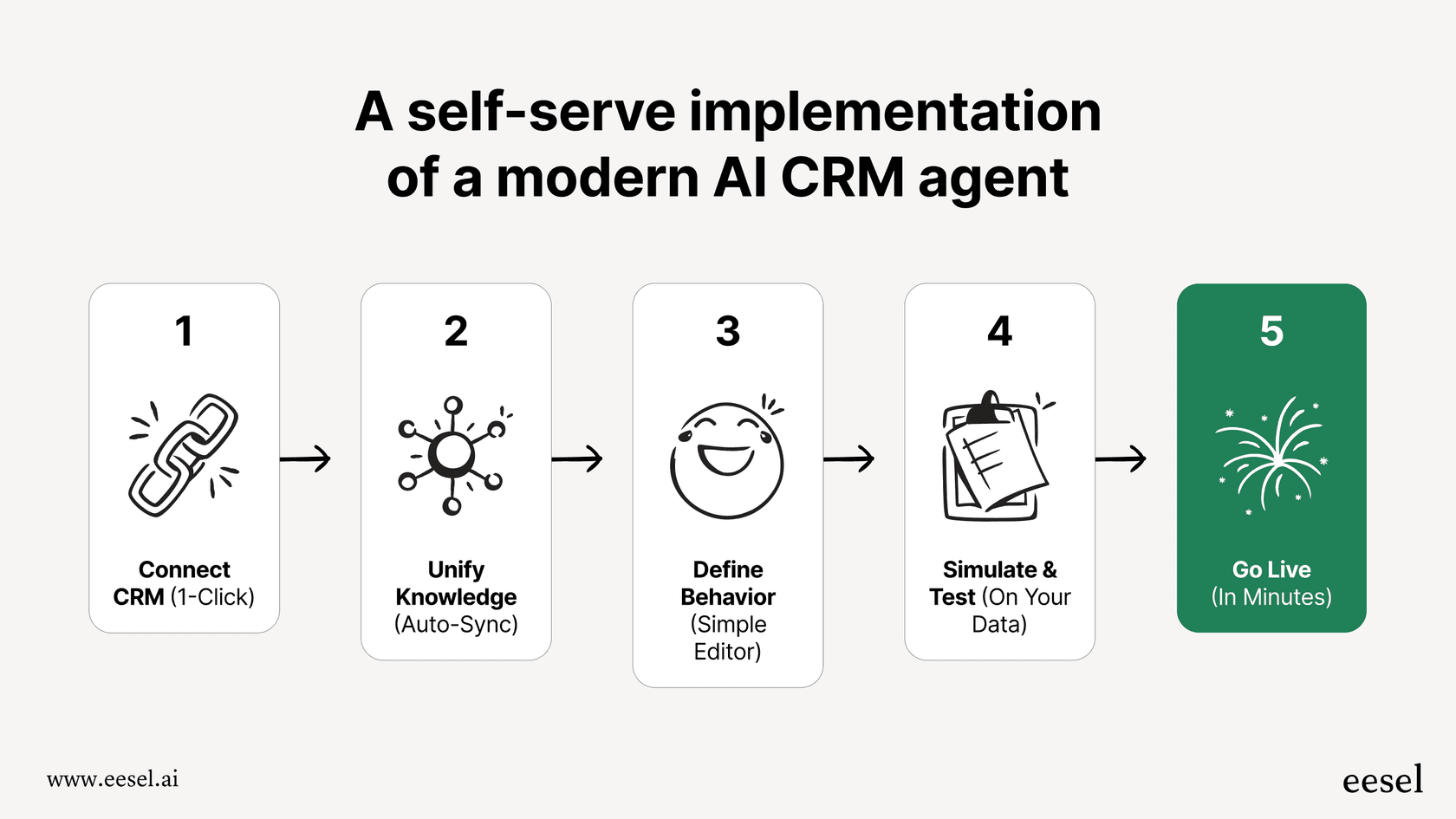
In contrast, eesel AI is all about speed and independence. You can sign up and get your first AI agent live all on your own, without having to talk to a salesperson unless you want to.
Here's why that matters:
-
Simple helpdesk connection: You don't need to be a developer to hook it up. eesel AI connects in minutes and fits right into your team's existing workflow, so there's no new system to learn.
-
Builds on what you have: eesel AI layers on top of the tools you already pay for and makes them smarter. You skip the disruption and retraining that comes with moving your whole team to a new platform.
-
Instant results: Since you can get started almost immediately, you can start seeing how it performs on day one, not months down the road.
For teams that need to be nimble and want to prove the value of AI quickly, the self-serve approach from eesel AI is a much better fit.
Features and customization: A closed system vs. a flexible engine
Beyond the setup, the real test of an AI agent is how smart, accurate, and adaptable it is. This is where the different philosophies of Ada and eesel AI really start to show.
The Ada CX approach to features
Ada is a capable platform. It gives you features like creating a bot persona, handling multiple languages, and setting up rule-based logic. But all of these features live inside Ada's own ecosystem; customization means tweaking the Ada bot itself. Some users have found that while it's great for straightforward questions, the answers can feel a bit robotic. It can also struggle with tricky issues that need information from outside its direct knowledge base.
The eesel AI approach: Using real-world knowledge
eesel AI starts with the assumption that your company's important information isn't all stored in one tidy place. It's built to handle the messy reality of how teams actually work.
Tying together scattered knowledge
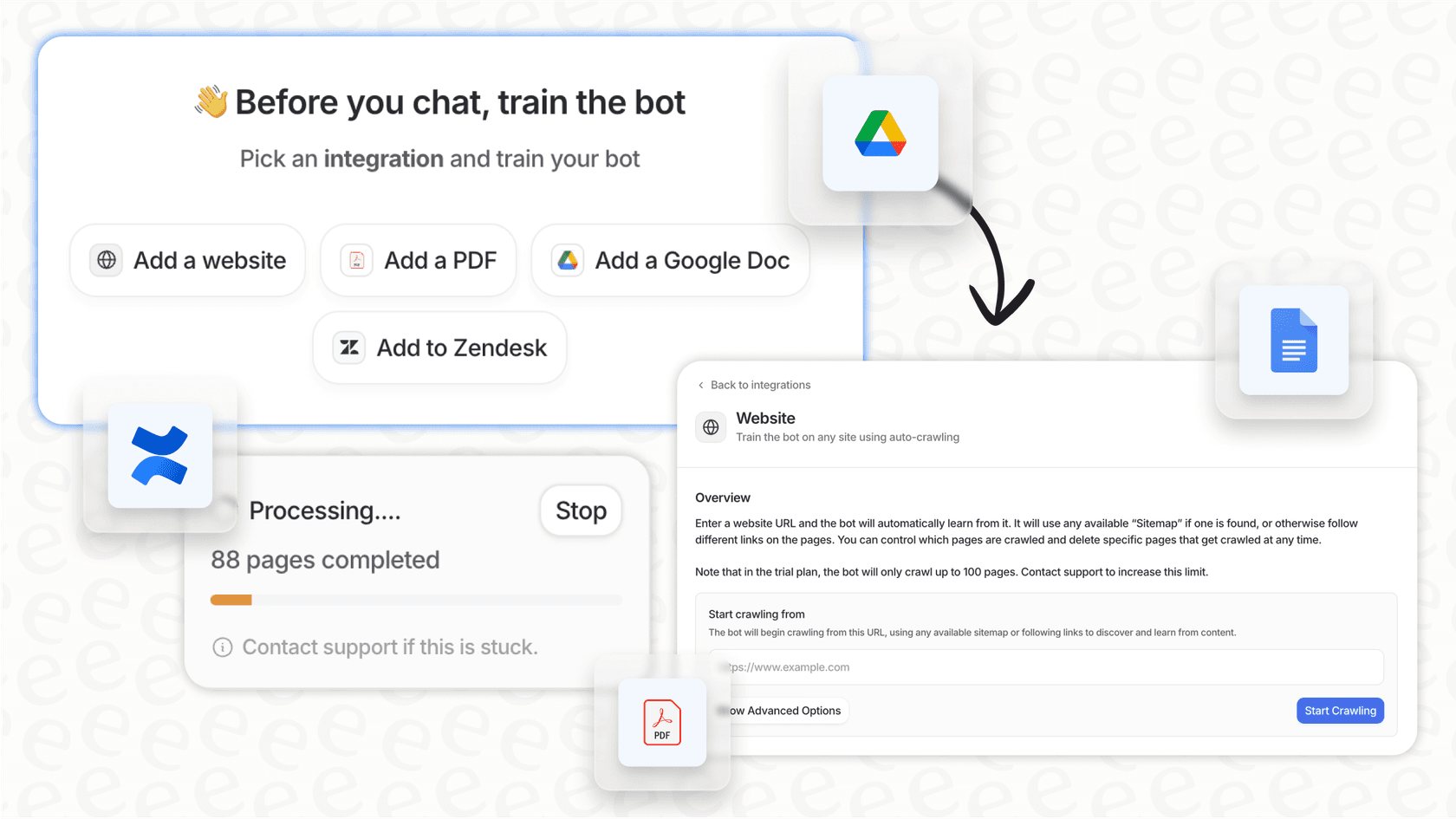
The biggest plus for eesel AI is its ability to learn from all your content, no matter where it is.
-
It learns from your past tickets: It can analyze thousands of your team's old conversations to pick up on your brand voice, common solutions, and how you talk to customers.
-
It connects to internal docs: It can pull information from your internal wikis in Confluence, project plans in Google Docs, and more. This gives the AI the same context your human agents have, which is something other platforms often can't do unless the answer is in a perfect help article.
Detailed control and safe testing
eesel AI lets you call the shots with some pretty unique control and safety features.
-
You can build custom actions and prompts: You can tell the AI exactly what it's allowed to do, whether that's looking up live order info in Shopify, updating a ticket field, or escalating a conversation to the right person.
-
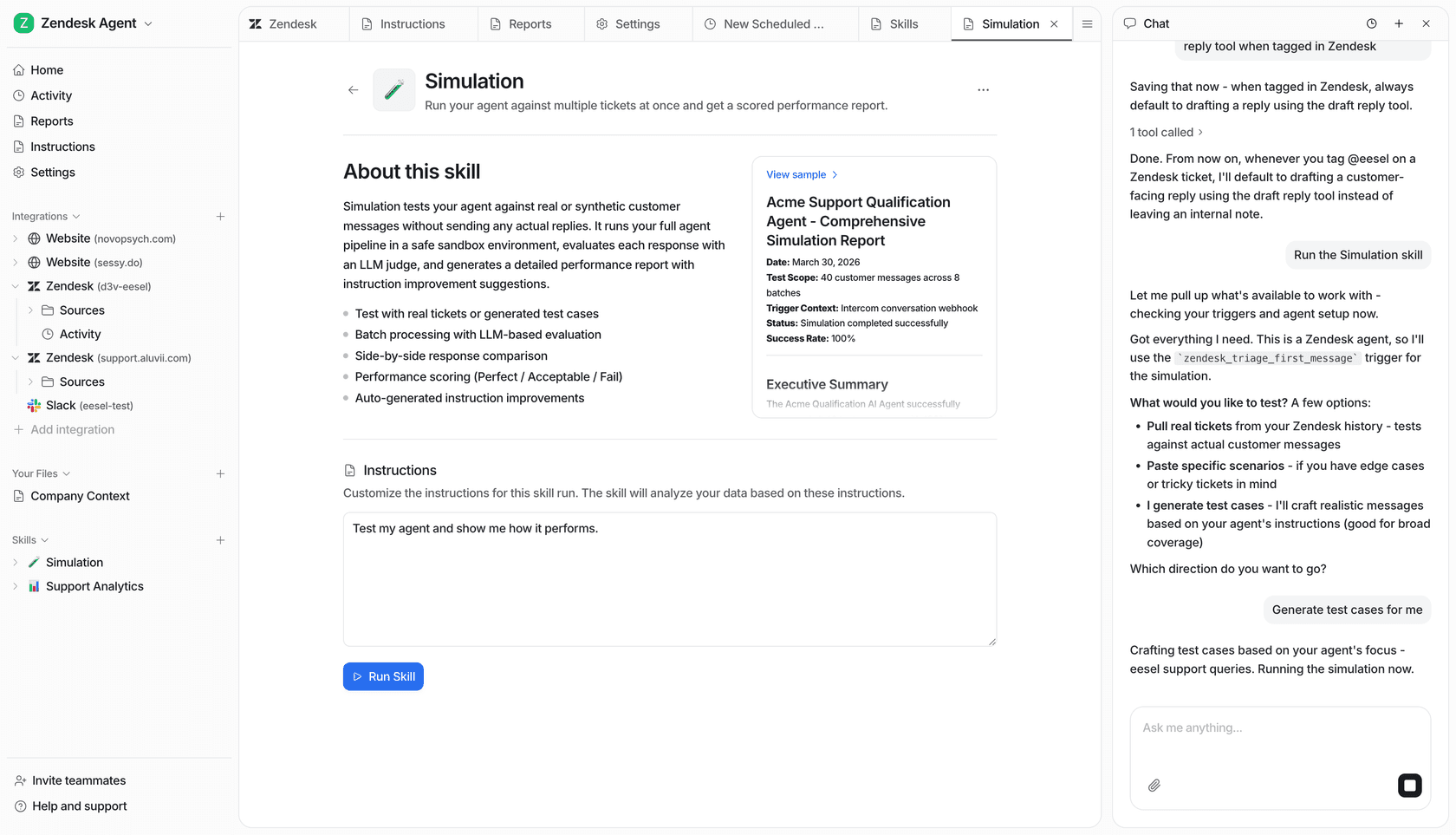
It has a powerful simulation mode: Before you let the AI talk to a single customer, you can test it on thousands of your past tickets in a safe environment. This gives you a real forecast of how it will perform and lets you find and fix any weak spots with confidence. It's a much more practical way to test than what most competitors offer.
Ada CX vs eesel AI: A quick comparison
| Feature | Ada CX | eesel AI |
|---|---|---|
| Onboarding | Requires sales demo; guided setup | Fully self-serve; go live in minutes |
| Integration | Acts as a standalone platform | Layers on top of existing helpdesks |
| Knowledge Sources | Connects to existing knowledge content | Trains on past tickets, help centers, Confluence, G-Docs, & more |
| Customization | Bot persona and rule-based guidance | Granular prompt control & custom API actions |
| Testing | Simulated conversations | Bulk simulation on thousands of real past tickets |
| Pricing Model | Not publicly disclosed; contact sales | Transparent, task-based pricing; no per-seat fees |
| Best For | Enterprises needing a comprehensive, standalone bot platform | Teams wanting a flexible, fast, and integrated AI layer |
Pricing and value: Opaque enterprise pricing vs. transparent task-based costs
Pricing is a significant factor in any software decision, and the difference between these two platforms couldn't be more stark.
Ada CX pricing: Not publicly disclosed
Ada does not publish pricing. To find out what it costs, you have to go through their sales team. The platform is positioned for high-volume enterprises -- Ada states on its pricing page that it's a good fit for companies with at least 300,000 annual customer service conversations. This approach has some real downsides for buyers:
-
Hard to predict costs: Without public pricing, budgeting requires completing a full sales process before you can even get a number.
-
Long-term contracts: Enterprise agreements are often multi-year and aren't easy to change if your needs shift.
-
Minimum volume requirements: The 300,000 annual conversation minimum makes Ada inaccessible to smaller teams entirely.
Third-party reports suggest enterprise contracts commonly run in the range of $100,000-$300,000+ annually, but Ada's pricing is not publicly confirmed, so you should contact their sales team for accurate figures.
eesel AI pricing: Clear and predictable
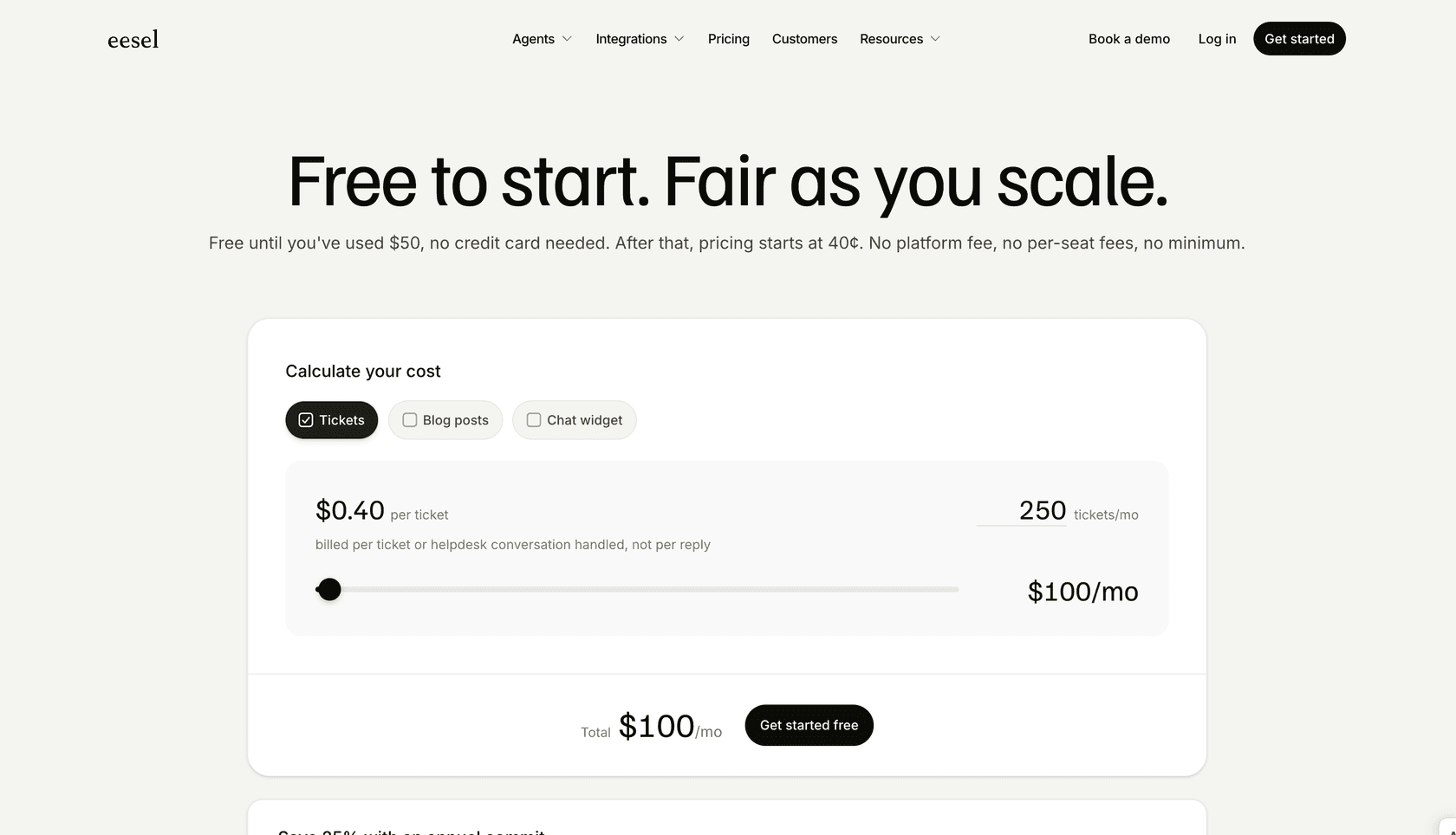
eesel AI's pricing is task-based and fully transparent. All costs are listed on the website, so you can plan your budget without a sales call.
eesel AI pricing (task-based)
| Task type | Price | What it covers |
|---|---|---|
| Helpdesk task | $0.40/task | One AI reply or action in any connected helpdesk |
| Heavy task | $4.00/task | Complex multi-step workflows and automations |
| Enterprise add-on | $1,000/mo | SSO, HIPAA, BAA, dedicated engineer |
New accounts get $50 free credits at signup with no credit card required, so you can test with real tickets before committing.
The benefits of this model are straightforward:
-
No fees per seat: Your bill doesn't go up just because you have more agents logged in. You only pay for resolved interactions.
-
Flexible: You can start paying per task and cancel whenever you want, which lowers the financial risk.
-
You know what you're getting: It's easy to calculate your expected cost based on your actual support volume.
This upfront approach lets you scale your support without worrying about surprise costs tied to contract terms.
The verdict: Which AI platform is right for you?
So, how do you choose? It really comes down to what your organization values most.
If you're a large company looking for a single, all-in-one AI platform and you're ready for a traditional sales process and a bigger upfront commitment, Ada CX is a proven and powerful choice.
However, if your team is all about speed, flexibility, and making your existing tools smarter, then eesel AI is the obvious choice. It's built for modern support teams that want to see results fast, keep control over how they work, and use every bit of knowledge their company has. With its quick, self-serve setup, powerful testing mode, and clear pricing, eesel AI gives you the tools to build a better support system without the friction of old-school enterprise software.
Ready to see how fast you can get your support automated? Try eesel AI for free and launch your first AI agent in minutes.
Frequently asked questions

Share this article

Article by
Stevia Putri
Stevia Putri is a marketing generalist at eesel AI, where she helps turn powerful AI tools into stories that resonate. She's driven by curiosity, clarity, and the human side of technology.