Aisera pricing explained: plans, integrations, and ROI in 2026


Last edited May 7, 2026
Disclosure: This article is published by eesel AI, a competitor of Aisera. We encourage you to read Aisera's own materials for their perspective.
So you're looking into Aisera. You've heard it's a powerful AI platform for automating work across IT, HR, and customer support. The catch: finding Aisera pricing sends you straight to a dead end. The pricing page returns a 404 error as of May 2026, and every other source on the site points to a demo request form.
This guide covers what is actually knowable about Aisera's pricing model, what the only publicly available data tells you, and what to expect before you engage with their sales team. It also walks through how a purpose-built AI support tool like eesel AI structures its pricing for teams that want to budget before committing to a sales process.
What Aisera is
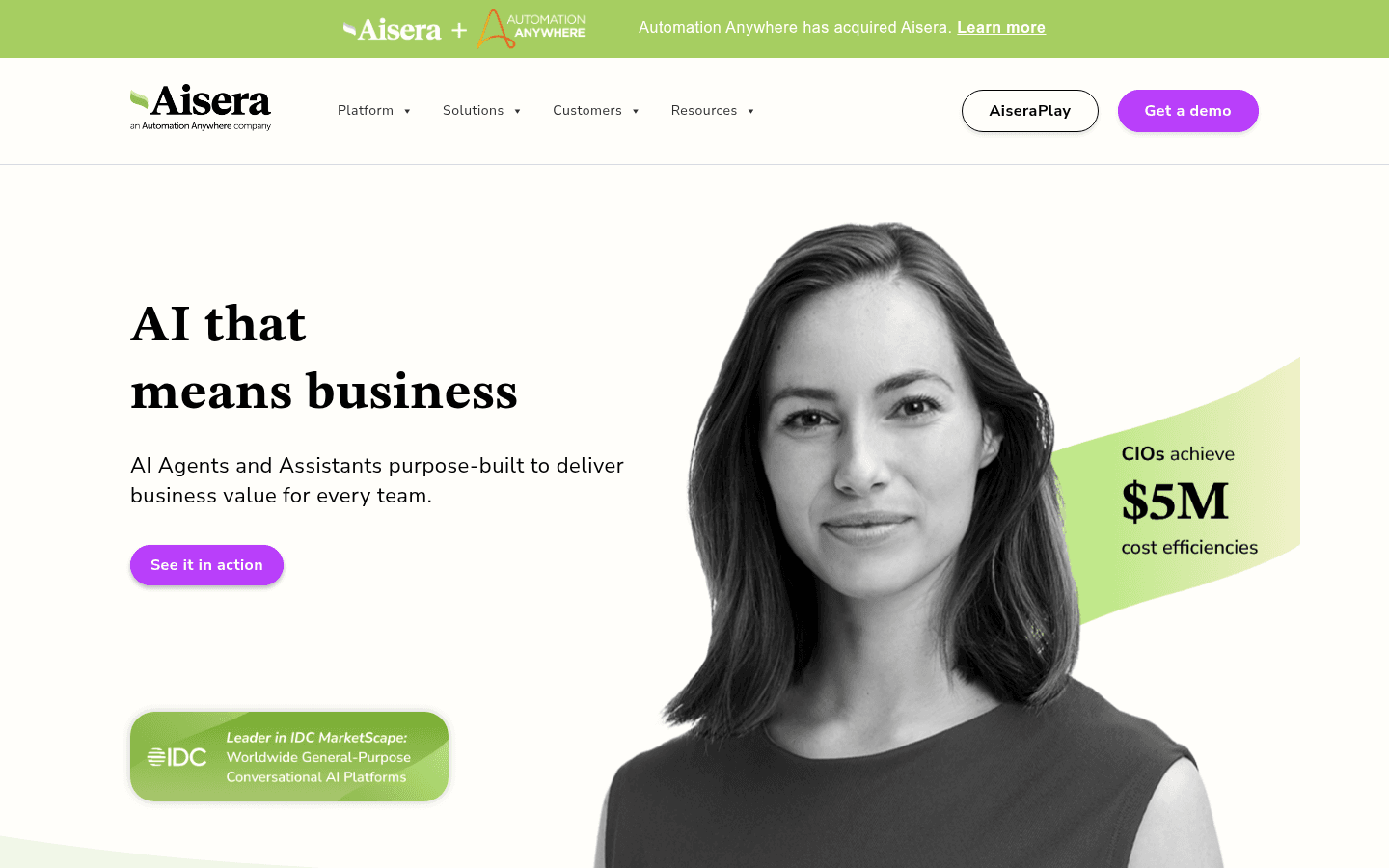
Aisera is an enterprise agentic AI platform that automates work across large organizations. Its core products include an AI Service Desk for IT support, Aisera Unify for orchestrating AI agents across departments, Agent Assist for live agent productivity, and AIOps for IT operations. The platform is built on the Agent Composer low-code/pro-code builder and covers IT, HR, Finance, Procurement, Legal, and customer service use cases.
Aisera is a Gartner Magic Quadrant Leader for AI in IT Service Management. In November 2025, the company was acquired by Automation Anywhere and continues operating as a product within that portfolio.
Customer results published on aisera.com include an 81% auto-resolution rate at the City and County of Denver, a 70% ticket auto-resolution rate at OmniTRAX, and $2.2M in cost savings at LifeScan.
How Aisera pricing works
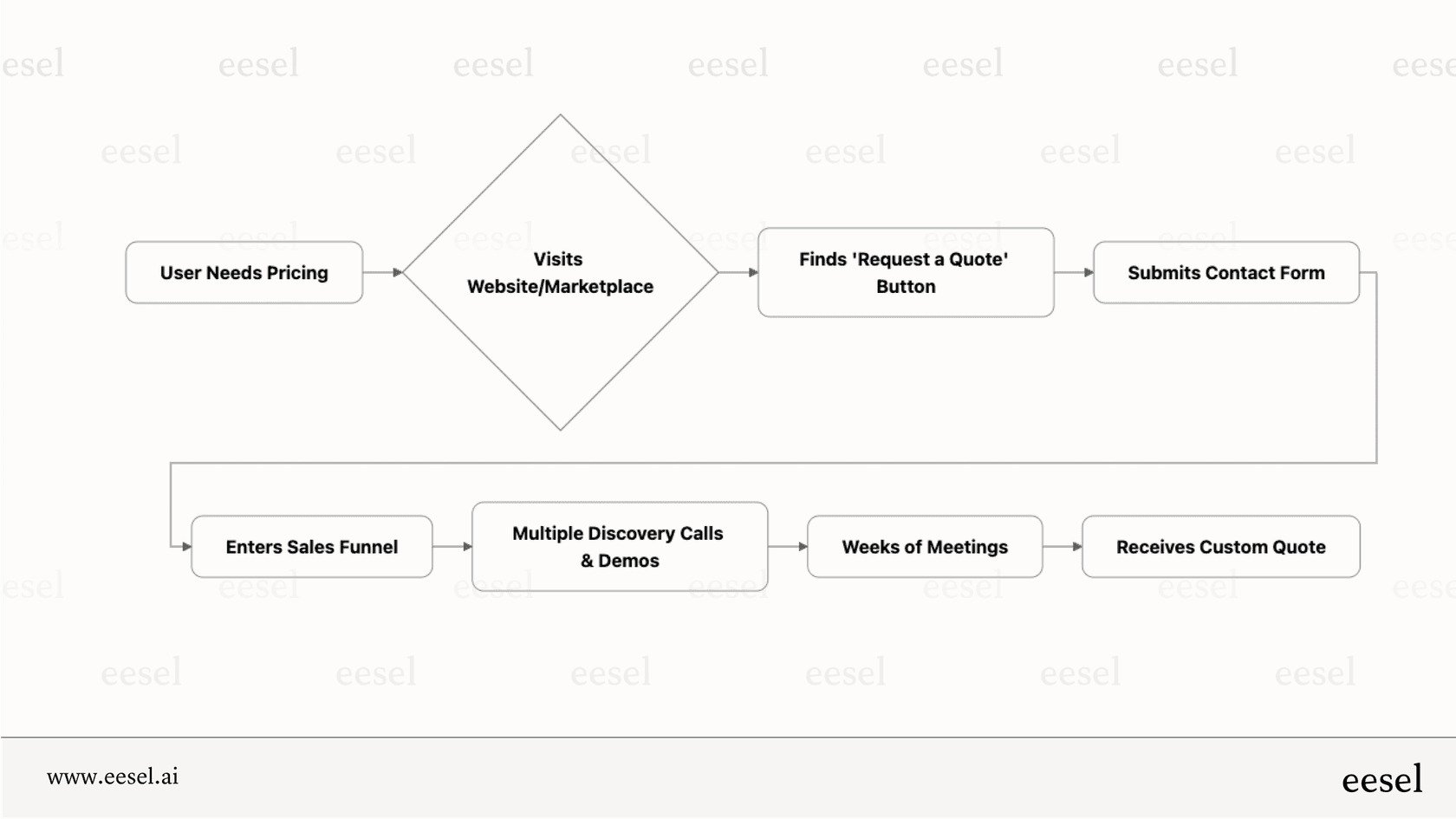
Aisera uses an enterprise, sales-led model with no self-serve option and no public price list. The aisera.com/pricing URL returns a 404 error. The site directs prospective buyers to either request a demo or submit an RFP for a customized quote.
This model is standard for software sold to Global 2000 enterprises: the final price depends on which modules you license, how many users need access, how many departments you deploy across, and what integrations and SLAs you negotiate. There is no contact Aisera for a starting estimate until you're in an active sales conversation.
What the Azure Marketplace data reveals
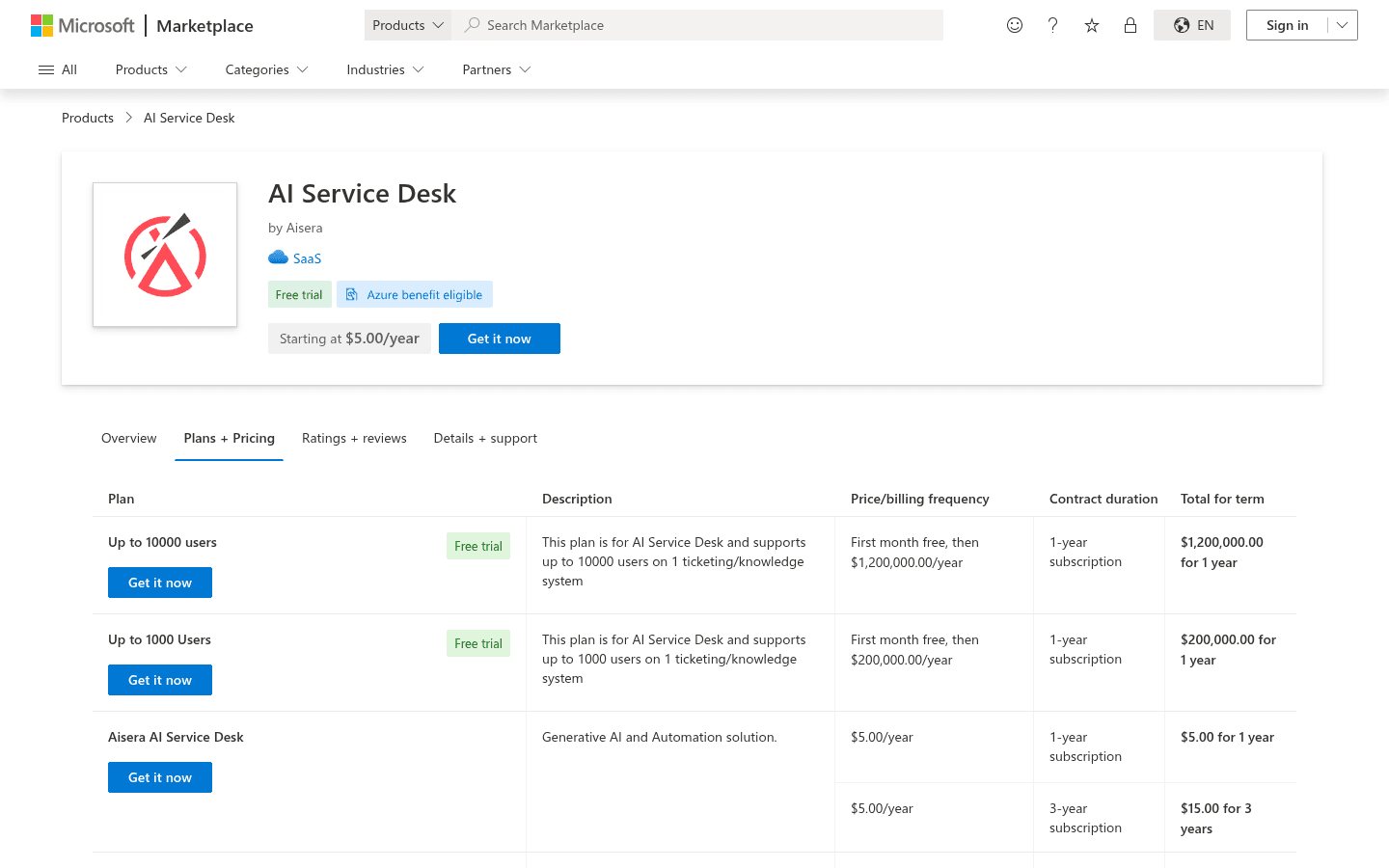
The only publicly verifiable Aisera pricing data comes from the Microsoft Azure Marketplace, where Aisera has chosen to list its AI Service Desk product. Microsoft's marketplace requires vendors to publish pricing, which makes this the one channel where Aisera's own numbers appear:
| Plan | Annual price | User ceiling |
|---|---|---|
| AI Service Desk | $200,000/year | Up to 1,000 users |
| AI Service Desk | $1,200,000/year | Up to 10,000 users |
These are annual, upfront payments for the AI Service Desk product only. They are not shown anywhere on Aisera's own site. Pricing for Aisera Unify, Agent Assist, AIOps, and Aisera Assistant is not publicly disclosed through any channel.
The data shows that pricing scales roughly with user volume: moving from 1,000 to 10,000 users corresponds to a 6x increase in the published figure.
What drives your Aisera quote
Because every price is custom-built, understanding the inputs the sales team works from gives you a rough sense of the order of magnitude before you engage.
Modules and product scope. Aisera has distinct product lines (AI Service Desk, Aisera Unify, Agent Assist, AIOps). Each carries its own licensing cost. A deployment covering IT only costs less than one spanning IT, HR, Finance, and Procurement.
User count. The Azure Marketplace data confirms that pricing scales with volume. Your user and agent count is one of the primary inputs to any quote.
Integration complexity. Aisera supports 40+ pre-built connectors including ServiceNow, Salesforce, Zendesk, SharePoint, and Jira. Custom integrations with older or proprietary systems require professional services work, quoted separately.
Department count. Aisera's platform is built around cross-domain deployment: IT, HR, Finance, Procurement, Legal, and Sales. Each department adds configuration, workflows, and knowledge setup, which affects both license and implementation scope.
Implementation and onboarding. Enterprise AI deployments at this scale involve significant configuration and testing before go-live. One-time implementation fees are standard and are quoted separately from the recurring license.
Support tier. Basic support is typically included. Premium support (24/7 coverage, dedicated account manager, guaranteed response SLAs) is usually an add-on charged as a percentage of the annual contract value.
The practical cost of the quote-only model
The sales-led model makes sense for very large enterprises with genuinely complex, multi-department requirements. For everyone else, it creates friction worth naming before you start.
You can't self-qualify on budget. Without a starting number, you don't know if Aisera is in range until after a multi-week discovery process. The Azure Marketplace data suggests that budget conversations for the AI Service Desk should start well above $200,000 per year; if that's outside your range, knowing that early saves everyone's time.
Planning requires guesswork. Finance teams need concrete numbers to approve projects. A quote-only vendor means your internal budget estimate is approximate until the proposal arrives, which can delay approvals and push back timelines.
Growth changes are opaque. If your headcount doubles or you want to extend the platform to a new department, you return to the sales cycle to renegotiate. There is no published formula to estimate what that change costs in advance.
None of this rules Aisera out if the fit is right. But it is information worth having before you invest time in the evaluation process.
A transparent alternative: eesel AI
eesel AI takes the opposite approach to pricing. Every cost is published at eesel.ai/pricing, and the model is task-based: you pay per interaction handled, not per seat.
| Task type | Price |
|---|---|
| Light tasks (dashboard questions, simple lookups) | Free |
| Regular tasks (support tickets, chat sessions) | $0.40 each |
| Heavy tasks (long-form content, deep research tasks) | $4.00 each |
There is no monthly minimum. A free trial gives you $50 in credits with no credit card required, so you can test against real tickets before committing. A default spending cap of $250/month prevents unexpected charges, and you can adjust it at any time. For teams that can commit to $300+/month in annual usage, the annual discount reduces costs by 25%.
An enterprise add-on at $1,000/month adds SSO, HIPAA compliance, a dedicated solutions engineer, and a signed enterprise agreement.
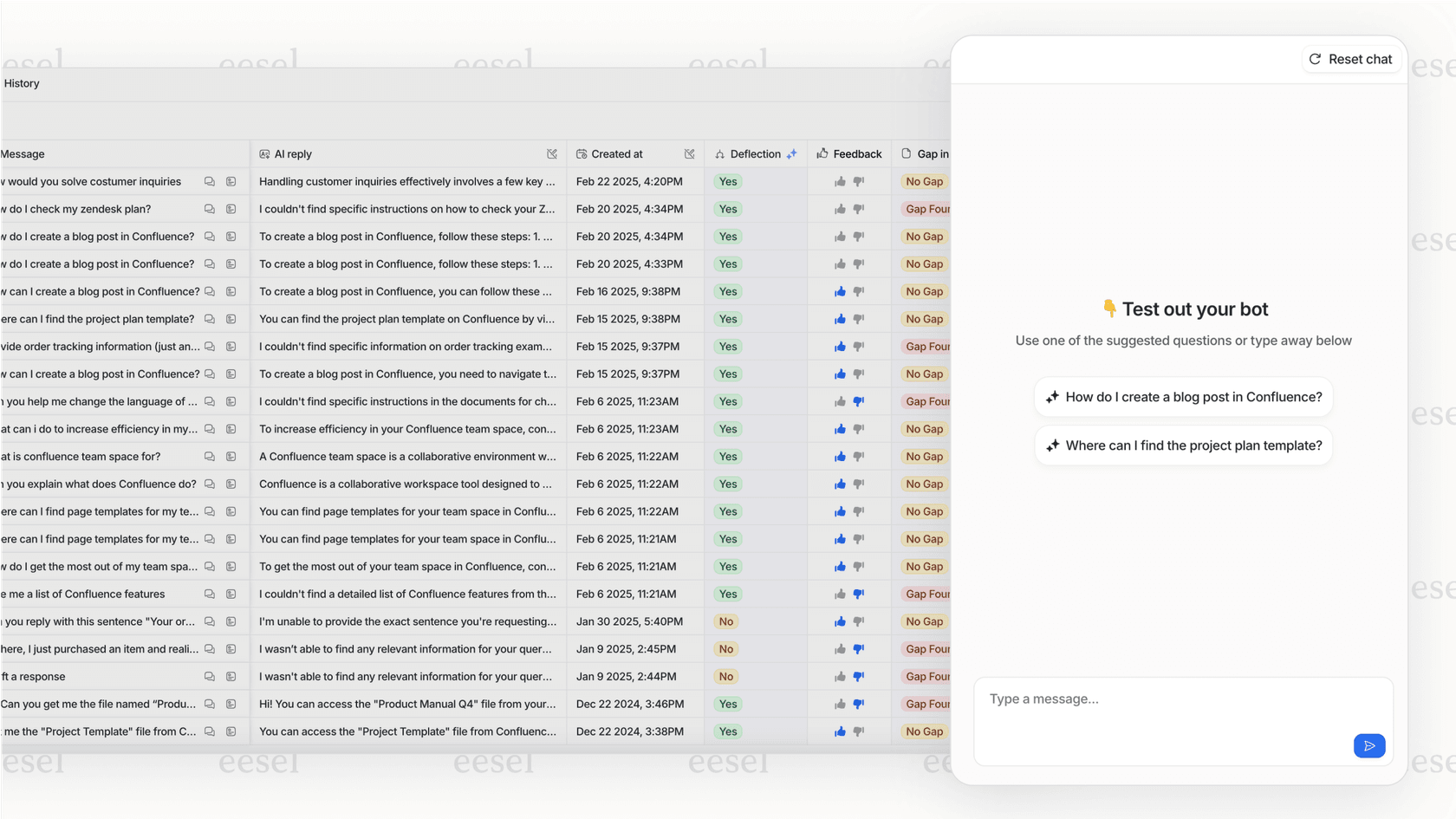
Because pricing is per task rather than per seat, the cost scales with what the AI actually resolves, not with how many agents are logged in. A team of 5 or 50 pays the same rate for the same volume of tickets handled. eesel also publishes a simulation feature that lets you test the AI against your own historical tickets to forecast resolution rates and costs before committing.
eesel deploys as an AI layer on top of your existing helpdesk (Zendesk, Freshdesk, Gorgias, Help Scout) rather than replacing it, so there is no data migration or tool swap involved. It reads your help center articles, past tickets, and connected knowledge sources, then handles tickets autonomously or queues draft replies for agent review.
Is Aisera the right fit?
Aisera is built for Global 2000 organizations running multi-department AI deployments with enterprise security requirements, custom SLAs, and complex integration environments. The Azure Marketplace data puts the AI Service Desk at $200,000 to $1,200,000 per year depending on user count, and that covers one product line. Full platform deployments spanning multiple departments will be scoped and priced accordingly.
If your requirements genuinely match that profile, the custom-quote process is worth entering. If you need to benchmark cost before committing to a sales cycle, or if your team is smaller and you need something that can be evaluated and deployed quickly, a publicly priced alternative is worth testing first.
See eesel AI pricing to run the numbers on your ticket volume, book a demo, or start free with $50 in credits today.
Frequently asked questions

Share this article

Article by
Kenneth Pangan
Writer and marketer for over ten years, Kenneth Pangan splits his time between history, politics, and art with plenty of interruptions from his dogs demanding attention.