What is Anyscale? A 2025 overview for business leaders


Last edited October 9, 2025
It feels like every company is talking about AI right now. But behind the cool apps and splashy headlines, there’s a whole world of heavy-duty infrastructure that makes it all possible. Think of it as the "picks and shovels" of the current AI gold rush. These are the tools companies use to build their own AI from the ground up, and one of the biggest names you'll hear is Anyscale.
This article is a straightforward guide to what Anyscale actually is, who it’s for, and what it costs. More importantly, we'll get into the big question: should your company be building its own AI on a platform like this, or should you be buying a ready-to-go application that solves a specific business problem today?
What is Anyscale?
At the end of the day, Anyscale is a cloud platform for developers and data scientists who need to run huge, complex AI and Python jobs. It’s built on top of an open-source framework called Ray, which was created by the same people. If Ray is a powerful engine that can split a computing task across thousands of machines, then Anyscale is the commercial-grade vehicle built around that engine, complete with a dashboard, safety features, and support.
Some of the biggest names in tech use it, from OpenAI to Netflix and Uber. That tells you a lot about their ideal customer. Anyscale is designed for highly technical teams of Machine Learning (ML) engineers who are building custom AI models and systems. It’s not a tool for your marketing department; it’s a tool for the engineers who might spend the next year building a custom AI tool for your marketing department.
Key features of Anyscale
So, what do you actually get with the platform? Let's skip the jargon and look at what its features mean for a business.
A unified platform for scaling AI workloads
Modern AI, like training a large language model, needs a ridiculous amount of computing power, way more than a single server can provide. The main problem Anyscale solves is getting thousands of processors (CPUs and GPUs) to work together as one giant supercomputer. This is what lets teams chew through massive datasets and build the kind of complex models that just wouldn't be possible otherwise.
It’s also not locked into one cloud provider. Teams can run their jobs on different clouds like Google Cloud and AWS, or even on their own private servers if they have them.
Tools for developer productivity
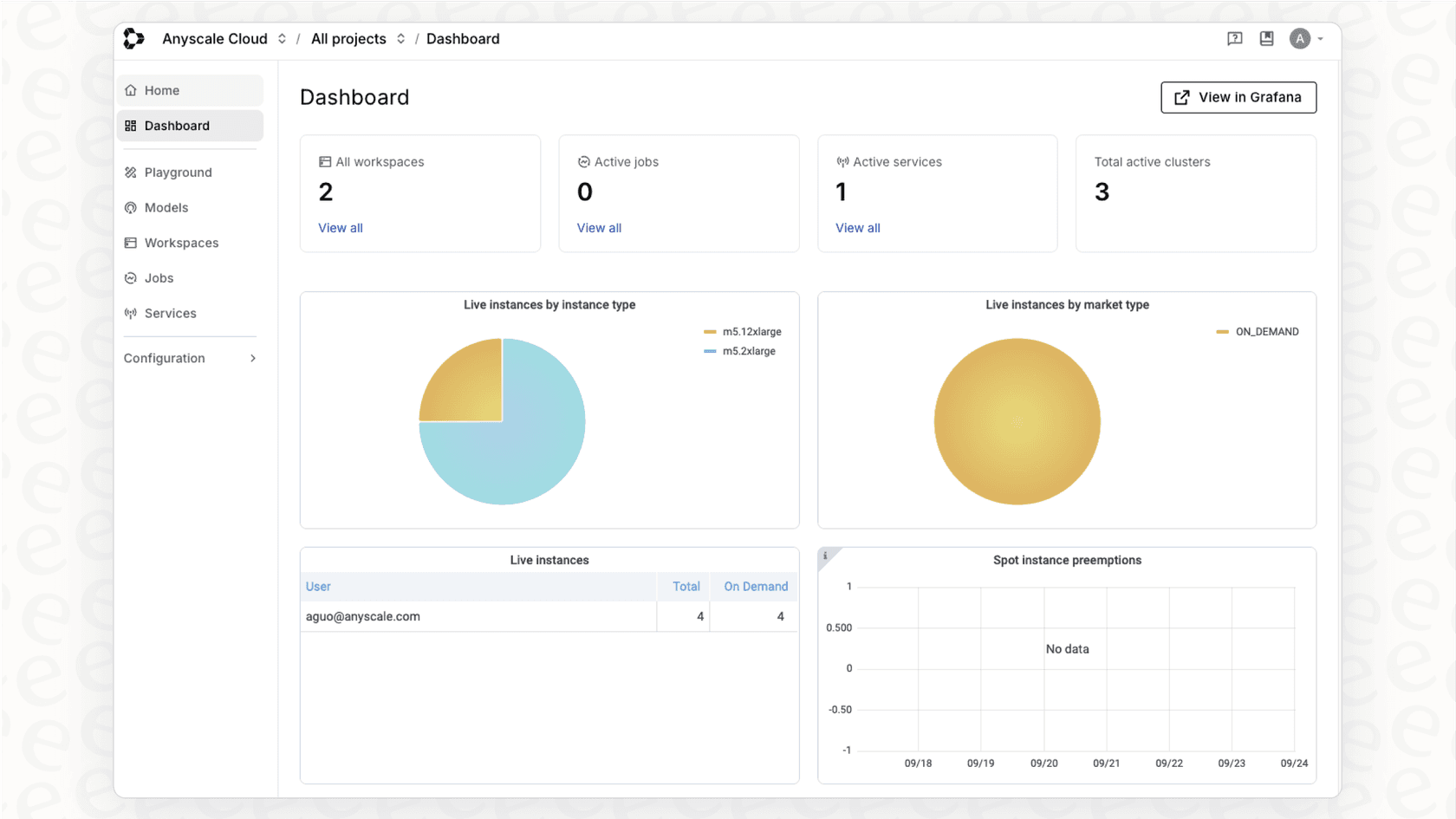
Anyscale comes loaded with features meant to help technical teams get work done faster. It has things like development environments and fancy dashboards for keeping an eye on everything. For the expert developers it’s built for, these tools are a big deal. They smooth out the painful process of taking a small AI project that works on a single laptop and making it a massive system that can handle millions of users. Keeping those engineers productive is a huge part of the platform's appeal.
Cost management for expensive AI hardware
Let's be honest, the special processors needed for AI (GPUs) are incredibly expensive. A massive headache for companies building AI is that these pricey chips often sit around doing nothing, burning a hole in the budget. Anyscale has features that help companies get the most out of their hardware by automatically optimizing how GPUs are used. It can also cut down on costs by smartly using "spot instances," which are basically cheaper, leftover compute resources that cloud providers sell at a discount.
This focus on cost management tells you something important about the "build" approach. While Anyscale is good at managing these expenses, it also proves that the whole process is fundamentally expensive and complicated. For businesses that just need AI to solve a specific problem like customer support, a dedicated application offers a much clearer path to results without all the infrastructure drama.
Anyscale use cases and limitations
Figuring out if Anyscale is for you really comes down to understanding the very specific problems it's designed to solve.
Primary use cases
Anyscale is at its best when a company is doing massive, custom AI development. The main use cases look something like this:
-
LLM Training & Fine-Tuning: This is the heavy lifting of creating or customizing a large language model from scratch. It’s a process that can tie up thousands of GPUs for weeks or even months.
-
Batch Inference: Using a trained model to process a huge pile of data in one go, like scanning a million product reviews or categorizing a library of images.
-
Large-Scale Data Processing: Getting enormous datasets cleaned up and ready before you can even think about training an AI model on them.
-
Generative AI Applications: Running the backend for complex services that generate content in real time. For instance, RunwayML uses Anyscale to power its video generation models. Another customer, Attentive, managed to slash its AI compute costs by an incredible 99% using the platform.
Limitations for non-technical teams
Here’s the main thing to remember: Anyscale is not a simple, plug-and-play tool. To use it well, you need serious expertise in Python, machine learning, and the tangled web of cloud infrastructure. It’s a classic "build" platform for builders.
If you're in a department like customer service, IT, or HR, trying to create a custom chatbot on Anyscale would be a huge and costly engineering project. You'd need to hire a dedicated team of specialists and wait months, if not longer, to see a result.
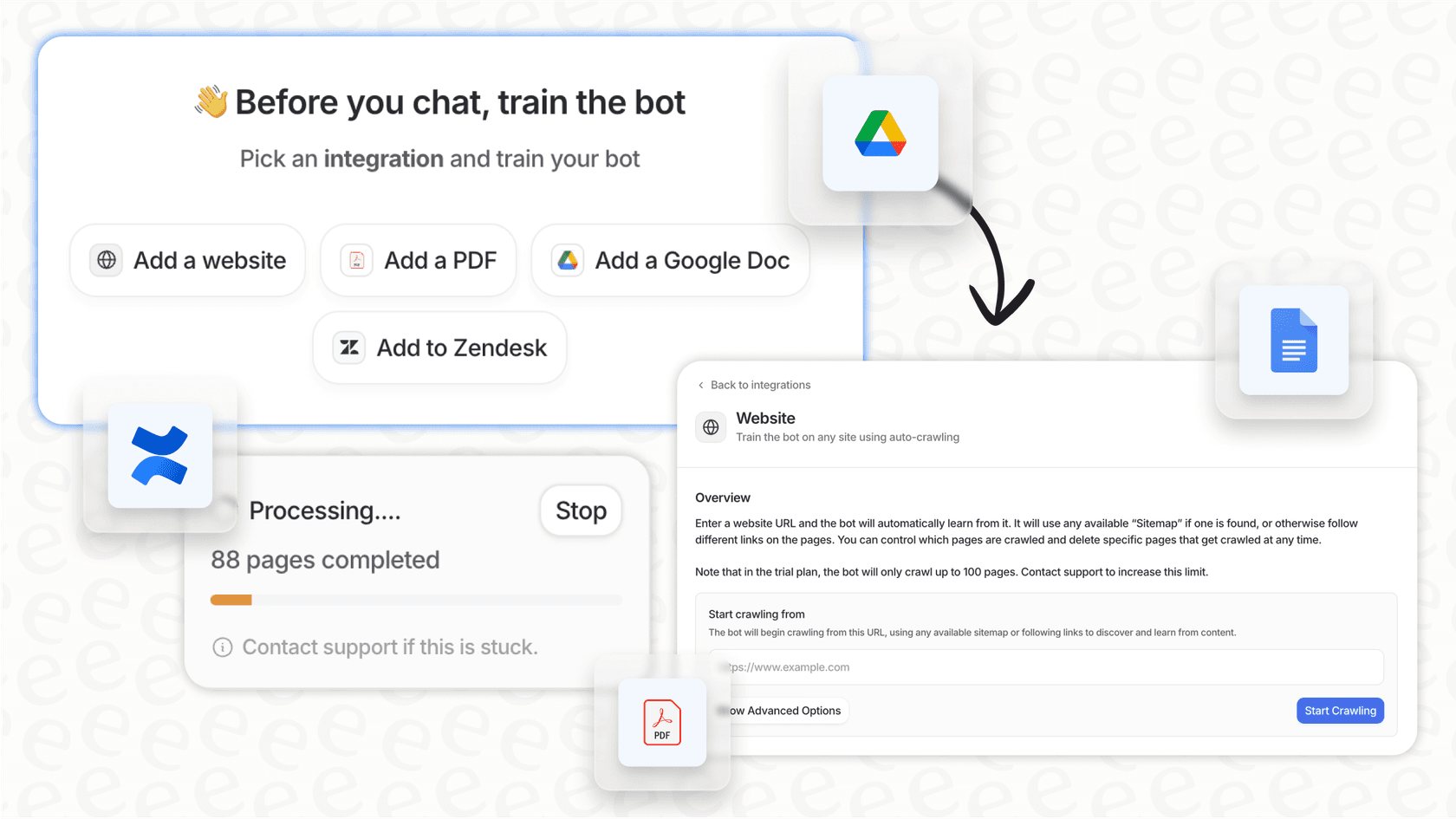
For teams that need to solve business problems right now, a specialized AI application platform like eesel AI is a much faster and more sensible path. Instead of building the whole car, you just get the keys. You connect your existing tools like Zendesk, Freshdesk, or Confluence and deploy a capable AI agent. eesel AI is designed for anyone to use, letting you get started in minutes, not months.
Anyscale pricing explained
Anyscale's pricing is based on usage, which is normal for infrastructure tools but can be a nightmare for budgeting. You're essentially paying for the raw computing power you use, billed by the hour.
Pay-as-you-go usage-based billing
You pay for what you use, plain and simple. The price changes a lot depending on which GPU you need for your job, with the more powerful ones costing quite a bit more.
| Instance Containing: | Hosted Cost (from) |
|---|---|
| CPU Only | $0.0112 /hr |
| NVIDIA T4 | $0.1264 /hr |
| NVIDIA L4 | $0.1966 /hr |
| NVIDIA A10G | $0.3545 /hr |
| NVIDIA A100 | $0.6388 /hr |
| NVIDIA H100 | $1.8603 /hr |
| NVIDIA H200 | $2.1411 /hr |
Deployment models and committed contracts
Anyscale gives you two main ways to deploy. The "Hosted" plan is fully managed by them and is the easiest way to start. The "Bring Your Own Cloud (BYOC)" model lets you run Anyscale inside your own cloud setup, giving you more control over your data. For bigger companies, they also offer committed contracts with volume discounts.
The challenge of unpredictable costs
For a business leader, the biggest issue with usage-based pricing is that it makes budgeting really tough. A sudden spike in work, a bug that makes a process run for too long, or an experiment that uses more power than planned can all lead to a shocking bill at the end of the month.
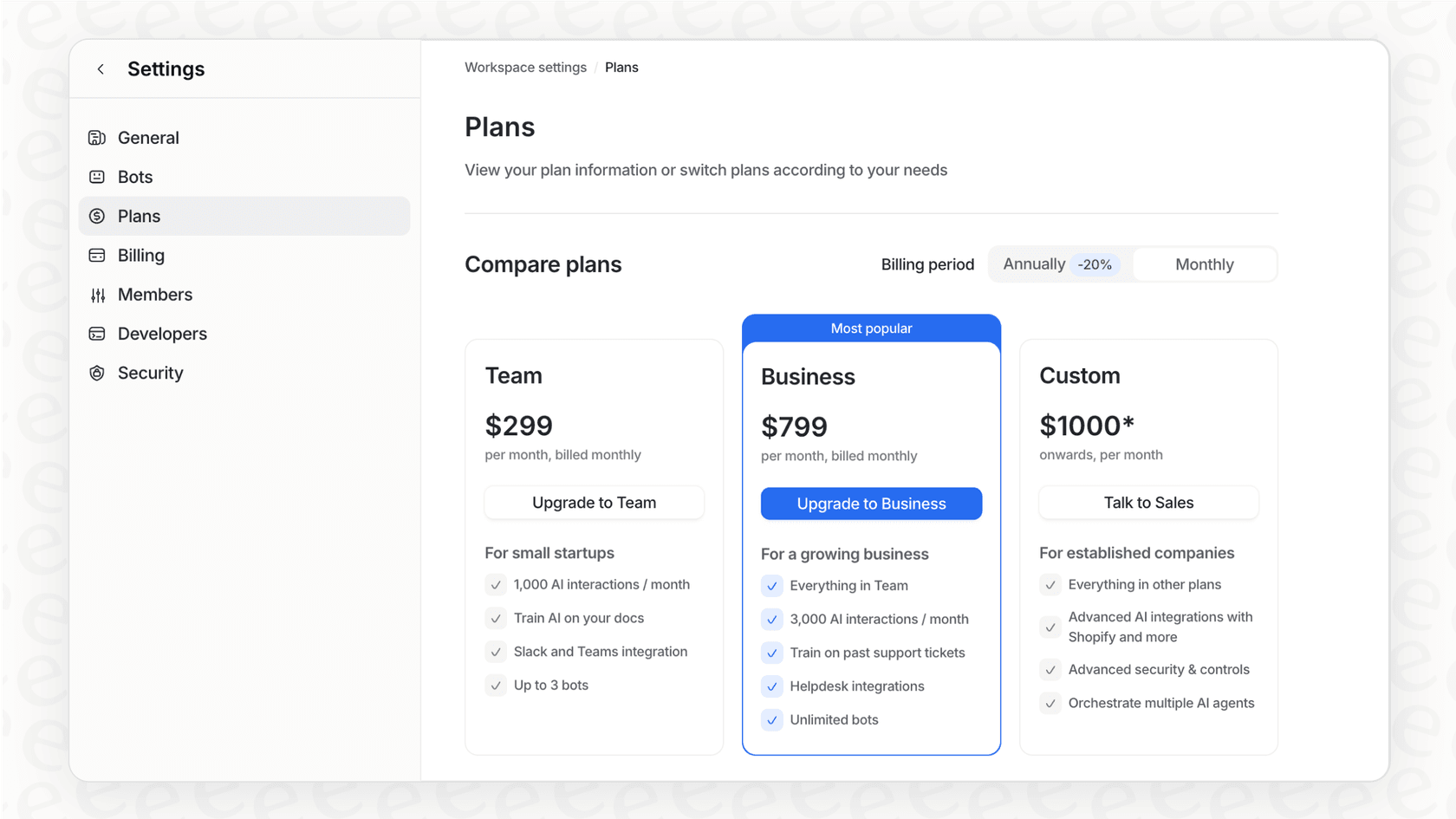
This is a major problem for departments that need predictable spending. In contrast, AI application platforms like eesel AI typically offer straightforward monthly or annual plans. With predictable pricing, you know exactly what your bill will be, making it much easier to calculate your return on investment and grow without worrying about surprise costs.
Building with Anyscale vs. buying an AI solution
So, let's bring it all together. Anyscale is a seriously powerful and important platform for the world of AI development. It's the engine that lets companies with deep technical talent build their own foundational models and massive, custom AI systems.
But the choice for most businesses is simpler than that. Most companies don't need to build an AI engine from scratch; they need to use AI to solve real, immediate problems. It really comes down to "building" with a tool like Anyscale versus "buying" a ready-made solution like eesel AI. For things like customer service, internal IT support, and knowledge management, the "buy" approach is almost always faster, cheaper, and more practical.
If your goal is to automate support tickets, give your agents better tools, and bring all your company knowledge together without hiring a team of ML engineers, then a solution built for simplicity is the way to go. A platform like eesel AI lets you connect your existing helpdesk and knowledge bases to deploy a powerful AI agent in minutes. You can even test it on your own data before you fully launch, so you can roll it out with confidence.
Frequently asked questions

Share this article

Article by
Kenneth Pangan
Writer and marketer for over ten years, Kenneth Pangan splits his time between history, politics, and art with plenty of interruptions from his dogs demanding attention.