A deep dive into Botpress: Features, pricing, and a simpler alternative


Last edited December 4, 2025

There's a lot of talk about advanced AI chatbot platforms like Botpress. They promise a world where you can build incredibly powerful, custom AI agents with a drag-and-drop studio. On the surface, it looks like the dream solution for automating conversations.
That’s what this post is about. We want to give you a straight, no-fluff look at Botpress, what it does well, what it’s actually like to build with, its AI smarts, and its famously tricky pricing. Let’s get into it.
What is Botpress?
At its core, Botpress is a conversational AI platform made with developers in mind. It's built for creating highly customized AI agents and chatbots. Its biggest draw is flexibility. Think of it less like a simple chatbot builder and more like a workshop full of powerful tools that let developers construct complex, multi-step conversations from the ground up.
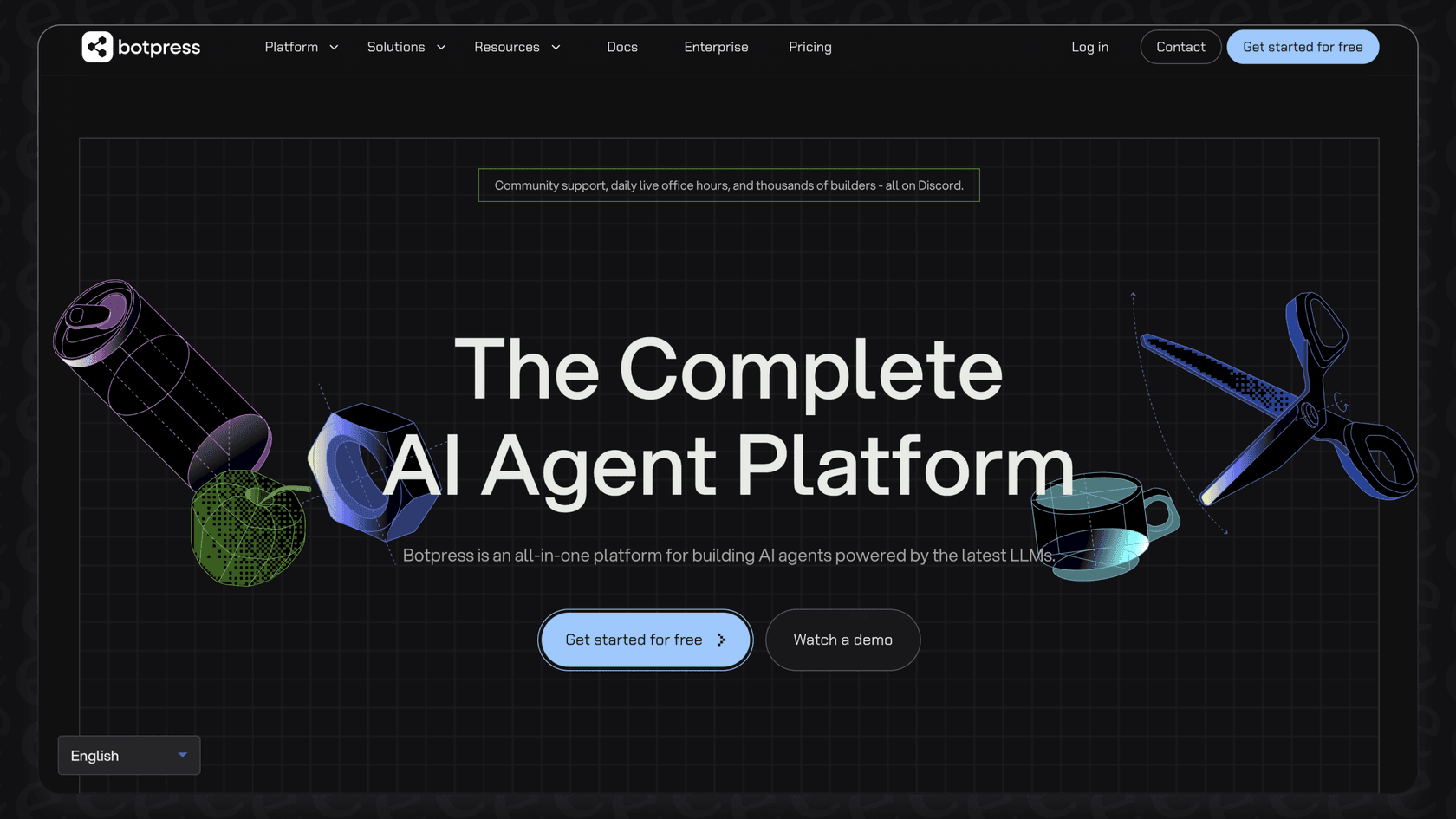
It’s meant to be the engine behind a sophisticated AI assistant, not just a way to slap a simple Q&A bot on your website.
Here’s a quick rundown of what it offers:
-
A visual, flowchart-style studio for mapping out conversations.
-
An engine that figures out what users are actually trying to say (this is often called Natural Language Understanding, or NLU).
-
Connections to different messaging apps and business systems.
-
A big focus on being an "AI agent" that can do things, not just spit out answers.

The Botpress building experience: Powerful, but at a cost
This is where that gap between promise and reality really starts to widen. Botpress is undeniably powerful, but that power comes with a level of complexity that isn't always clear from the marketing materials.
Botpress: A platform built for developers
While Botpress has a visual interface, you can't unlock its real power without writing code. It’s often labeled a "low-code" platform, but for anything more than a basic FAQ bot, you'll need developers.
Want your bot to look up order information from your database? Need it to run a custom script or remember what you talked about five minutes ago? That requires someone who's comfortable with JavaScript and APIs. This technical hurdle is exactly why agencies charge a premium for Botpress projects. They aren't just dragging and dropping boxes; they're doing custom development work.
The learning curve for non-technical teams
User reviews often bring up the "high learning curve," and they aren't kidding. If you're a support manager or a founder without a technical background, trying to build a genuinely helpful bot can get frustrating, fast. The logic, variables, and expressions needed to make a bot smart are anything but intuitive if you haven't spent time coding.
This is a huge barrier for most customer support teams who just want to get something up and running that solves their problems. They need a tool that fits into their day-to-day work, not one that demands a new technical skillset.
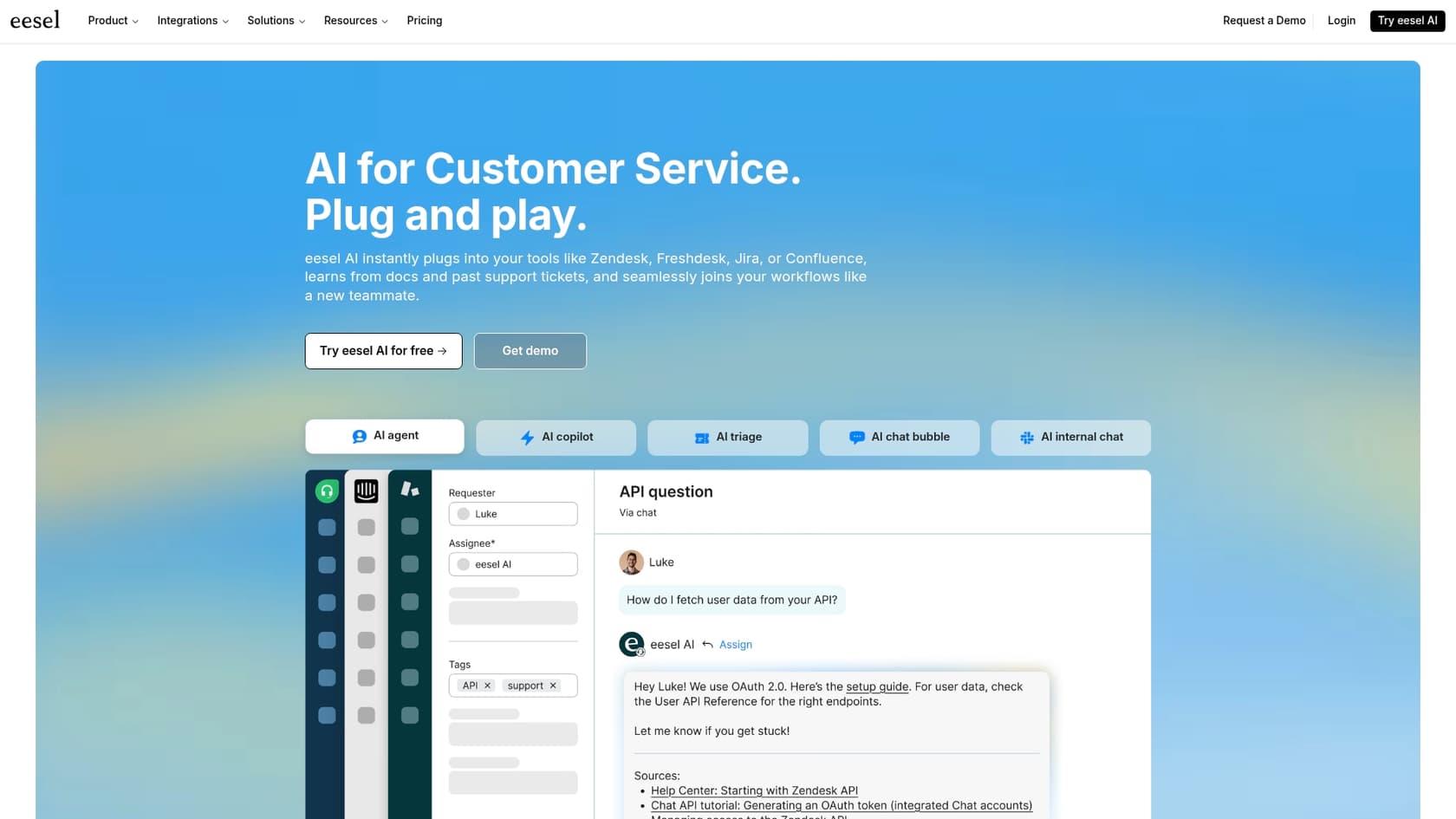
For teams that don't have developers on standby, a platform like eesel AI offers a totally different experience. It's built from the ground up to be self-serve. You can connect your helpdesk and knowledge sources in a few clicks and have a working AI agent in minutes, not months.
The problem with testing and deployment
Botpress gives you an emulator to test your flows, which is useful. But it doesn't solve a more fundamental problem: how will your bot actually do with real customer questions? You can test the specific paths you've built, but you have no easy way to see how it would handle the thousands of unique, messy, and unpredictable conversations your team has already had.
This means you’re essentially launching blind. You go live without any real data on how many tickets your bot will actually deflect or where its biggest knowledge gaps are.
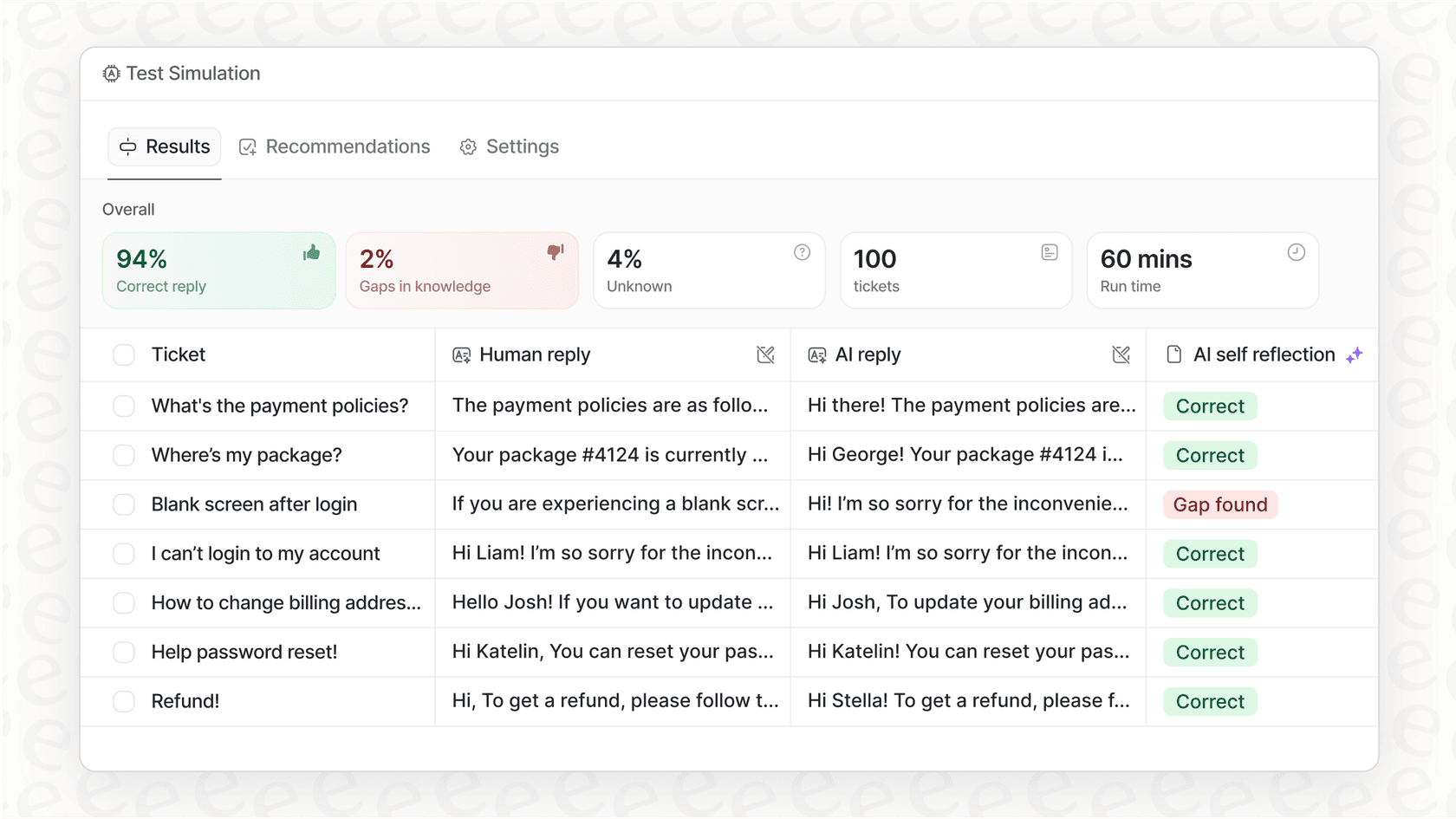
This is where a risk-free simulation can make all the difference. With eesel AI, you can test your AI agent on thousands of your past tickets in a safe environment. It gives you an accurate prediction of its performance and helps you see what it can't answer before it ever speaks to a single customer.
Powering the Botpress AI: Knowledge and integrations
An AI agent is only as smart as the information it can get its hands on. Here’s how Botpress handles knowledge and connects to your other tools.
Building knowledge from the ground up
Botpress has something called a "Knowledge Agent" that you train by feeding it documents or website links. You have to manually upload your FAQs, product manuals, and any other documentation to create its brain.

The bot's ability to answer questions hinges entirely on the quality and format of the documents you give it. If your information isn't in a clean, well-organized file, or if the answer doesn't exist in a document at all, the bot is stuck.
The challenge of scattered information
Let's be honest, for most companies, the most useful knowledge isn't sitting in neat PDF documents. It's scattered all over the place: in the resolutions of past support tickets, across internal wikis like Confluence, and buried in shared Google Docs.
Botpress doesn't have a native way to learn from the rich history of your team's support conversations. That’s a massive missed opportunity. Those conversations contain your brand's unique voice and the tried-and-true solutions to your customers' real-world problems.
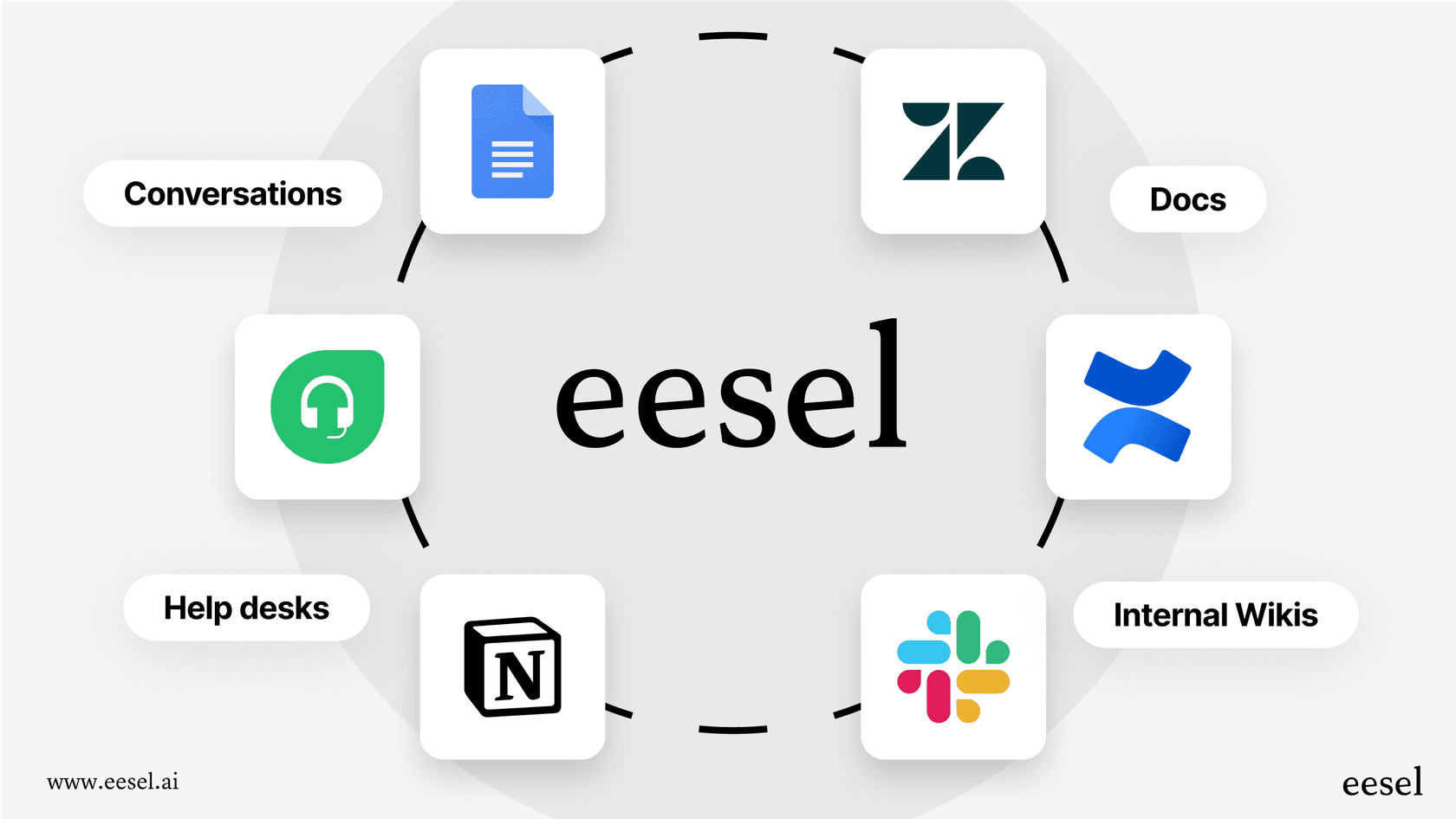
A better way to do it is to bring all that knowledge together from the start. eesel AI is built differently. It can train directly on your past tickets from helpdesks like Zendesk or Freshdesk. It picks up your brand voice and common solutions automatically, right from day one, while also connecting to all your other knowledge sources.
Integrations and getting things done
Botpress can connect with tools like Slack, Zapier, and Salesforce, which lets your bot take action in other systems. But just like building the bot, setting up these integrations usually requires a developer to configure API calls and manage how data moves between platforms. It’s another layer of technical work to add to the pile.
Botpress pricing explained: A complex, usage-based model
One of the biggest points of confusion around Botpress is the price tag. The monthly subscription fee you see on their website is just the starting point. Your final bill can be much higher and is often difficult to predict.
The core subscription plans
Here are the main pricing tiers, straight from their official pricing page. Just remember, "Usage" is an extra cost you pay on top of the monthly fee for every single plan.
| Plan | Monthly Price | Key Features |
|---|---|---|
| Pay-as-you-go | $0 + Usage | Visual studio, $5 monthly AI credit, Community support. |
| Plus | $89/mo + Usage | Human handoff, Watermark removal, Live chat support. |
| Team | $495/mo + Usage | Role-based access, Real-time collaboration, Advanced support. |
| Enterprise | Starts at $1495/mo | Whiteglove onboarding, Custom limits, Dedicated support manager. |
The hidden costs: AI spend and usage limits
That little "+ Usage" note is where it gets tricky. Your final cost is driven by two main things that are hard to guess ahead of time.
-
AI Spend: This is what you pay for the large language model (LLM) that powers the bot's intelligence. You're billed based on "tokens," which are basically pieces of words. Longer and more complicated conversations use more tokens, which costs you more money.
-
Incoming Messages & Events: Each plan includes a certain number of messages per month (the Plus plan, for example, gives you 5,000). If you go over that, you get charged an extra $20 for every additional 5,000 messages. A busy support month could easily result in a bill that’s way bigger than you planned for.
On top of that, there are paid "add-ons" for things like more bots, extra storage for your knowledge base, and additional team seats, each tacking more onto your monthly cost.
Why predictable pricing is so important
This usage-based model makes it incredibly difficult for a business to set a budget. Your costs go up as more customers talk to you, which means a successful marketing campaign or a seasonal spike in business could lead to a shockingly high bill. In a way, you get penalized for being successful.
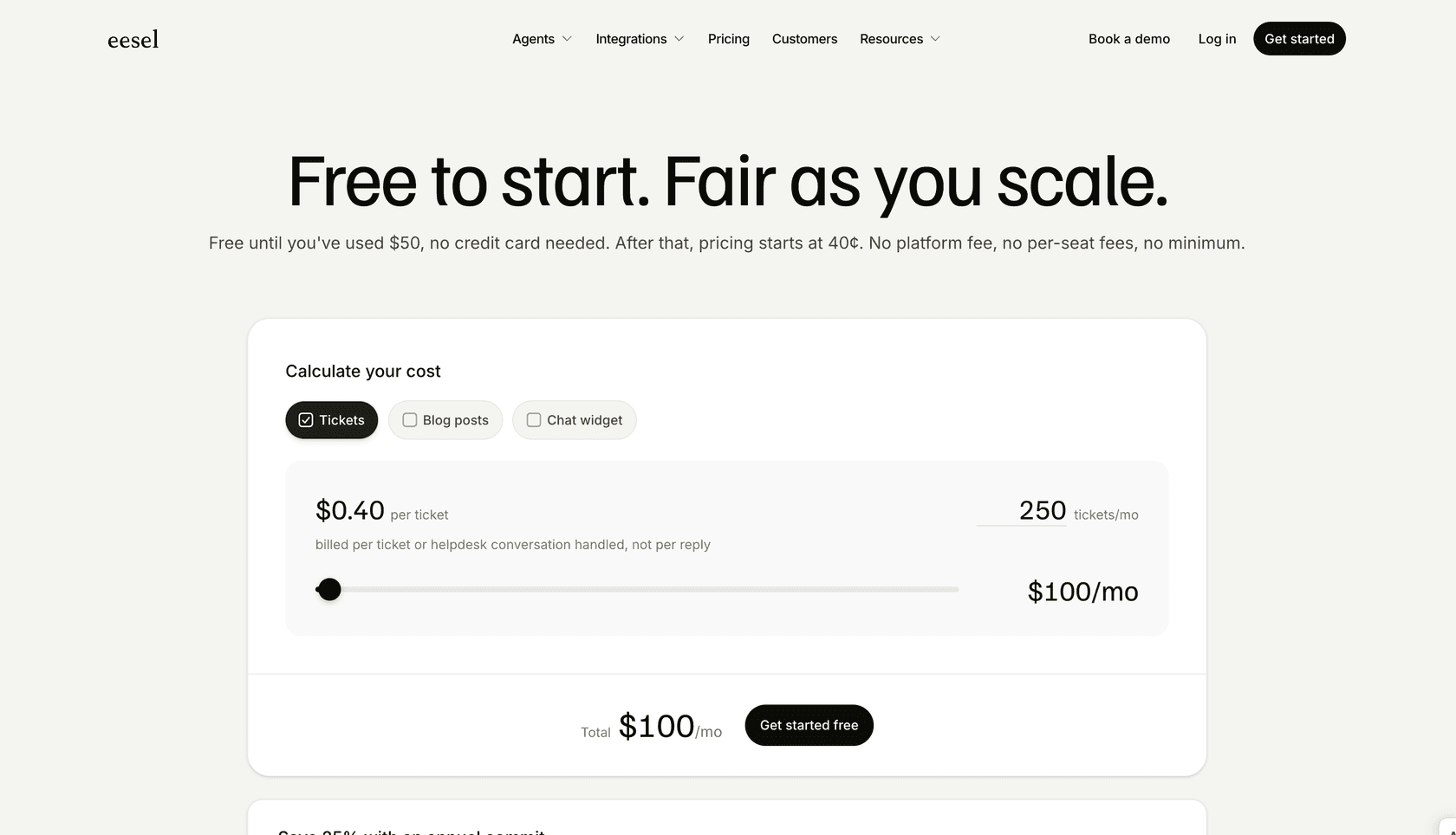
For businesses that need to know what they're spending each month, alternatives like eesel AI offer a much simpler model. Pricing is based on a set number of AI interactions, with no extra fees per resolution. This lets you scale up your support without ever having to worry about surprise costs.
The verdict: Who is Botpress actually for?
So, after looking at all of this, who should actually use Botpress?
It’s clear that Botpress is a very flexible and powerful platform, but it’s definitely not for everyone. It's the right choice for companies that have developers in-house, need extremely specific customizations for their AI agents, and are okay with managing a complex, usage-based billing system.
For most support, IT, and operations teams, the goal is simpler: reduce ticket volume and make things more efficient, and do it now, without starting a huge development project. The steep learning curve, need for technical skills, and unpredictable costs make Botpress a tough choice for hitting that goal.
If you're looking for an AI support platform that gives you powerful results without the developer dependency and surprise bills, eesel AI might be a much better fit. It's designed to be completely self-serve, learns from all your existing knowledge and past tickets automatically, and has transparent, predictable pricing. You can get started in minutes and begin automating support with confidence.
Frequently asked questions

Share this article

Article by
Stevia Putri
Stevia Putri is a marketing generalist at eesel AI, where she helps turn powerful AI tools into stories that resonate. She’s driven by curiosity, clarity, and the human side of technology.