Claude pricing 2026: Pro, Team, and API costs side by side

Last edited September 29, 2025

Everyone's talking about Anthropic's Claude models, and it’s easy to see why. The whole family, Opus, Sonnet, and Haiku, can do some seriously impressive things, from writing code to drafting creative emails. But if you’re thinking about using this tech for your business, you've probably hit a wall with one big question: what will this actually cost me?
Figuring out the Claude pricing isn't as simple as finding a single price tag. It’s a mix of different subscription plans, a pay-as-you-go API model, and a billing system based on "tokens" that can feel a bit like learning a new language.
Don't worry, this guide is here to translate. We’ll break down every part of Claude’s pricing so you can get a real sense of the cost and decide if it’s the right move for your business.
What are the Claude AI models?
Before we get into the dollars and cents, it helps to know that "Claude" isn't a single AI. It's more like a family of models, each with its own strengths. Picking the right one is your first step to managing costs, because you don’t want to use the most powerful, expensive model for a simple job. That’s like using a sledgehammer to crack a nut.
Here’s a quick rundown of the Claude family:
| Model | Best For | Key Characteristic |
|---|---|---|
| Claude 3.5 Haiku | Quick chats, sorting emails, fast summaries. | The speediest and cheapest option, great for tasks you need done in bulk. |
| Claude 3.5 Sonnet | Most day-to-day business tasks, finding info, coding help. | The best mix of smarts and speed for the price. |
| Claude 3 Opus | Deep research, complex problem-solving, strategic thinking. | The brainiest and most powerful model for your most important work. |
While these models are amazing generalists, getting them to do a specific job well, like customer support, takes more than just picking one from this list. You need to build a whole system around the model to give it the right information and tell it what to do.
A complete breakdown of Claude pricing plans
Claude gives you two main ways to pay: monthly subscriptions to use their chat app and a pay-as-you-go model for their API, which lets you build Claude into your own tools.
Claude pricing for chat subscription plans
The subscription plans are the easiest way to start. You get access to Claude through a web or mobile app, kind of like ChatGPT. You just pay a flat fee each month.
The catch? These plans have usage limits that can be a little fuzzy. They might reset every few hours or change depending on server traffic. This is fine if you're just using it for yourself to brainstorm or write drafts. But it’s not so great for something like a customer support bot that needs to be on and ready to go 24/7.
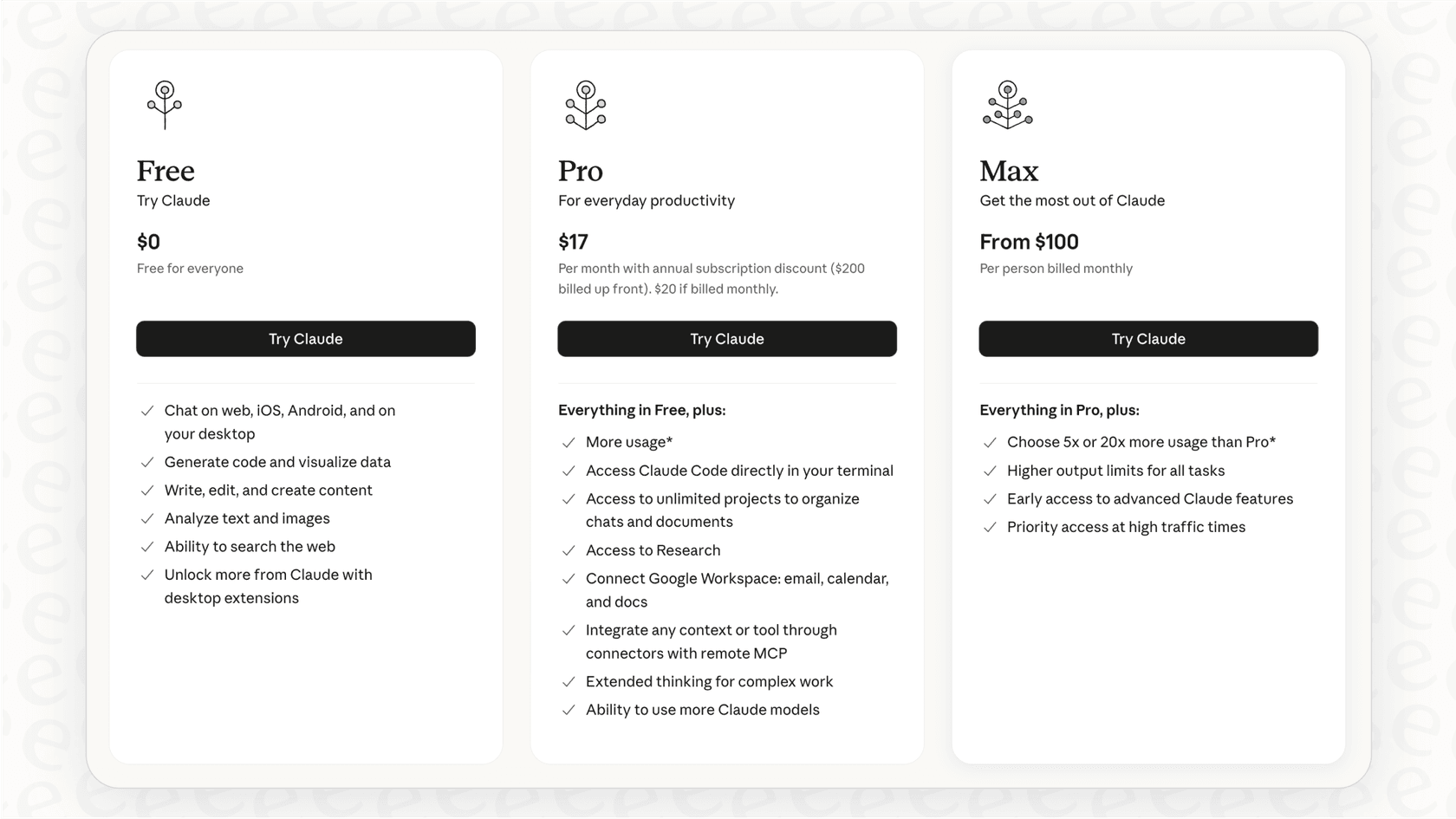
Here’s how the plans look:
| Plan | Price (Monthly) | Price (Annual) | Key Features & Limits | Best For |
|---|---|---|---|---|
| Free | $0 | $0 | Limited access to Sonnet, with low daily message caps that change with demand. | Anyone wanting to kick the tires and see what Claude can do. |
| Pro | $20 | $17/mo ($200 upfront) | About 5x more usage than the free plan, access to all models, and priority during busy times. | Professionals and heavy users who need more power and higher limits. |
| Team | $30/user | $25/user/mo | Higher limits than Pro, a huge 200k context window, and central billing for teams of 5 or more. | Small teams collaborating on projects with Claude. |
| Enterprise | Custom | Custom | The highest usage limits, SSO, extra security features, and dedicated support. | Big companies that need to use Claude at scale with tight security. |
Claude pricing for the API: The pay-per-token model
If your goal is to build an application that uses Claude, like an AI agent for your help desk, you'll be using their API. This pricing is totally different. Instead of a flat fee, you pay for exactly what you use, and usage is measured in tokens.
A token is basically a piece of a word. For English text, 100 tokens equals about 75 words. The key thing here is that you're billed for two things separately: input tokens (the text you send to the model) and output tokens (the text the model sends back). Output tokens cost a lot more because it takes way more computing power for the AI to generate a response.
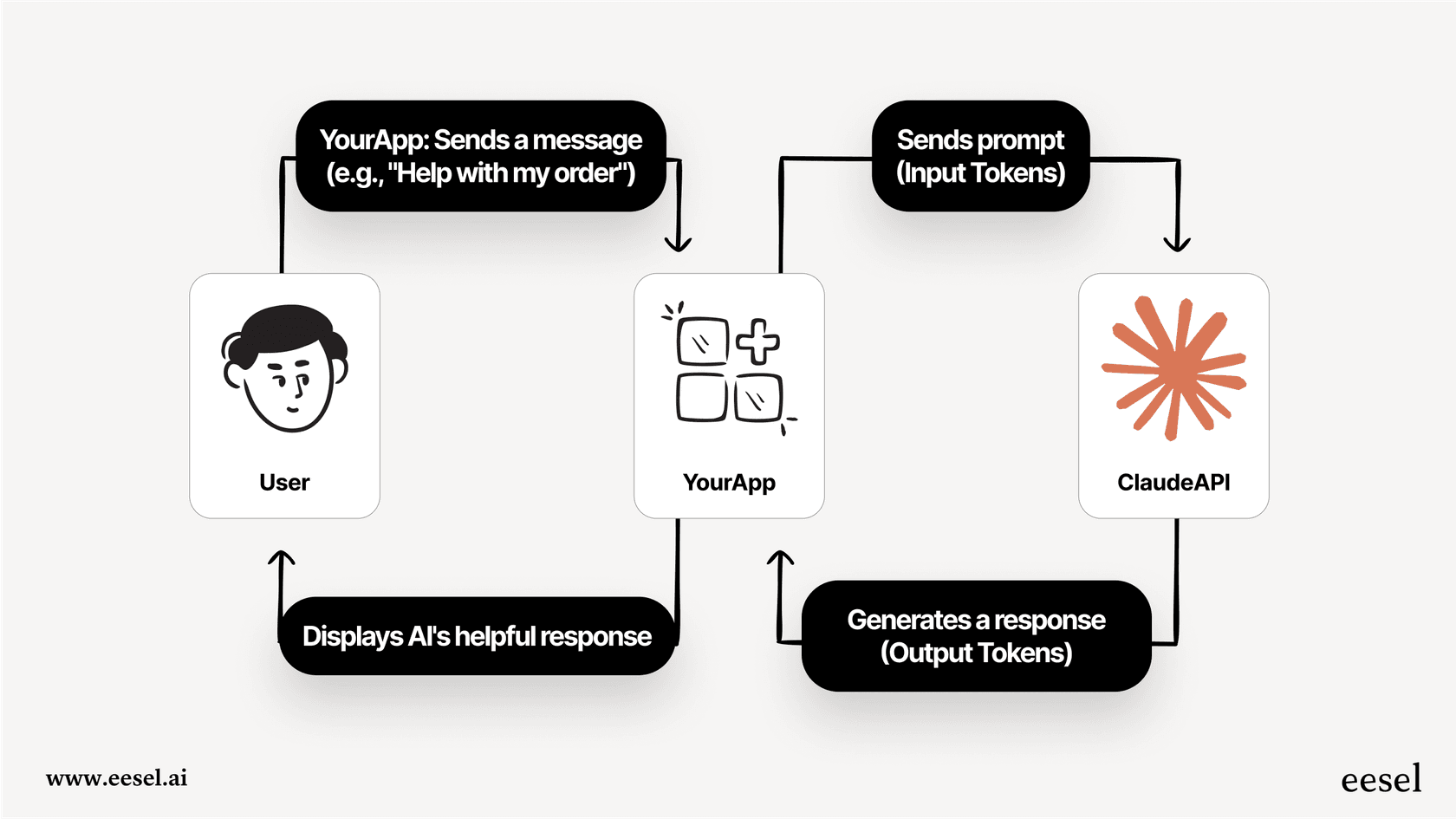
Here are the standard API rates, priced per 1 million tokens (MTok):
| Model | Input Price / 1M Tokens | Output Price / 1M Tokens | Context Window |
|---|---|---|---|
| Claude 3 Haiku | $0.25 | $1.25 | 200K |
| Claude 3.5 Sonnet | $3.00 | $15.00 | 200K |
| Claude 3 Opus | $15.00 | $75.00 | 200K |
Let's make that a bit more concrete. Say you want to use Claude Sonnet to answer a customer support email.
-
A customer sends in a 375-word email. That’s roughly 500 input tokens.
-
The AI writes back a helpful, 150-word reply. That’s about 200 output tokens.
The cost for that one email would be:
-
Input cost: (500 tokens / 1,000,000) * $3.00 = $0.0015
-
Output cost: (200 tokens / 1,000,000) * $15.00 = $0.0030
-
Total cost: $0.0045
Less than half a cent sounds great, right? But it adds up in a hurry when you have thousands of customer conversations a month. And as you’ll see, the token cost is just the beginning.
The hidden costs for support teams
While the pricing page looks simple enough, using a general tool like Claude for a specialized job like customer support comes with some sneaky costs and headaches.
The problem with token-based billing
Customer support chats are all over the place. A quick question might cost a fraction of a cent. But a long, detailed complaint from a frustrated customer can eat up thousands of input tokens before the AI even starts writing a reply. If the AI's response is just as detailed, your output costs go up too.
This makes budgeting a total nightmare. One busy month could leave you with a surprisingly big bill, and there's no good way to predict it. You’re basically paying a penalty for having more customers talk to you.
A purpose-built platform like eesel AI gets rid of this problem. You get transparent, predictable monthly plans based on a set number of resolutions. There are no per-resolution fees or confusing token math, so you never have to sweat about a complicated ticket wrecking your budget.
The integration and setup headache
Anthropic gives you a powerful AI model, but that's where their job ends. It's just an API. To actually make it useful for your support team, you have to build a whole system around it. That means connecting it to your help desk, whether that's Zendesk or Freshdesk, feeding it your knowledge base articles, and building rules for when it should answer a ticket versus when it should pass it to a human.
This is a big project. It can take months of a developer's time (and salary) to build and even more work to keep it running smoothly.
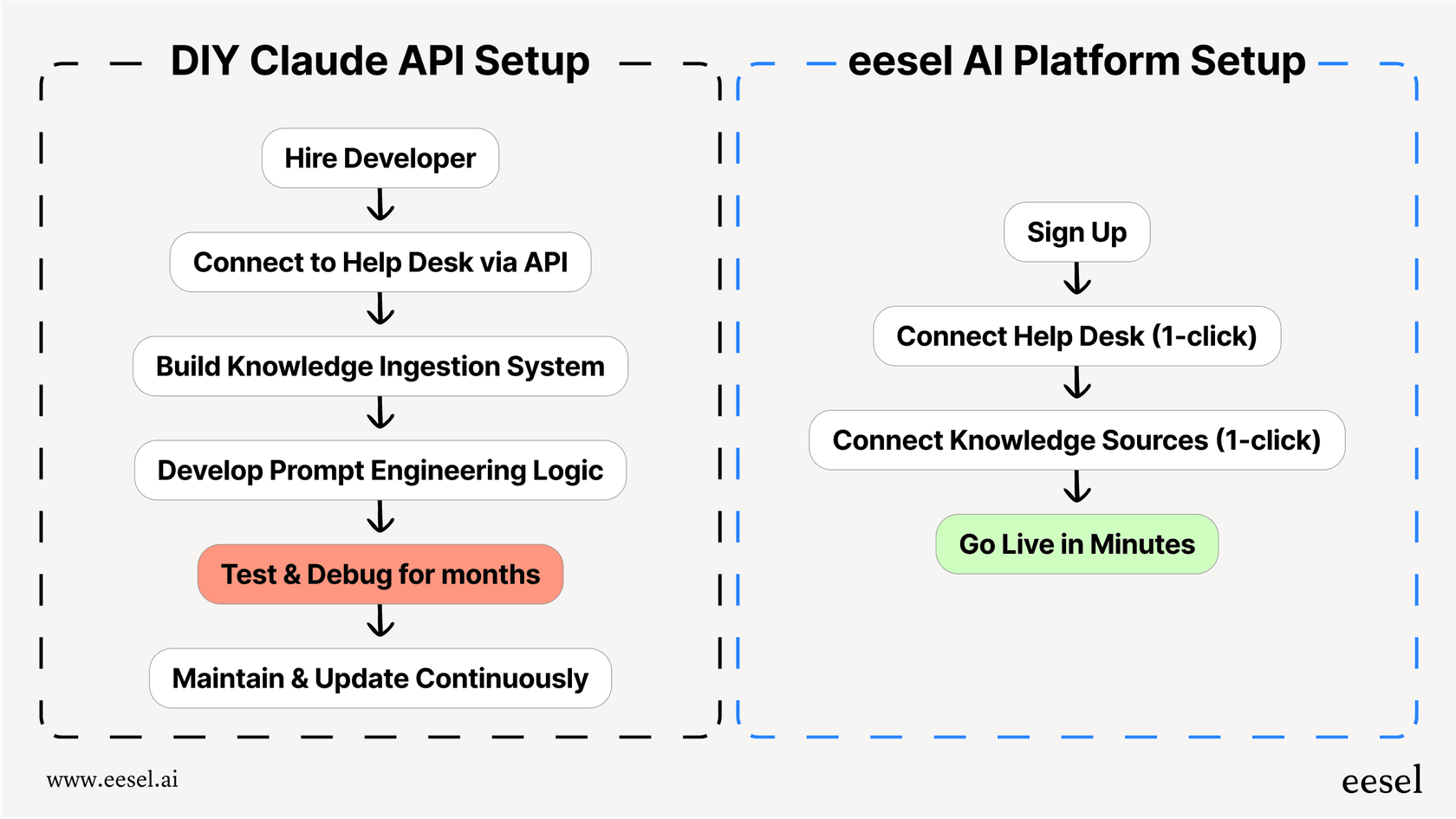
This is where a platform designed specifically for support, like eesel AI, really shines. It's not a raw API; it’s a complete tool. You can connect your help desk and knowledge sources in a few clicks and go live the same day, no developers required. It’s built to be self-serve, putting you in control.
The risk of generic, off-brand answers
Right out of the box, Claude has no idea who you are. It hasn't read your old support tickets, your internal wikis on Confluence, or your product details in Shopify. Without that context, its answers will sound generic and might not match your brand's voice. Getting it to sound like your team takes a ton of technical work, from fancy prompt engineering to building a system that feeds it the right information at the right time.
eesel AI is built to solve this exact problem. It learns from your past support conversations to automatically match your team's tone and style. It also plugs into all the places your company knowledge lives, from your help center to scattered Google Docs and Slack channels, making sure its answers are always accurate and on-brand.
Going beyond the API for real results
Claude's models are incredibly powerful, there's no doubt about it. But turning that raw power into something that actually helps your customer support team isn't as easy as just signing up for the API. The pay-per-token pricing model leads to unpredictable bills, the technical setup is a huge project, and you run the risk of getting generic answers. For a vital role like customer support, a purpose-built platform is a faster, safer, and cheaper path to getting results.
eesel AI closes that gap. It delivers all the intelligence of the best AI models but wrapped in a self-serve platform that’s already integrated with your tools, trained on your company's knowledge, and comes with simple, predictable pricing.
Pro Tip: Before you go all-in on any AI tool, you should be able to see how it performs with your actual data. eesel AI’s simulation mode shows you projected automation rates and cost savings based on thousands of your real historical tickets. You can see the value before you ever turn the bot on for your customers and deploy with confidence.
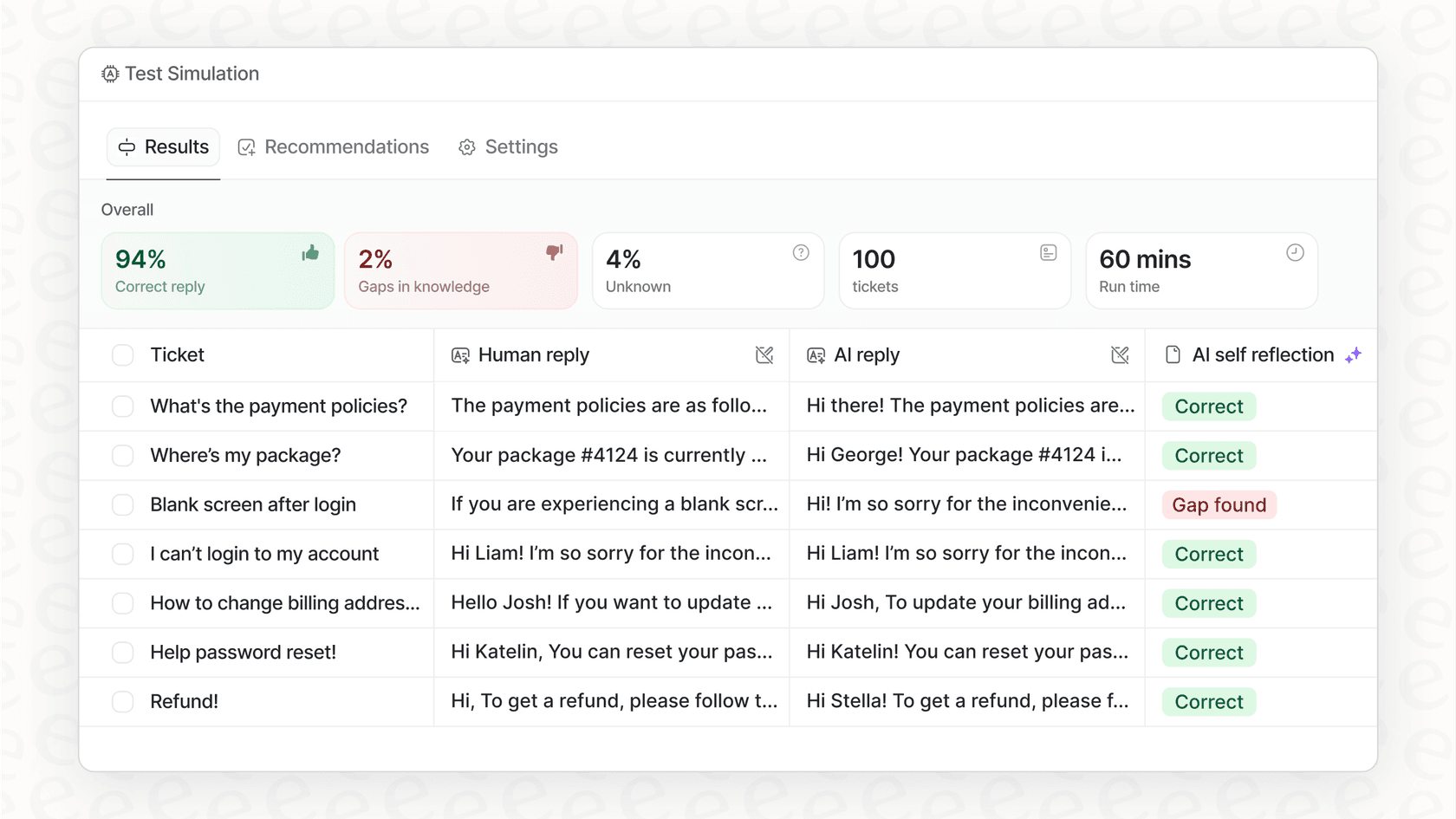
Ready to see how an AI platform built for support can level up your customer experience, without the hidden costs and complexity? Sign up for eesel AI for free and you can get your first AI agent running in minutes.
Frequently asked questions

Share this article

Article by
Stevia Putri
Stevia Putri is a marketing generalist at eesel AI, where she helps turn powerful AI tools into stories that resonate. She’s driven by curiosity, clarity, and the human side of technology.