How do I support customers in multiple languages with AI?


Last edited June 19, 2026
Why this is a bigger lever than it looks
It's easy to treat multilingual support as a nice-to-have you'll get to once you've expanded. The data says it's closer to a revenue gate, and it's a big part of why so many companies are using AI for customer service.
CSA Research surveyed 8,709 consumers across 29 countries and found that 76% prefer to buy products with information in their native language, and 40% will never buy from sites in another language at all. Unbabel's 2021 multilingual CX report put a churn number on it: 68% of people said they'd switch to a competitor that offered support in their language.
And the gap is real, not hypothetical. Intercom's survey of support teams and end users found 88% of teams claim to offer support in more than one language, but only 28% of customers say they actually experience it. That space between "we offer it" and "I felt it" is where customers quietly leave. The same survey found 29% of businesses had lost customers over missing multilingual support.
"If I google something and see a result in my native language, I expect there to be someone who speaks it among the site's staff."
a developer on r/webdev, Feb 2025

That quote is the whole reason this is hard to fake. A native-language reply reads as a promise that real support is on the other end. The job is to keep that promise at scale, which is where the next question comes in: how?
Three ways to actually do it
There are really only three approaches, and they trade off quality, speed, and cost in different ways.
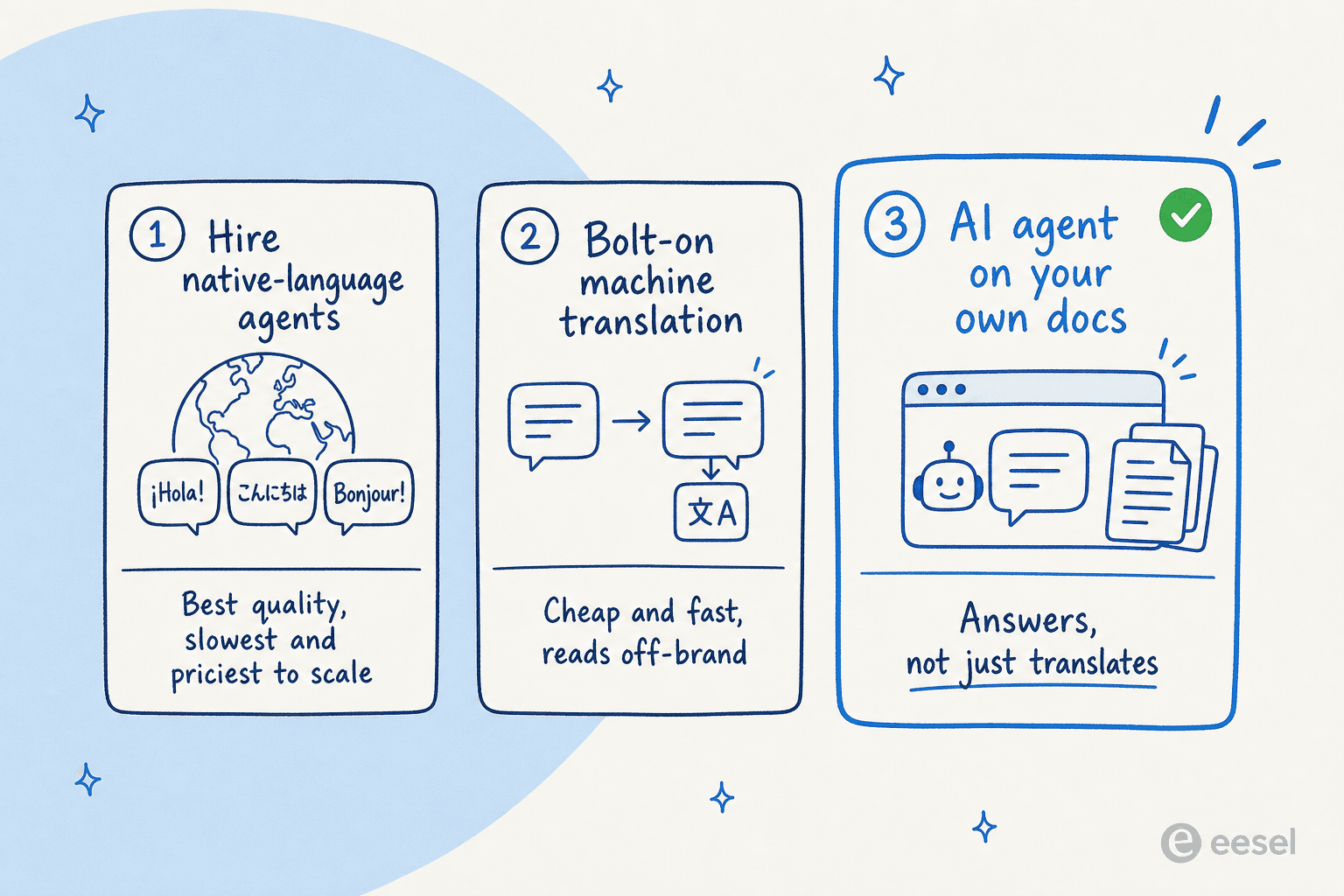
Hire native-language agents. The gold standard for quality, and the hardest to scale. Intercom found 85% of support managers say it's difficult to hire reps who speak more than one language. Every new market means another hire, another shift to cover, another seat. It works until growth outpaces recruiting.
Bolt machine translation onto your helpdesk. Cheap and instant. Tools like Zendesk auto-translation or Freshdesk multilingual templates will translate an incoming message and your reply on the fly. The problem is that customers can tell.
"I can spot AI translations in web copy or UI almost immediately. It feels off, and cheap."
a developer on r/webdev, Feb 2025
Run an AI agent on your own knowledge. This is the option most people don't realise exists, and it's different in kind. Instead of translating a reply, the agent reads the question, finds the answer in your help center and past tickets, and writes a fresh reply in the customer's language. It's answering, not translating. For repetitive tier-1 volume, this is the one I'd reach for, and it's the model behind most modern support ticket automation. It pairs well with keeping human linguists for the nuanced, brand-sensitive cases. Here's a fuller look at the AI vs human trade-off.
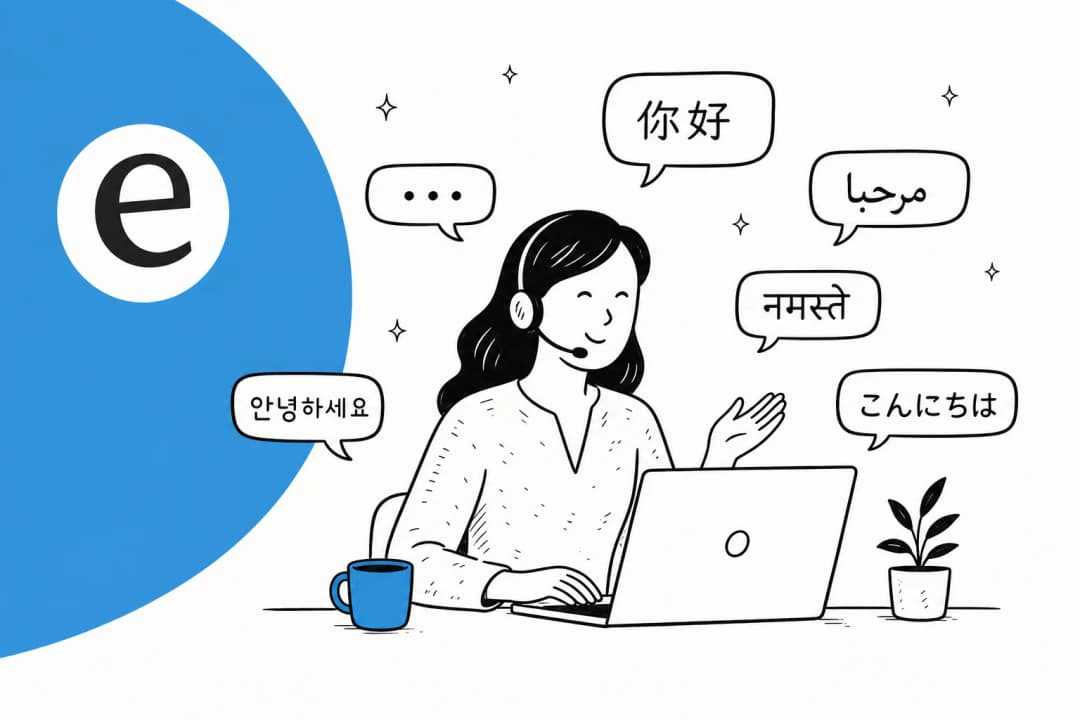
How one AI agent covers 80+ languages
I work on the agent side of this at eesel, so the question I get most is some version of "do we need to configure each language separately?" The answer is no, and the reason is worth understanding because it changes how you budget and test.
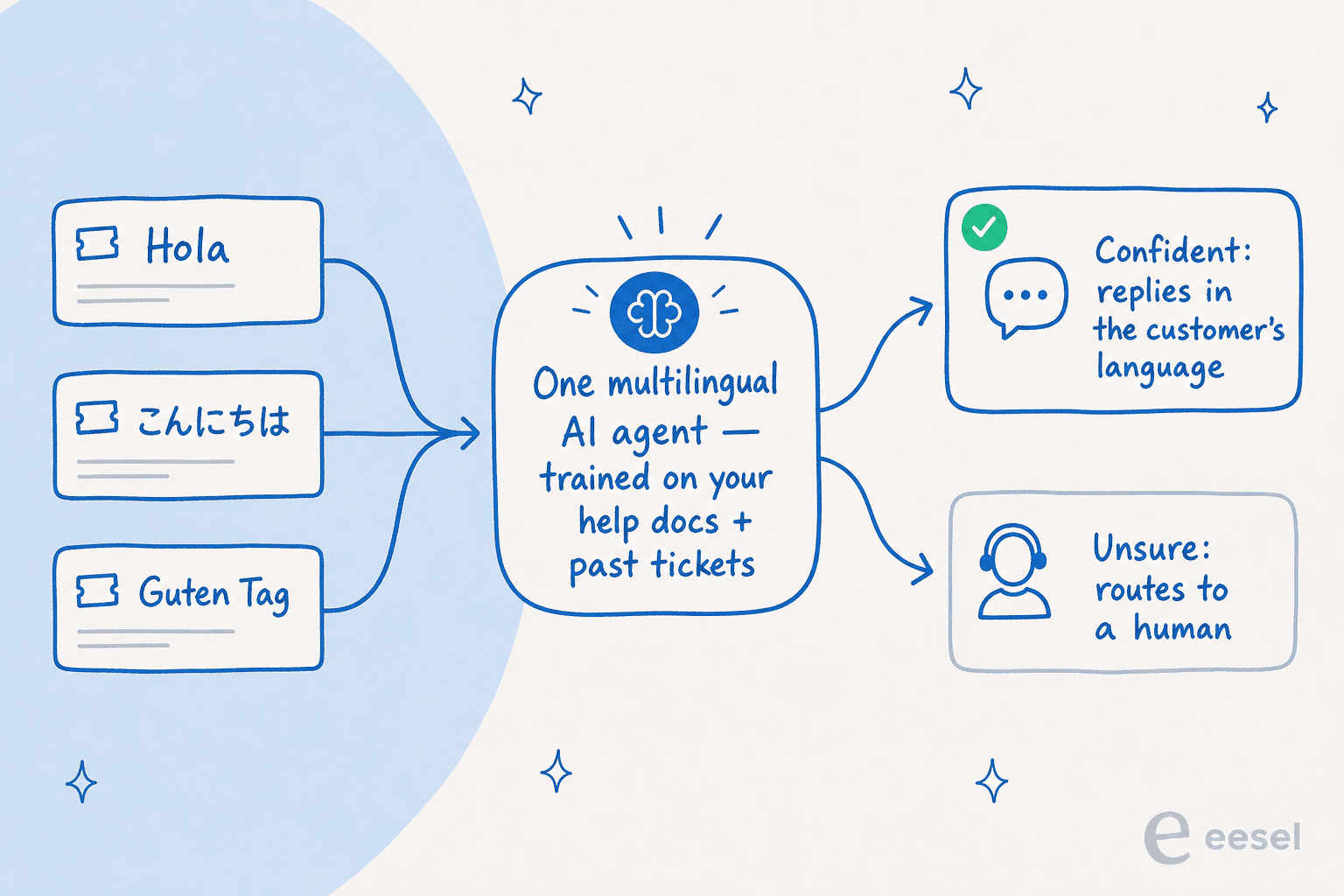
The model underneath is multilingual to begin with. It already understands Spanish, Japanese, German, and 80-odd others, so you don't build a per-language pipeline. You connect it to your knowledge base once, and that knowledge is what it answers from in every language. The real engineering isn't translation, it's two things around it: retrieval (finding the right answer in your docs) and guardrails (knowing when not to answer).
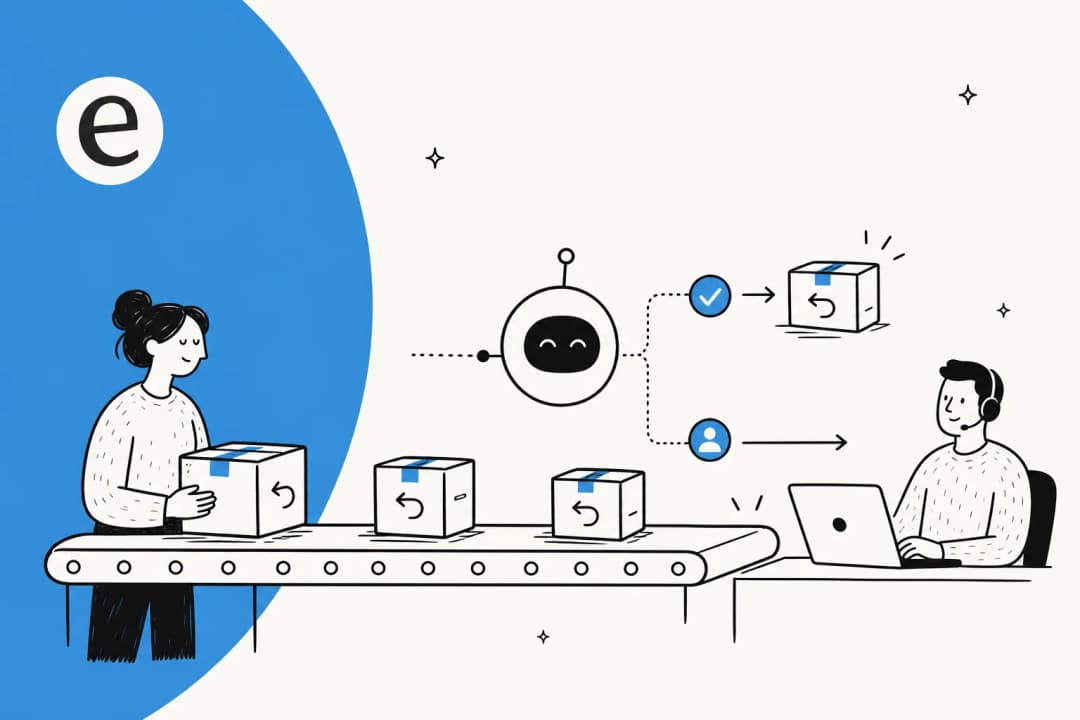
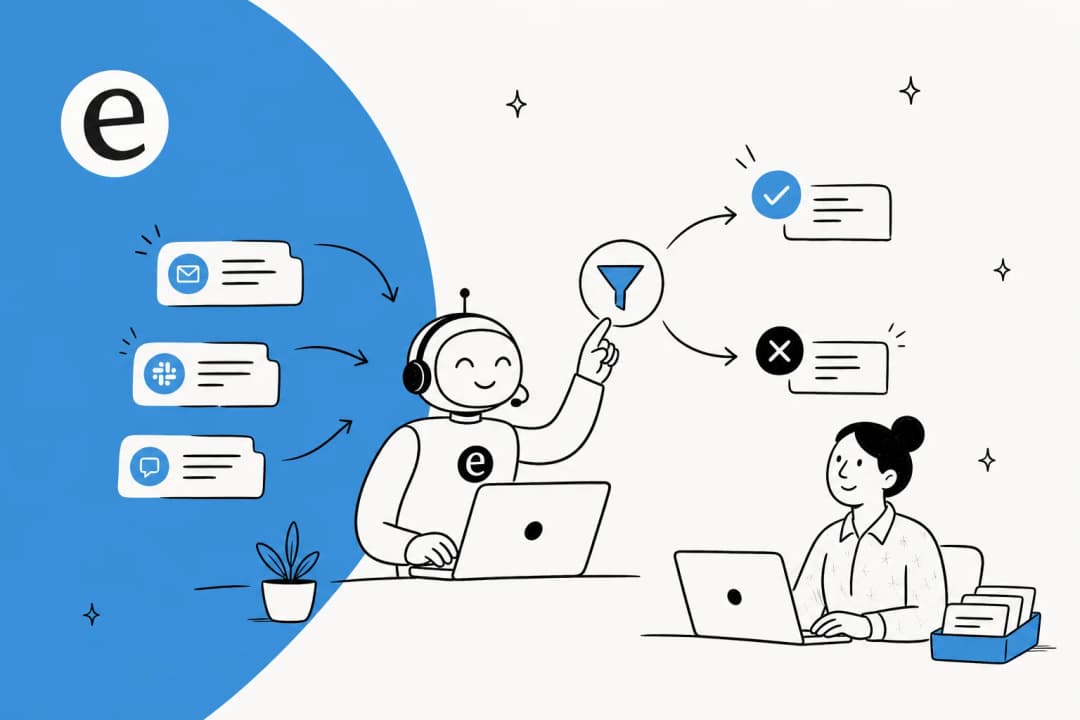
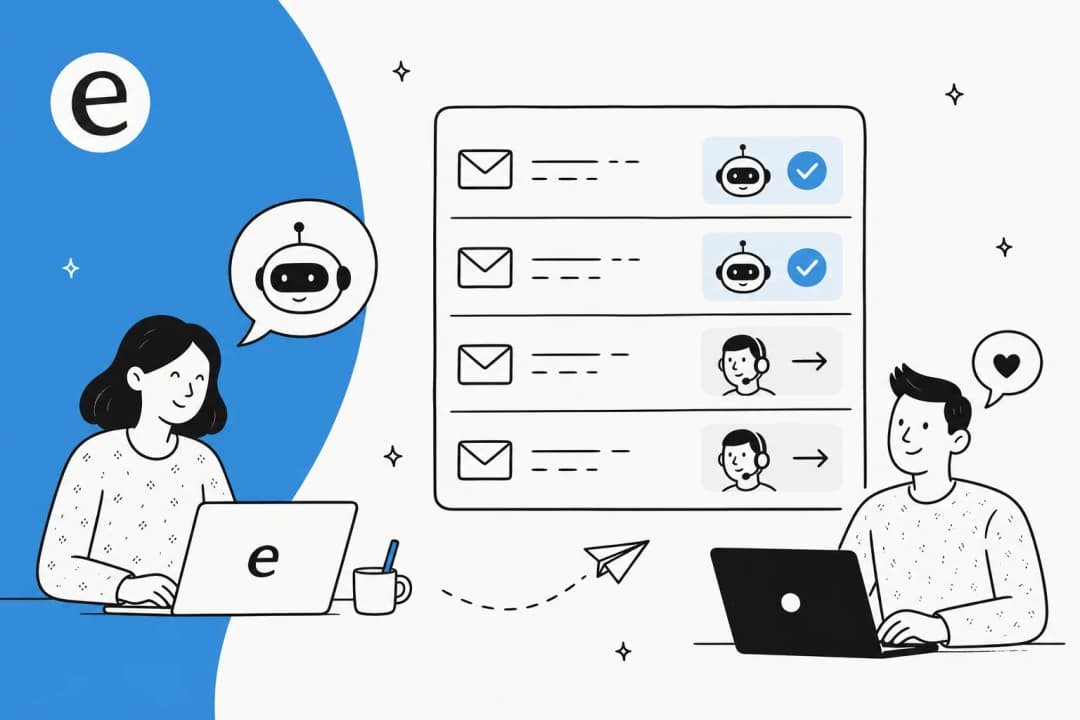
That second part is the one that matters for trust. A good agent uses confidence-based routing: when it's sure, it replies in the customer's language; when it isn't, it drafts for a human or hands off instead of guessing. The agent learns the language patterns from your own ticket history, so it picks up how your customers actually phrase things in each market, not a textbook version.
The honest part: where this breaks
Here's the bit most vendor pages skip. Fluency and accuracy are not the same thing, and AI is very good at sounding right while being wrong.
"AI is often better at translating into English than into many other languages... It is good at sounding fluent, but not always correct or appropriate. It can produce something that looks confident but is actually wrong or unnatural."
a localization specialist on r/TranslationStudies, Jan 2026
I've watched this happen with our own agent, which is why I'm cautious about it. Early on, we saw drafts going out to German- and Dutch-speaking customers with internal UI text and unfilled placeholders leaking straight into the reply, things like a raw first_name token sitting where a name should be. In English you'd catch it instantly. In a language your reviewer doesn't read, it sails through, and it's exactly the kind of detail that tells a customer no one's really minding the shop. That single experience is why every rollout we do now gets simulated against historical tickets before it goes live, language by language.
The other thing that breaks early is brand voice. One operator put it bluntly:
"We used to have a team of human translators, but have since dumped them for using AI assisted translation. We had a 'quirky' brand identity... the AI tools just can't do that, but it makes numbers go up."
an operator on r/BetterOffline, Sep 2025
The takeaway isn't "don't use AI." It's that AI should carry the high-volume, repeatable load while you keep an eye on tone and hand the nuanced cases to a person. Tools that don't let you control voice or set up clean escalation are the ones that burn you, so it's worth weighing them against the best AI helpdesk software before committing.
How I'd actually roll it out
So given all that, here's the sequence I'd follow. It's deliberately boring, because boring is what keeps you from a public German-language mistake.
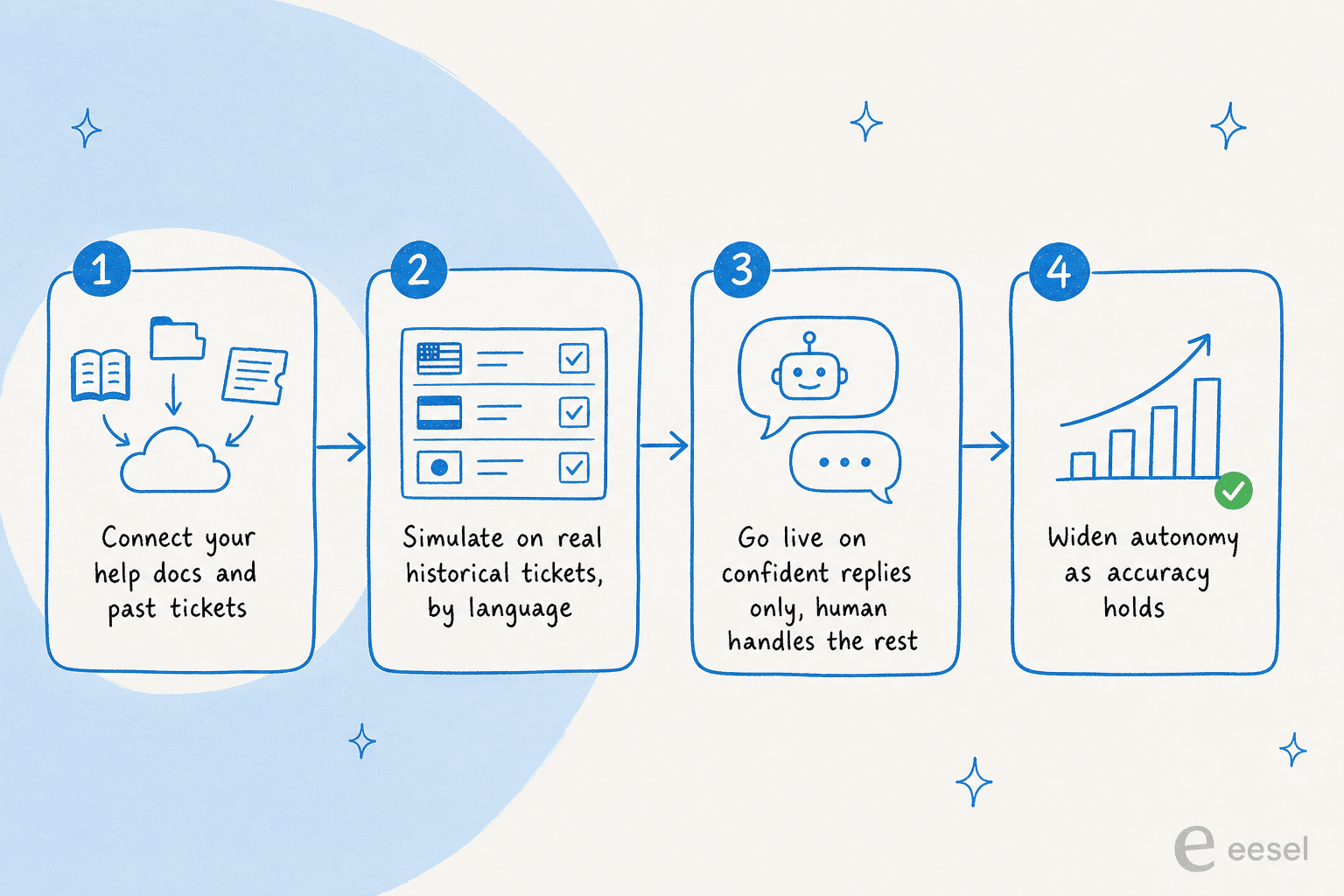
- Connect your help docs and past tickets. This is the agent's source of truth. The richer your knowledge base, the better every language gets, because they all draw from the same well.
- Simulate on real historical tickets, broken out by language. This is the step people skip and regret. Run the agent against thousands of past tickets and look at coverage per language. German might come back at 80% while a lower-volume language sits at 40%. Now you know where to add docs before launch, not after a complaint.
- Go live on confident replies only. Let the agent auto-handle the cases it's sure about and route everything else to a human. You're not flipping a switch to "AI answers everything," you're letting it take the easy wins first. This is the same tier-1 deflection pattern that works in a single language, just extended across all of them.
- Widen autonomy as accuracy holds. As the numbers stay solid, hand the agent more. Every correction your team makes feeds back in, so it gets better at your specific phrasing over time.
This isn't theoretical. One eesel customer, the loan marketplace Smava, runs a fully automated Zendesk agent that processes over 100,000 German-language tickets a month, one of our largest deployments. That volume only works because the language handling and the guardrails were tested before it scaled.
What it actually costs
The pricing surprise here is a good one: your cost tracks ticket volume, not the number of languages. Because one agent handles all of them, adding Japanese support doesn't add a Japanese bill. There's no per-language license and no extra seat to staff a new market.
That's a real departure from the old model, where each language meant another hire or another translation-tool tier. With usage-based pricing like eesel's, you pay per ticket the agent handles regardless of language, with no per-seat fee. If you want to see the broader cost comparison against human agents, the gap widens fast once you're covering more than two or three markets.
Support every language with eesel
If you're running Zendesk, Freshdesk, Gorgias, Front, or Help Scout, eesel works like a new teammate that plugs into your helpdesk in minutes, already speaks 80+ languages, and answers from the help docs and past tickets you already have. The differentiator is the simulation mode: you run it across your real ticket history, see exactly how it would have answered in each language, fill the gaps, and only then go live, with confidence-based routing so it never guesses on the tickets it isn't sure about. It's free to try, no credit card.

Multilingual support used to be a hiring problem. Now it's a setup-and-test problem, which is a much better problem to have. Get the knowledge base right, simulate before you launch, and keep a human on the cases that need a human, and you can answer customers in their own language without building a translation team to do it.
Frequently Asked Questions

Share this article

Article by
Alicia Kirana Utomo
Kira is a writer at eesel AI with a Computer Science background and over a year of hands-on experience evaluating AI-powered customer service tools. She focuses on breaking down how helpdesk platforms and AI agents actually work so that support teams can make better buying decisions.