OpenAI Agentic Commerce Protocol: What changes (2026)

Last edited September 29, 2025

For as long as most of us have been shopping online, the process has been pretty much the same: search, scroll, click, repeat. But that whole routine is starting to change. Now, it’s becoming more about just asking an AI assistant to find and buy things for you.
Leading the charge are OpenAI and Stripe with their new OpenAI Agentic Commerce Protocol (ACP). It’s an open standard that lets people buy products directly inside a ChatGPT chat.
This isn’t just some minor update. It’s a shift that could pull the center of e-commerce away from giants like Amazon and Google and move it toward conversational AI. So, what does this actually mean for your business? Let's get into what the protocol is, how it works, what it’s good at, where it falls short, and how you can prepare for what's coming.
What is the OpenAI Agentic Commerce Protocol?
At its heart, the OpenAI Agentic Commerce Protocol is basically a set of rules that lets AI agents (like ChatGPT), businesses, and payment processors talk to each other securely to make a sale happen. You can think of it as a universal language for AI shopping.
It was developed by OpenAI and Stripe with the goal of creating a simple, standard way for AI to handle transactions. According to the official documentation, it's designed to be powerful and easy for businesses to adopt without having to completely overhaul their existing systems. It’s also flexible enough to work with different payment processors and platforms, and it keeps sensitive payment info secure.
But here’s the most important part for business owners: you’re still in the driver's seat. Unlike selling on a marketplace where you give up a lot of control, the protocol is set up so you own the customer relationship, process the payment yourself, and manage everything that happens after the purchase, from shipping to returns.
How the OpenAI Agentic Commerce Protocol works
The protocol isn't a single tool, but more of a three-step dance that connects finding a product, checking out, and paying for it, all within a single chat. Let's walk through it.
Step 1: Getting your products seen with a product feed
It all begins with your product catalog. For your items to show up in ChatGPT, you have to give OpenAI a structured data file, usually called a product feed. This is typically a TSV, CSV, XML, or JSON file that lists out everything you sell.
This file contains all the important details: product names, descriptions, prices, how many you have in stock, images, and shipping options. The key is to keep this feed as fresh as possible, ideally updating it every 15 minutes or so. That way, ChatGPT always knows exactly what’s available and what it costs.
Step 2: Handling the order with the agentic checkout spec
Alright, so a customer in ChatGPT decides they want to buy one of your products. This is where the Agentic Checkout Spec comes into play.
-
ChatGPT collects the info: The AI gathers the customer’s shipping address and payment details right there in the chat. They don’t have to leave and go to your website.
-
A checkout session begins: ChatGPT then pings your business’s API to start a new checkout, sending over the necessary info securely.
-
You take it from here: This is where you have all the control. Your backend systems get the request and do what they normally do: validate the info, calculate sales tax, check for fraud, and decide whether to approve the order. Once your system gives the thumbs-up, it sends a confirmation back to ChatGPT, which then lets the user know.
So even though the checkout looks like it's happening in ChatGPT, all the important business logic is still running on your own systems.
Step 3: Keeping payments secure with the delegated payment spec
Moving payment information around is always tricky. The protocol handles this with the Delegated Payment Spec, which is a clever way to make sure OpenAI never actually sees or touches raw credit card numbers.
Here’s how it works: instead of sending card details, OpenAI creates a one-time payment request with a maximum amount and an expiration time. This request goes to a payment provider like Stripe, which then sends back a secure, single-use payment token.
OpenAI passes that token to you, the merchant. You then use that token to charge the customer through your payment processor. It's a secure handshake that keeps everyone's data safe and the whole process smooth.
The business impact of the OpenAI Agentic Commerce Protocol
While ACP opens up some really exciting doors, it also brings a few new headaches that businesses need to be ready for. It's not quite a perfect, out-of-the-box solution for conversational commerce.
The good news for e-commerce merchants
Let's start with the upsides. Using the protocol gives you three big wins:
-
A brand new sales channel: You get a direct line to millions of people who are actively looking to buy something, right in the app they're already using.
-
Less friction at checkout: By keeping everything inside one conversation, you get rid of the extra clicks and page loads that often lead to abandoned carts. This could be a huge boost for conversion rates.
-
You keep your customers: This is a big one. Unlike selling on Amazon, you’re still the merchant of record. You control your branding, your fulfillment, and most importantly, you have a direct relationship with your customers.
Real-world challenges and where the protocol falls short
ACP is fantastic at handling the transaction, but selling stuff is about so much more than just taking a payment. The entire customer journey matters, and that's where the protocol by itself has some pretty big gaps.
-
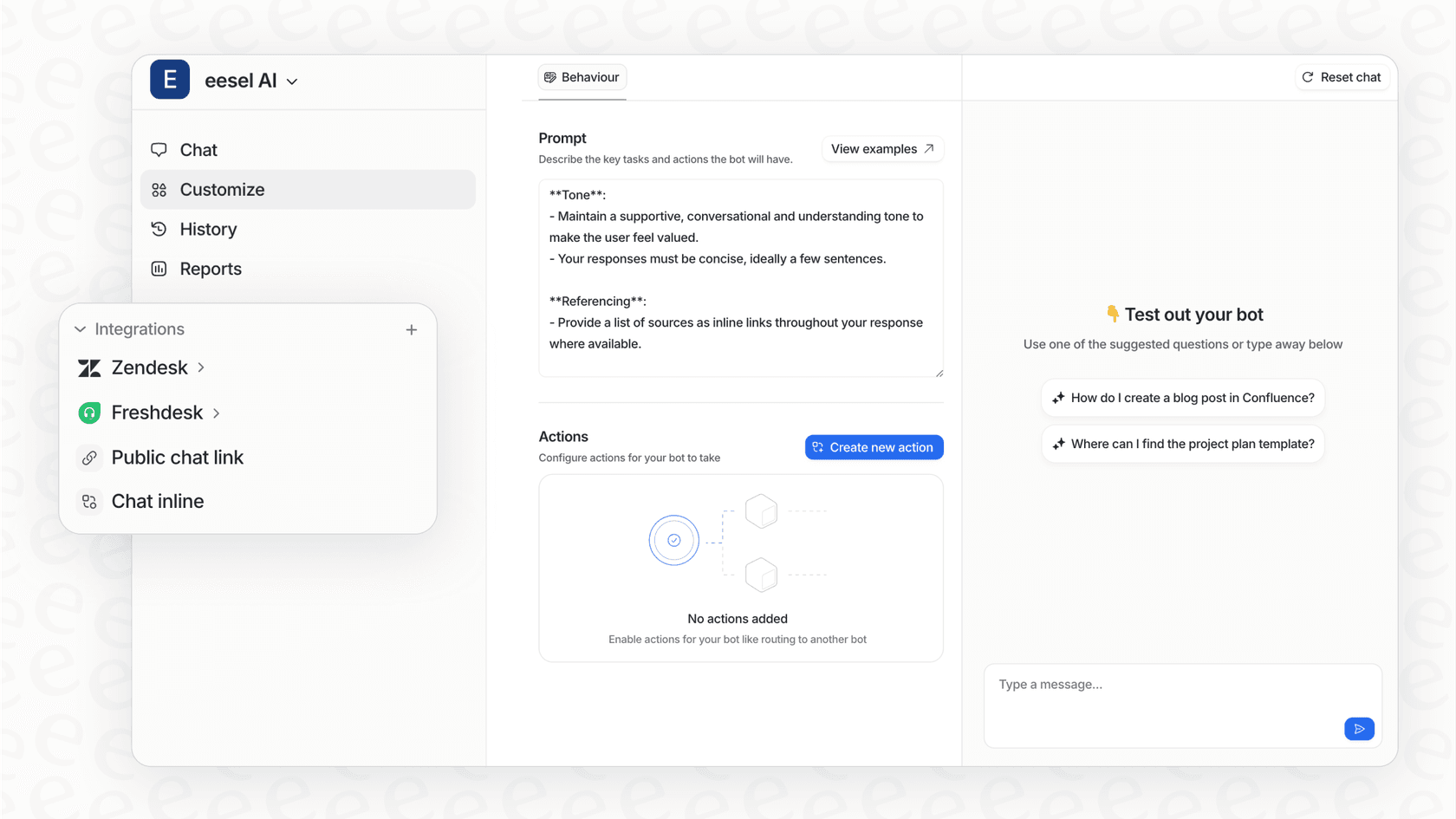
The pre-sale questions: A product feed is great for hard data like price and size. But what about when a customer asks, "Will this shirt shrink when I wash it?" or "Is this camera lens compatible with my Sony A7III?" These are the kinds of detailed questions that can make or break a sale, and ACP alone can't answer them. This is where a dedicated AI comes in. For example, an AI chatbot from eesel AI can be trained on your entire company's knowledge, not just a data feed. It can learn from your help docs, past support tickets, and even your Shopify store to answer these specific pre-sale questions accurately.
-
The post-purchase support wave: The protocol’s job is done the moment an order is confirmed. But for your team, the work is just beginning. This new sales channel is going to create a new stream of support tickets with questions about order status, returns, and how to use the product. You need a plan to handle this without burning out your support team. An AI support agent from eesel AI is built for exactly this. It can connect directly to your helpdesk, whether you use Gorgias or Zendesk, and automate full responses to those common post-purchase questions. This keeps customers happy without you needing to hire more people.
- The technical upkeep: Even though ACP is meant to be simple, setting up and maintaining real-time product feeds and API endpoints still takes some technical know-how. You’ll need to make sure your backend systems are solid enough to handle these new interactions without any hiccups.
The future of agentic commerce: What's next?
This is really just the start. The launch of the OpenAI Agentic Commerce Protocol is a sign of a much bigger shift in how we'll all be buying and selling things online.
-
The competition is heating up: OpenAI isn't the only one thinking about this. Google has its own standard, the Agent Payments Protocol (AP2), which tells you this is a serious trend, not just a fad. This is shaping up to be the next big battleground for e-commerce.
-
It’s more than just single items: The long-term idea goes way beyond just buying one T-shirt. Soon, AI agents could be managing a shopping cart with items from different stores ("find me the best price for these three things"), handling your subscriptions, or even buying things for you in the background based on your habits.
-
A new kind of tech stack: The e-commerce tools of the future will probably have two main layers that work together:
- Transactional protocols (like ACP): This is the underlying "plumbing" that lets secure purchases happen across different AIs and platforms.
- Conversational and support AI (like eesel AI): This is the "brain" that actually talks to the customer, answers their tricky questions before the sale, and takes care of all the support needs after.
Get your business ready for the OpenAI Agentic Commerce Protocol
The OpenAI Agentic Commerce Protocol is a huge step forward that makes buying through AI a real thing. It gives businesses a fantastic new way to sell, but it doesn't handle the important conversations that happen before and after someone clicks "buy."
If you rely only on ACP, you'll have a gap when it comes to answering pre-sale questions and a bigger support workload after the sale. That can lead to lost sales and unhappy customers. To really do well in this new environment, you need to pair a transactional tool like ACP with a smart conversational AI that can manage the whole customer experience.
eesel AI is built to be that intelligent layer. By bringing all your company knowledge together and plugging into your existing helpdesk, eesel gets you ready to not just process transactions, but to build real customer relationships in the age of AI. Best of all, you can get it up and running in minutes and even use its simulation mode to see your potential ROI before you fully launch.
Find out how eesel AI can get your support operations ready for the future of commerce.
Frequently asked questions

Share this article

Article by
Kenneth Pangan
Writer and marketer for over ten years, Kenneth Pangan splits his time between history, politics, and art with plenty of interruptions from his dogs demanding attention.