Zendesk AI pricing in 2026: what automated resolutions really cost


Last edited June 24, 2026
Estimate your real Zendesk AI bill
Most of the confusion disappears once you plug in your real numbers. The seats, the AI resolutions, and the add-ons stack into one bill, and the same volume priced per ticket sits next to it for contrast.
The shape is the point: the seat line grows with headcount, but the resolution line grows with volume, and volume is the thing AI is supposed to take off your plate. The better your AI does, the more it costs. Hold that thought, it's the crux of the whole model.
Zendesk's plans in plain English
Start with the seat price, because that's the layer the Zendesk pricing page leads with. All figures below are per agent, per month, billed annually.
| Plan | Type | Price (per agent/mo, billed annually) | What you get |
|---|---|---|---|
| Support Team | Support-only | $19 | Email, ticketing, routing, triggers. No AI agents. |
| Suite Team | Suite | $55 | Adds AI agents, omnichannel routing, messaging, live chat, telephony. |
| Suite Professional | Suite | $115 | Most popular. Adds admin Copilot, AI writing tools, skills-based routing, IVR. |
| Suite Enterprise + Copilot | Suite | Talk to sales | Custom. Intelligent triage, Auto Assist, governance, sandbox, custom roles. |
| Copilot (add-on) | Add-on | $50 | Agent-facing AI assistant. |
| Workforce Engagement (add-on) | Add-on | $50 | Quality assurance + workforce management. |
| Contact Center (add-on) | Add-on | $50 | Voice and digital contact center. |
The first thing worth flagging: the $19 Support Team plan has no AI agents at all. The price most people quote when they say "Zendesk is cheap" is the one that does the least. AI agents first appear on Suite Team at $55, and the genuinely capable AI lives higher up the ladder or behind add-ons. If you want the full tour of what each AI tier unlocks, we've mapped Zendesk's AI capabilities separately.
Enterprise pricing is hidden behind "talk to sales", which is its own signal: the largest, most AI-heavy configuration is the one you can't price yourself.
What you actually pay for: the three layers
Here's the mental model I wish more buyers had before their first Zendesk AI demo. The bill is a stack, not a line.
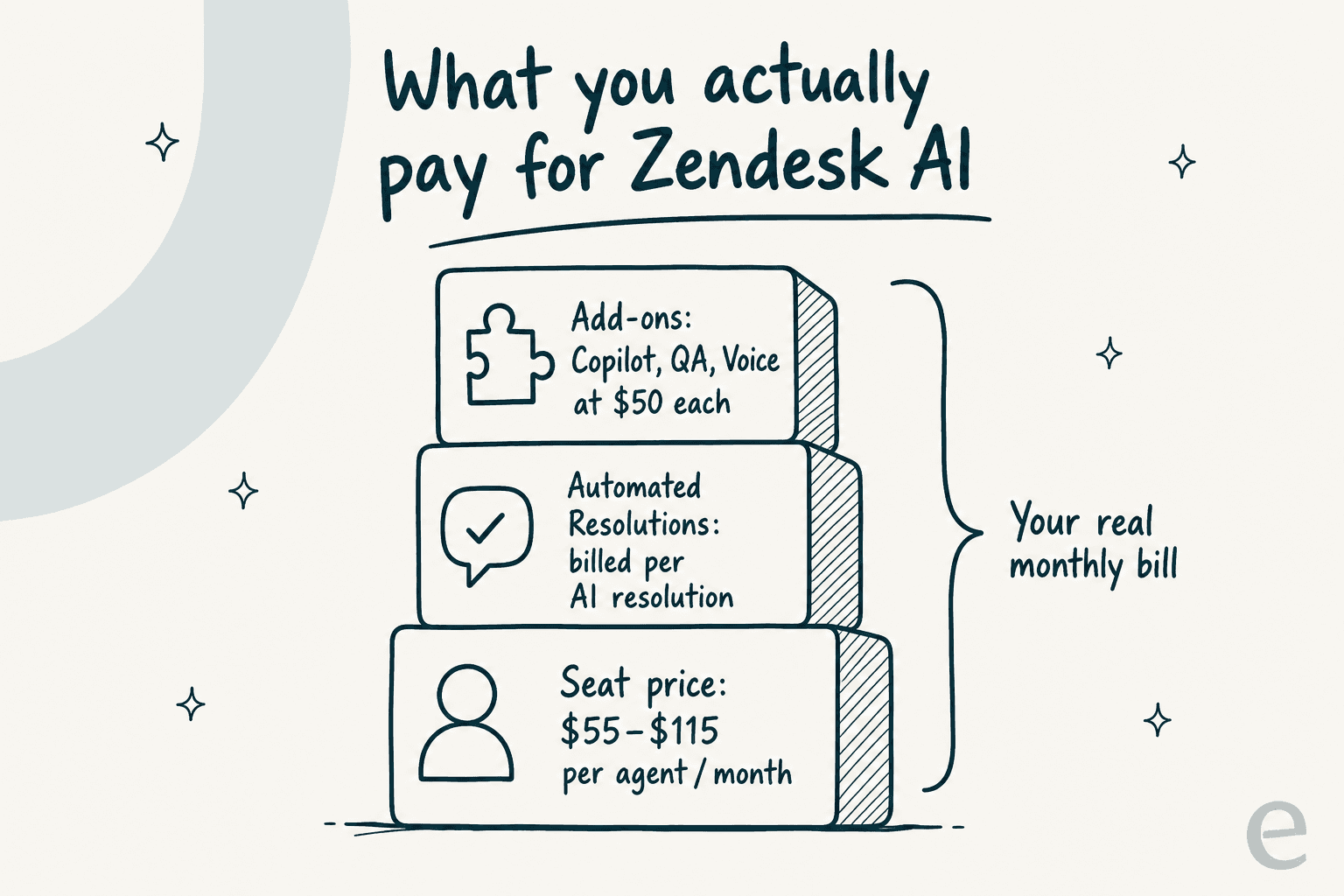
The seat price is the floor. On top of it sits the automated-resolution billing for AI agents, which is usage-based. And on top of that sit the add-ons, each $50/agent/month, that turn the basic experience into the one Zendesk demos. A Capterra reviewer described the setup work bluntly:
"Pricing is a bit of a con and setting up add ons can add more to it and could feel like a full time job in the backend."
Vibhore S., Logistics Lead, Capterra review (Apr 2026)

None of these layers is hidden, exactly. They're all documented. But you have to assemble them yourself to know what you'll pay, and that's where the sticker-to-invoice gap opens up.
Automated resolutions: the layer that surprises people
This is the part of Zendesk AI pricing worth slowing down on, because it's the part that behaves differently from everything you're used to.
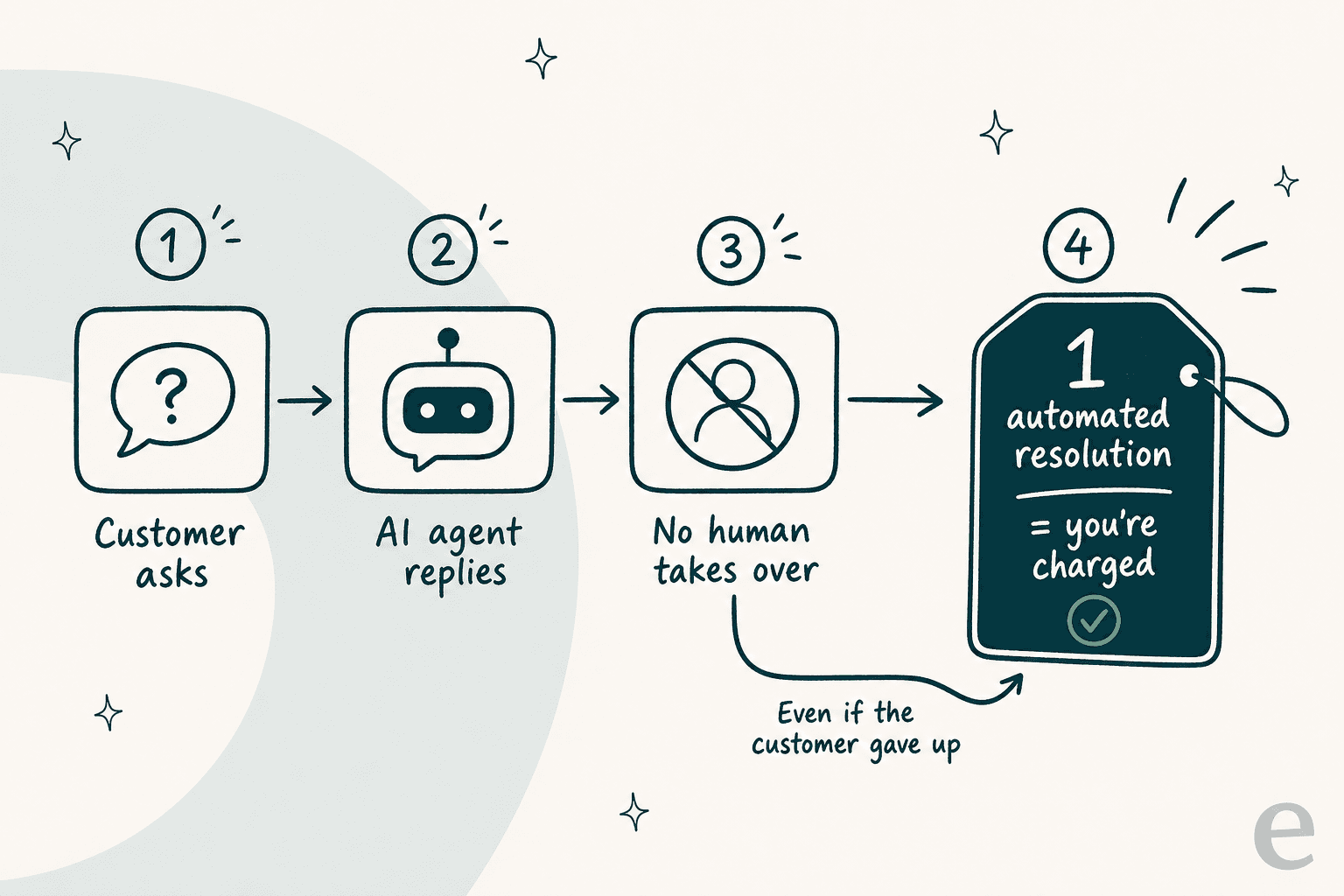
An automated resolution is any request an AI agent handles without escalating to a human. Zendesk frames it as a fairness feature, you only pay for outcomes, and there's a real logic to that. The catch is in how a "resolution" gets counted and what it costs.
Zendesk doesn't publish the per-resolution dollar figure, it's allowance-based and sales-assisted. The numbers we have come from buyers working through their own contracts. The original AR pricing thread on r/Zendesk is the canonical reference:
"From what I can see in regards to this new 'Automated Resolution' pricing model, we'll be paying about $1.50 ~ $1.20 per resolution... If you have 500 AR per week, the bill blows out to be $650, where there wasn't a charge before."
u/caledragonpunch, r/Zendesk (Aug 2024)

The same community member later noted that without a committed plan, overage resolutions run about $2 each. So the practical advice is to forecast your volume and commit ahead of time, otherwise the overage rate bites.
The deeper objection is about the definition. A resolution counts when the AI replies and no human takes over, which is not the same as the customer actually being helped. One operator in the same thread put the incentive problem precisely:
"the subjective part in the resolutions. who knows if the bot is just leaving the customer hanging and marking it as a resolution... they got agitated and abandoned the chat and it was considered a resolution"
u/Willing_Estimate6107, r/Zendesk (Jan 2026)
That's the structural tension: a metric that bills you more when it works counts an abandoned chat the same as a real fix. It's not that Zendesk's AI is bad, the underlying AI agents are genuinely capable and the product is rated well overall. It's that the meter you're paying isn't perfectly aligned with the outcome you care about. If you want to dig into how resolutions get measured, Zendesk's own QA tooling is the place that data lives.
The $50 add-ons: Copilot, QA, and Voice
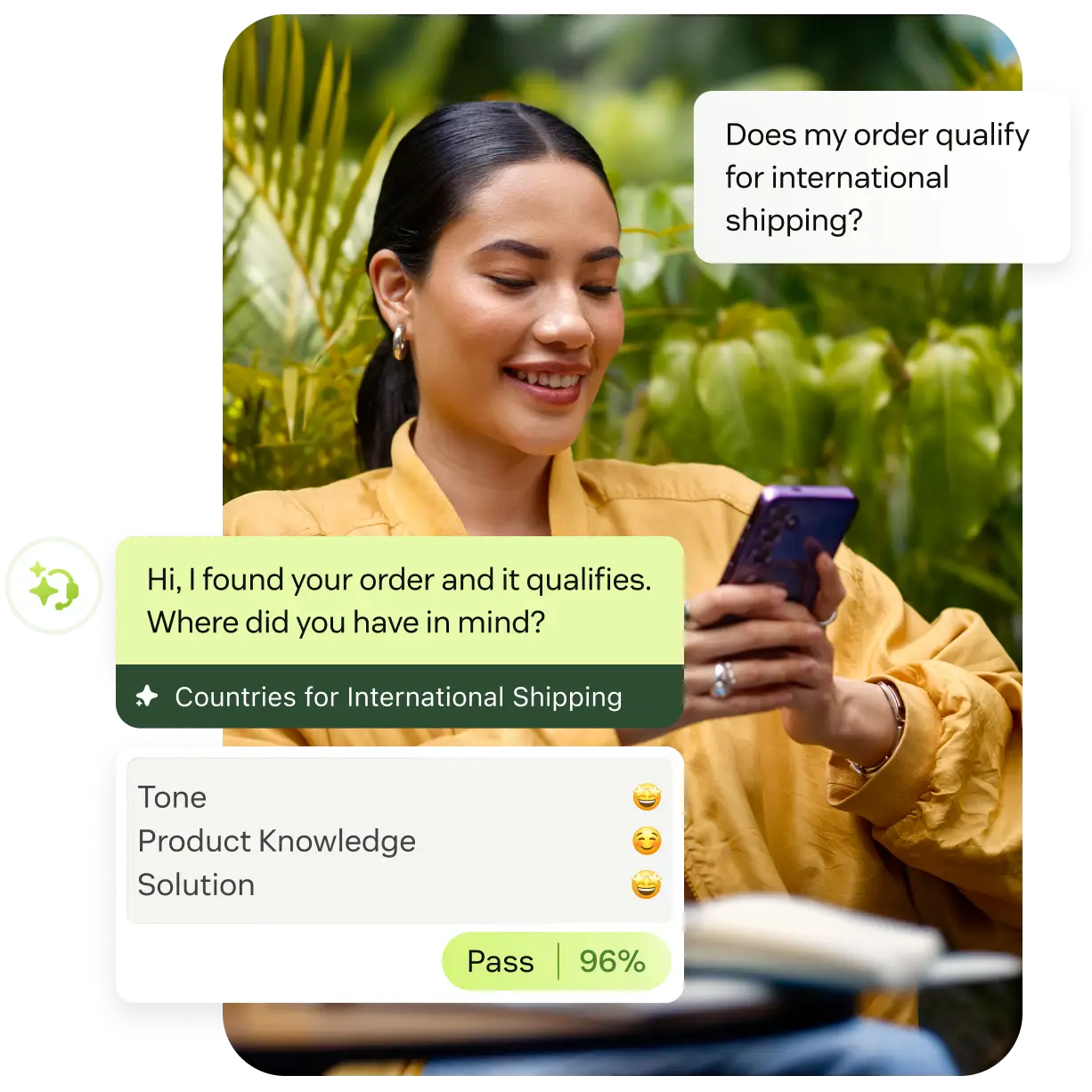
The third layer is the add-ons, and each one is another $50 per agent, per month, billed annually.
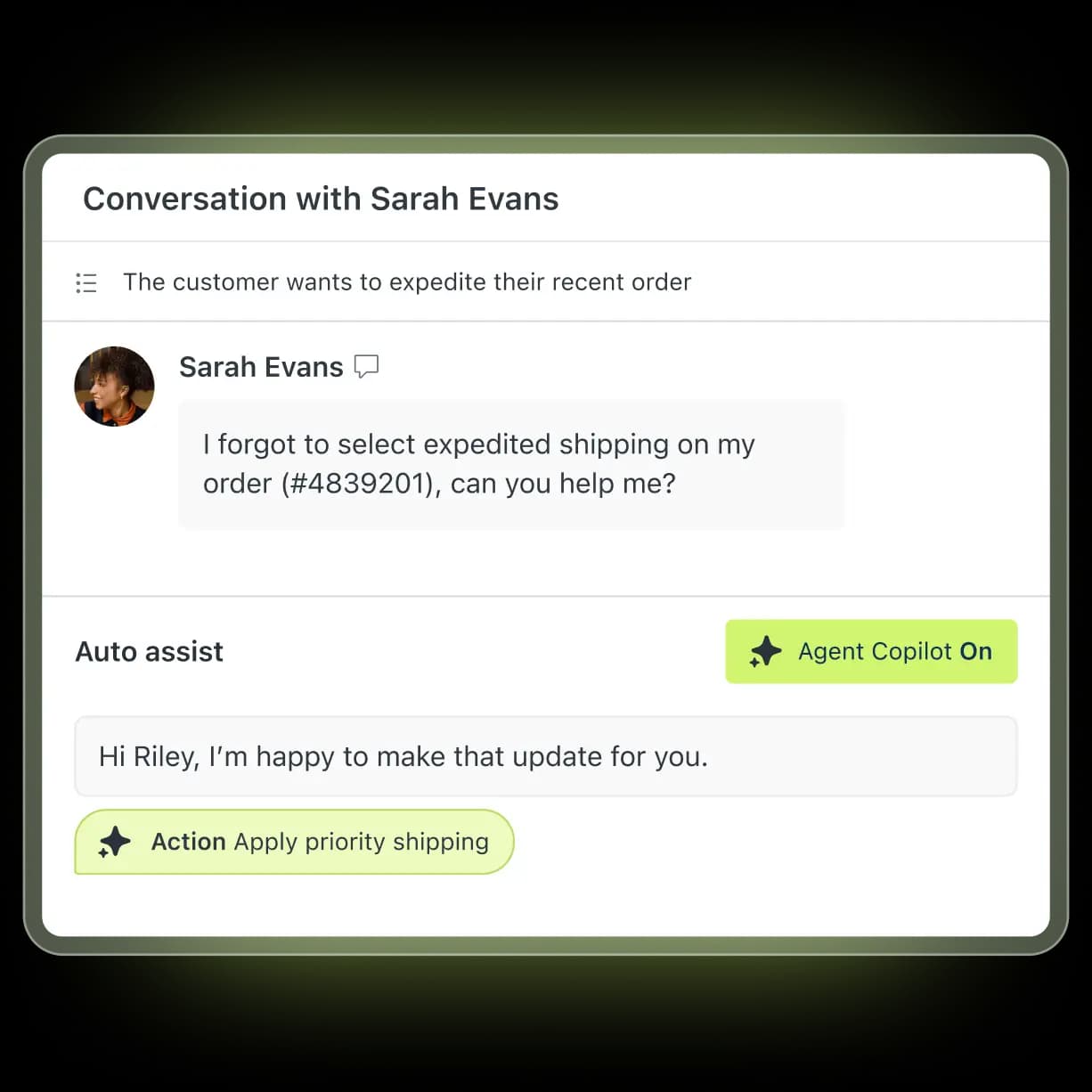
Copilot is the agent-facing assistant, it suggests next steps and can take some actions autonomously inside the agent workspace. It's genuinely useful, and it's also a recurring "is it worth it?" question on r/Zendesk, where teams trade notes on whether the Copilot add-on earns its line item.
The Workforce Engagement bundle ($50/agent) folds in Quality Assurance, which scores 100% of conversations rather than a sample, for both human and AI agents. If you're running AI agents at volume and want to audit them, this is effectively a tax on doing that properly.
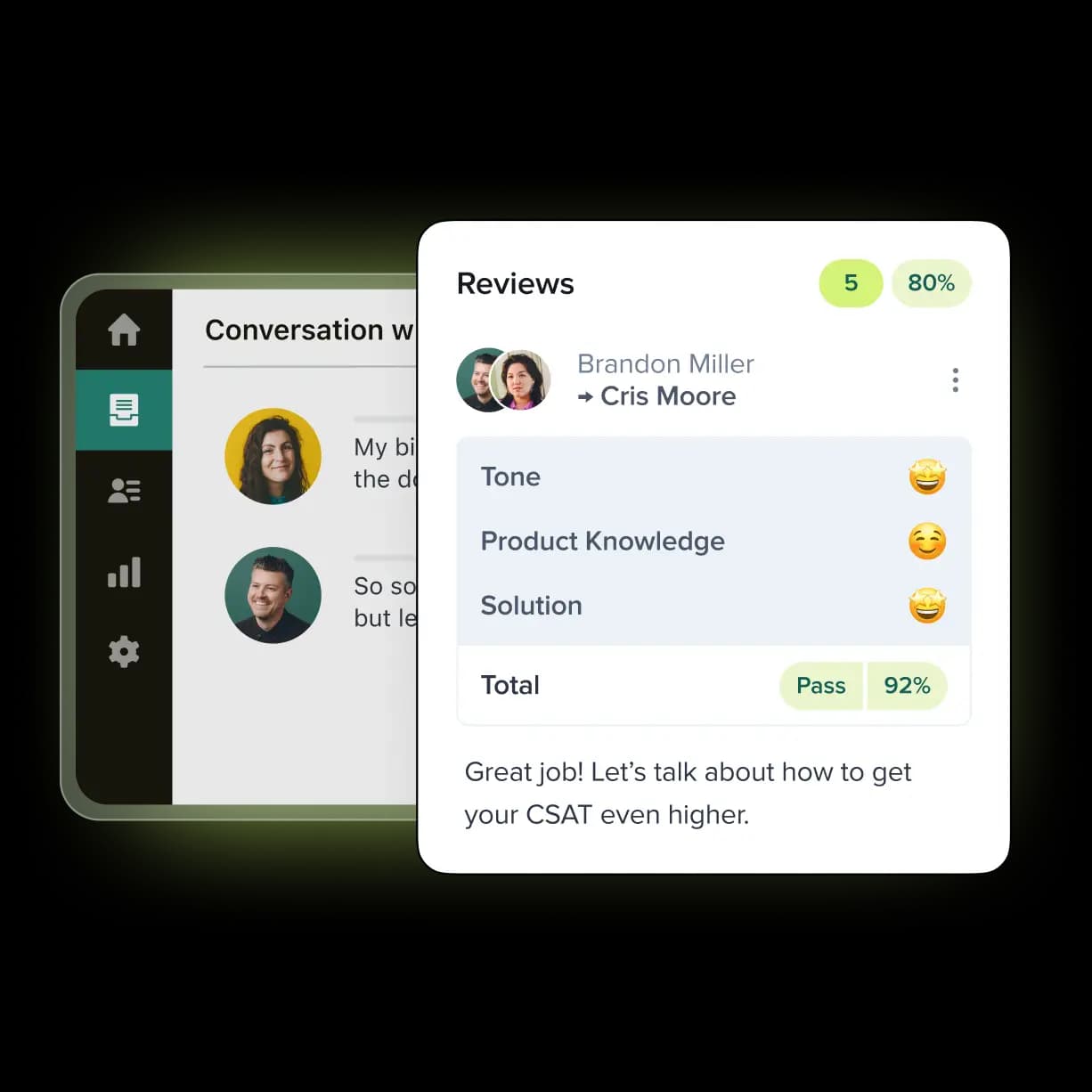
The pattern across all three add-ons is the same: the capabilities that make Zendesk AI feel complete, the assistant, the QA, the voice resolutions, are mostly priced separately from the seat. None of this is unusual for enterprise software. But it does mean the honest answer to "how much does Zendesk AI cost" is "more than the row you're looking at."
Where the model bites: scaling
Put the layers together and a specific problem emerges as you grow. Most software gets cheaper per unit at scale. Per-resolution AI billing does the opposite, every additional resolved ticket is another charge, so the line that should fall as you automate more actually rises.
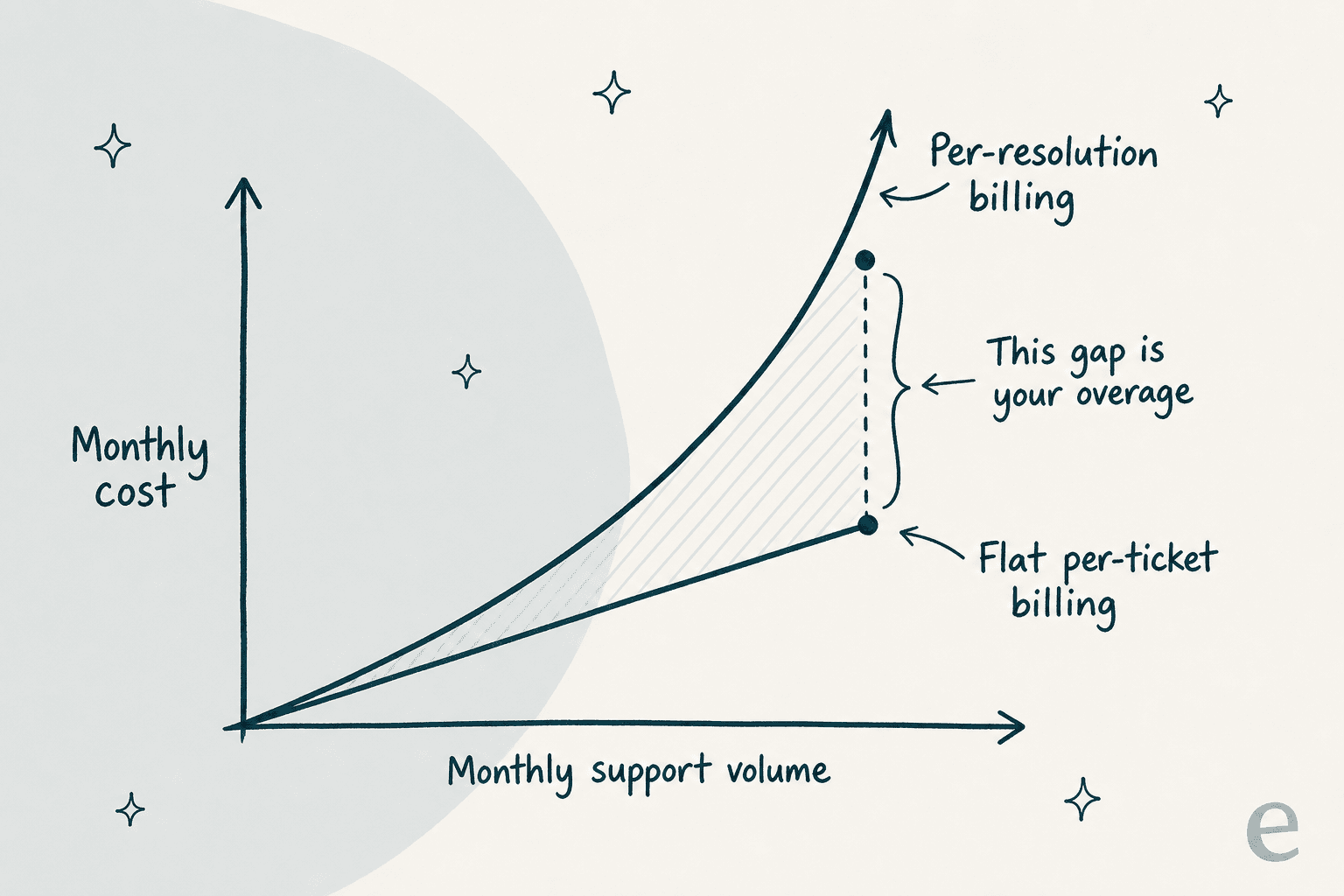
This is exactly the complaint that drives the busiest "leaving Zendesk" threads. The most-upvoted version is an admin watching the bill climb past what the team's growth justified:
"as we've grown from just a few users to a couple of dozen, our Zendesk bill has climbed to around $5,000 per month (not including add-ons)... their response was vague, suggesting only that we downgrade to a lower plan, which isn't an option for us."
r/Zendesk, "Zendesk is becoming too expensive" (Nov 2024)
To be fair to Zendesk, the core product earns its reputation. It holds a 4.3/5 on G2 across nearly 7,000 reviews, and most of the gripes are about the bill rather than reliability. The ticketing is mature, the marketplace is deep, and plenty of large teams stay happily.
The friction is specifically the AI cost model, which is why so many teams keep Zendesk as the helpdesk and shop for the AI layer separately. If you're at that stage, our roundup of Zendesk AI alternatives is a good next stop, and the same dynamic shows up in Freshdesk AI pricing if you're comparing the two.
Try eesel for Zendesk
Here's the thing I'd actually do if I were running support on Zendesk and wanted AI without the per-resolution math: keep Zendesk as the helpdesk and put the AI layer on top, priced per ticket.
That's what eesel AI for Zendesk is. It installs as a native AI agent from the Zendesk Marketplace, learns from your past tickets, help center, and macros on day one, and starts handling tier-1 work, drafting replies, updating fields, routing escalations, in under 30 minutes. No retraining project, no data labeling.
The pricing is the part that answers this post directly: $0.40 per ticket handled, no seat fee, no platform fee, no per-resolution counting. One ticket is one task no matter how many back-and-forth messages it takes, so the bill is something you can forecast instead of dread. And before you go live, simulation mode runs the AI against your past Zendesk tickets so you can see coverage and gaps before a single customer is touched, which is the pre-launch confidence Zendesk's own setup doesn't give you.
It's working at real scale, not just in demos. Smava runs a fully automated Zendesk agent on 100,000+ German-language tickets a month, and Ecosa reports 75% of tier-1 Zendesk tickets handled by AI at roughly an hour to integrate. On data privacy it's SOC 2 Type II via certified processors, GDPR-compliant with EU residency, and it never trains models on your tickets, the security details matter if you're in a regulated space.
| Zendesk AI agents | eesel AI for Zendesk | |
|---|---|---|
| Billing unit | Per automated resolution | Per ticket handled |
| Seat fee | $19-$115 per agent/mo | None |
| Indicative rate | ~$1.20-$2 per resolution | $0.40 per ticket |
| Pre-launch simulation | Not built in | Run against past tickets |
| Setup | Plan-dependent | Under 30 minutes |
Want AI on Zendesk that bills the way you'd expect? You can try eesel free, it learns your Zendesk history in minutes and you can simulate the whole thing before going live.
Frequently Asked Questions


Add AI to Zendesk, priced per ticket
Flat $0.40 per ticket, live in under 30 minutes. No per-resolution surprises.
Share this article