









Top 50 FinOps Tools to Consider in 2026
If you're managing cloud costs across engineering, finance, and product, you're already practicing FinOps. FinOps is the operating model that helps teams make better spending decisions together.
As spend expands across multi cloud, Kubernetes, data platforms, and AI workloads, teams need clear cost allocation and unit economics to make better tradeoffs without slowing delivery.
At scale, spreadsheets and native billing consoles are not enough. FinOps tools and FinOps platforms normalize billing data, map spend to teams, services, and products, allocate shared costs, forecast budgets, and flag anomalies early.
A modern FinOps platform is not just cloud cost reporting. It drives day to day decisions through workflows and integrations with Jira, ServiceNow, Slack, and Teams.
Key Takeaways
- FinOps vs. CCM: Modern FinOps platforms operationalize cost ownership and workflows, whereas traditional tools focus primarily on static reporting.
- 2026 Priorities: Key capabilities now include AI cost management (GPU/Model APIs), automated tagging, and multi-cloud unit economics.
- Scalability: Native cloud tools often struggle with cross-cloud normalization and shared cost allocation, necessitating dedicated third-party platforms.
- Top Recommendation: Finout is highlighted as a leading enterprise solution for its "MegaBill" observability and 100% cost allocation accuracy.
Gartner groups these solutions under cloud financial management tools, a category that increasingly spans cost allocation, forecasting, governance, and optimization across modern cloud environments.
This is part of a series of articles about FinOps.
FinOps vs. Traditional Cloud Cost Management
Cloud cost management tools mainly report what you spent. FinOps platforms go further by operationalizing cost ownership with allocation, forecasting, governance, and optimization workflows.
The FinOps Foundation’s multi-cloud tools and terminology matrix shows how each provider uses different billing terms, exports, and data models across AWS, Azure, GCP, and OCI. That terminology fragmentation makes apples-to-apples reporting much harder when you rely only on native tools.
Native tools like AWS Cost Explorer and GCP billing reports help with basic visibility, but they often struggle with cross cloud normalization, shared cost allocation, and attributing spend to products or teams. FinOps platforms also address AI cost management, including model APIs and GPU spend, where usage-based pricing makes attribution and forecasting harder.
As cloud and AI usage grow, dedicated FinOps tooling becomes the practical way to maintain control, improve accountability, and keep engineering velocity high.
In-house vs. third-party FinOps?
Use our calculator to compare costs and resources.
Core FinOps Tool Capabilities to Look For
The FinOps Framework continues to evolve, but the core remains the same: it defines 18 capabilities that help organizations operationalize cloud financial management across engineering, finance, and product. A modern FinOps platform should support these capabilities across the full stack, including containers, data platforms, and AI workloads, not only VM and storage spend.
The FinOps Foundation Landscape is a useful cross-check during evaluation because it categorizes tools by technology type, supported data providers, FinOps capabilities, and specialization.
Foundational capabilities to look for in 2026:
- Cost allocation: Allocate spend across cloud providers, teams, services, products, and customers, including shared cost reallocation and support for showback or chargeback. (Where Finout is the gold standard in the market)
- Tagging and allocation automation: Enforce tagging standards and automate allocation when tags are missing or inconsistent so reporting does not depend on manual hygiene.
- Dashboards and reporting: Role-based views for engineering, finance, and product, with distribution into existing workflows such as Slack, Teams, Jira, and ServiceNow.
- Financial planning and forecasting: Budgeting and forecasting that combines historical usage with business context, supporting variable demand and new services.
- Anomaly detection: Detect unusual spend patterns early and route alerts to the right owners with enough context to take action.
- Discount and commitment management: Model, track, and optimize commitments such as Savings Plans and Reservations, including utilization and coverage.
- AI cost management: Attribute and forecast usage based AI spend such as model APIs and GPU workloads, where shared environments and variable usage make unit economics harder.
- Data standardization: Support the FOCUS standard (FinOps Open Cost and Usage Specification) so cost and usage data can be normalized across providers for cleaner reporting, comparison, and downstream analysis.
A fully capable FinOps platform does more than report cloud costs. It operationalizes ownership through allocation, governance, forecasting, and workflow integrations so teams can make faster cost and performance tradeoffs as the environment scales.
50 FinOps Tools to Consider in 2026
The FinOps tooling landscape keeps expanding, with new platforms and point solutions released frequently across cloud, Kubernetes, data, and AI spend. With more choices than ever, the hard part is separating broad “cloud cost management” tools from FinOps platforms that support allocation, forecasting, governance, and day to day decision workflows.
In this list, you'll find a mix of end to end FinOps platforms, cloud-native billing tools, Kubernetes-focused solutions, commitment and rightsizing point solutions, and open-source projects. Gartner’s cloud financial management tools category is a useful benchmark for evaluating how broad or specialized each option is.
Use this guide as a quick comparison resource, whether you're standardizing on one platform or layering targeted tools as your organization scales.
This guide lists 50 FinOps tools to evaluate in 2026, including enterprise FinOps platforms like Finout and focused tools for specific needs such as rightsizing, commitment optimization, and anomaly detection.
Whether you need an end to end FinOps platform or a targeted solution for a specific cost problem, this list is designed to help you compare options quickly and choose tooling that will scale with your organization.
#1. Finout
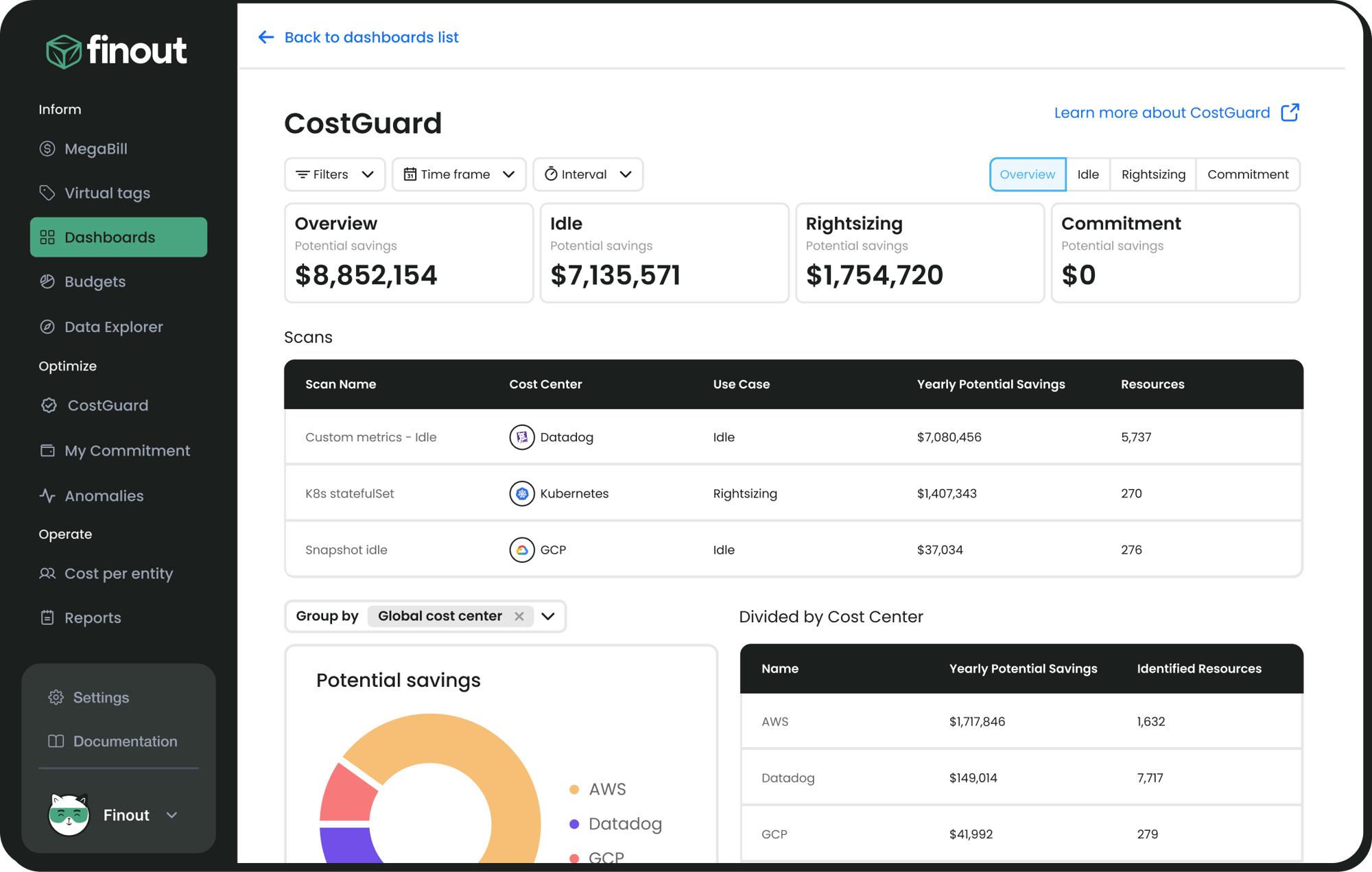
Finout normalizes AWS, Azure, GCP, Kubernetes, and SaaS billing into unit economics such as cost per customer, feature, product, or environment, enabling automated allocation and cross-cloud reporting.
Finout is the leading enterprise FinOps platform built to help companies manage and govern cloud spend at scale, empowering organizations with deep visibility, automated financial planning, and actionable insights across complex infrastructures. Supporting AWS, GCP, Azure, OCI, Kubernetes, Datadog, Snowflake, OpenAI, Anthorpic, and more, Finout enables seamless cost allocation and optimization without the need for code changes or agents.
At the core of Finout’s solution is the patented MegaBill—a holistic and 100% accurate observability layer that consolidates cloud and SaaS billing into a single, unified view. This level of transparency allows businesses to monitor costs across every service, workload, and environment with unparalleled accuracy.
Instant, AI-Powered, Virtual Tagging gives enterprises the power to allocate and track 100% of their cloud spend, even for untagged resources. Combined with shared cost reallocation and advanced financial forecasting, Finout transforms how companies understand past spend, plan for future growth, and adopt FinOps practices across the organization.
With a fixed, transparent pricing model and zero savings fees, Finout eliminates the hidden costs associated with traditional cloud cost management (CCM) tools. This ensures predictability while maximizing ROI for enterprise clients.
Trusted by Industry Leaders
Finout is trusted by global brands such as Elastic, Just Eat Takeaway, Lyft, The New York Times, CCCIS, Wiz, and Tenable. On average, Finout customers report:
| Metric | Average Customer Result |
|---|---|
| Cost Allocation | 95% on any scale |
| Annual Reduction | 15% cloud cost savings |
| Engineering Efficiency | 50% time savings |
"I highly recommend Finout to any organization seeking to optimize their cloud resource management and drive cost efficiency in dynamic Kubernetes environments. Our experience with Finout has been exceptional, and I am confident that it will continue to play a crucial role in our ongoing success."
– Vijay Kurra | Senior Manager, Cloud DevFinOps, Tenable
👁 GPI_ReviewSnippet_110251_05012025
Year founded: 2020, Tel Aviv, Israel
Finout is best fitted for enterprises with complex infrastructures that need to allocate and reallocate shared costs and then provide teams with features to govern and reduce their spending.
Pricing structure:Finout's offering has a fixed, transparent price with no savings fees of around 1% of the cloud spend.
#2. ProsperOps
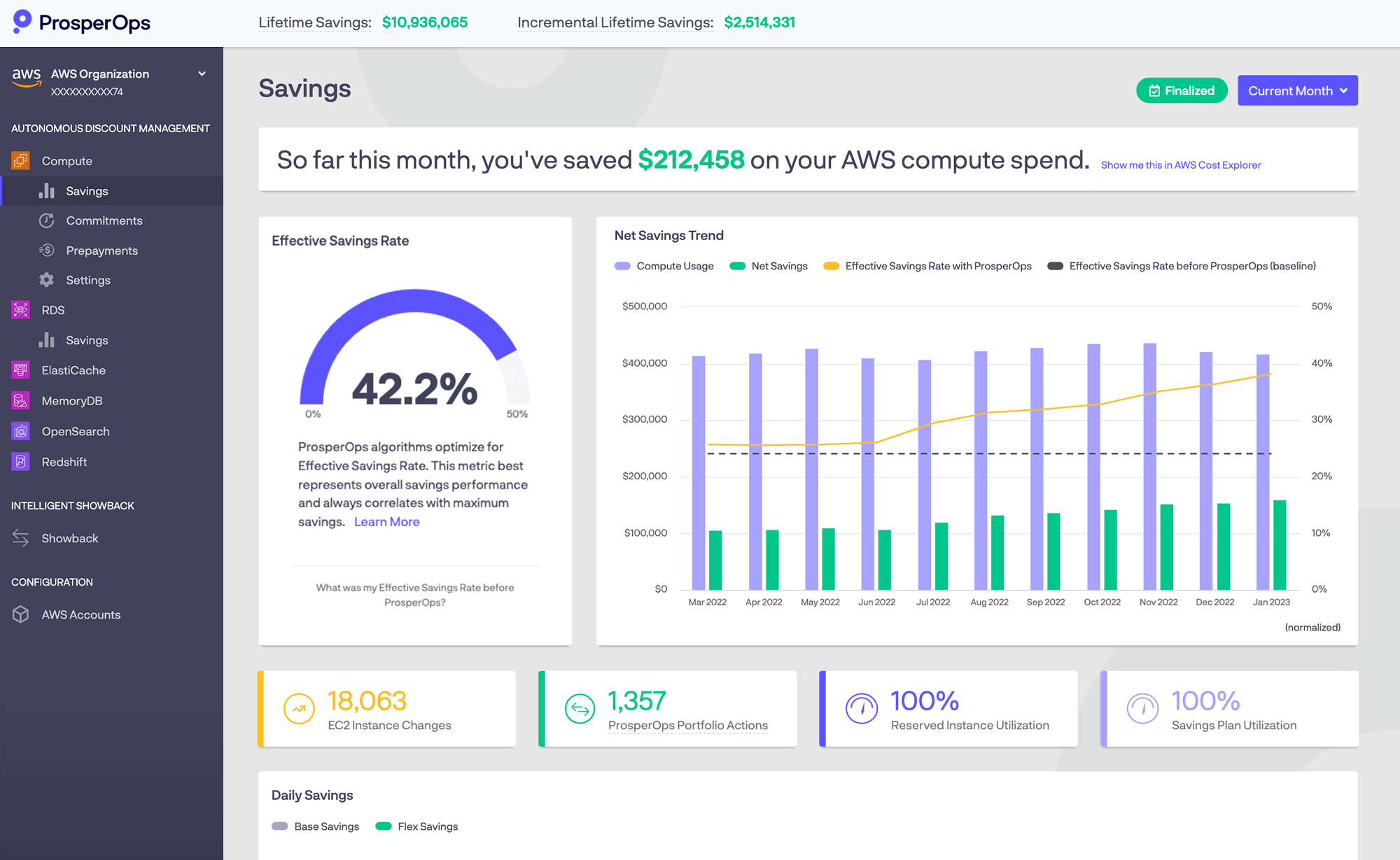
ProsperOps is a fully automated, multi-cloud cost optimization platform for AWS, Azure, and Google Cloud. It automates the management of:
- Reserved Instances (RIs)
- Savings Plans
- Committed Use Discounts (CUDs)
By using real-time usage data, it delivers continuously aligned optimization without manual intervention.
In addition to rate optimization, ProsperOps offers powerful usage optimization via ProsperOps Scheduler. This feature automatically powers down or scales back idle resources to eliminate waste and is the only resource scheduler to integrate with rate optimization. Additionally, for teams using shared scope commitments or operating across multiple business units, ProsperOps Intelligent Showback automatically reallocates savings and costs to improve financial visibility.
With a clear focus on outcome‑based pricing, ProsperOps charges only a percentage of the savings it delivers.
#3. CloudPilot AI
CloudPilot AI is an intelligent cost optimization platform for Kubernetes, helping engineering teams cut cloud spend by up to 80% while ensuring production-grade stability.
By predicting spot instance interruptions 45 minutes in advance, CloudPilot AI makes spot instances as reliable as on-demand, unlocking significant savings without added risk. It also detects overprovisioned and underutilized resources in real time, then uses AI to automatically rightsize workloads and reduce waste.
Built with production in mind, CloudPilot AI features an enhanced scheduling algorithm that improves on Karpenter by factoring in real-time prices, capacity signals, and interruption risks for smarter, more stable provisioning decisions.
#4. Densify
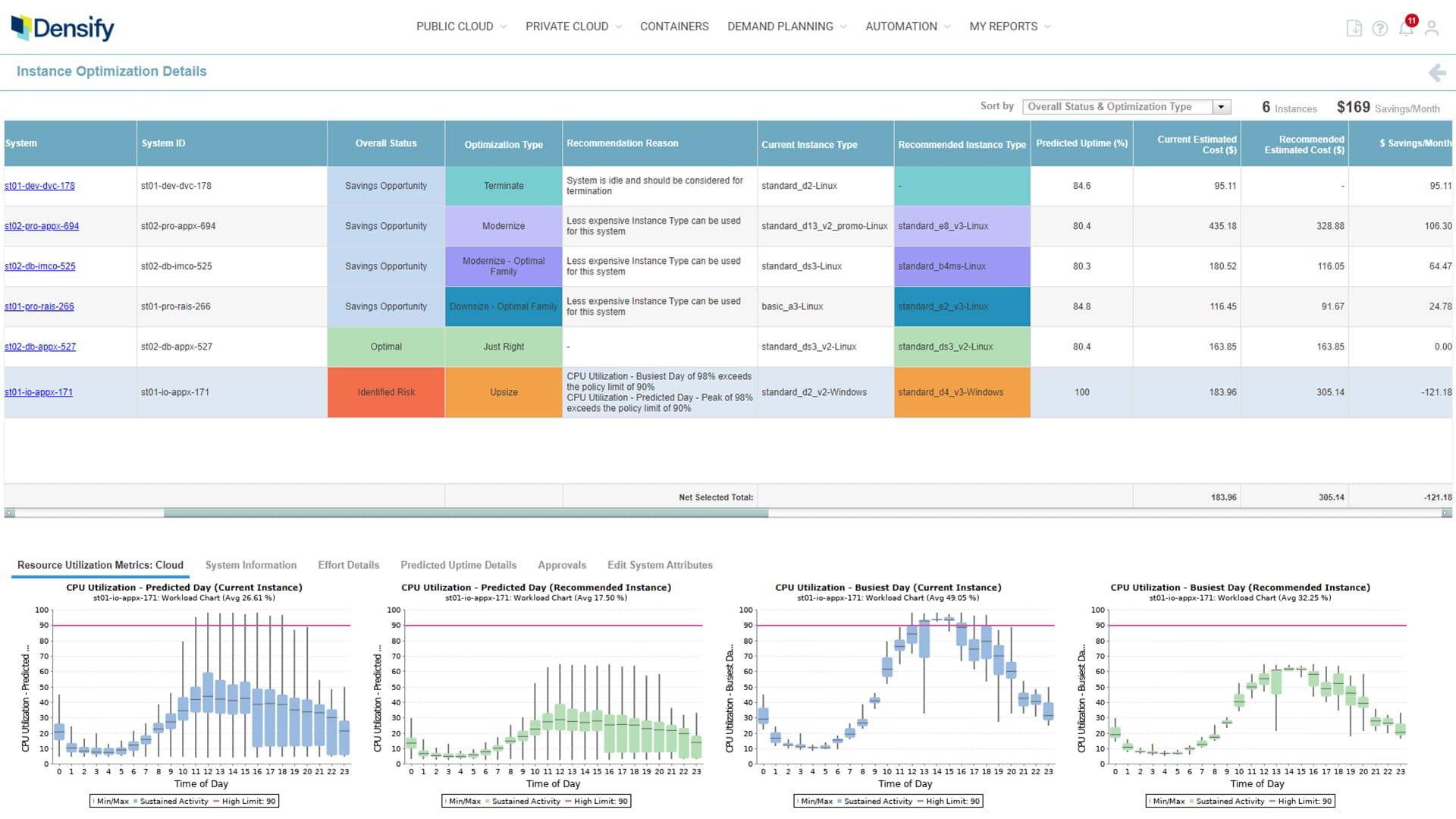
Densify leverages machine learning to identify and forecast cloud resource usage and availability, making it a powerful tool for automating cloud cost and usage optimization. Key features include instance rightsizing and intelligent scaling of cloud resource types. Densify excels in containerization, particularly with Kubernetes, by efficiently managing clusters, namespaces, quotas, and projects at scale.
Unlike other FinOps tools, Densify primarily serves cloud engineering teams, who are increasingly pressured by finance departments to report and validate their cloud resource usage. The platform is suitable for single-, hybrid-, and multi-cloud environments, including IBM Cloud and container services like Red Hat and Kubernetes.
#5. Spot by NetApp
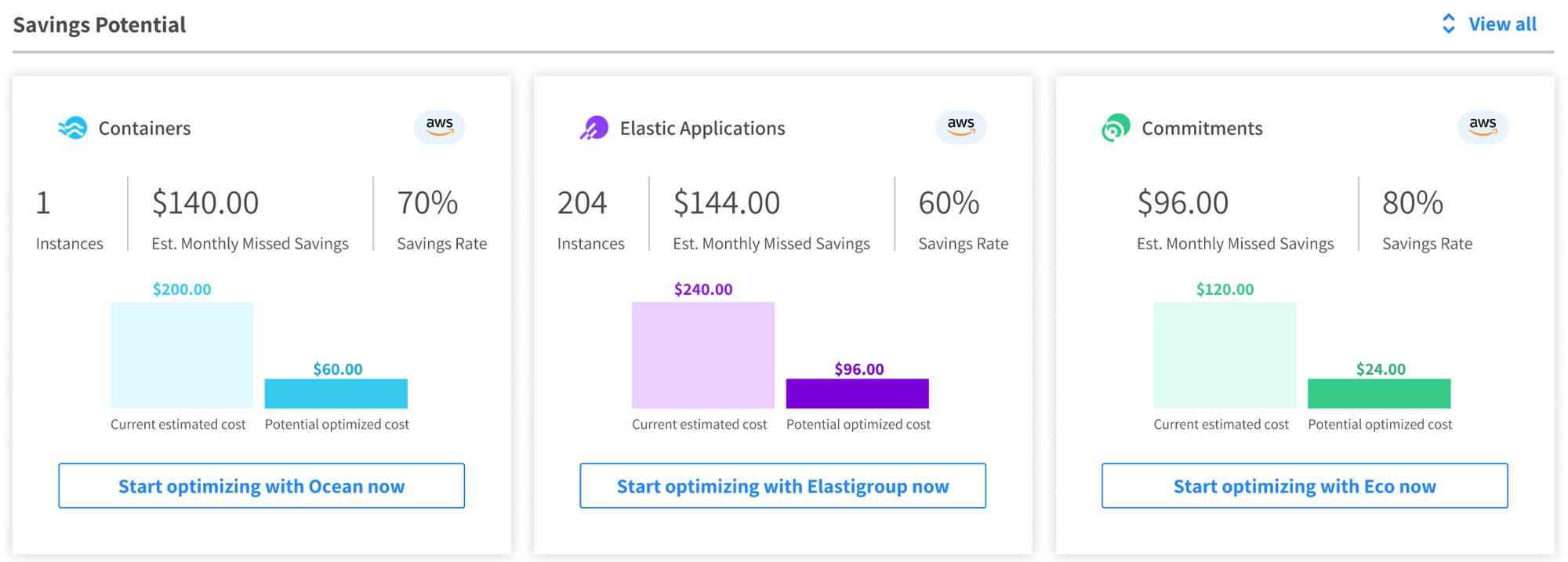
Spot by NetApp provides cloud cost and usage transparency for AWS, GCP, and Azure. Since its acquisition by NetApp in 2020, Spot has enhanced its capabilities, offering advanced cloud storage and compute optimization. This acquisition has enabled the development of a comprehensive CloudOps platform that provides a wide range of data and cloud management services. Spot primarily serves large enterprises and managed service providers needing extensive cloud solutions.
#6. Ternary
👁 Team-Leader-Dashboard-Outline
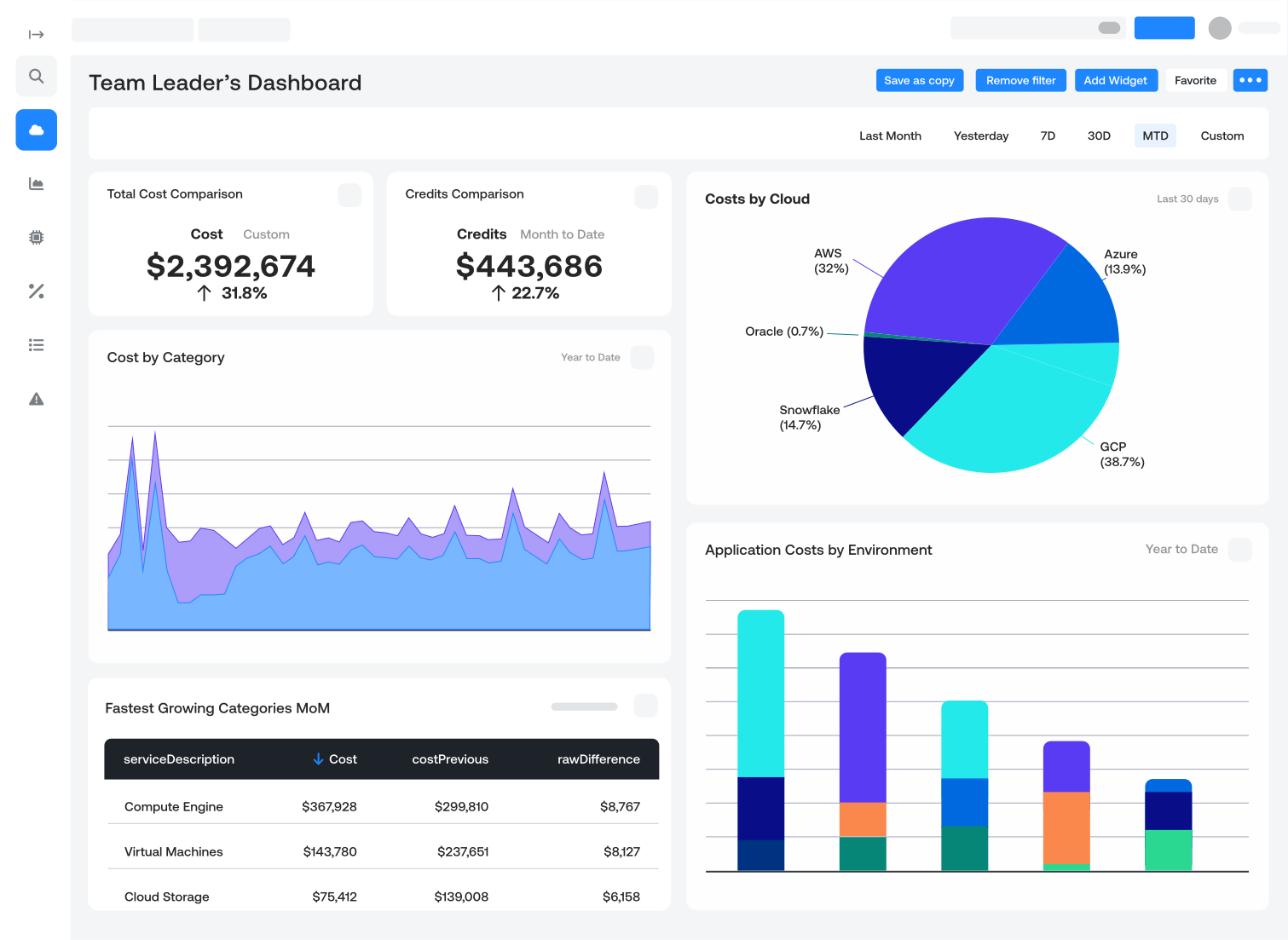
Ternary is a cloud cost optimization platform built to help teams monitor, manage, and reduce spend across AWS, GCP, and Azure. Purpose-built for FinOps teams, Ternary is also a strong player in the MSP market, offering multi-tenant features and flexible controls for managed service providers supporting multiple end customers.
#7. CloudHealth by VMware
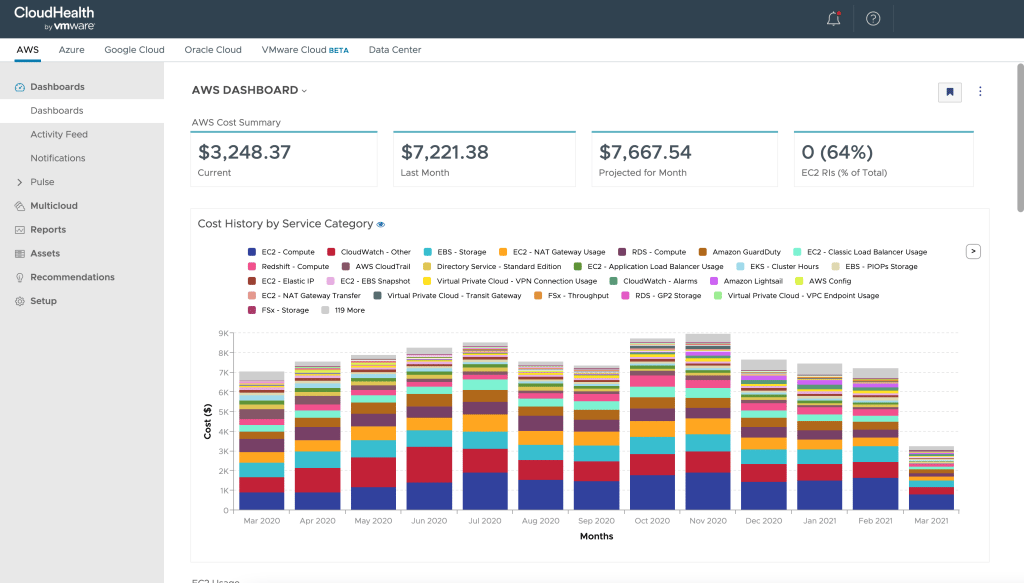
*CloudHealth was bought by VMware and Broadcom, which today is widely considered a legacy solution.
CloudHealth leverages advanced analytics and automation to optimize cloud costs and usage, making it an effective tool for managing multi-cloud environments. Key features include cost allocation, budget tracking, and performance monitoring. CloudHealth excels in providing comprehensive visibility and control over cloud resources, particularly across AWS, GCP, and Azure.
#8. Cloudability IBM
👁 Apptio Cloudability dashboard
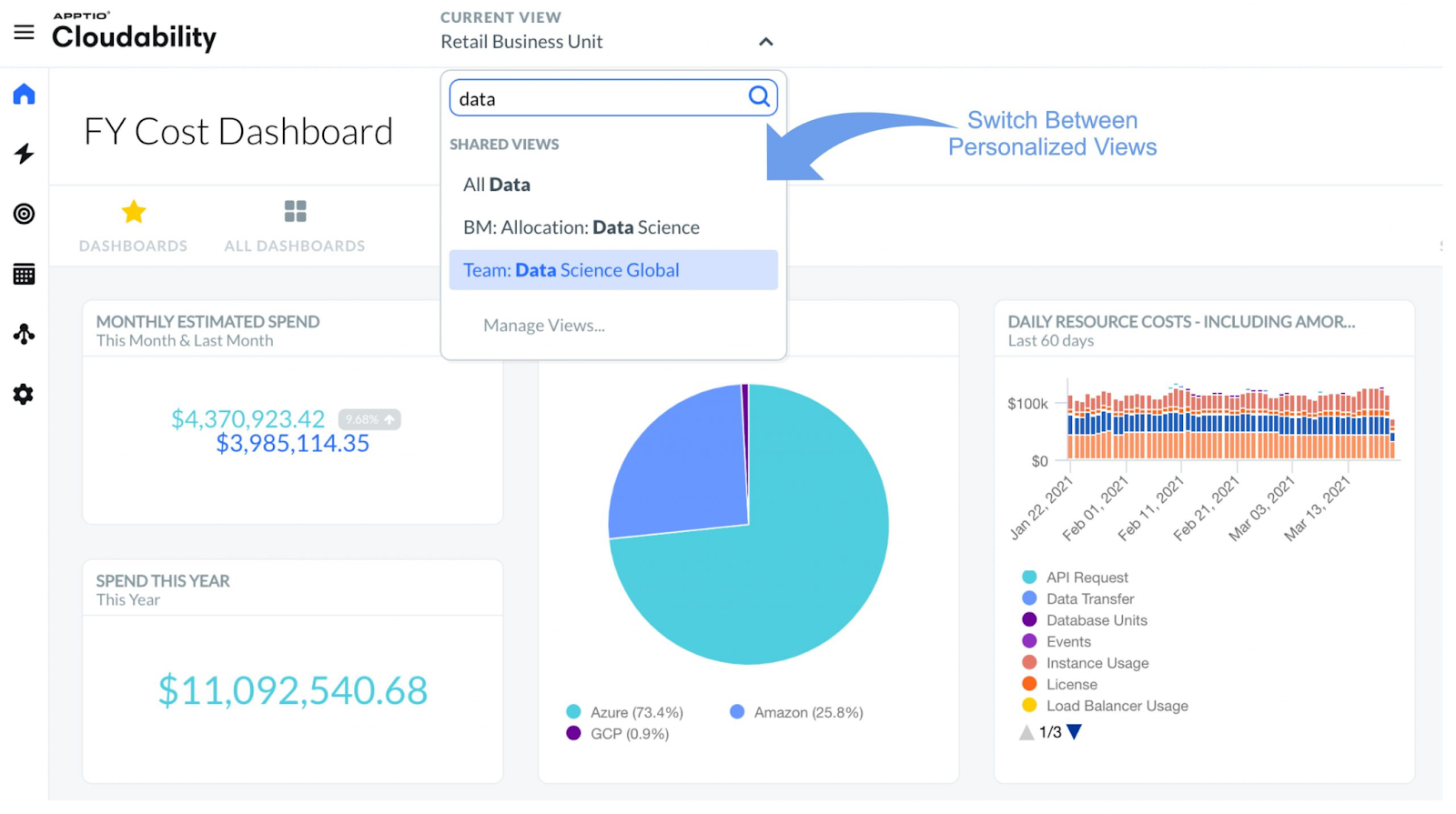
Cloudability is a platform designed to analyze and optimize AWS, GCP, and Azure usage and spending. As a certified FinOps platform by Apptio, Cloudability aims to unite IT, finance, and DevOps teams to optimize cloud usage, enhance service delivery, and reduce costs. It is one of the few platforms that specifically aligns with the FinOps framework, catering primarily to large enterprises and leading cloud adopters.
#9. Yotascale
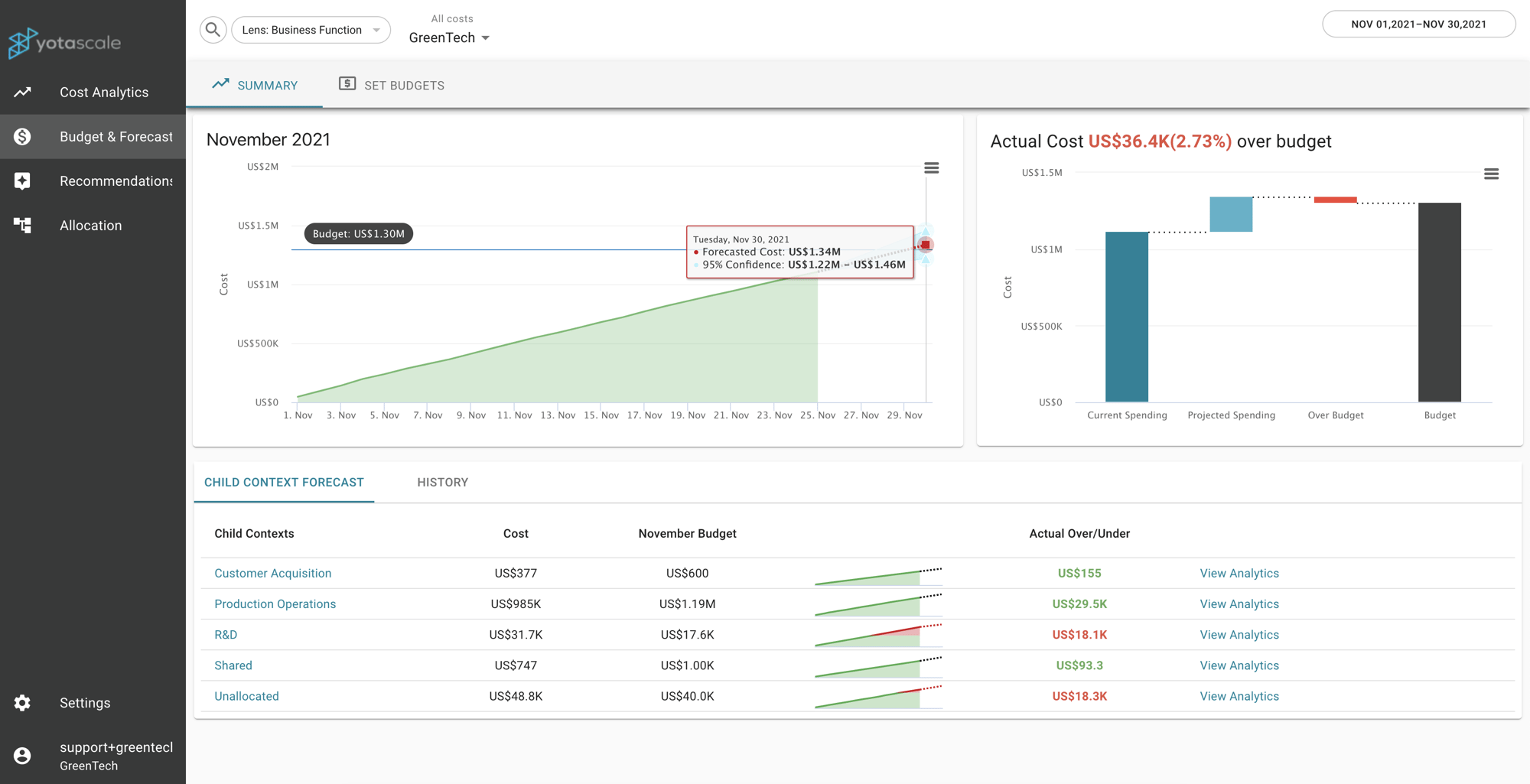
Yotascale leverages machine learning and advanced analytics to optimize cloud costs and resource utilization, making it a powerful tool for managing dynamic cloud environments. Key features include real-time cost allocation, anomaly detection, and predictive analytics. Yotascale excels in providing granular insights and automated recommendations, particularly for AWS, Azure, and GCP.
#10. Granulate
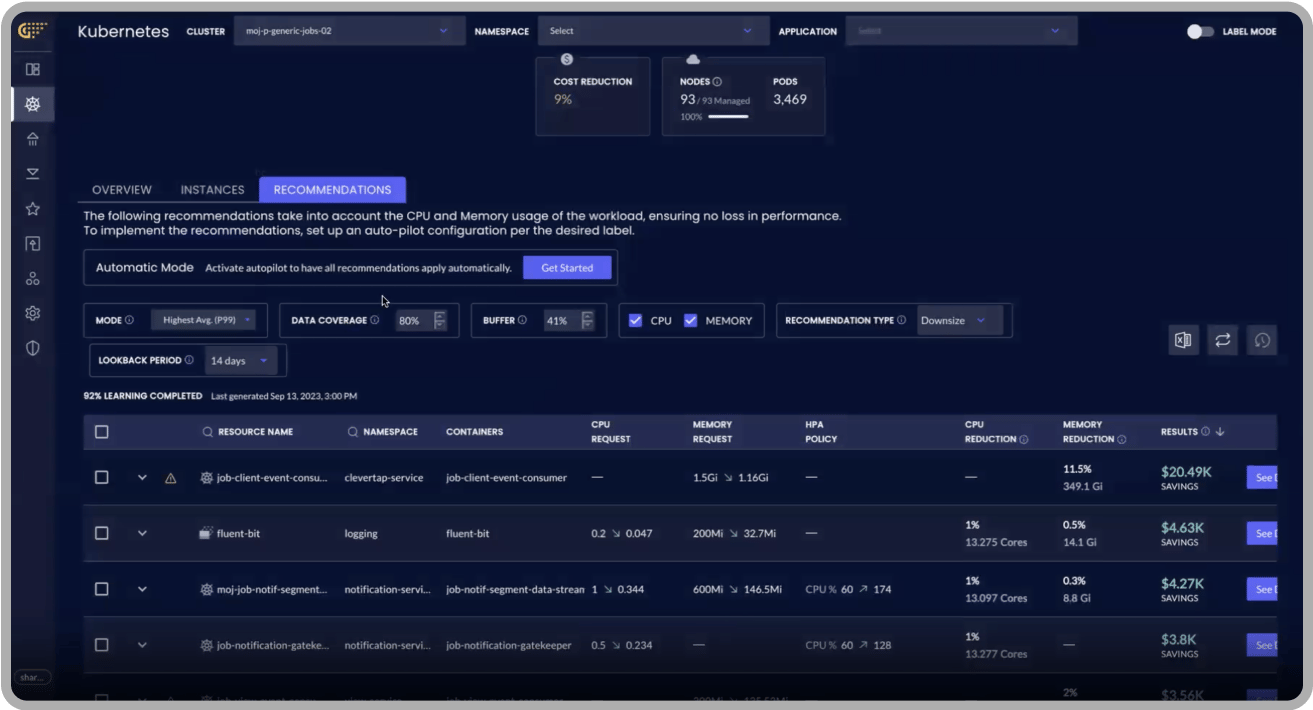
Granulate leverages real-time continuous optimization to enhance cloud performance and reduce costs, making it an essential tool for high-performance computing environments. Key features include workload optimization, latency reduction, and resource efficiency. Granulate excels in providing autonomous optimization, particularly for AWS, Azure, and GCP.
#11. Cast.AI
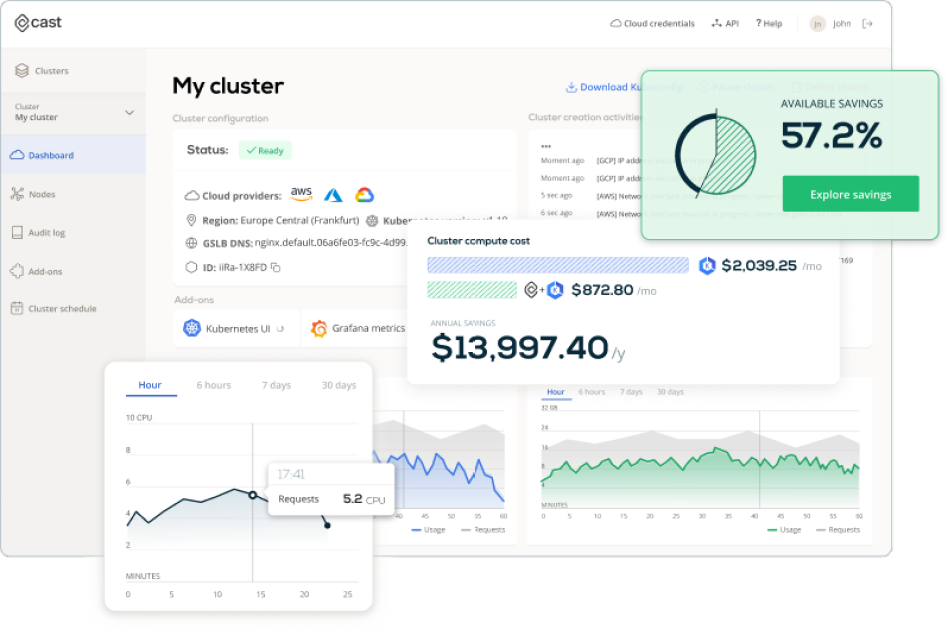
Cast.AI leverages artificial intelligence and automation to optimize cloud costs and manage resources, making it a vital tool for dynamic and scalable cloud environments. Key features include cost optimization, workload automation, and multi-cloud support. Cast.AI excels in providing real-time insights and automated cost-saving recommendations, particularly for AWS, Azure, and GCP.
#12. Pelanor
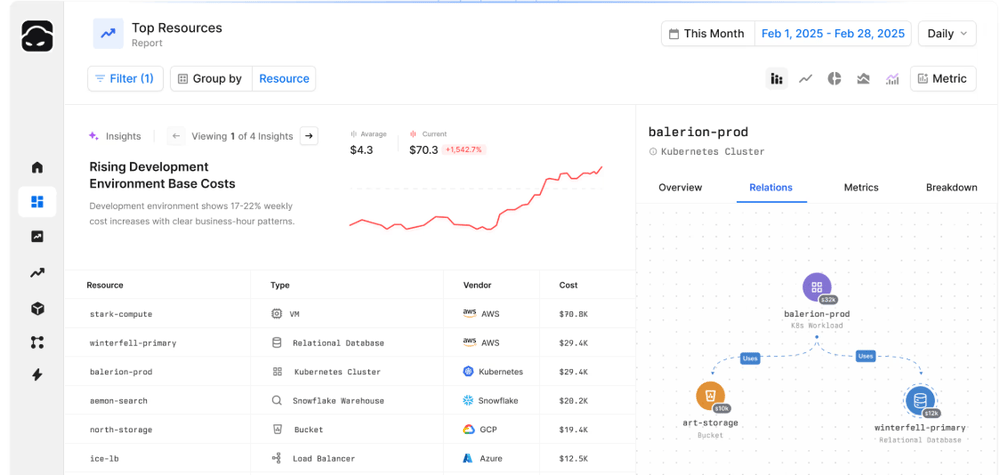
Pelanor leverages advanced analytics and automation to streamline Kubernetes cost allocation and enhance cloud financial visibility, making it a powerful enabler for modern FinOps practices. Key capabilities include dynamic cost breakdowns by namespace, label, or service, real-time usage monitoring, and seamless integration with popular observability and billing tools.
#13. Usage.AI
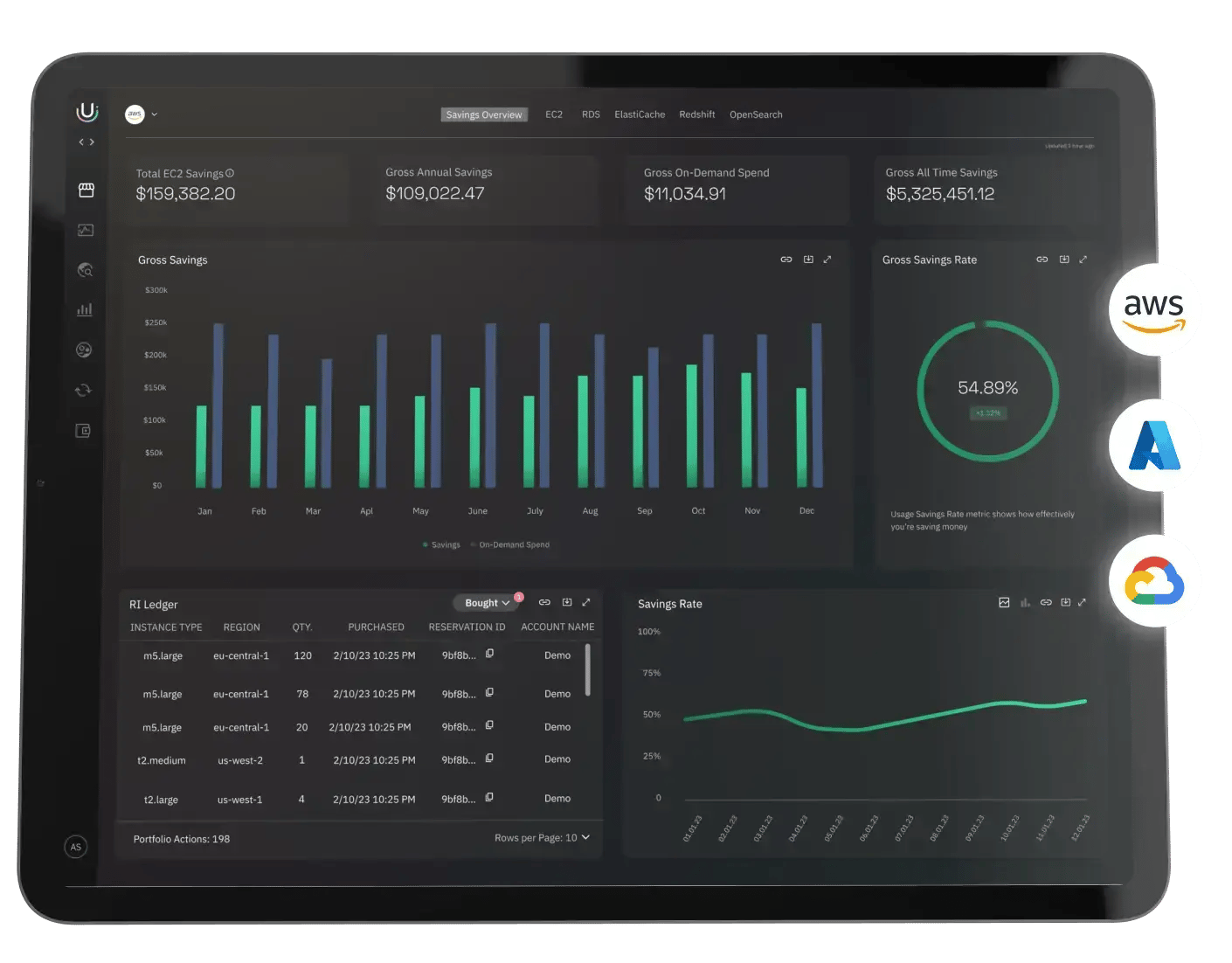
Usage.AI leverages machine learning and automation to optimize cloud costs and resource utilization, making it an essential tool for efficient cloud management. Key features include real-time cost tracking, intelligent instance resizing, and automated budget controls. Usage.AI excels in providing precise cost-saving recommendations and optimizing cloud resources, particularly for AWS, Azure, and GCP.
#14. AWS Cost Explorer
👁 aws-cost-explorer-cloud-cost-intelligence
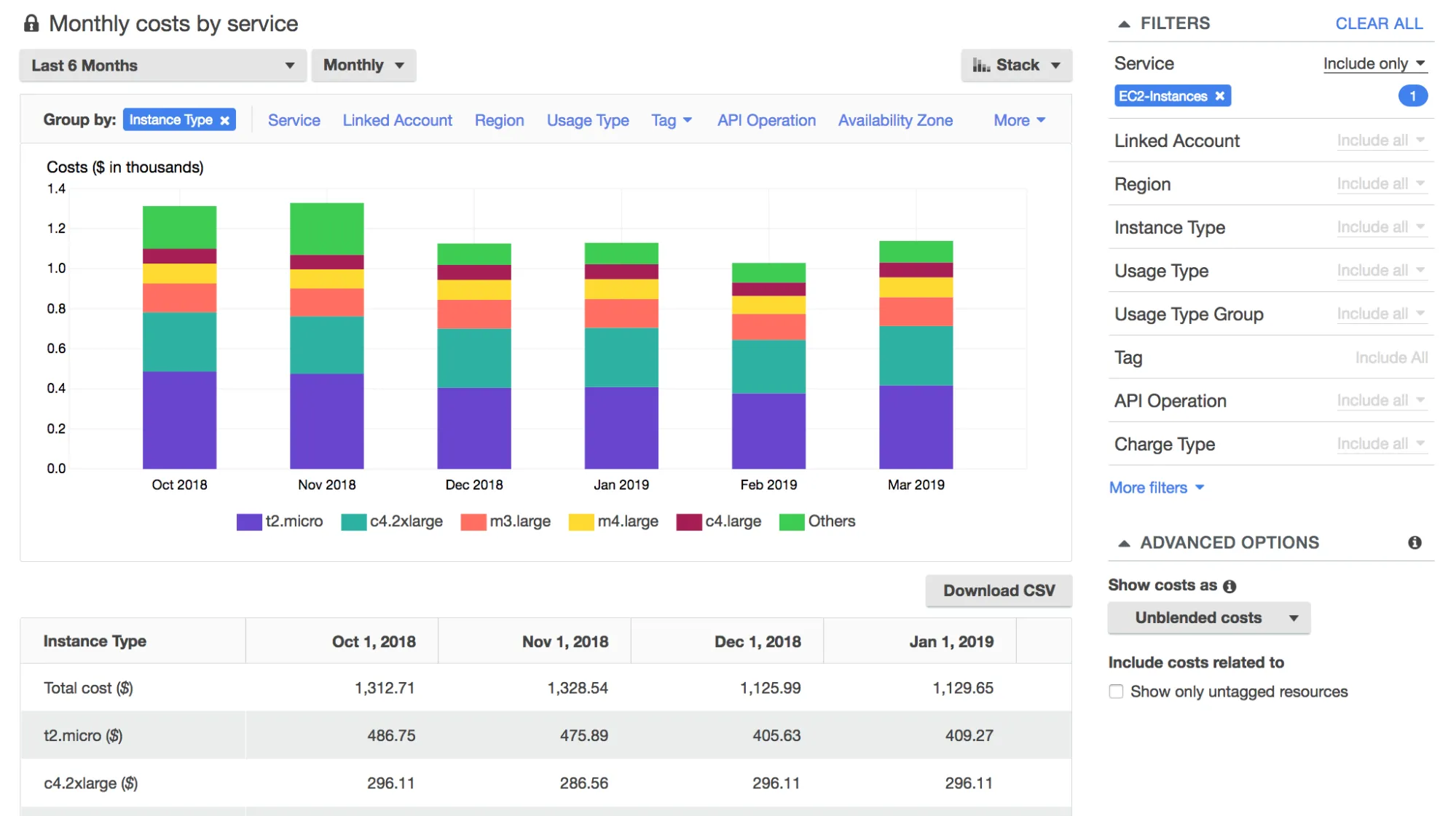
AWS Cost Explorer provides detailed cost analysis and visualization for organizations utilizing AWS cloud services, making it an essential tool for cloud financial management. Within the broader AWS billing ecosystem, it sits alongside CUR, Data Exports, Quick Sight, and Consolidated Billing, as outlined in the FinOps Foundation’s multi-cloud tools and terminology matrix.
It is a strong starting point for single-account or AWS-centric visibility, but multi-cloud environments and cross-team governance use cases usually require a dedicated FinOps platform.
#15. Datadog
👁 10 Best Datadog Alternatives to Consider in 2024 | Better Stack Community
Datadog offers powerful cloud monitoring and observability solutions that integrate with FinOps to provide detailed insights into cloud performance and cost management. Key features include real-time monitoring, customizable dashboards, and automated cost analysis.
#16. GCP Cost Management
👁 Cost management tools in Google Cloud Console | Google Cloud Blog
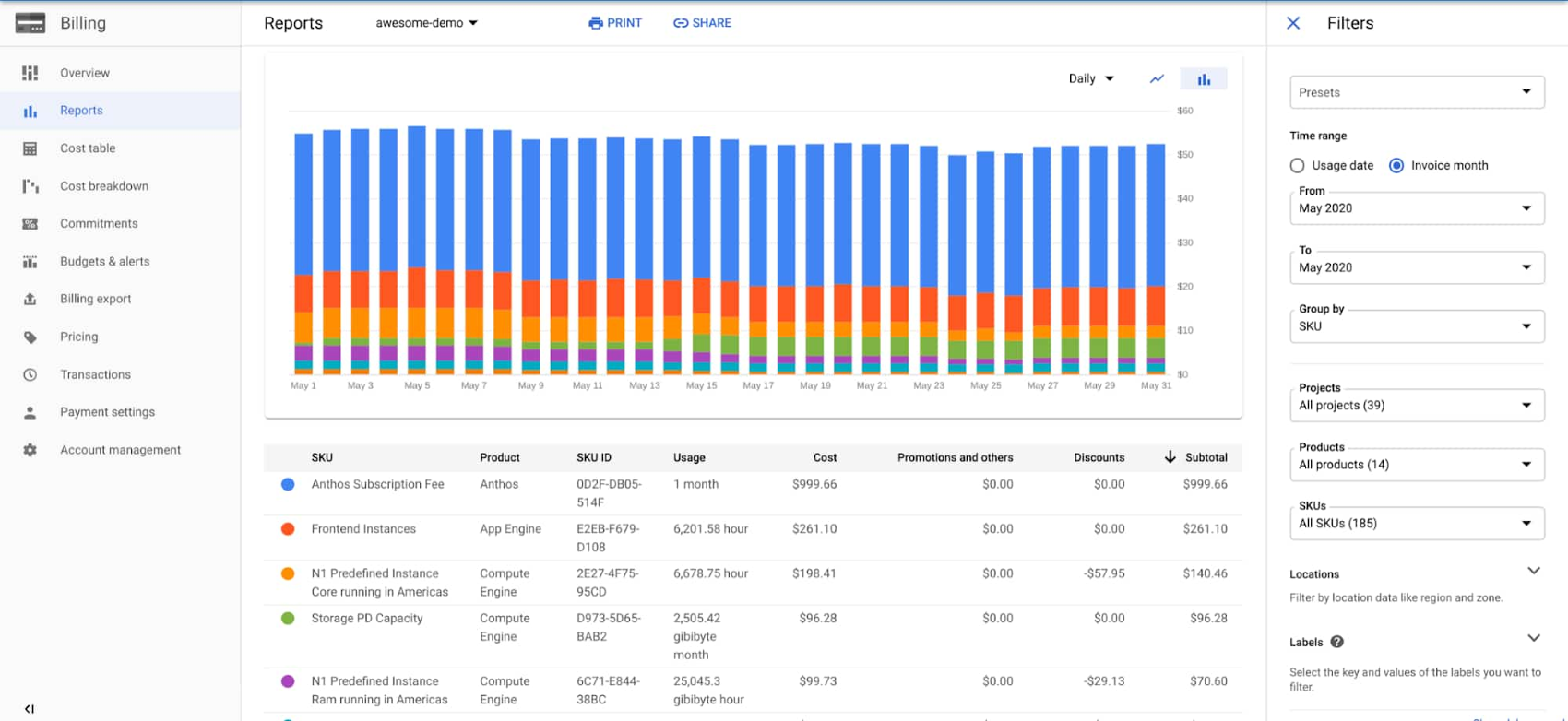
GCP Cost Management offers native cloud cost management and optimization for organizations using Google Cloud Platform (GCP). A major differentiator is billing export to BigQuery in standard, detailed, and pricing schemas, plus support for custom reporting through Looker Studio, as noted in the FinOps Foundation’s multi-cloud tools and terminology matrix.
For GCP-only environments, that can be a strong native foundation. For broader multi-cloud visibility and governance, most teams still need a dedicated FinOps platform.
#17. Azure Cost Management and Billing
👁 Microsoft Cost Management | Microsoft Azure
Azure Cost Management and Billing offers a comprehensive suite of tools for tracking, managing, and optimizing cloud costs within Microsoft Azure environments. Its native strengths include REST APIs across multiple dimensions with fine-grained filtering, scheduled exports via the Cost Management API, and analytical integrations with Power BI and Azure Synapse, as highlighted in the FinOps Foundation’s multi-cloud tools and terminology matrix.
That makes it a practical option for Azure-centric organizations, but companies managing spend across multiple providers usually outgrow native-only tooling and move to a dedicated FinOps platform.
#18. Kubecost
Kubecost is a cloud cost monitoring and optimization tool specifically designed for Kubernetes environments. Key features include real-time cost allocation, resource usage insights, and automated recommendations for optimizing Kubernetes clusters.
#19. Flexera
👁 IT and Cloud Management, Optimization and Solutions | Flexera
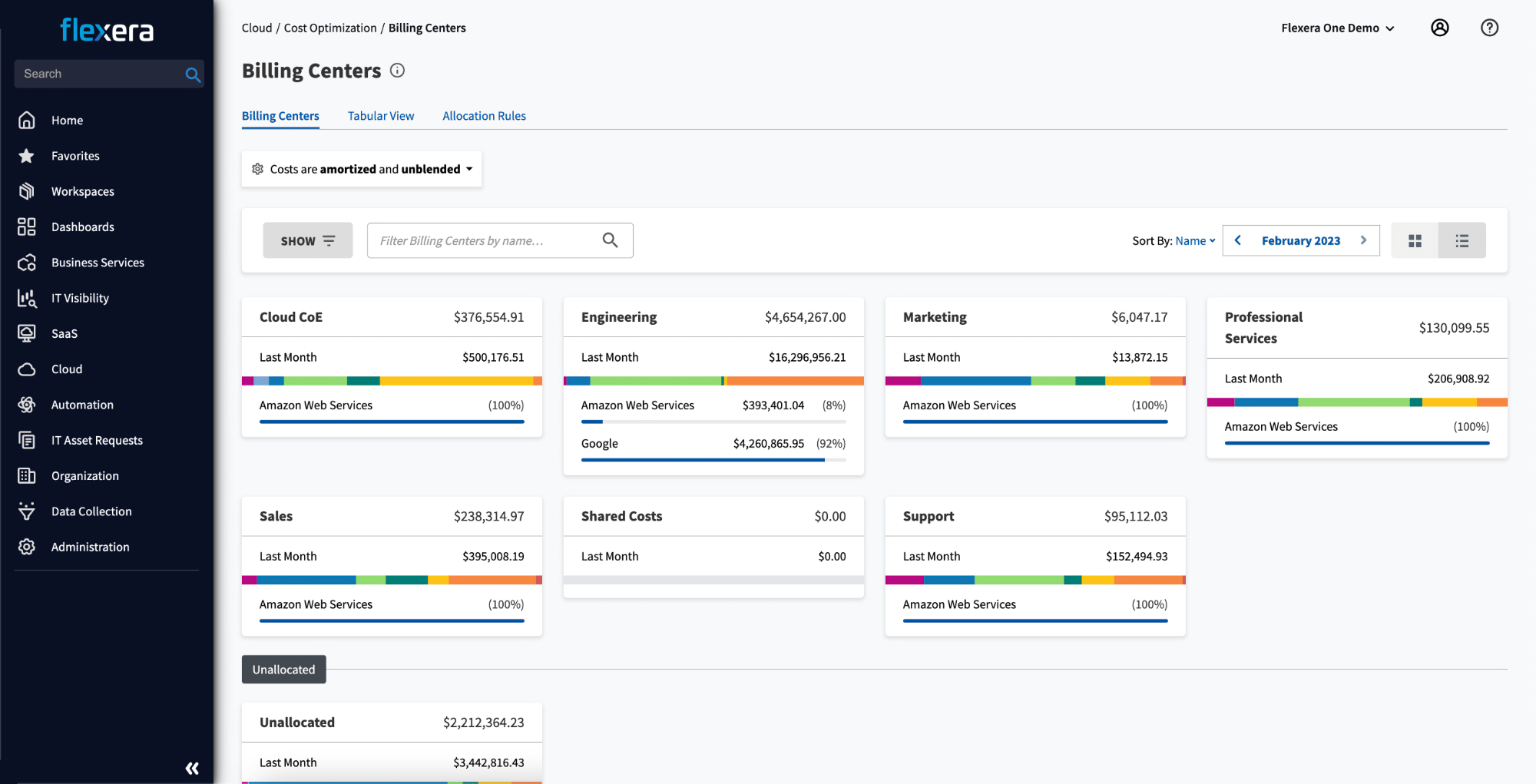
Flexera provides comprehensive cloud cost management and optimization across both cloud and on-premise infrastructures. Key features include asset visibility, license optimization, and compliance monitoring.
#20. Anodot
Anodot uses AI-driven anomaly detection to continuously monitor cloud costs and identify irregularities. Key features include real-time monitoring, automated alerts, and advanced analytics.
#21. Xosphere Instance Orchestrator
👁 XoSphere Instance Orchestrator Reviews & Ratings 2024

Xosphere Instance Orchestrator leverages automation and machine learning to dynamically switch between spot instances and other instance types. Key features include real-time instance management, cost optimization, and workload balancing.
#22. Zesty
Zesty is an automated cloud optimization platform that dynamically adjusts cloud resources in real time to match actual workload demand. Supporting AWS, Azure, and GCP, Zesty continuously rightsizes compute and storage without manual intervention. Its flagship feature, Zesty Disk, automatically expands or shrinks storage volumes based on utilization.
#23. Vantage
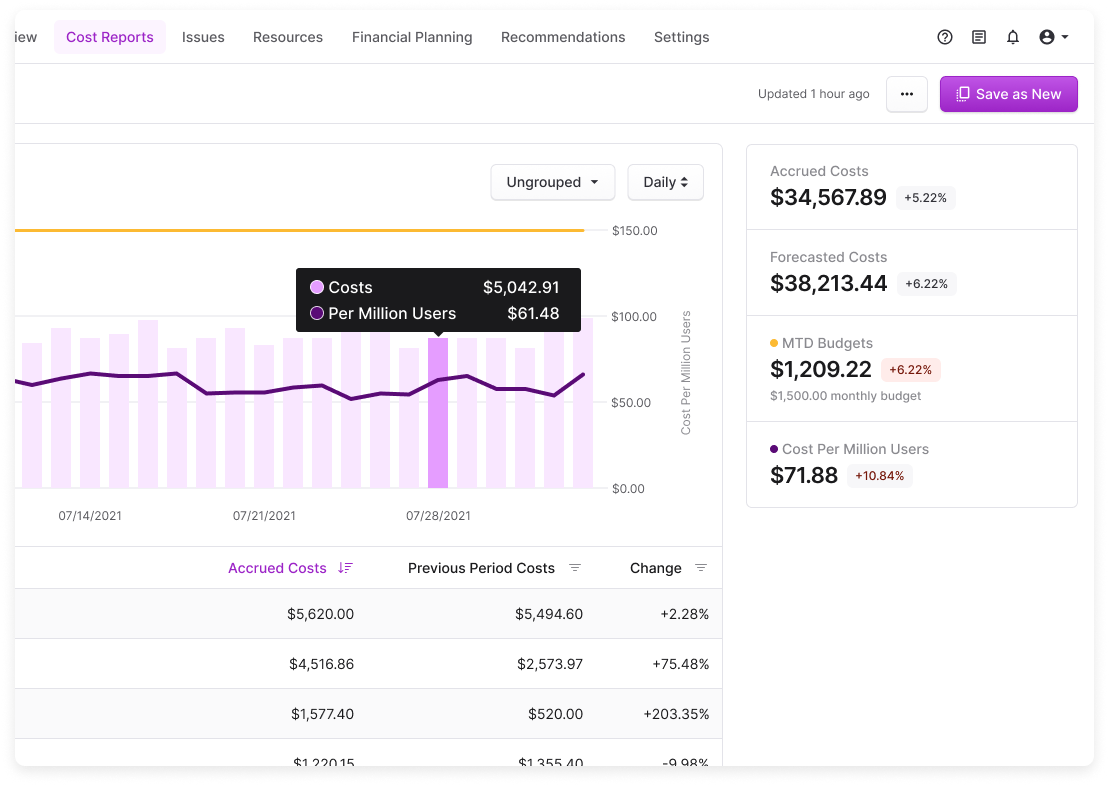
Vantage is a modern, multi-cloud cost management platform designed to give engineering, finance, and FinOps teams deep visibility and actionable insights into cloud spend. Supporting AWS, Azure, Google Cloud, and Kubernetes, Vantage centralizes cost data across providers and services.
#24. Crayon
Crayon is a global FinOps and cloud cost optimization provider that helps enterprises reduce spend across AWS, Azure, Google Cloud, and hybrid environments. Its platform combines cloud cost analytics with managed FinOps services.
#25. Umbrella
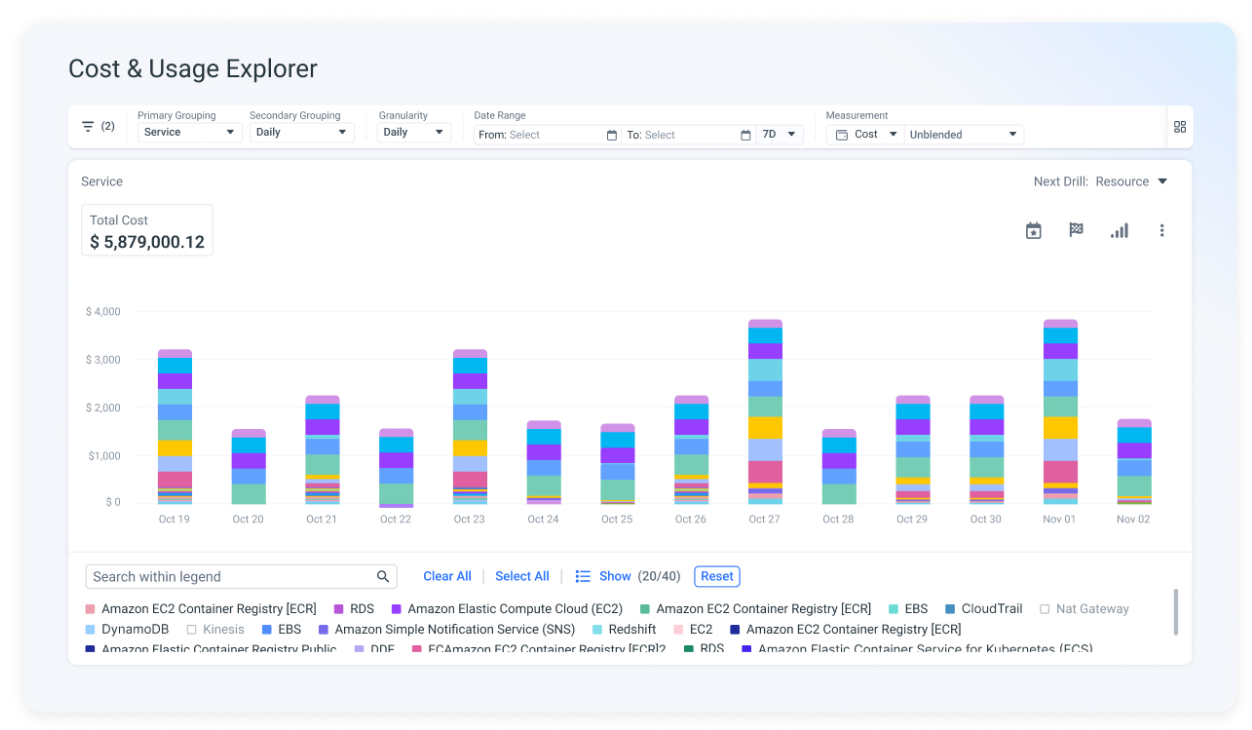
Umbrella is a multi-cloud and Kubernetes cost management platform that combines AI-driven insights with a user-friendly interface. Its standout feature is CostGPT, an AI assistant that lets users query cloud spend in natural language.
#26. Harness Cost Management
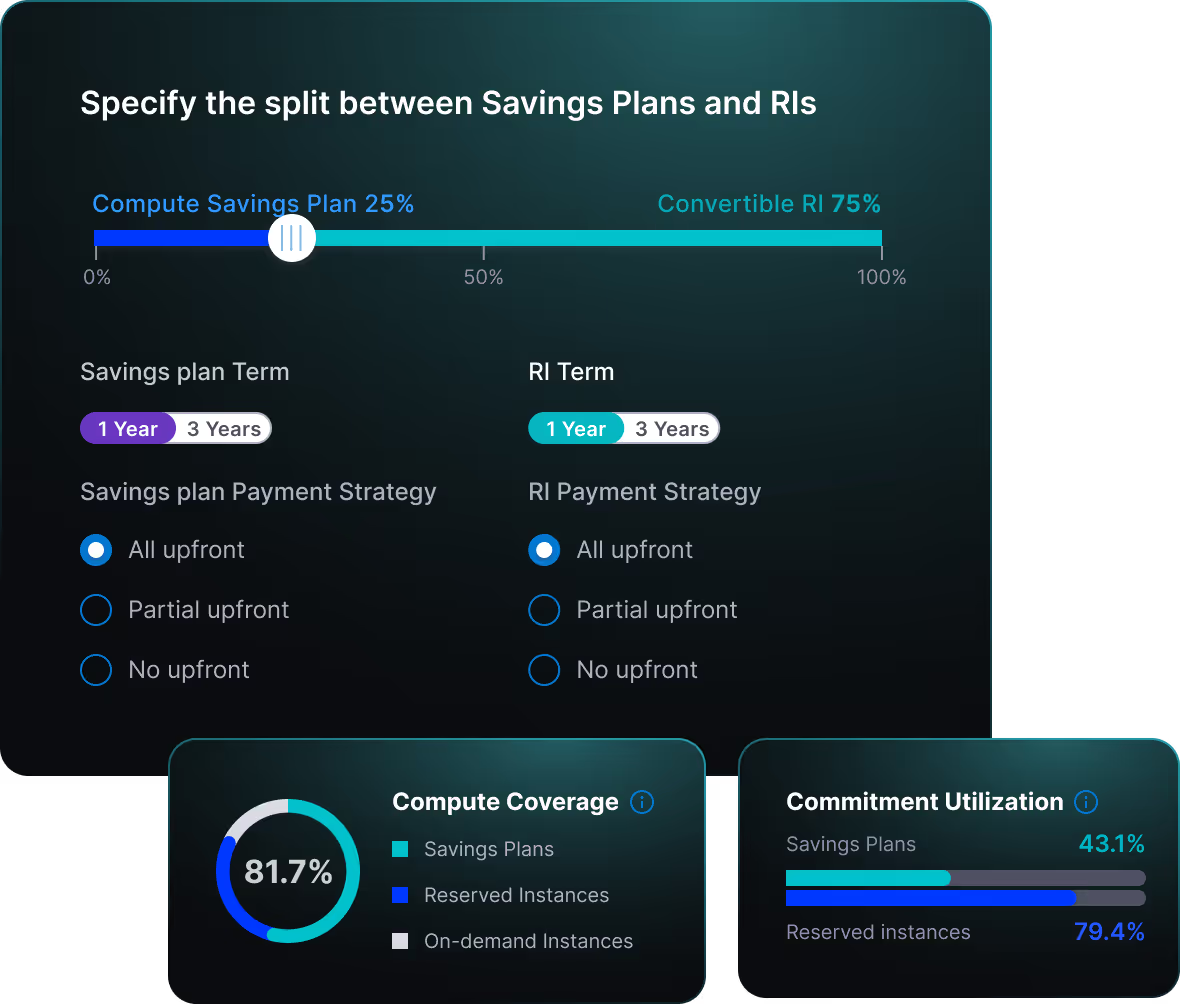
Harness Cost Management extends the Harness software delivery platform with robust FinOps capabilities across AWS, Azure, GCP, and Kubernetes. It provides real-time cost visibility for engineering teams, surfacing anomalies and optimization opportunities directly within developer workflows.
#27. CloudCustodian
CloudCustodian is an open-source, policy-as-code engine that enables organizations to govern cloud environments and control costs at scale. Supporting AWS, Azure, and GCP, it lets teams define rules in simple YAML files to enforce tagging, rightsizing, and shutdown schedules.
#28. CloudCheckr CMx
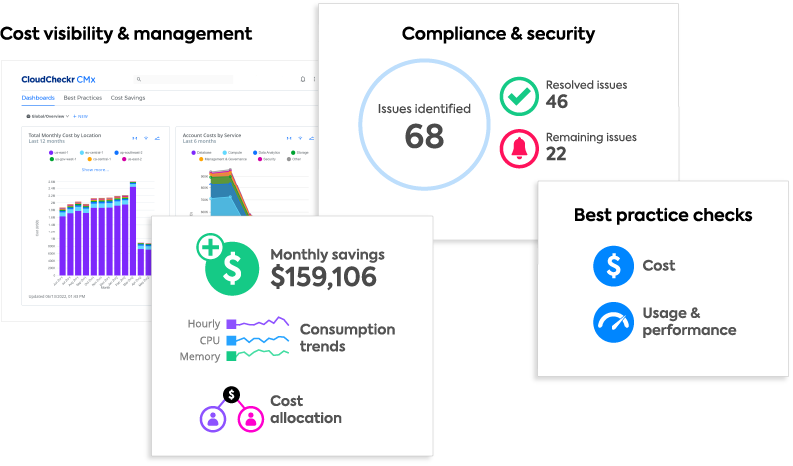
CloudCheckr CMx, now part of Spot by NetApp, is a comprehensive cloud management platform that helps enterprises optimize costs, maintain security, and ensure compliance across AWS, Azure, and GCP.
#29. Apptio
Apptio, best known for its Cloudability platform, is a leading enterprise FinOps tool that provides deep visibility and financial accountability across multi-cloud environments. It stands out for its strong financial governance and enterprise-grade reporting.
#30. nOps
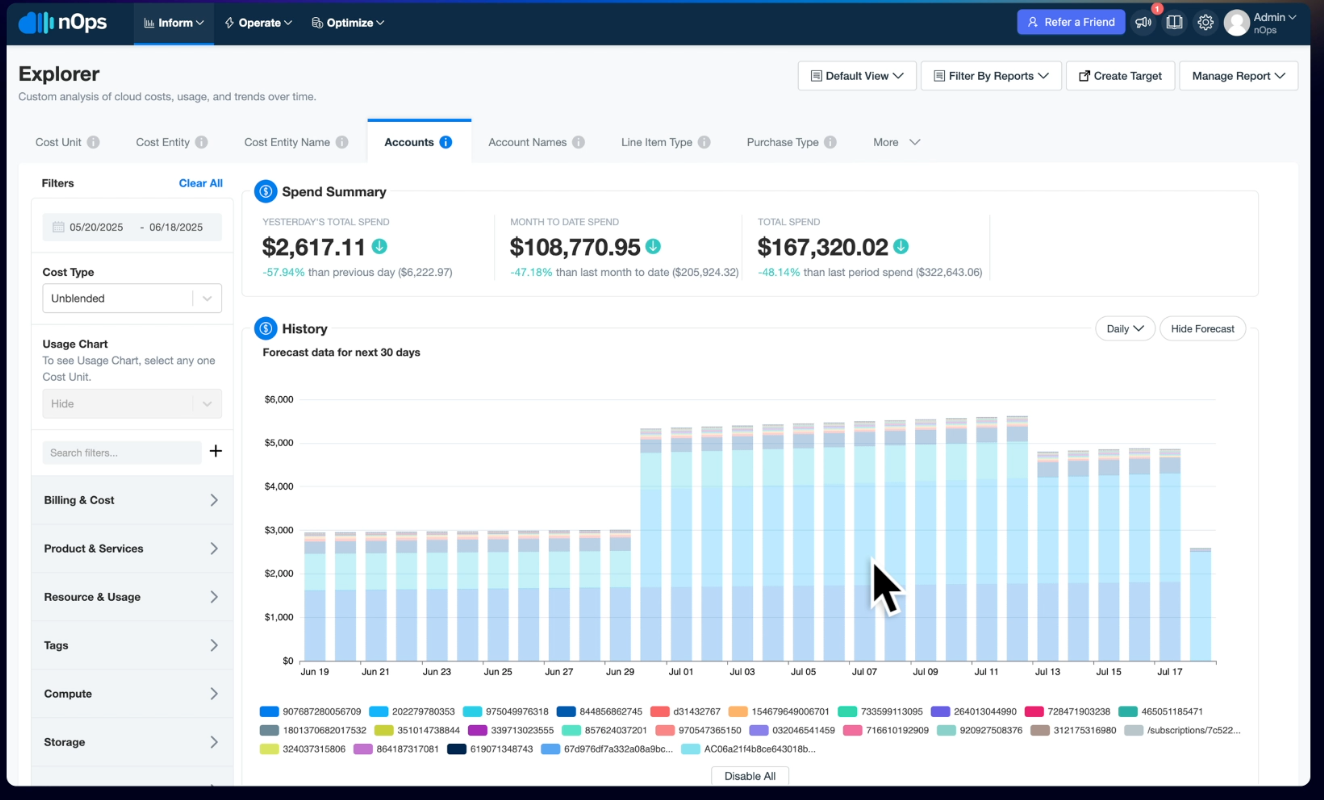
nOps is a FinOps platform purpose-built for AWS environments, offering automated cost optimization, compliance monitoring, and workload governance.
#31. Holori
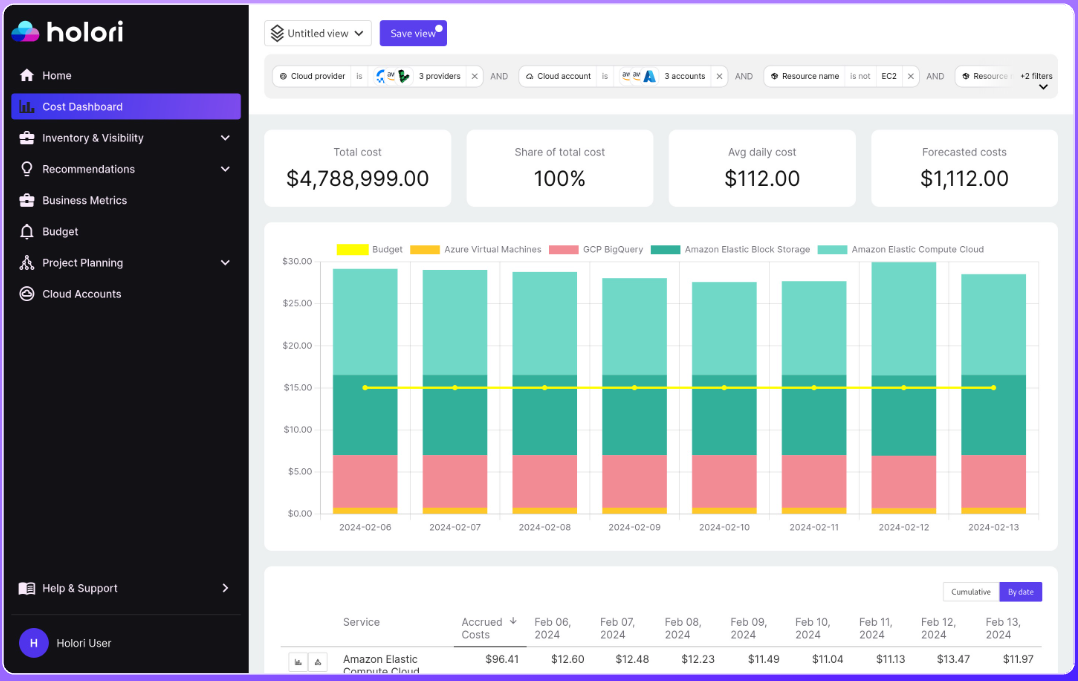
Holori is a visual FinOps and cloud cost management tool that simplifies cloud architecture and cost analysis through interactive infrastructure diagrams.
#32. Certero
Certero is a unified IT asset management and FinOps platform that delivers end-to-end visibility of cloud and software costs. It brings together software license management, SaaS optimization, and cloud cost management.
#33. ManageEngine CloudSpend
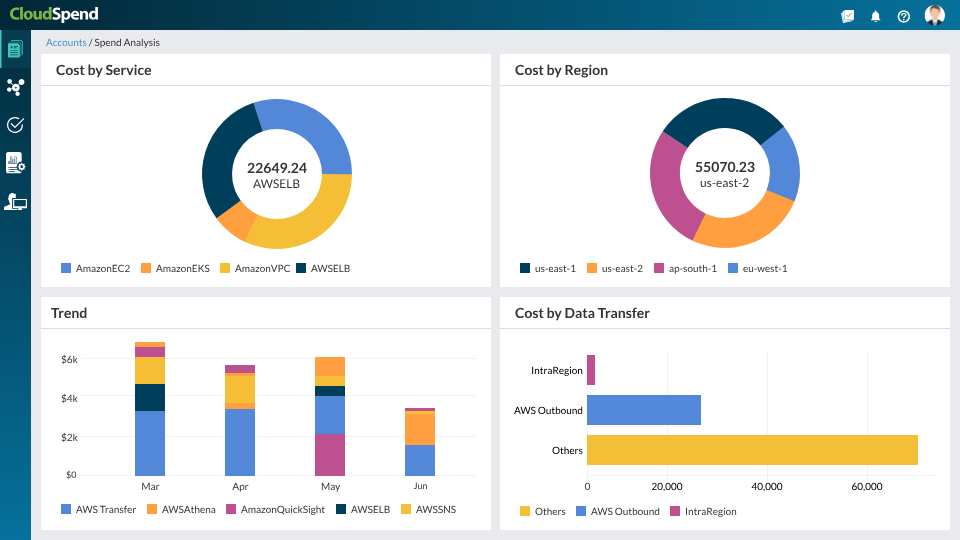
ManageEngine CloudSpend is a FinOps tool designed for SMBs and mid-sized enterprises that need straightforward cloud cost visibility and optimization.
#34. CloudKeeper
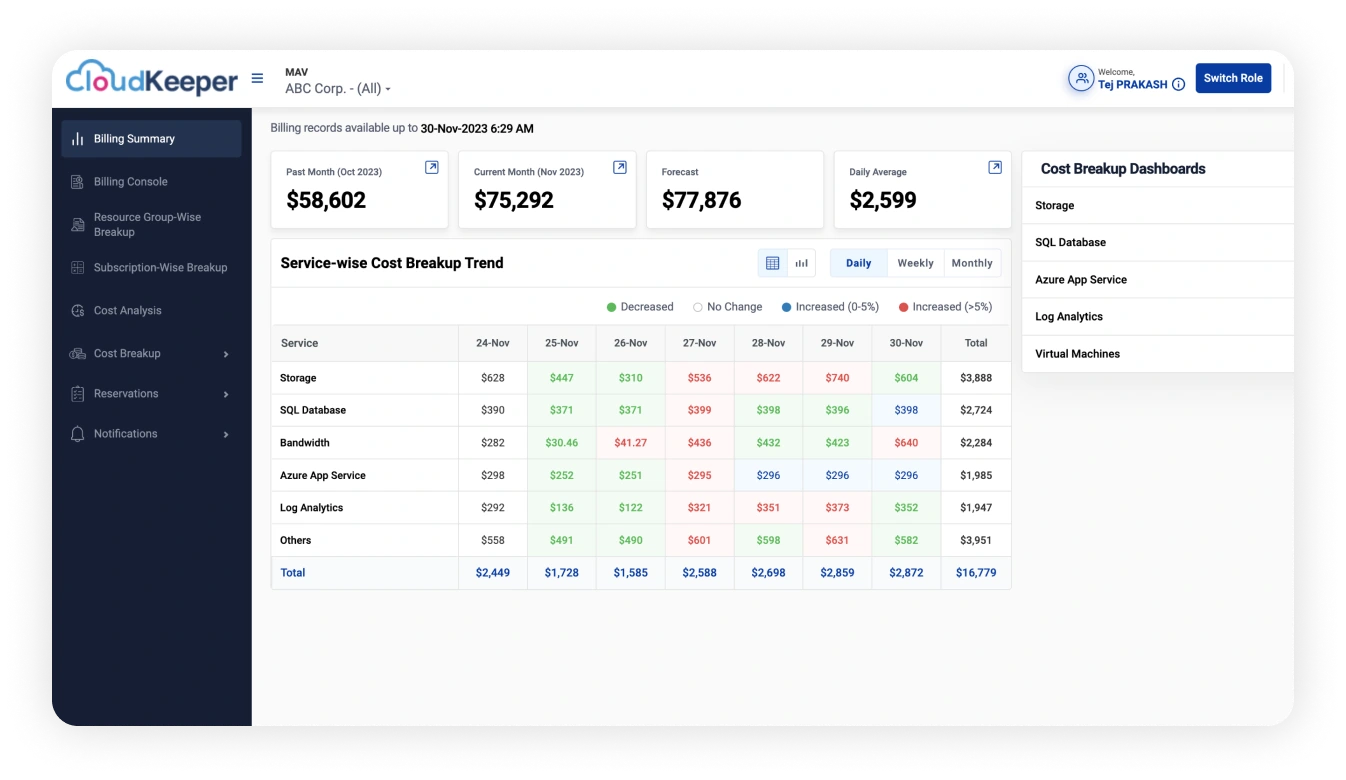
CloudKeeper is a cost optimization platform that combines software automation, expert advisory, and group-buying strategies to deliver guaranteed cloud savings.
#35. Vertice
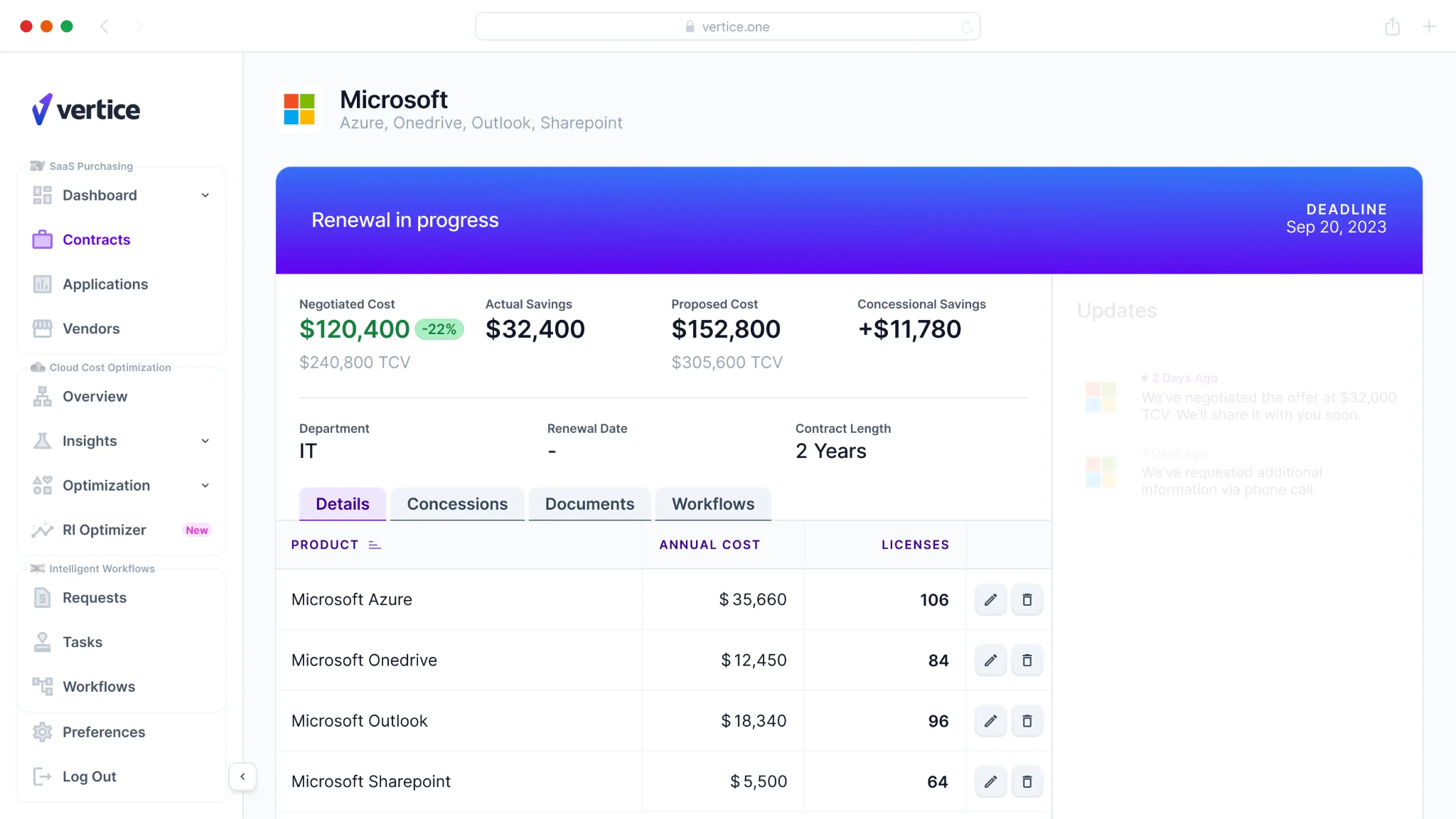
Vertice is a SaaS and cloud spend optimization platform that helps organizations control both infrastructure and software costs.
#36. ServiceNow IT Asset Management
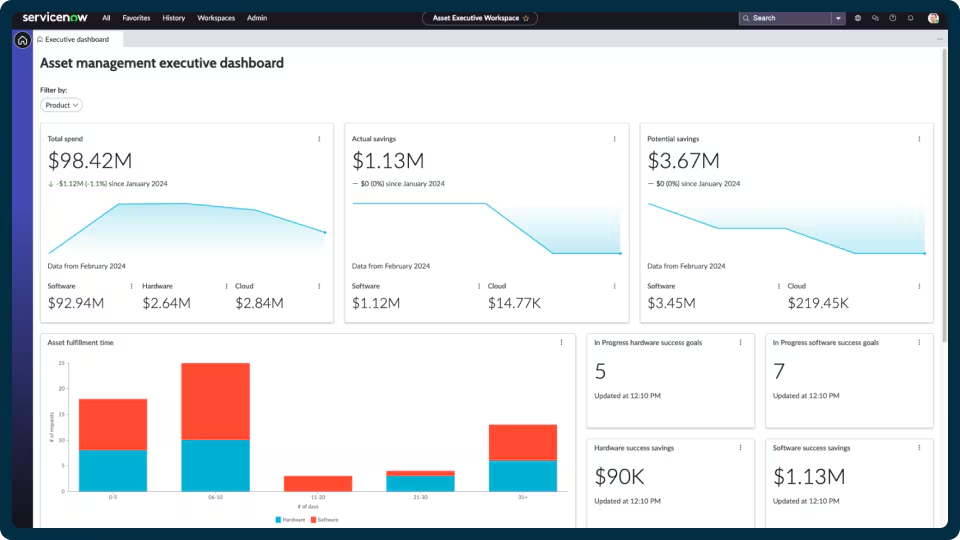
ServiceNow IT Asset Management extends the ServiceNow platform to provide visibility and control over cloud costs alongside traditional IT assets.
#37. Amazon CloudWatch
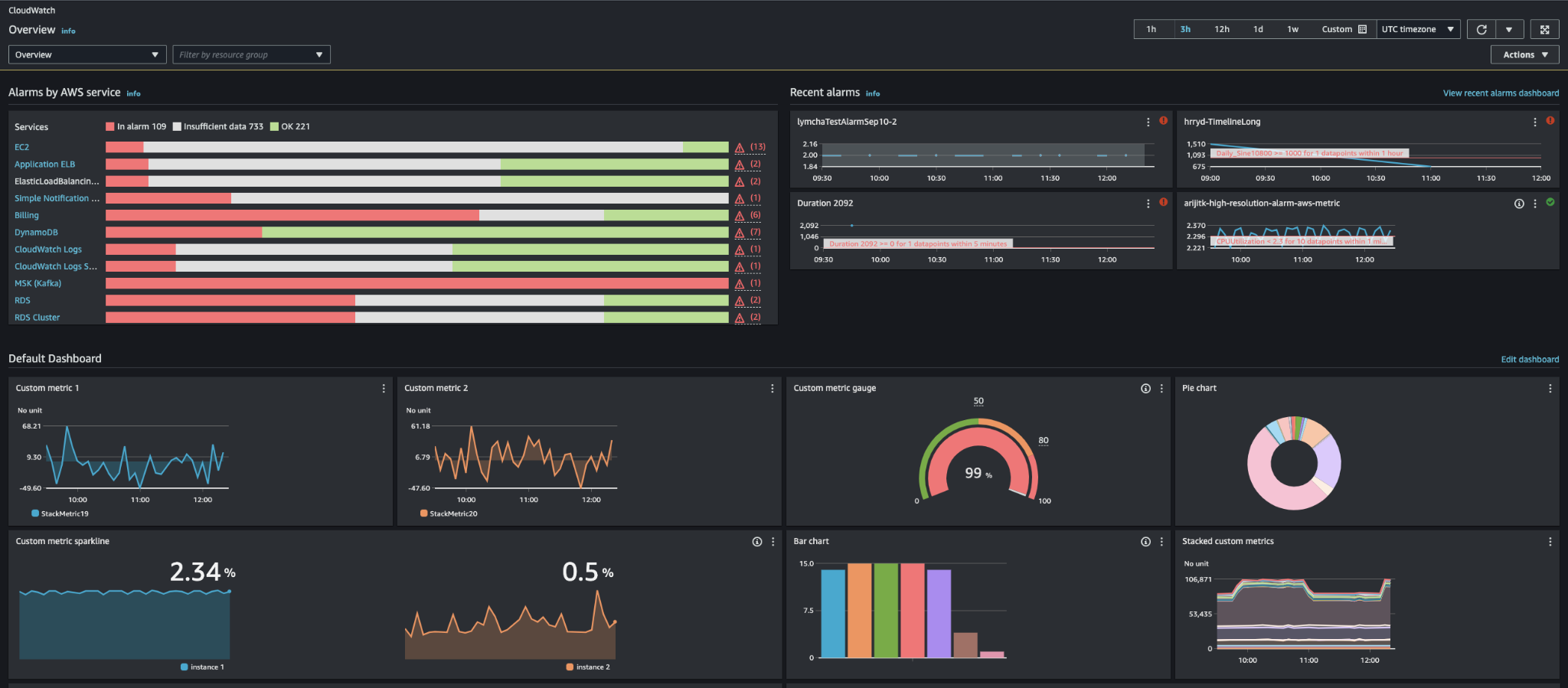
Amazon CloudWatch is AWS’s observability platform that also supports FinOps practices by providing visibility into resource utilization and associated costs.
#38. PointFive
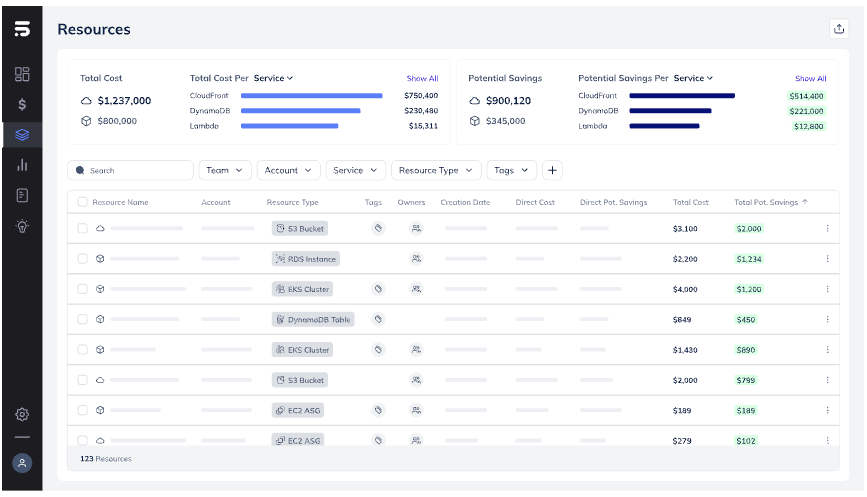
PointFive is a cloud cost management platform that leverages the FOCUS standard—the FinOps Open Cost and Usage Specification—to deliver accurate, standardized FinOps reporting across multi-cloud environments. In practice, that means normalizing billing and usage data into a common schema so teams can compare, allocate, and report on spend without constantly reconciling different AWS, Azure, and GCP billing formats by hand.
#39. Surveil
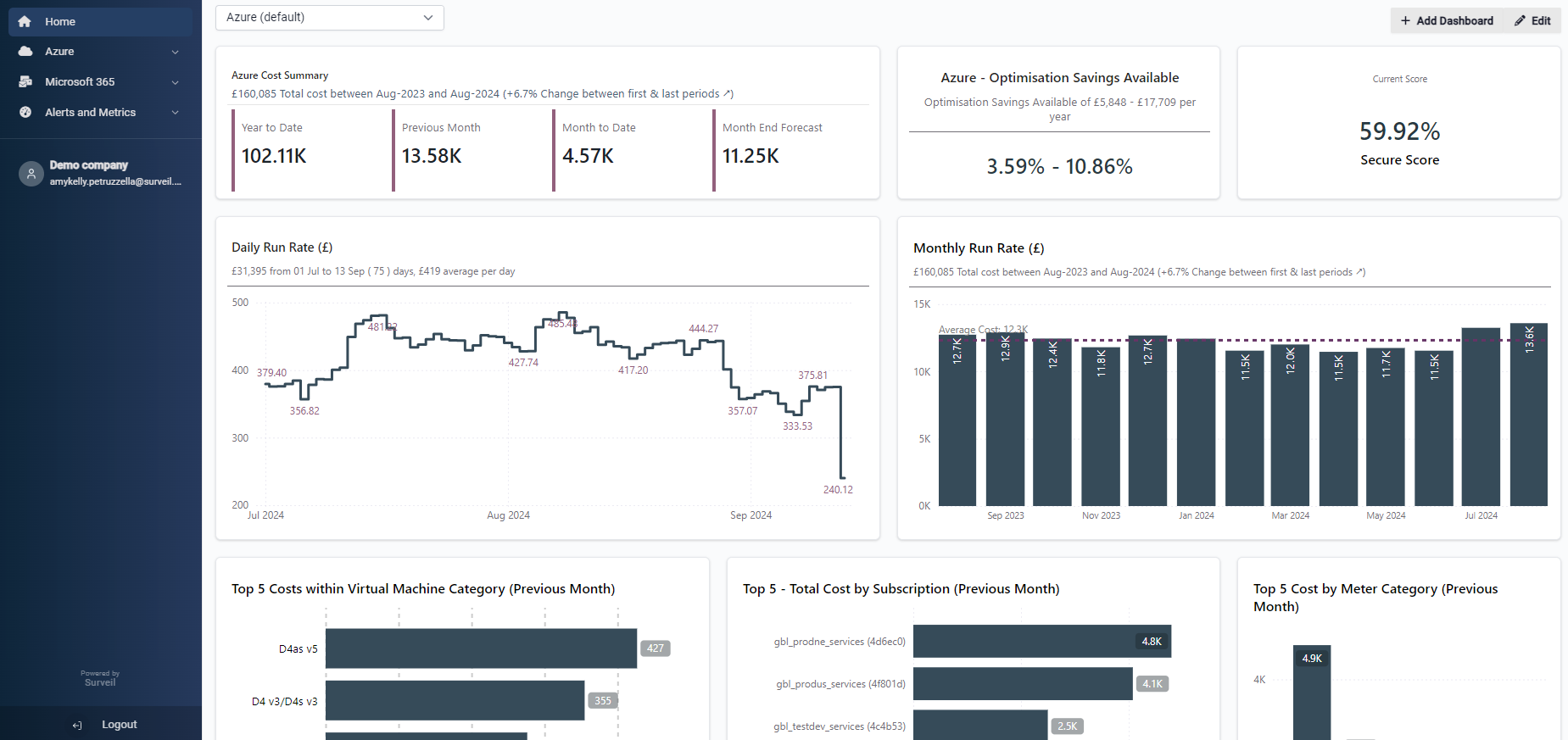
Surveil is a FinOps and cost analytics platform that integrates billing data from AWS, Azure, and GCP into a single pane of glass. Built with FOCUS compatibility.
#40. CoreStack
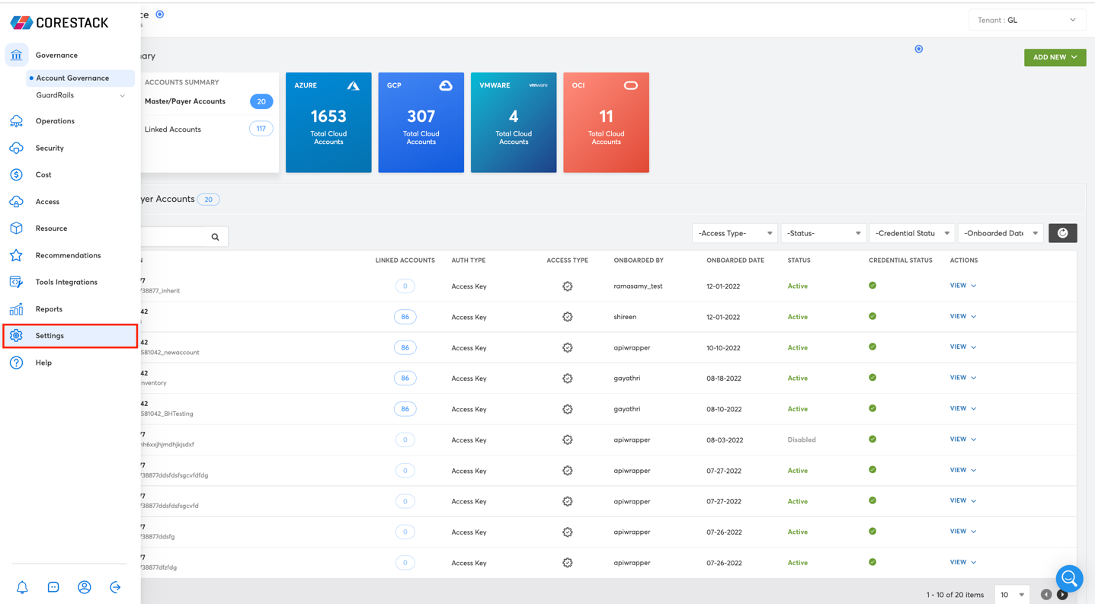
CoreStack is a multi-cloud governance platform that brings together FinOps, SecOps, and compliance management in a single solution.
#41. AnyScope Envisor
AnyScope Envisor is a FinOps and IT spend management platform that extends beyond cloud to cover a broad range of technology costs.
#42. Amnic
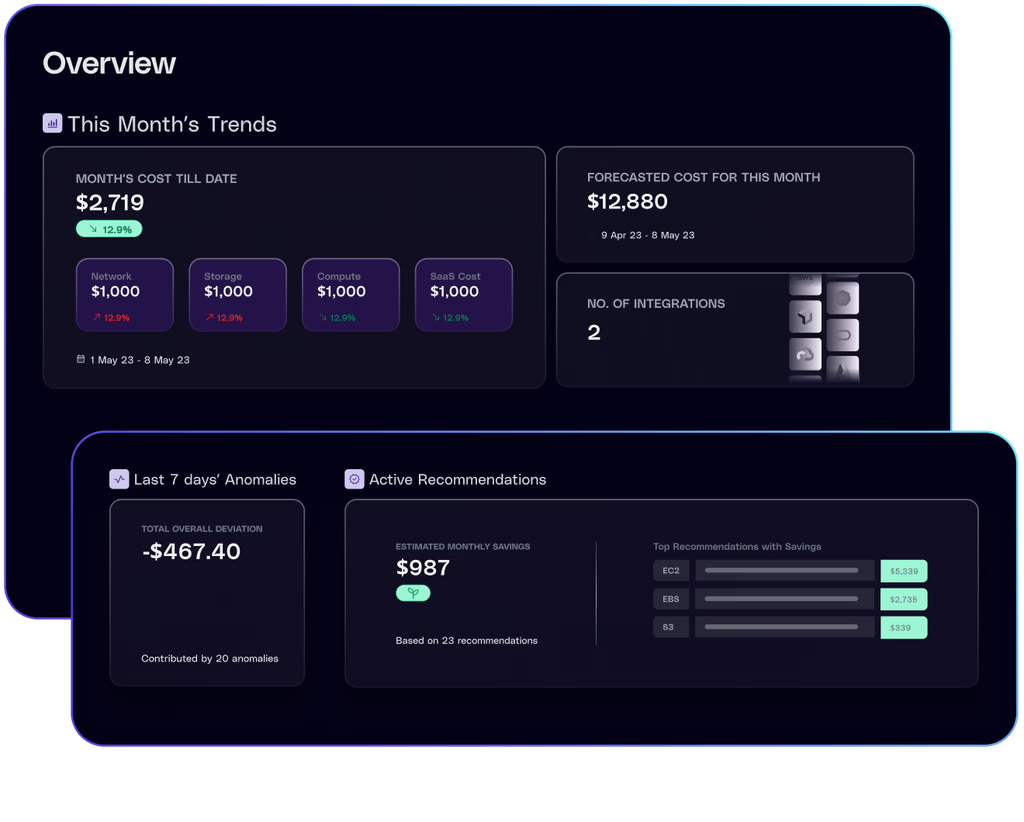
Amnic is a cloud cost optimization and analytics platform that uses FOCUS-aligned datasets to deliver standardized reporting and insights.
#43. OpenCost
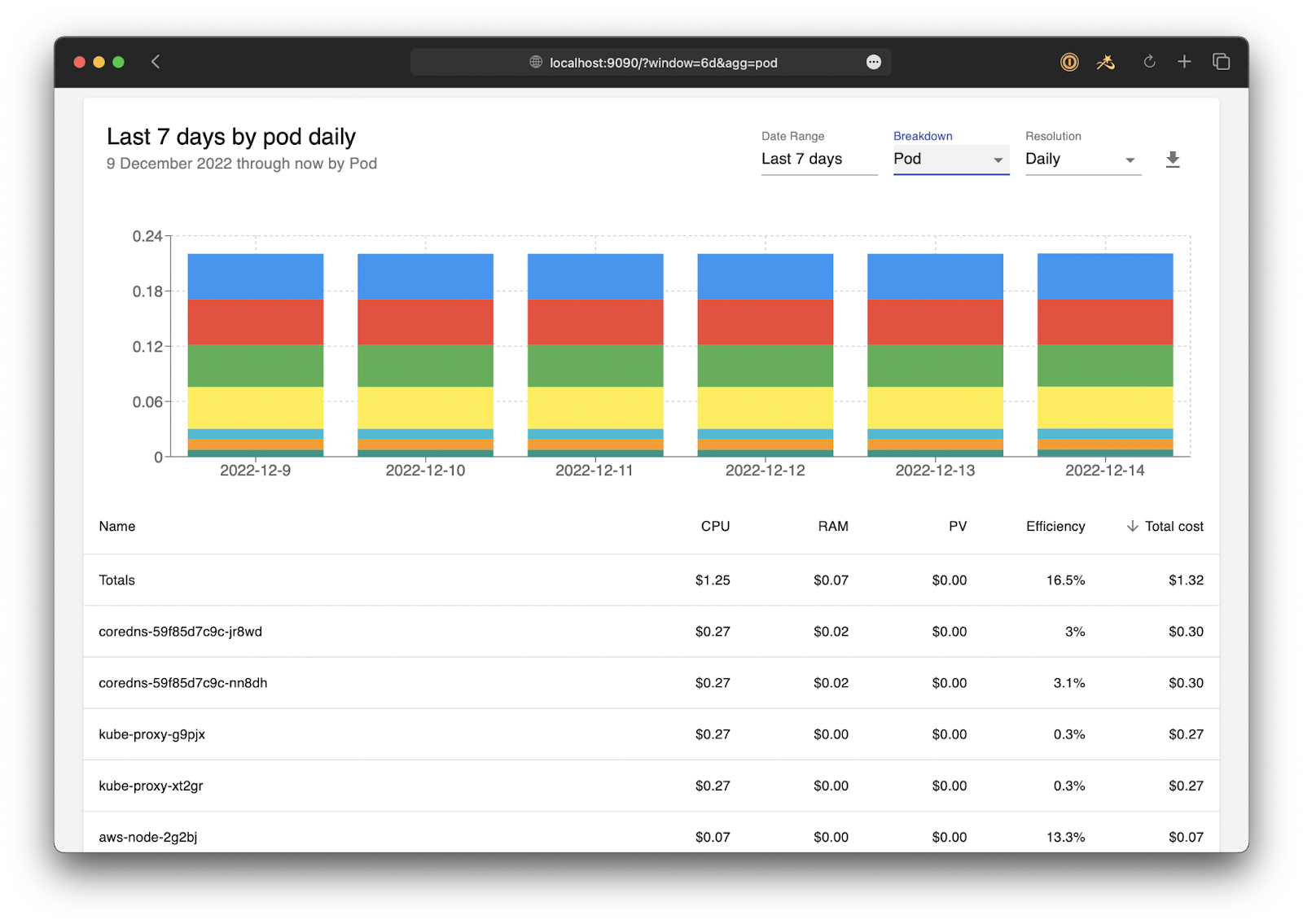
OpenCost is an open-source project that provides real-time cost monitoring for Kubernetes workloads. Originally incubated by Kubecost and the FinOps Foundation.
#44. Uniskai
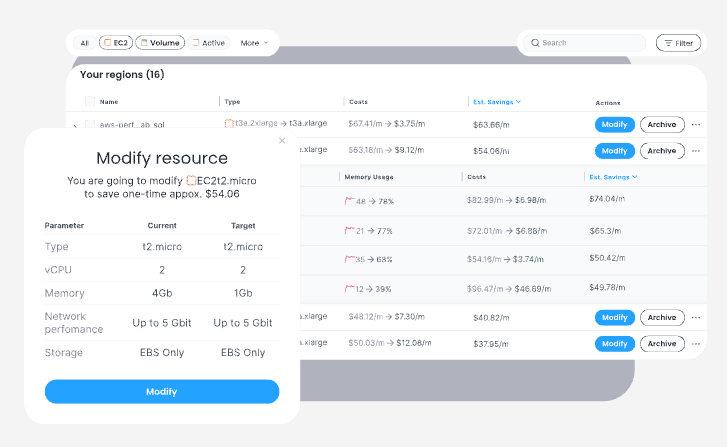
Uniskai is a cloud cost management and governance platform built for AWS, Azure, and GCP. It provides intelligent insights into resource utilization.
#45. CloudMonitor
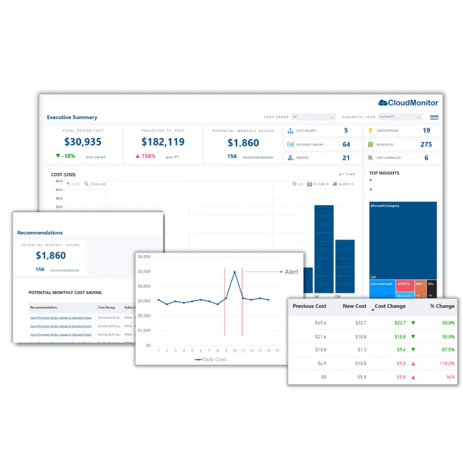
CloudMonitor is a cloud cost optimization tool that provides real-time visibility into spend across AWS, Azure, and GCP. It focuses on anomaly detection and predictive analytics.
#46. StormForge
StormForge is an AI-powered Kubernetes optimization platform that helps organizations balance application performance with cloud cost efficiency. It continuously analyzes workloads, automatically rightsizing pods and clusters.
#47. Economize
Economize is a lightweight, easy-to-adopt cloud cost management tool designed for SMBs and fast-growing startups. Supporting AWS, Azure, and GCP, Economize delivers clear dashboards and anomaly detection.
#48. ParkMyCloud
ParkMyCloud, now part of Turbonomic, specializes in automated scheduling and shutdown of idle cloud resources to eliminate waste.
#49. Infracost
Infracost is an open-source tool that integrates cloud cost visibility directly into Infrastructure-as-Code (IaC) workflows. Supporting Terraform, Pulumi, and other IaC frameworks.
#50. CloudHealth Secure State
CloudHealth Secure State, part of VMware’s CloudHealth portfolio, extends beyond cost visibility to provide real-time security and compliance insights linked with financial governance.
Related Content:
- Read our guide to AWS FinOps
- Read our guide to Azure FinOps
- Read our guide about FinOps Principles
Choosing the Right FinOps Tool for Your Business
Building a FinOps culture doesn’t happen overnight, but it’s essential for creating a sustainable, scalable cloud strategy. While many businesses begin with native tools like AWS Cost Explorer, relying solely on these solutions often limits growth and transparency. Adopting a dedicated FinOps platform accelerates cloud cost maturity, driving accountability and optimization across the entire organization.
Use the FinOps Foundation Landscape as a reference and pressure-test each option against this evaluation checklist:
- Provider coverage: Does the platform support the clouds, Kubernetes environments, data platforms, and AI services you already use?
- Allocation depth: Can you allocate tagged, untagged, and shared costs by team, product, environment, or customer?
- FinOps capability breadth: Does it cover reporting, forecasting, anomaly detection, commitments, governance, and optimization?
- Workflow integration: Can insights flow into Slack, Jira, ServiceNow, Teams, or other systems your teams already use?
- Pricing transparency: Is pricing clear, predictable, and aligned with how you expect to scale?
- Security and compliance: Does the vendor meet your requirements for access controls, governance, and enterprise readiness?
The right FinOps tool not only addresses cloud spend but also automates complex cost allocation, forecasts demand, and ensures seamless financial governance. Choosing the right FinOps platform means aligning with your company’s cloud environment, projected growth, and operational needs.
Finout delivers unparalleled cloud cost observability, governance, and advanced financial planning—helping enterprises navigate cloud complexity with clarity. With instant virtual tagging, shared cost reallocation, and a unified MegaBill, Finout provides the single source of truth you need to manage cloud costs at scale.
Ready to simplify cloud cost management and elevate your FinOps journey?
Book a demo today and see how Finout can transform the way you manage cloud spend.
cloud & AI spend
FAQs
FinOps tools are platforms and point solutions that help you understand, allocate, govern, and optimize cloud spend across engineering, finance, and product teams.
In multi-cloud environments, they pull billing and usage data from providers like AWS, Azure, and GCP into a shared view so you can connect infrastructure cost to teams, services, products, or customers.
- Cost allocation: Map spend to teams, products, environments, or customers.
- Anomaly detection: Catch unusual spend changes early.
- Forecasting and budgeting: Plan for future spend based on usage and business context.
- Governance workflows: Turn cost insights into approvals, ownership, and action.
- Integrations: Push reports and alerts into tools like Slack, Jira, ServiceNow, and Teams.
FinOps is a cloud financial management operating model that brings engineering, finance, and product teams together to manage cloud spend with shared accountability.
It is built around cross-functional collaboration, faster decision-making, and the FinOps Foundation’s 18-capability framework. If you want a deeper overview, see Finout’s FinOps guide.
The three FinOps phases form a continuous loop:
- Inform: Create visibility through cost allocation, reporting, and unit economics.
- Optimize: Act on waste, improve commitments, and make better cost-performance tradeoffs.
- Operate: Embed governance, accountability, and workflows into everyday engineering and finance processes.
If you're evaluating FinOps platforms, the key is choosing one that supports all three phases instead of just reporting on spend.
- Native tools usually do not normalize data across multiple cloud providers.
- They often lack automatic shared cost allocation.
- They do not reliably handle untagged or inconsistently tagged resources.
- Their forecasting is usually limited to provider-level data, not business context.
- They rarely connect directly to workflow tools for ownership and action.
Dedicated FinOps platforms add cross-cloud visibility, richer allocation logic, governance, forecasting, anomaly response, and workflow integrations that help teams actually act on cost data.
Native tools tell you what you spent. A FinOps platform helps your teams act on it.

Stay ahead of FinOps trends
Get our monthly product newsletter delivered straight to your inbox.
.svg)

Related articles
- Ultimate Guide to FinOps: Principles, Phases, and Technology
- FinOps X 2026: Everything You Need to Know
- AWS Savings Plans vs Reserved Instances: 5 Key Differences in 2026
- Top 21 FinOps Tools to Consider in 2026 - Calculator Version
- Finout Recognized in Gartner’s Magic Quadrant: Shaping the Future of Cloud Financial Management
- Beyond GPUs and API Calls: Understanding the True Cost of AI Initiatives
- Databricks Pricing
- Databricks Pricing Calculator: 6 Free Tools to Estimate Your Costs
- AWS bill shock - the complete guide
- OpenAI Cost Optimization: A Practical Guide for Scaling Smart
- Top 14 FinOps KPIs and How to Maximize Them
- Finout's Round C - A Milestone Moment for Finout and the FinOps Community
- AWS FinOps: Why, How, and 6 Tools to Get You Started
- What is Cloud FinOps?
- What is Azure FinOps and How You Can Adopt It
- FinOps: Principles and Lifecycle Guide
One platform.
Every team. Complete control.
Built for the complexity, speed, and ownership demands of modern cloud and AI environments