FinOps is a developing practice that aims to drive business value through data-driven spending decisions.
The name, a combination of "Financial" and "Operations", reflects the cross-functional nature of the approach, which seeks to bridge the gap between finance, operations, and engineering teams.
For teams that use Azure, FinOps means making the right choices regarding cloud spending, together.
It’s about adopting the right mindset, switching instance types, and using Azure’s native cost management tools. Teams that get Azure FinOps right enjoy:
- Lower cloud bills
- A shared sense of accountability
- Greater agility in decision making
Let’s take a look at some principles and practices that Azure teams can follow to adopt FinOps.
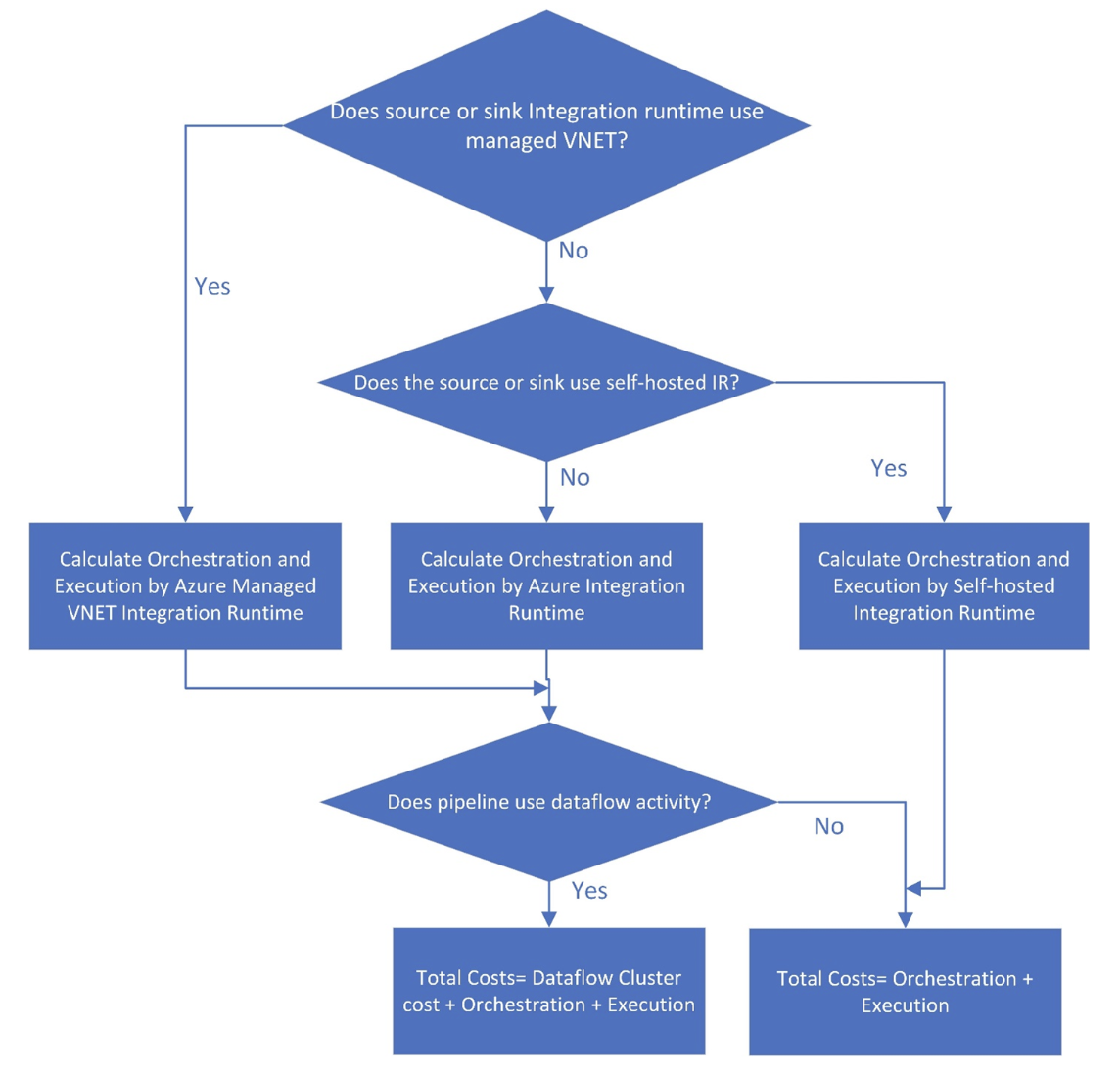
👁 Flow chart
This is part of a series of articles on FinOps.
Enhance your Cost Visibility, Accountability, and Optimization with powerful Azure FinOps tools
FinOps Azure is centered around visualizing your cloud spending and understanding its patterns. To ensure financial accountability, teams must identify who is spending, how much, and why.
While a monthly bill provides some insight, it is beneficial to utilize the cost breakdown in your provider's native tools or a third-party tool like Finout to gain a more comprehensive understanding of your cloud spending across multiple providers.
From here, you’ll need to iterate on strategies for reducing cloud spending, by following recommendations from your tool of choice and looking closely at your infrastructure.
Before diving into this process, it is essential to equip yourself with the right mindset to ensure the success of your FinOps Azure practices-
Continual evaluation and adjustment: Keep reassessing your cloud usage and adapt your approach based on new information and insights to ensure ongoing cost optimization.
Teamwork: it is crucial to form a cross-functional team involving members from finance, operations, and cloud departments. By working together, this team can take responsibility and coordinate efforts to achieve cloud cost optimization.
Consider serverless: Azure FinOps functions, a service that offers serverless computing, is an alternative approach to lowering cloud costs. Serverless computing is most effective for intermittent, compute-intensive workloads.
Utilize Azure Cost Management Without Incurring Any Costs
With the increasing pace of cloud adoption by enterprises, managing cloud expenses across the organization has become a challenging task. Microsoft's Azure Cost Management assists organizations in efficiently managing and enhancing cloud expenditures across not only Azure but also other cloud platforms.
All Azure customers and partners have access to Azure Cost Management, which is a software-as-a-service (SaaS) solution that enables organizations to track, allocate, and optimize cloud expenses in a multi-cloud setting. Microsoft is dedicated to enhancing support for a multi-cloud environment, which includes Azure, AWS, and Google Cloud Platform, through Azure Cost Management.
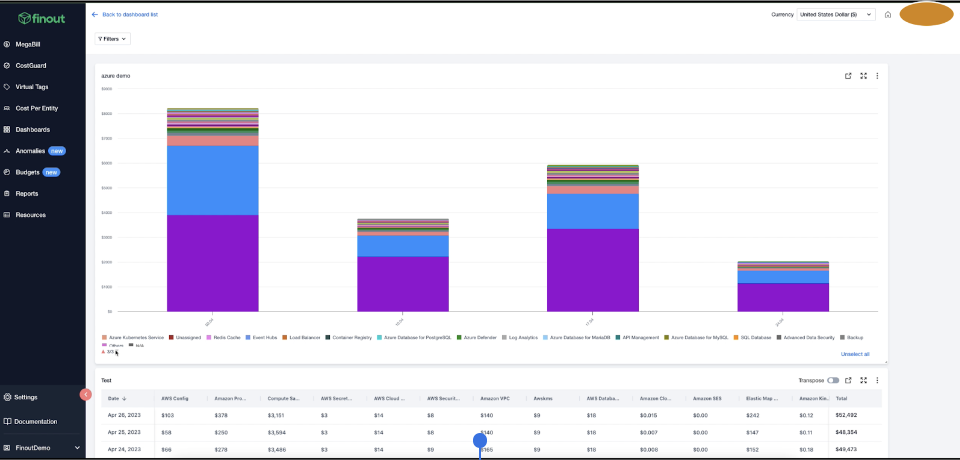
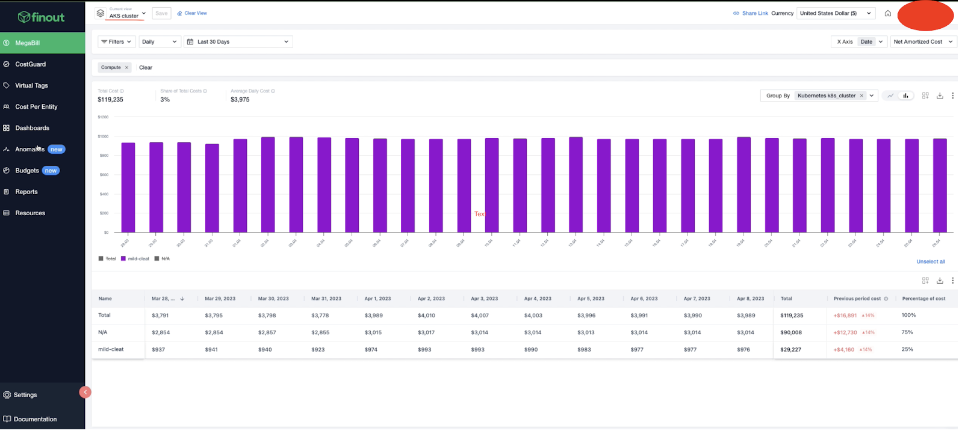
Also, you can use third-party Azure FinOps tools to manage your billing and create qualified dashboards. Finout can be a good solution to create and manage your Azure cost and create dashboards.
You can view examples of dashboards below that have been created at Finout:
👁 Finout Dashboard image
👁 Finout Dashboard image
Azure FinOps Best Practices
Now that you understand the core FinOps principles, we can take a look at some actual steps you can take to cut this cloud platform spending.
Use Spot Instances
Azure enables you to purchase unused compute capacity at a 90% discount compared to on-demand pricing. However, Microsoft reserves the right to terminate spot instances at any time based on capacity demands. This option is most appropriate for workloads that can tolerate interruptions, such as batch data processing.
Use Reserved Instances
This alternative allows you to reserve instances for 1-3 years. By opting for Reserved Instances, you can receive discounts of up to 72% compared to on-demand pricing, as per Microsoft. Analyze your infrastructure to identify workloads that don’t require constant operation, then migrate them to a cheaper instance.
Azure Cost Management Tools
Azure offers a range of cost management tools that can help you gain a better overview of your spending-
Azure Policy lets you implement policies to tag all resources and govern their creation and placement.
Azure Cost Management is included in your Azure subscription and enables you to monitor and manage its costs.
Management groups and subscriptions let you segregate workloads and projects with distinct cost-allocation frameworks, such as production versus development.
Azure RBAC is a security feature that regulates the creation of resources in Azure, which affects expenses.
Azure Advisor offers cost-optimization suggestions but can’t advise on certain resource types such as databases.
Azure Resource Manager gives you better visibility and control over your cloud resources, which can ultimately lead to cost savings.
Final Thoughts
If you’re looking to reduce your spending in Azure, FinOps could prove to be an effective strategy.
By sticking to the principles and Azure FinOps best practices that prioritize visibility, accountability, and cost optimization, you can significantly reduce your cloud spending and improve your company’s bottom line.















.svg)