|
VOOZH | about |
|
VOOZH | about |
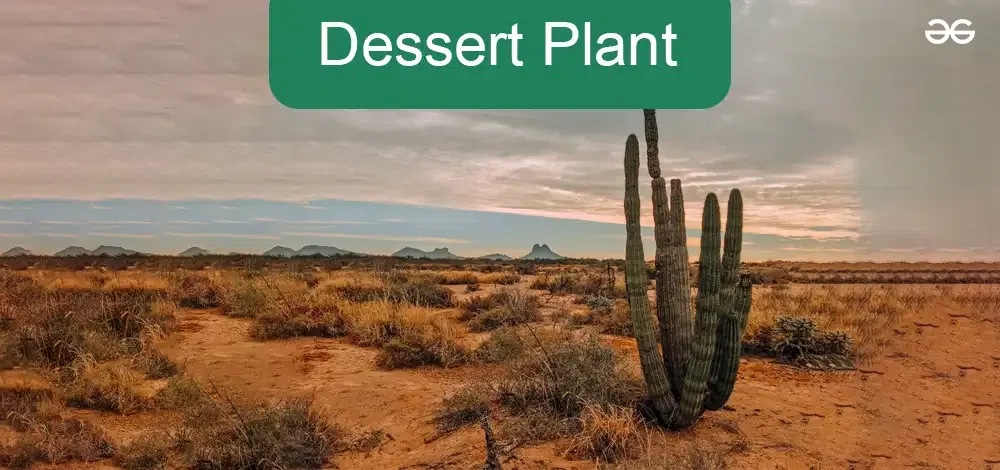
Adaptation refers to a change in an organism's structure and function as a result of a natural process that makes the organism more suited to endure and proliferate in a given environment. Adaptation occurs in plants and animals, allowing them to adjust well within a given environment. E.g. Dessert plants like cacti have spikes, which allows them to conserve water. Animals like tigers have stripes on their body which help them to blend well with their environment like grasslands in order to catch prey.
The natural process through which organisms adapt to completely new surroundings or fluctuations in their current environments is known as adaptation. Georges Louis Leclerc Comte de Buffon was one of the scientists who investigated adaptation before the creation of evolutionary theory. He was a French mathematician who held the view that creatures evolved over time by adjusting to their circumstances.
Also Read: Adaptation and Habitat
There are different types of adaptations such as:
Structural adaptations are modifications made to an organism's structure to help it better adapt to its surroundings. These structural alterations have an impact on an animal on numerous levels. E.g Plants known as succulents have adapted by storing water inside themselves, since they are found in areas with very less water.
The modification of an organism's behaviour to help it survive better in a given environment is known as behavioural adaptation. It can be difficult to spot behavioural adaptations, and it frequently takes thorough field and laboratory research to bring them to light. E.g In winter, birds tend to migrate towards the south, in order to obtain more food and breed.
A physiological adaptation is a bodily function that enhances an organism's capacity to reproduce and survive in a given environment. These adaptations can be the various ways in which an organism reacts to environmental stimuli. Since the majority of these changes are based on body chemistry and metabolism, they are normally invisible from the outside. E.g To prevent heat loss, an animal living in a cold climate will have characteristics like thick coats and short ears. Shivering to produce more heat as it gets chilly is the physiological adaptation in this case.
Co-adaptation is the process by which two or more species that are symbiotically dependent on one another for survival adjust to new conditions. E.g Long beaks assist hummingbirds collect nectar from particular plants, where they are then pollinated as a result. The pollen grains are dispersed in this manner, and the hummingbirds are fed in return.
Adaptation are found in both plants and animals. Most plant and animals are interdependent on each other for their survival and help maintain the ecological balance. Trees in colder regions have spine like leaves which help them survive better in harsh conditions. Octopus camoulflage themselves to the background environment to protect themselves from predators. Let us try to understand the different types of adaptations found in both plants and animals.
Adaptations in animals are usually dependent on their habitats. Their bodies develop certain features which allows them to survive in a particular environment.Animals are able to overcome difficulties, take advantage of opportunities, and eventually thrive in a variety of habitats around the world thanks to these biological, behavioural, and structural changes. Let us understand more on adaptations in animals in different habitats:
Polar regions are areas which show an extreme cold climate. North and South Pole fall in these regions. Few of the characteristics of animals found in these places are:
Desert conditions show extremely high temperatures and water scarcity. The following features are seen in organisms living in the desert regions:
Grasslands are areas where grass is the main vegetation found along with shrubs and small trees. Some of the features of animals found there are:
Due to their proximity to the equator, tropical rainforests are typically hot and humid. They show a high percentage of rainfall with annual precipitation around 60-160 inches. Some of the features of animals found there are:
Animals that live in water have special features in their body which allow them to absorb oxygen from water.Following features are seen in animals living in aquatic habitat:
Plant adaptation is evidence of the clever strategies plants have evolved to meet obstacles and take advantage of opportunities in their environments. Over millions of years, plants have mastered the art of adaptation, whether it is through the creation of drought-resistant leaves, symbiotic connections with pollinators, or the capacity to flourish in nutrient-poor soils.
The following features are seen in plants found in polar region:
Plants in Desert environment show the following features:
Plants which are found in water have to face harsh situations like limited oxygen content and low intensity of light. The following features are seen in plants found in aquatic habitat:
Natural selection or mutation could lead to adaptation. The rapid genetic alteration known as a mutation may be accidental or random. Any alteration to the DNA's nucleotide sequence and the replacement of a single pair of nucleotides will result in mutation. While some mutations may be favourable to an organism's survival in the struggle for life, others may be destructive to humans.
Adaptations like coloration and camouflage shield them from predators. Animals in hazardous environments are more likely to survive for longer thanks to DNA mutations, and these attributes of survival are passed on to subsequent generations. Numerous animals can survive and thrive on the Earth thanks to these adaptations.
E.g. Charles Darwin researched two islands' turtles. On one island, there were turtles with small legs, straight shells, and food that was close to the ground. A few turtles relocated to another island because there was more food there. Longer-legged turtles were able to survive. Over time, their shells rounded and their necks became longer. As a result of these changes in their species, the population of the new island increased.