An ecosystem is a functional unit of nature in which living organisms interact with one another and with their physical environment. It includes both living (biotic) and non-living (abiotic) components that work together to maintain ecological balance. The proper functioning of an ecosystem depends on the interaction between these components.
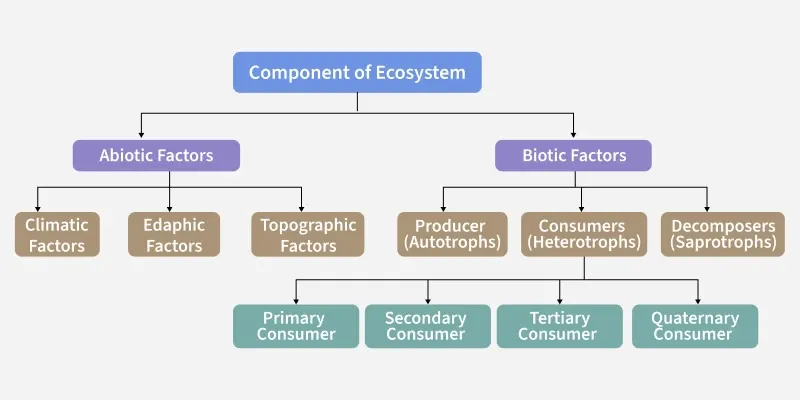
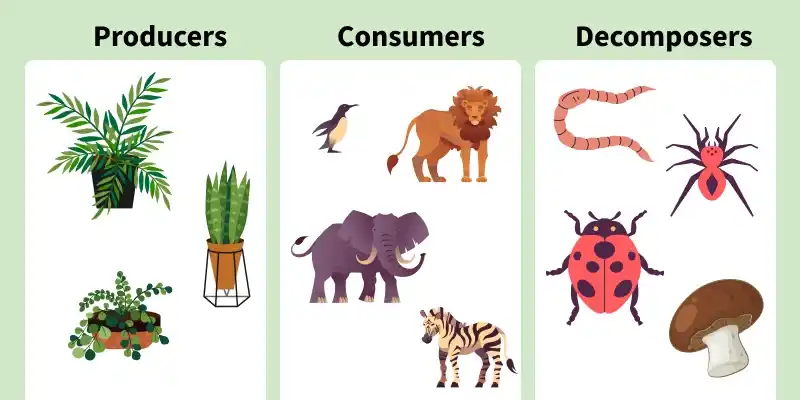
Biotic means are related to living. It contains all living components such as animals, plants, and microorganisms like fungi, etc. As they use energy for their survival, based on their mode of nutrition, they are divided into three groups:
Producers are autotrophs such as green plants, algae, and phytoplankton that prepare their own food using sunlight, carbon dioxide, and water through photosynthesis.
They form the base of the food chain and provide energy and oxygen to other organisms.
2. Consumers
All heterotrophs, primarily animals, that are dependent on the producers or other organisms are called consumers. It includes carnivores, herbivores and omnivores.
Carnivores depend on flesh for their food requirements.
Consumers help in maintaining the balance in the ecosystem by following the food chain.
These consumers are divided into the following groups:
Type of Consumer
Description
Examples
Primary Consumers (Herbivores)
Feed directly on plants (producers)
Cow, goat, rabbit, sheep
Secondary Consumers (Carnivores/Omnivores)
Feed on primary consumers
Frog, crow, small fish, spider
Tertiary Consumers
Feed on secondary consumers
Snake, fox
Quaternary Consumers (Apex Predators)
Top-level predators that feed on tertiary consumers
Lion, tiger, eagle, shark
3. Decomposers
All microorganisms, such as bacteria and fungi, that depend on dead matter and decaying for food fall under this category. they contributes to environmental cleanup and ecosystem nutrient recycling. These nutrients support plant development and subsequently ecosystem maintenance.
These are the organisms that feed on dead and decaying matter and convert it into simpler inorganic substances. They are important for the nutrient content in the soil. With more nutrients, more species and trees can grow.
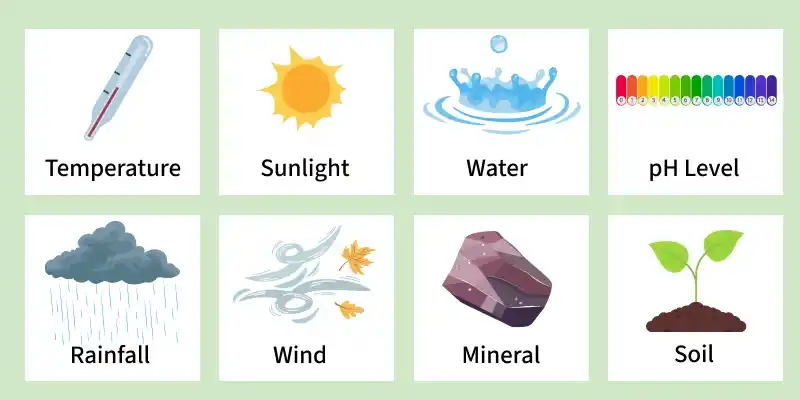
Abiotic Components
It involves all the non-living things present in the environment. These abiotic components function together to enable the ecosystem's energy and nutrition cycles. All the abiotic factors are essential factors that determine the number and type of organisms present in a region. It is classified into three categories: